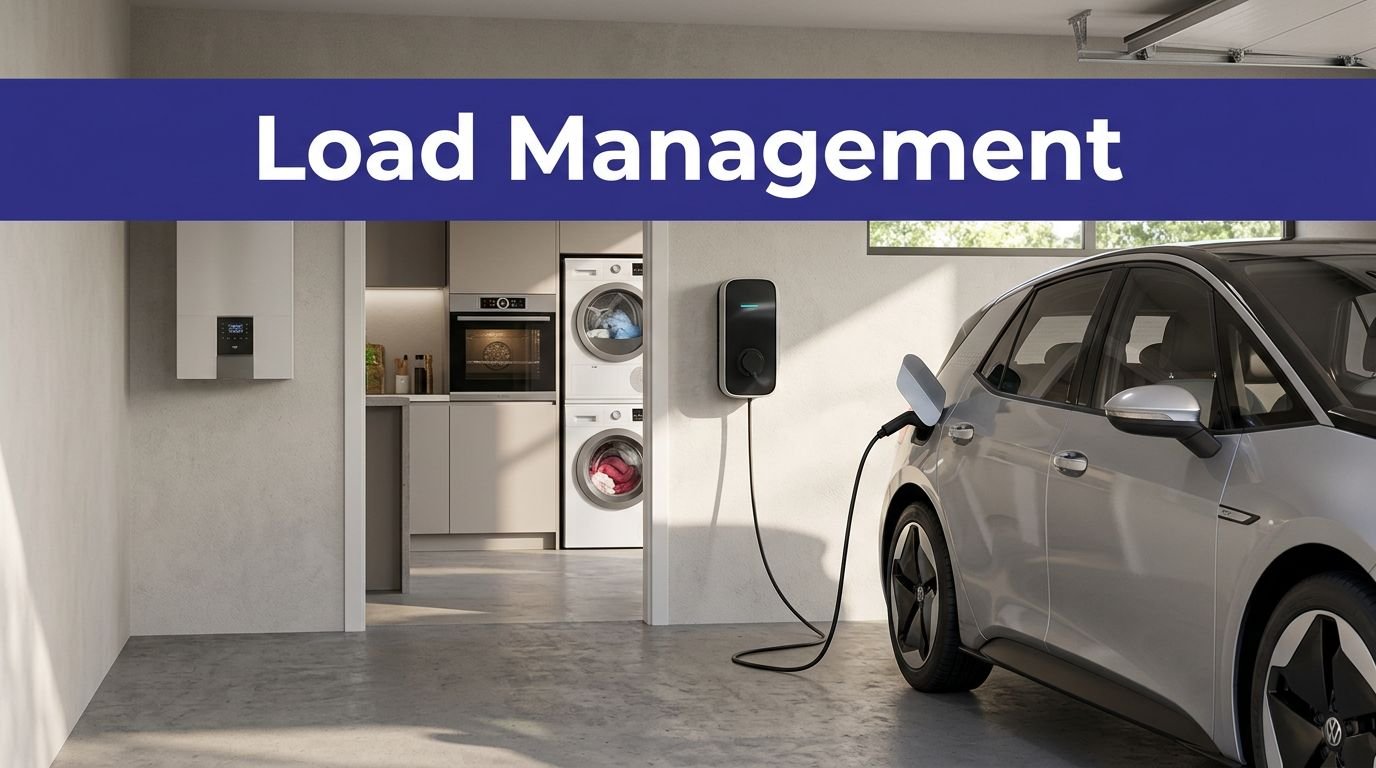
Your EV is ready to charge. Your house is also running the oven, dryer, heat pump, and a small army of phone chargers nobody remembers plugging in. That is when a home electrical panel can start feeling like a group project with no adult supervision.
Implementing EV charger load management helps your charger use the power your home can safely spare. Utilizing this type of EV charger load management can often prevent a costly electrical panel upgrade, but it does not create extra electricity out of thin air. It watches the load, then tells the car to slow down when the house gets busy.
Here is what homeowners should know before buying equipment or booking an installer, especially when your home electrical capacity is tight.
Key Takeaways
- EV charger load management automatically adjusts charging speeds when household electricity demand approaches a safe limit.
- It is different from load sharing, which divides power between two or more EV chargers.
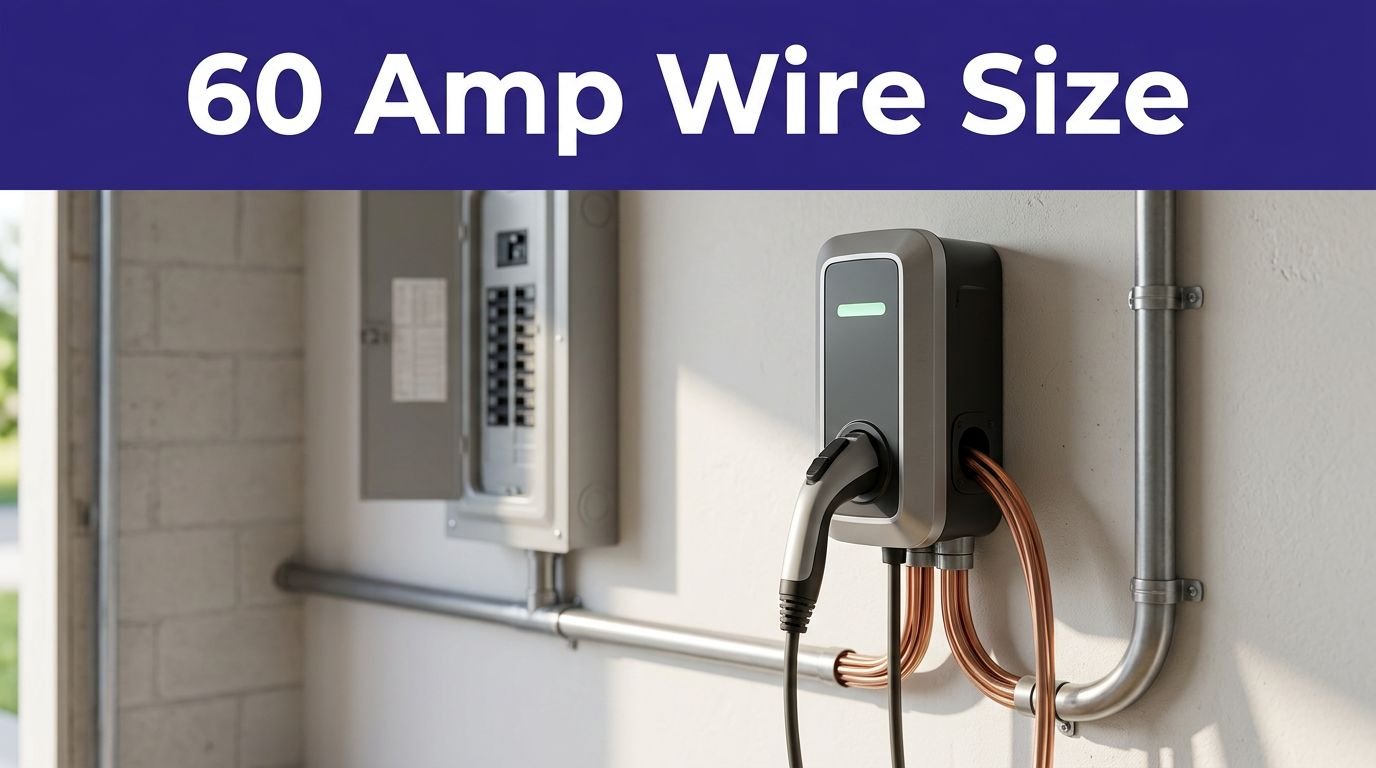
- A 60-amp circuit usually supports a 48-amp Level 2 charger because EV charging is treated as a continuous load.
- These systems are a key component of smart charging for modern homes, helping to optimize energy usage.
- Older homes, all-electric homes, and homes with 100-amp service are common candidates for these installations.
- A licensed electrician should perform a formal load calculation and confirm local code requirements before installation.
What EV Charger Load Management Actually Does
Although people often say “charger,” the wall-mounted equipment is technically an EVSE, or electric vehicle supply equipment. The actual charging hardware is located inside the car, which does more work than it typically gets credit for.
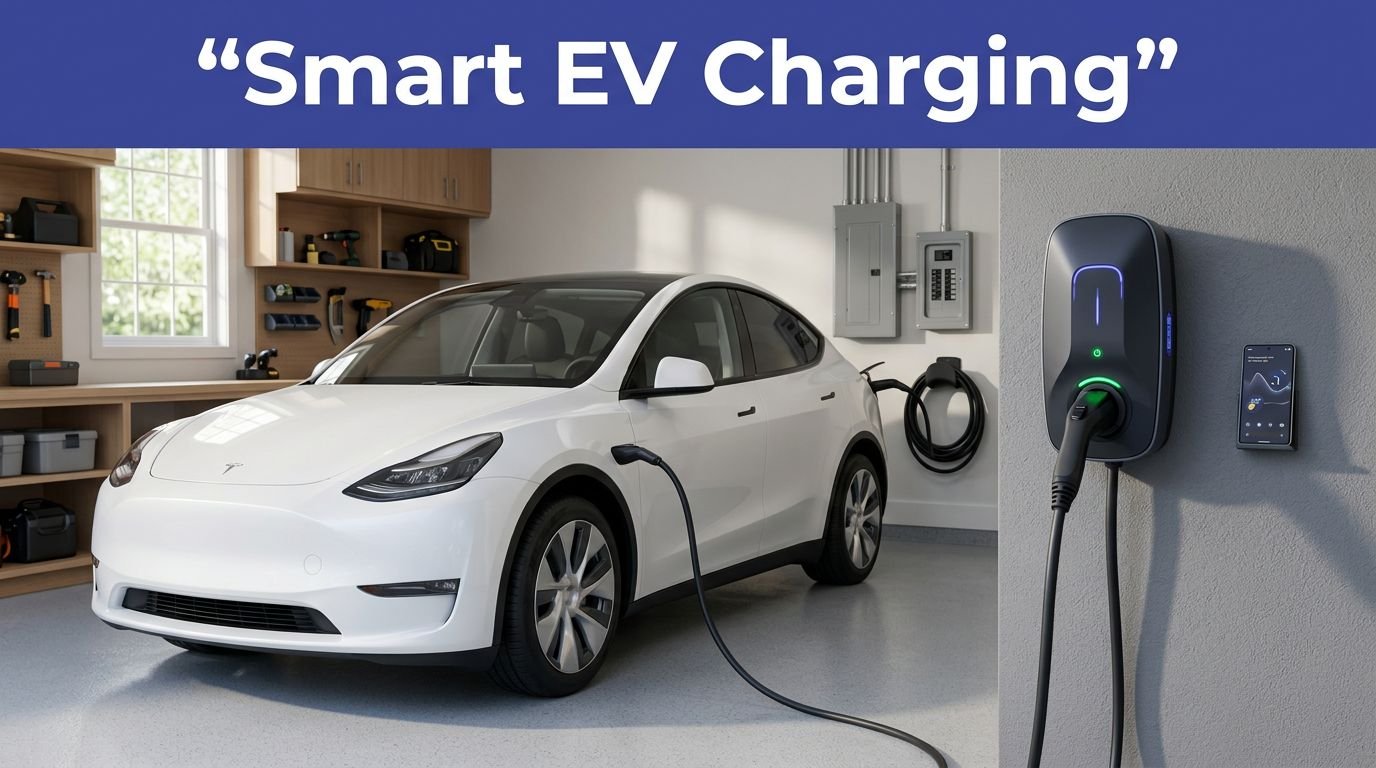
At its core, dynamic load management is the process of monitoring and adjusting the power flow to your vehicle. The system uses current transformers, which are small sensors that clamp around the service conductors inside your electrical panel. By providing real-time monitoring of your household energy consumption, these sensors report the live electrical load to the EVSE or a separate energy management controller.
When your total home demand rises, the system automatically lowers the power available to the vehicle. Once high-demand appliances, such as the oven or heat pump, cycle down or turn off, the system increases the available power, allowing the EV to resume charging at a faster rate.
Consider a home with a 100-amp electrical service. If a family starts cooking dinner while the clothes dryer is running, the total demand on the panel increases significantly. If an EV plugs in and requests 48 amps during this peak period, a dynamic load management system will proactively reduce the charging rate to ensure the household demand stays within the safe capacity of your electrical service.
Load management protects the capacity you already have. It does not turn a 100-amp service into a 200-amp service.
Because your vehicle is typically parked for several hours, this process is seamless. Losing a few kilowatts for part of the evening has little effect on your total overnight charge, ensuring you wake up to a full battery without needing an expensive panel upgrade.
Why Your Panel’s Empty Spaces Can Be Misleading
A panel can have open breaker slots and still lack enough electrical capacity for a high-power EV charger. Empty spaces are simply physical real estate. They are not proof that your existing system can handle the added demand of another major appliance.
Electricians use a load calculation to estimate the total demand placed on your service. That calculation considers fixed appliances, heating and cooling equipment, electric ranges, dryers, water heaters, and other items. The exact method depends on the electrical code used in your area and the specific equipment in your home. If your home has reached its limit, the alternative to installing a management system is often expensive infrastructure upgrades.
The National Fire Protection Association’s National Electrical Code treats EV charging as a continuous load for circuit sizing. In plain English, a charger pulling 48 amps needs a 60-amp branch circuit. It is the 125 percent rule, and it is not optional simply because someone bought a heavy-duty outlet at a hardware store.
Here is the basic relationship:
| Branch Circuit Rating | Typical Maximum EVSE Output |
|---|---|
| 30 amps | 24 amps |
| 40 amps | 32 amps |
| 50 amps | 40 amps |
| 60 amps | 48 amps |
A proper load calculation may show that your home has room for a charger without any management system, even during periods of high peak demand. It may also show that a lower charging rate is sufficient for your lifestyle. Many drivers do not need 48 amps every night. A 24-amp or 32-amp level 2 charger can still add meaningful range while you sleep.
The right answer comes from your driving habits, not from the biggest number on the box.
Dynamic Load Management, Load Sharing, and Load Balancing
These terms are often used interchangeably, but they represent distinct technologies.
Dynamic load management monitors the entire home. It actively adjusts charging speeds based on the real-time power demand from major appliances, heating equipment, and other electrical loads to prevent circuit overload. In contrast, static load management relies on a fixed, pre-set limit that does not react to fluctuations in your home energy usage.
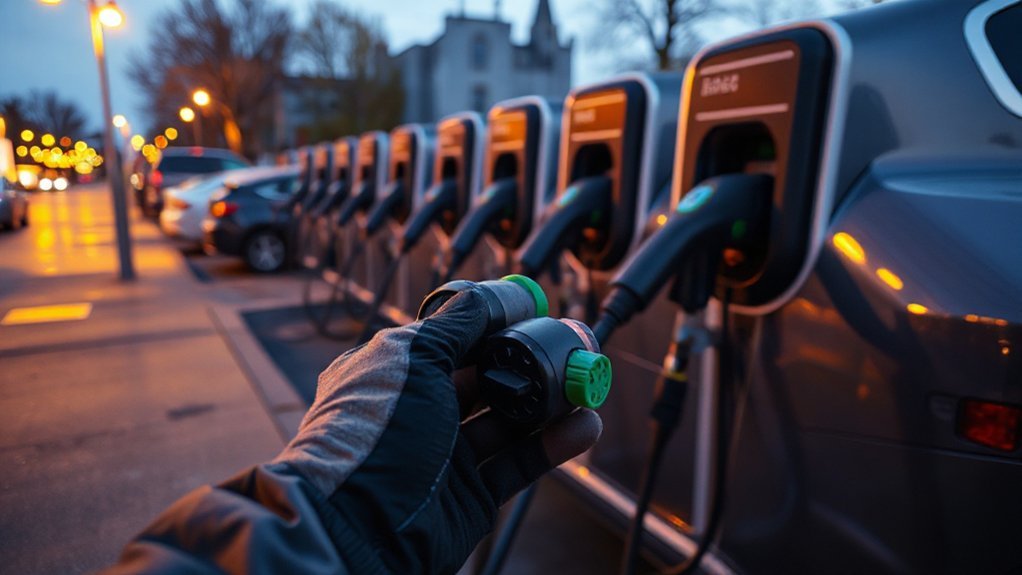
Load sharing splits a fixed amount of electrical capacity among multiple EV chargers. It is particularly useful when two vehicles share one circuit or when several chargers must operate behind a strict electrical service limit.
Tesla’s Wall Connector, for example, offers power sharing for multiple connected units, while systems like the Wallbox Power Boost use an energy meter to manage total available service capacity. The exact hardware, wiring method, and approved setup vary by model, so always consult the current installation manual before assuming different products will communicate effectively.
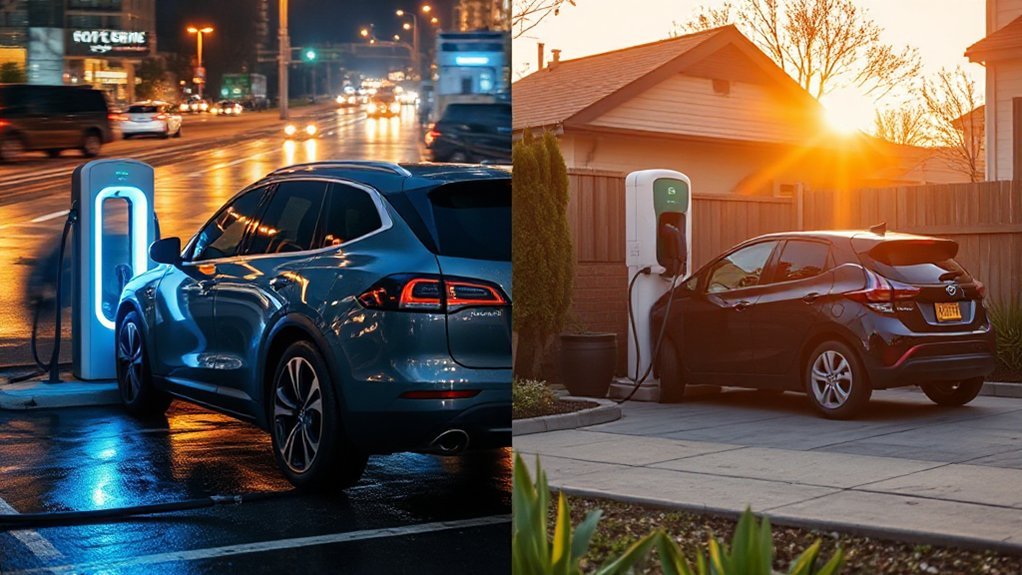

A two-EV household may utilize both concepts to achieve efficient load balancing. While dynamic load management oversees the house to ensure safe operation, load sharing determines how two vehicles divide the available power. Through proportional load sharing, one car may receive 32 amps while the other receives 16, and the system can automatically adjust this distribution as one vehicle reaches full charge.
Ultimately, you do not need to stand in the garage performing manual EV traffic control late at night. These automated systems handle the complexities of energy distribution for you.
Homes That Benefit Most From Load Management
Load management is not a must-have for every EV owner. It makes the most sense when your electrical service has limited headroom or your home has large electric loads that overlap. Property owners should consider these solutions if they want to avoid costly infrastructure changes.
These situations are worth discussing with an electrician:
- A 100-amp service panel with electric cooking, laundry, water heating, or heating equipment
- An older home where a service upgrade would require expensive utility work
- A house adding a heat pump, induction range, solar battery, or other major electrical equipment
- Two EVs that need regular home charging
- A detached garage or accessory dwelling unit with limited feeder capacity
The timing of your loads matters. A gas-heated home with one EV may have a lot of unused overnight capacity. An all-electric home in winter is a different story. Heat pumps, resistance backup heat, electric water heaters, and EV charging can all want power at the same time. These devices are like relatives reaching for the last dinner roll, as everyone is suddenly very confident they deserve it. For these households, using EV load management for peak shaving can prevent service interruptions and lower electricity costs. While this article focuses on residential setups, charge point operators often apply similar logic to optimize power distribution across much larger sites.

Photo by Elite Power Group
Solar and battery systems add another layer to this equation. A load manager may help control charging during normal grid-connected operation, and these systems contribute significantly to grid stability. However, backup power is a separate question. An EV can drain a home battery fast, so battery-backed panels often need carefully planned EV charging limits to ensure your essential appliances remain powered during an outage.
Choosing a Home EV Load Management System
Start with an electrician who has installed the EVSE and energy management equipment you are considering. This is not the time for somebody to say, “I watched three videos, how hard can it be?” The answer is hard enough to involve live service conductors.
Ask for a written load calculation. Then ask how the proposed system behaves under real household demand.
A good conversation should cover these points:
- The service rating and calculated demand. Confirm whether the house has 100-amp, 150-amp, or 200-amp service, then see the calculation behind the recommendation.
- The charging rate you need. A commuter driving 30 miles a day has different needs than a driver covering 180 miles between shifts. Planning for your specific mileage now allows for scalable EV charging as your household vehicle fleet grows in the future.
- The control method. Find out whether the system uses current transformers at the main service, a hardwired energy meter, or a charger group with a fixed shared limit.
- What happens if communication fails. Ask whether the EVSE reduces output, stops charging, or relies on an internet connection. The goal is reliable power distribution that remains safe even if the network drops; safety control should not become a Wi-Fi mood swing.
- Listing, permits, and inspection. Equipment should be listed by a recognized testing laboratory, installed to the manufacturer’s instructions, and permitted where required. Your local authority having jurisdiction has the final word.
There are two broad installation paths. One uses an EVSE with built-in dynamic control plus compatible metering hardware. The other uses a separate energy management system that controls the charger through a contactor or approved communication link.
Integrated systems can look cleaner and may reduce compatibility headaches. Separate controls can offer more flexibility, particularly in larger homes or homes with battery backup. Neither is automatically better. The wiring plan, listing requirements, and local inspection rules decide a lot of the story.
Cost also needs a straight answer. Load management equipment and installation add cost, but a full service upgrade can cost far more, especially if the utility must change equipment or the service entrance needs major work. Get quotes for both paths when a panel upgrade is on the table. Sometimes the math is obvious. Sometimes it is rude.
What Load Management Cannot Fix
A load management system is not a substitute for proper electrical capacity, nor can it repair damaged wiring, cure corrosion in an old panel, or make an overloaded service safe without professional engineering. If your existing electrical equipment is obsolete, unsafe, or too deteriorated to handle new work, a full service upgrade remains the safest path forward.
Furthermore, a system cannot provide maximum charging speed every second of every day. During periods of heavy household demand, the system will initiate load balancing to throttle or pause your charging session. This is not a system failure, but rather the EV charger load management technology working exactly as intended to protect your home from an electrical overload.
Check your charger app after installation to monitor performance. Confirm the maximum charging current, test how the system behaves while major appliances are running, and always keep your installer documentation on hand. If the system has adjustable limits based on your available power, do not casually change these settings because a forum comment suggested a higher threshold. Every home has unique requirements, and your electrical system is not the same as anyone else’s.
Frequently Asked Questions
Does EV charger load management make my home’s electrical service larger?
No, load management does not increase your home’s total capacity or turn a 100-amp service into a 200-amp service. Instead, it protects your existing electrical system by intelligently monitoring demand and temporarily slowing down the vehicle’s charging speed when other household appliances are active.
Is load management the same thing as load sharing?
While the terms are related, they perform different functions. Load management monitors the entire home to ensure total electricity usage stays within safe limits, whereas load sharing specifically divides a fixed amount of power between two or more EV chargers.
Can I install an EV charger load management system myself?
No, this work requires a licensed electrician to perform a formal load calculation and handle high-voltage service conductors inside your electrical panel. Because these systems involve critical safety components, they must be installed according to local electrical codes and manufacturer instructions to prevent hazards.
Will load management significantly increase the time it takes to charge my vehicle?
In most cases, the impact is minimal because the system only throttles power during periods of high household demand, such as when cooking dinner or running the clothes dryer. Since vehicles are typically plugged in for several hours overnight, the system easily compensates for these short adjustments to ensure your battery is fully charged by morning.
A Smarter Way to Add Home Charging
A bigger electrical panel is not always the answer. Sometimes the most sensible move is letting your vehicle wait its turn while the dryer, oven, and heat pump finish their power consumption.
EV charger load management offers homeowners a controlled way to add Level 2 charging without guessing at total electrical capacity. By performing an accurate load calculation, using certified equipment, and choosing a charging rate that aligns with your daily driving needs, you can bypass the need for a service upgrade. Interestingly, these same principles are scaled up for fleet charging and by commercial site hosts to avoid massive infrastructure upgrades when transitioning to electric vehicles.
Ultimately, smart load balancing and efficient power distribution make home charging accessible and reliable for everyone, ensuring your home electrical system stays within safe limits while keeping your vehicle ready for the road.
This post may contain affiliate links. If you make a purchase through these links, I may earn a small commission at no extra cost to you.