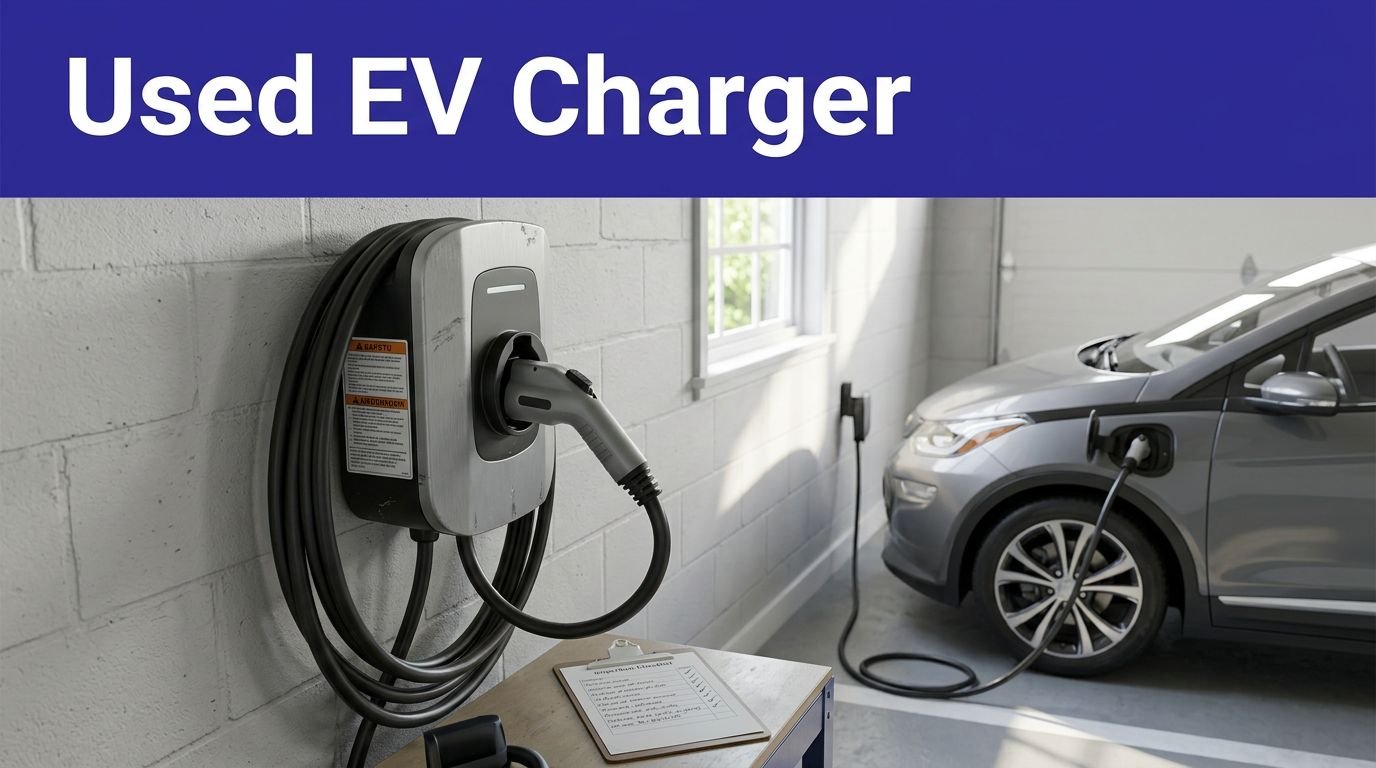
That new residential EV charger may look like a simple box, a cable, and a wall bracket. To the permit office, however, your new EV charging station represents a significant continuous electrical load connected directly to your home.
So, do you need an EV charger installation permit? Usually, yes, especially if you are adding a 240-volt circuit, installing a NEMA 14-50 outlet, or hardwiring a Level 2 charger. While a basic plug-in setup might occasionally be treated differently, your local building department always has the final word on compliance.
Here is where the answer stops being simple and starts becoming specific to your location.
Key Takeaways
- Most Level 2 EV charging station installations require an electrical permit and a professional inspection.
- Standard plug-in Level 1 charging usually does not require new permitting if no wiring changes are made, unlike the installation of a Level 2 charger.
- Installing a 240-volt outlet for a charger generally requires a permit, even if the charger itself plugs in rather than being hardwired.
- Your electrician must carefully evaluate your home’s electrical system to account for continuous load, circuit capacity, grounding, GFCI protection, and local code requirements.
- A permit protects more than just paperwork. It creates a verified record that the installation passed a professional inspection and meets safety standards.
When an EV Charger Permit Is Usually Required
The basic rule is easy: new electrical work usually needs approval.
That includes running a new branch circuit, adding a breaker, installing a 240-volt outlet, upgrading a service panel, or mounting a permanently connected Level 2 EVSE. EVSE stands for Electric Vehicle Supply Equipment, which is the official technical term for the hardware that supplies power to your vehicle.
The charger does not get a free pass just because it came in a neat retail box.
A Level 2 charger normally uses 208 or 240 volts. It also runs for hours at a time, which makes it a continuous load under the National Electrical Code. That combination brings the installation under electrical permitting rules in most U.S. jurisdictions.
Los Angeles County, for example, states that a permit is required to install an EV charger. San Diego’s consumer guidance also says a Level 2 charger installation requires a building permit and inspection before use. You can review the Los Angeles County EV permitting process and San Diego’s Level 2 installation guidance for examples of how local requirements are written.
A permit is also likely when the project includes:
- A new 240-volt circuit
- A new outlet or junction box
- Trenching or underground conduit
- Outdoor wiring
- A panel upgrade
- A load-management device
- A disconnect switch
- Work in a condominium, apartment, or commercial garage
When dealing with commercial EV charging, the rules become more complex. Projects in public or business spaces often require ADA compliance to ensure that accessible parking spaces meet specific installation standards for users with disabilities.
Here is the part that confuses people. The charger and the circuit feeding it are separate pieces of the project. You may buy a plug-in wall unit, but if an electrician has to install the outlet, that electrical permit is almost always mandatory for the new circuit.
The authority having jurisdiction, or AHJ, is the local building or electrical department responsible for deciding. Your neighbor’s experience in another town does not control your project. Neither does a comment from a person online who says their cousin installed three chargers without any problems.
Why Local Electrical Codes Matter
Installing an EV charger at home involves more than just bringing power to your vehicle. The electrical system must be properly configured to manage heat, current, weather exposure, and physical damage, while meeting strict safety standards.
The National Electrical Code provides the model safety rules for these projects. Local governments adopt specific code editions, sometimes with unique amendments, meaning the electrical code requirements in one city may differ significantly from those in the next county. Furthermore, requirements for a single-family dwelling can often differ from those for multi-unit properties or other structures.
A qualified professional will assess your electrical panel, available breaker space, conductor size, grounding, and the distance between the panel and the charging station. Performing accurate load calculations will determine whether your existing service can handle the additional demand or if the home requires a service upgrade or a managed charging solution.
A 40-amp charging output typically requires a 50-amp circuit because EV charging is classified as a continuous load. Similarly, a 48-amp output generally requires a 60-amp circuit. This arithmetic relies on sizing the circuit for 125 percent of the continuous charging load.
However, installing a 50-amp breaker does not mean every installation uses the same wiring. The correct conductor size depends on installation conditions, insulation ratings, temperature limits, conduit requirements, and local rules. This is the point where relying on an online tutorial stops being a plan and starts becoming a costly conversation with an inspector.
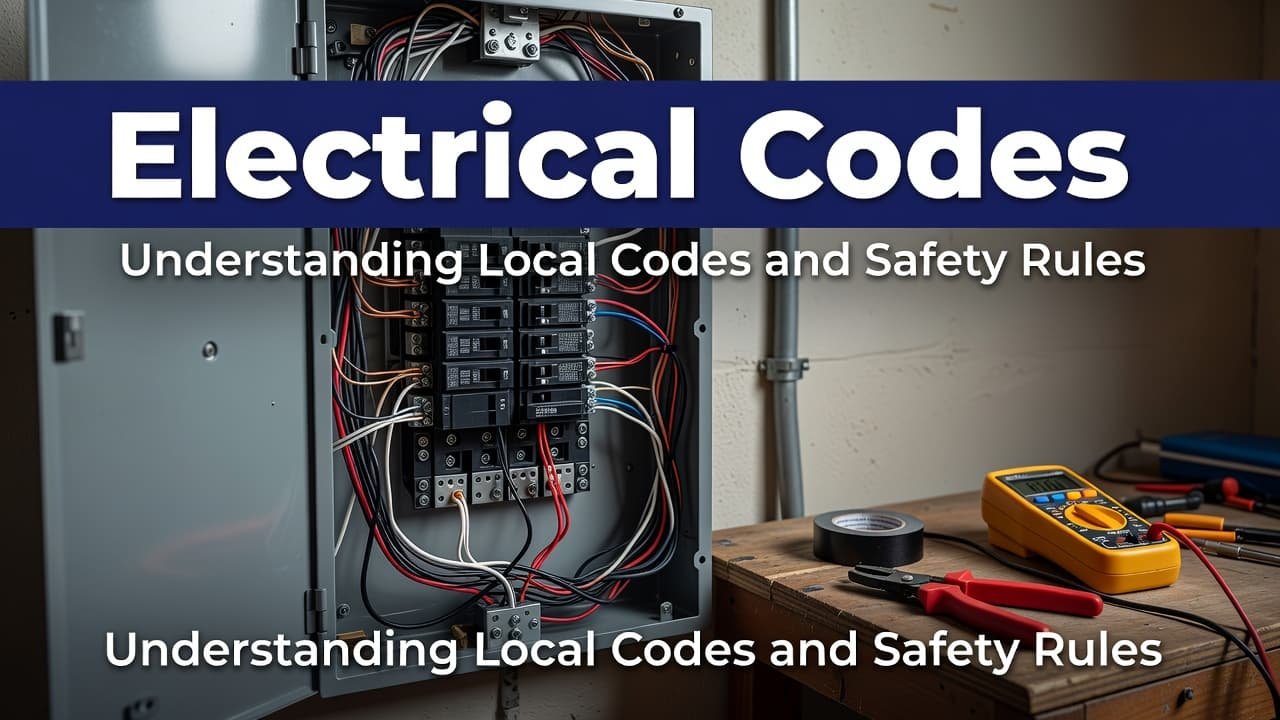
Common code concerns include:
- A dedicated circuit: Most Level 2 EVSE must have an individual branch circuit rather than sharing power with a dryer, garage receptacles, or lighting.
- Overcurrent protection: The breaker and conductors must match the charger’s configured output and the equipment manufacturer’s instructions.
- Ground-fault protection: Receptacles supplying EV charging equipment generally require GFCI protection under current NEC rules.
- Listed equipment: The charger should be UL listed to ensure it meets recognized safety standards required by local code.
- Outdoor protection: Exterior receptacles and equipment need weather-resistant protection and suitable enclosures.
- Mounting and clearances: The EVSE must be installed at a safe height and location, away from likely vehicle impact and water exposure.
Code editions matter. A rule appearing in the 2026 NEC is not automatically enforceable everywhere the moment it is released. Your local jurisdiction may still use an earlier adopted edition, or it may incorporate its own regional amendments.
This is why a permit application asks for the specific charger model, circuit details, installation location, and sometimes detailed load calculations. The documentation is tied to the technical specifics of your actual installation rather than a vague promise to add a charger at some point in the future.
When You May Not Need a Permit
There are limited situations where a permit may not be necessary.

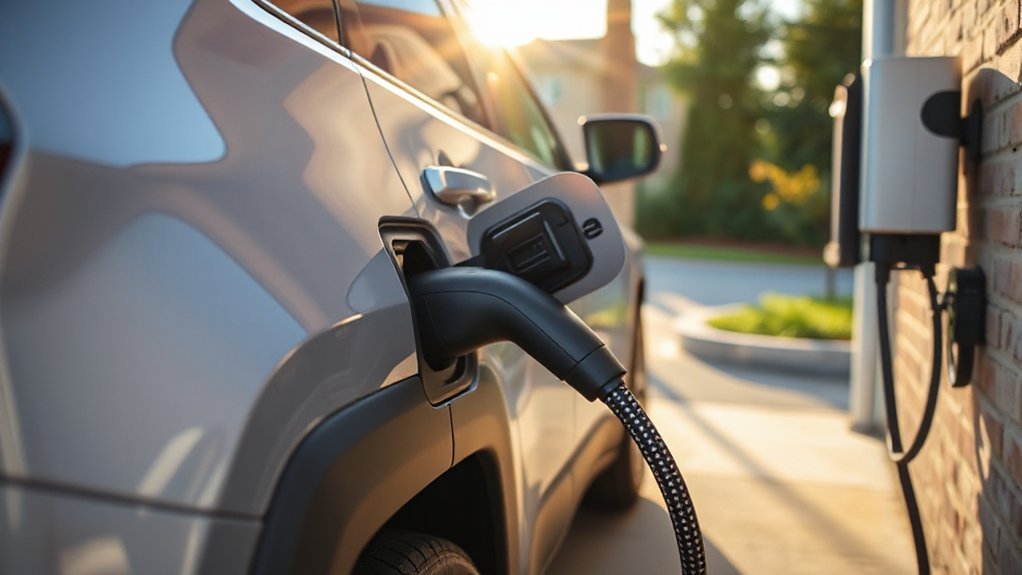
The clearest example is Level 1 charging through an existing, properly installed 120-volt household receptacle. If you are plugging in a portable charging cord and no wiring changes are needed, there may be no electrical work to permit.
A plug-in Level 2 charger connected to an existing, correctly rated 240-volt receptacle may also avoid a new permit in some jurisdictions. The key phrase is existing and properly rated. The outlet must already be suitable for the charger, and the circuit must support its continuous load.
That exception does not cover installing a new outlet. It also does not cover replacing a small breaker with a larger one, changing conductors, extending wiring, or modifying the panel.
Some jurisdictions require a permit for EV charging equipment even when the charger plugs into an existing receptacle. Others may exempt certain replacements or minor work. There is not one nationwide answer that you can safely apply to every garage in America.
Call your local building department before installation and ask four direct questions:
- Does this charger require an electrical permit?
- Does installing or replacing the receptacle require one?
- Will the work need an inspection before the charger can operate?
- What is the typical permitting timeline for this type of residential project?
Have the charger model, amperage, voltage, mounting location, and receptacle type ready. It is the normal Tesla one is not a technical specification, even if the person at the counter has heard it 400 times.
How the EV Charger Permit and Inspection Process Works
In many cases, a licensed electrician handles the entire permit application process. This approach keeps the project moving smoothly and reduces the chance that the application describes one installation while the garage contains another, ensuring your home charging system remains code-compliant.
The process usually follows this pattern:
- The site gets evaluated. The electrician checks your electrical panel, total service capacity, cable route, mounting surface, and indoor or outdoor location.
- The equipment is selected. The charger output, circuit rating, wiring method, disconnect needs, and specific mounting instructions are confirmed.
- The electrical permit application is submitted. The local jurisdiction often requests an electrical plan, load calculation, site plan, single line diagram, manufacturer instructions, and project details to complete the plan check.
- The installation is completed. The electrician installs the circuit, protection, conduit, receptacle or hardwired connection, and the charger itself.
- An inspection takes place. The inspector checks the completed work against the approved application and local electrical codes.
- Corrections are completed if needed. The installer fixes any identified issues and schedules a reinspection before final approval.
Permit fees vary by location and project scope. A simple branch circuit installation may have a different cost than a panel upgrade, trench, or service change. Always ask whether the quote from your professional includes the permit fees, plan review costs, inspection fees, and any potential reinspection charges.
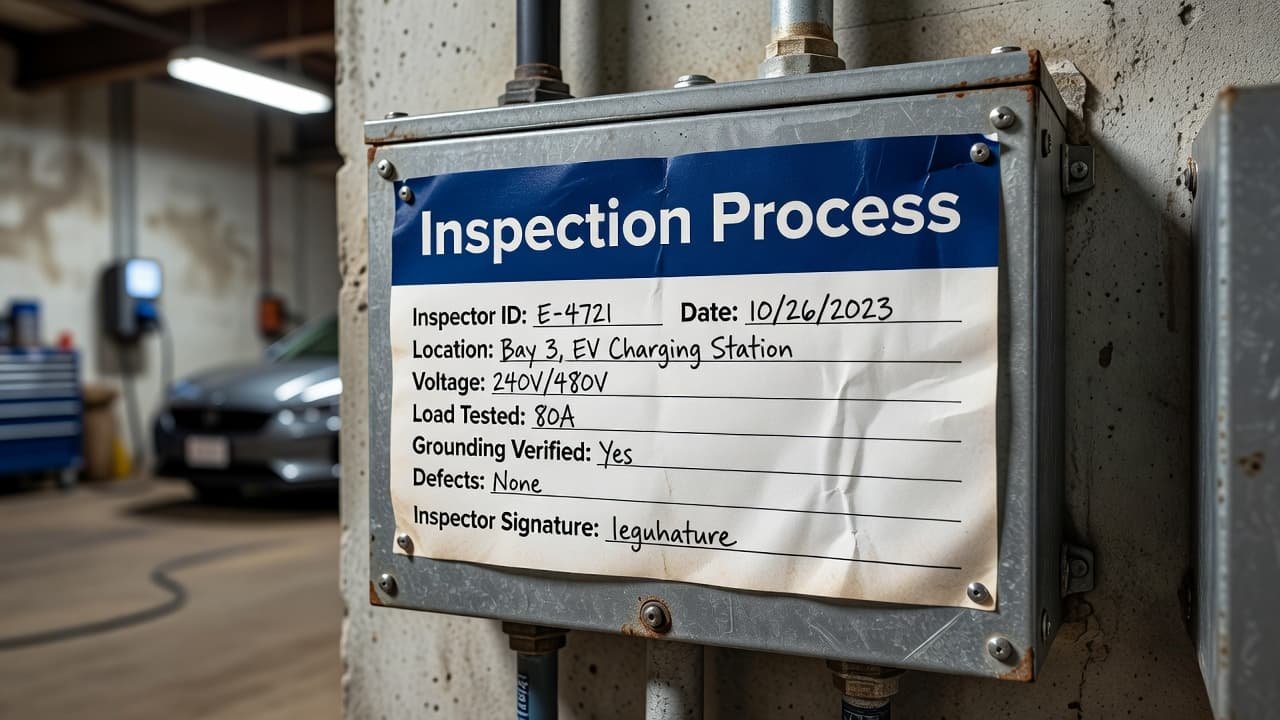
During the final visit, the official will verify that your setup meets all installation requirements and safety standards, including:
- Breaker size and conductor sizing
- Grounding and bonding at the electrical panel
- GFCI protection where required
- Circuit labeling
- Charger listing and installation instructions
- Conduit, fittings, and physical protection
- Mounting height and clearances
- Weatherproofing for outdoor equipment
- Disconnect access when the installation requires one
Keep the approved permit and final inspection record in a safe place. Future buyers, insurers, electricians, and inspectors may need proof that the work was completed legally and safely.
What Happens If You Skip the Permit?
Skipping a required permit does not make the work disappear. Instead, it turns your new EV charging station into an unrecorded modification that may surface when you sell, refinance, insure, or remodel your home.
An inspector can require the wiring to be exposed for review. A buyer inspection report may flag the charger, and the local authority may ultimately require a retroactive permit, costly correction work, or the total removal of the equipment.
Insurance questions can also become uncomfortable after an electrical fire. No one wants to discuss a missing permit while standing beside a damaged panel and a charger that was installed by a friend who simply knows a bit about wiring.
There are significant safety concerns as well. A loose termination or an undersized conductor may function for months before heat damages the connection and the broader electrical system. Because EV charging can run continuously overnight when nobody is in the garage watching for a problem, these risks are amplified.
While a permit is not a guarantee that nothing can fail, it ensures the inspection process is followed. This creates a vital safety check and an official record of the qualified professional who performed the work.
How to Prepare Before Calling an Electrician
You can make your initial consultation much faster and more productive by gathering the following details before you speak with a professional:
- Charger brand and model
- The manufacturer data sheet for your specific device
- Maximum charging amperage
- Hardwired or plug-in design
- Indoor or outdoor installation location
- Distance to the electrical panel
- Existing receptacle type, if one is already installed
- Main service rating, such as 100 or 200 amps
- Photos of the electrical panel, garage wall, and the proposed cable route
When you contact a professional, always verify their contractor license to ensure they are qualified to perform residential electrical work in your area. Ask the electrician to explain their load calculations in plain language to ensure your home can support the additional power draw. If your electrical panel is already at capacity, the solution may involve a panel upgrade, adjusting to a lower charger setting, or installing an energy management system that prevents the charger from running at full output when other large appliances are active.
Finally, remember to check with your HOA, condo association, landlord, and local utility provider regarding their specific requirements. Obtaining their approval is a separate process from securing a city permit, and one cannot replace the other.
Frequently Asked Questions
Do I need a permit if I am only plugging in my charger to an existing outlet?
If you are using a portable charger with an existing, properly rated household receptacle and no new wiring is required, you may not need a permit. However, local regulations vary significantly, so it is best to verify with your local building department before proceeding.
Can my electrician handle the permit application for me?
Yes, in many cases, a licensed electrician will manage the entire permit process as part of their service. This is often the preferred route, as it ensures that the documentation accurately reflects the technical installation and meets all local code requirements.
What are the risks of installing an EV charger without a permit?
Skipping the permit creates an unrecorded modification that can lead to problems during home sales, insurance claims, or future inspections. Beyond the paperwork, there are critical safety risks, as unpermitted work may fail to account for the continuous electrical load or proper grounding required to prevent overheating and fire hazards.
How much does an EV charger permit cost?
Permit fees are determined by your local jurisdiction and can vary based on the scope of the electrical work, such as whether a new circuit is being added or a panel upgrade is necessary. You should ask your electrician to clarify if their quote includes permit fees, plan review costs, and inspection charges.
Conclusion
Installing a Level 2 charger usually requires a permit when the project involves new 240-volt wiring, a new receptacle, or a dedicated hardwired circuit. While Level 1 charging through an existing outlet may not always trigger this requirement, your local building authority ultimately decides the rules for your EV charging station.
We recommend contacting your local Authority Having Jurisdiction or consulting with a licensed professional before purchasing cable, breakers, or conduit. Securing the proper EV charger installation permit is a small step compared to the frustration of opening a wall later, explaining unapproved work to a future home buyer, or discovering that your DIY project failed to meet essential safety standards. By following all local installation requirements, you ensure that your home charging setup remains safe, compliant, and efficient for years to come.
This post may contain affiliate links. If you make a purchase through these links, I may earn a small commission at no extra cost to you.