Determining the correct 60 amp wire size can feel complicated once you start looking at the requirements for a 60 amp breaker. It is common to hear conflicting advice, with some professionals recommending 6 AWG copper while others suggest 4 AWG copper, which can quickly turn a simple garage project into a source of confusion.
The short answer is that a 48-amp Level 2 EV charger on a 60-amp circuit usually requires 6 AWG copper THHN or THWN-2 when installed in conduit, or 4 AWG copper if you are using NM-B cable. The final requirement depends on the insulation type, temperature termination ratings, continuous-load electrical rules, and the specific installation method. It is vital to consider the quality of the copper wire and the installation environment to ensure safety. Before choosing your materials based on online suggestions, verify the specific load requirements and your wiring method to ensure your 60 amp breaker is safely supported.
Key Takeaways
- Since a 48-amp EV charger acts as a continuous load, the National Electrical Code requires the circuit to be sized at 125 percent, which necessitates a 60 amp breaker.
- When using conduit, 6 AWG copper wire with 75°C-rated terminations and THHN/THWN-2 conductors is often sufficient.
- Because of its stricter 60°C ampacity limit, 4 AWG copper is the standard choice when installing NM-B cable.
- Factors such as long cable runs, extreme ambient temperatures, conduit fill, and available panel capacity can alter your specific requirements.
- A licensed electrician should verify your installation design to ensure it meets the local code and the specific copper wire guidelines provided by the charger manufacturer.
The right 60 amp wire size depends on the wiring method
Choosing the correct 60 amp wire size is not as simple as picking one universal cable type. The proper selection depends on the conductor material, insulation type, temperature rating, and the specific installation method used for your charger.
For copper wire, NEC Table 310.16 lists 6 AWG copper at 65 amps when using the 75°C column. That appears to be the perfect match for a 60-amp circuit, but electrical codes are designed to ensure safety through strict limitations.
NM-B Romex cable is typically restricted to the 60°C column for ampacity calculations. Within this column, 6 AWG copper is rated for only 55 amps. Because the 125 percent continuous load rule requires a circuit to handle more than the charger’s maximum draw, this rating is insufficient for a 48-amp EV load. In contrast, 4 AWG copper has a 60°C ampacity of 70 amps, making it the standard requirement for a 60-amp circuit when utilizing NM-B Romex.
| Wiring method | Common copper conductor | Important condition |
|---|---|---|
| THHN/THWN-2 in conduit | 6 AWG copper | 75°C-rated terminations and proper installation |
| NM-B Romex cable | 4 AWG copper | Apply the 60°C ampacity limit |
| Larger or unusual installation | May require 4 AWG or larger | Check length, temperature, and correction factors |
Disagreements on this topic are common in online discussions, such as this EV wiring thread on Reddit. When selecting wire, one person might assume 6 AWG copper is always sufficient, but the more experienced approach considers the installation method and the terminal temperature rating. Using the wrong gauge can lead to overheating at the circuit breaker or the charger connection, which is why verifying the temperature rating of your components is vital.
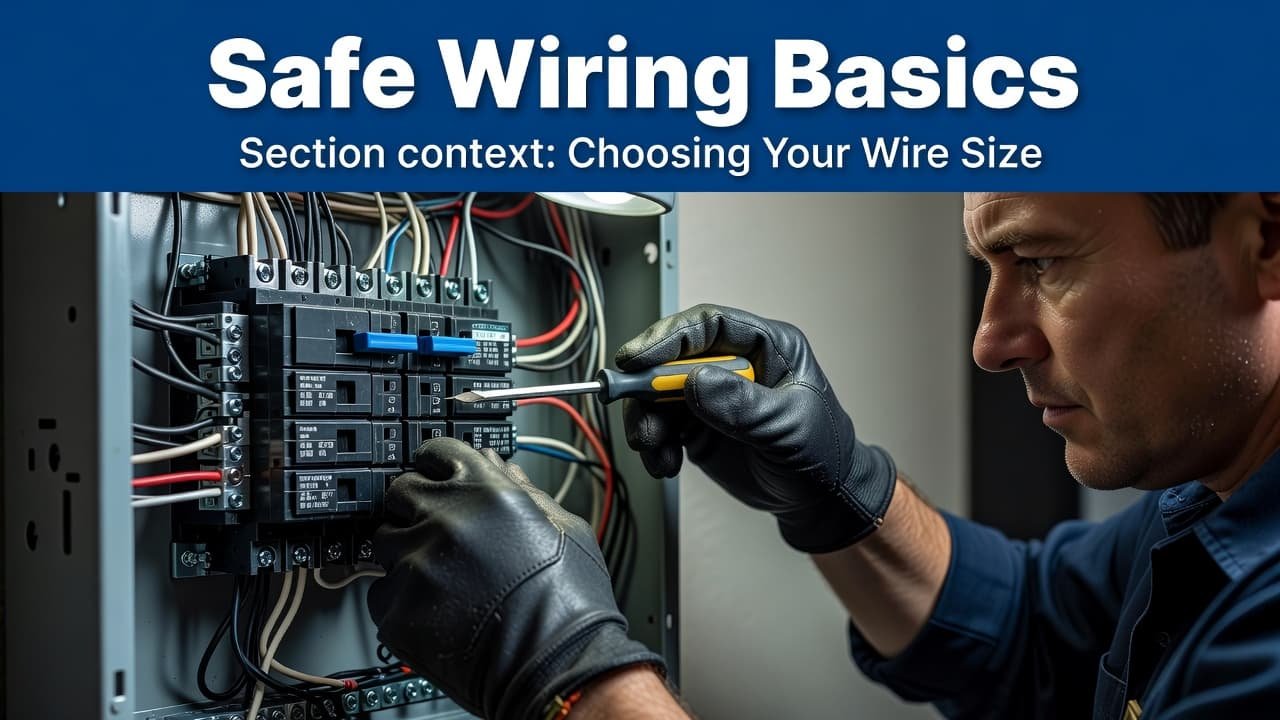
The safest practical answer for many residential installations is 4 AWG copper NM-B Romex or 6 AWG copper THHN/THWN-2 in conduit, provided the entire system is verified by a professional. Always confirm that your specific setup meets local codes for a 60 amp breaker before finalizing the installation.
Why a 48-amp EV charger needs a 60-amp circuit
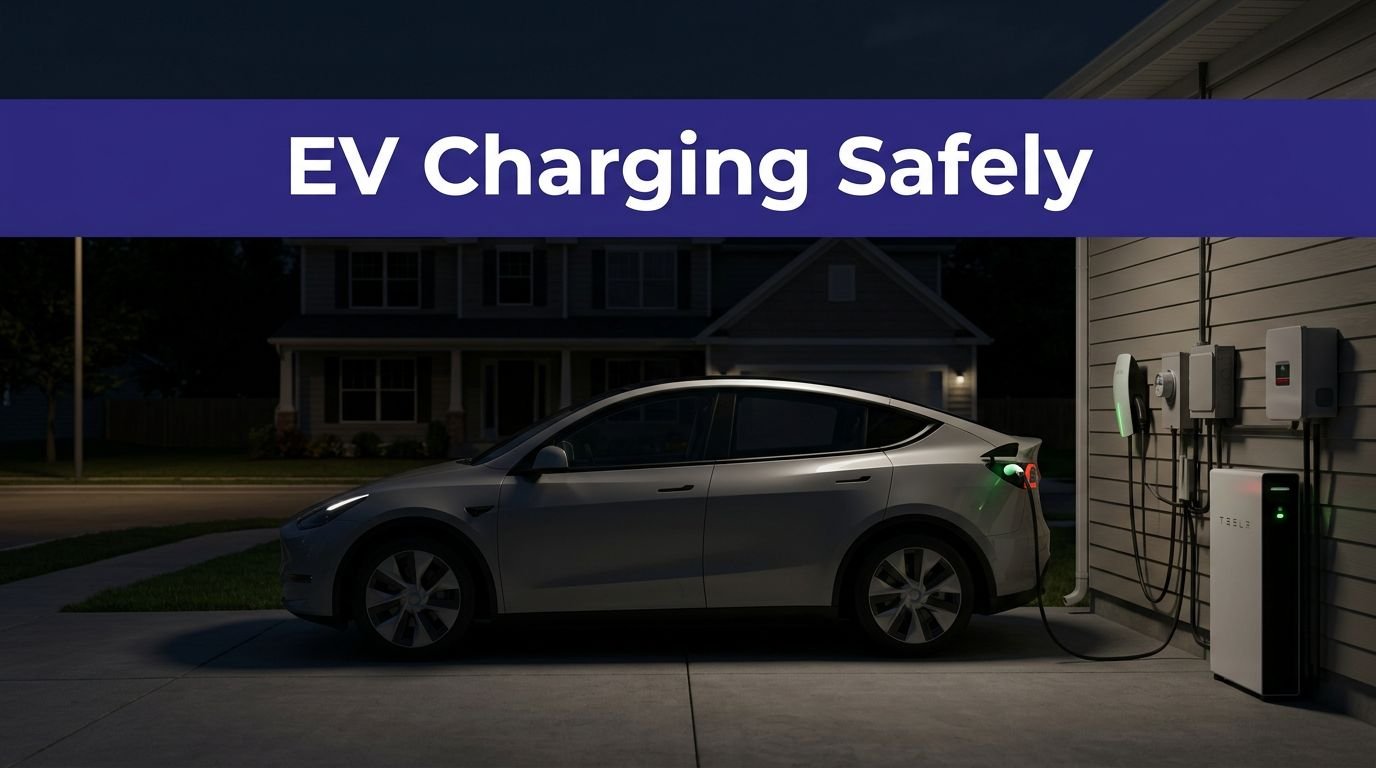
Home EV charging is not treated like plugging in a toaster for a few minutes. Because an EV charger acts as a continuous load, it may run for hours while pulling nearly the same current the entire time.
The National Electrical Code (NEC) addresses this through the 80% rule, which dictates that an overcurrent protection device should only be loaded to 80% of its capacity. Mathematically, this is the same as calculating the load at 125% of its rated current. For a 48-amp charger, the math works out as follows:
48 amps x 1.25 = 60 amps
This is why a 48-amp Level 2 charger requires a 60 amp breaker. The charger draws 48 amps, while the branch circuit is sized to maintain the required safety margin. This distinction is vital because a 60 amp breaker does not mean the vehicle charges at 60 amps. The circuit breaker protects the wiring from overheating, while the internal electronics of the EVSE control the actual charging current.
If the equipment is configured to draw 60 amps continuously, the calculation changes to:
60 amps x 1.25 = 75 amps
At that point, a 60-amp branch circuit is insufficient. The conductors, breaker, disconnects, panel equipment, and charger would all need to be sized for the larger load. Many residential chargers marketed as 60 amp units are actually 48-amp chargers that simply require a 60-amp circuit for installation. Always read the installation manual rather than relying on the product headline.
NEC Article 625 covers electric vehicle power transfer equipment, including the continuous load requirement found in Section 625.41. The Electrician Talk discussion about a 60-amp EV charger highlights why NM-B Romex often causes issues in this scenario. Because of the thermal constraints inherent in residential cabling, using the wrong gauge or wire type can lead to code violations.
The charger setting, circuit rating, and conductor ampacity must all align. If one of these components is mismatched, the installation is not code compliant.
Cable, conduit, and neutral conductors
The next question is not only which wire gauge you need, but what type of wiring belongs in your specific installation.
A hardwired 240-volt EV charger typically uses two ungrounded conductors, one hot leg on each phase, plus an equipment grounding conductor. A neutral usually is not needed for a charger that operates exclusively at 240 volts.

That often leads to the debate over the correct wire gauge for 6/2 versus 6/3 cable:
- 6/2 with ground has two insulated conductors and a grounding conductor. It is often sufficient for a 240-volt hardwired load when the manufacturer does not require a neutral.
- 6/3 with ground includes an additional neutral wire. This is often necessary for a NEMA 14-50 receptacle or equipment that requires both 120-volt and 240-volt paths.
- Individual THHN/THWN-2 conductors pulled through conduit offer more flexibility for routing and longer runs, though you must verify the conduit size, fill ratios, and protection requirements are strictly met.
A charger connected to a 14-50 receptacle involves a different installation process than a hardwired unit. The receptacle requires specific conductors based on its configuration, including a neutral where applicable. Even if the charger does not utilize that neutral, the receptacle wiring must comply with the code for that device.
A charger wiring question about 6/2 and 6/3 conductors is a good reminder that the equipment connection determines the conductor arrangement. Do not purchase cable based on a neighbor’s setup, as their charger, receptacle, wiring method, and local code may differ from yours.
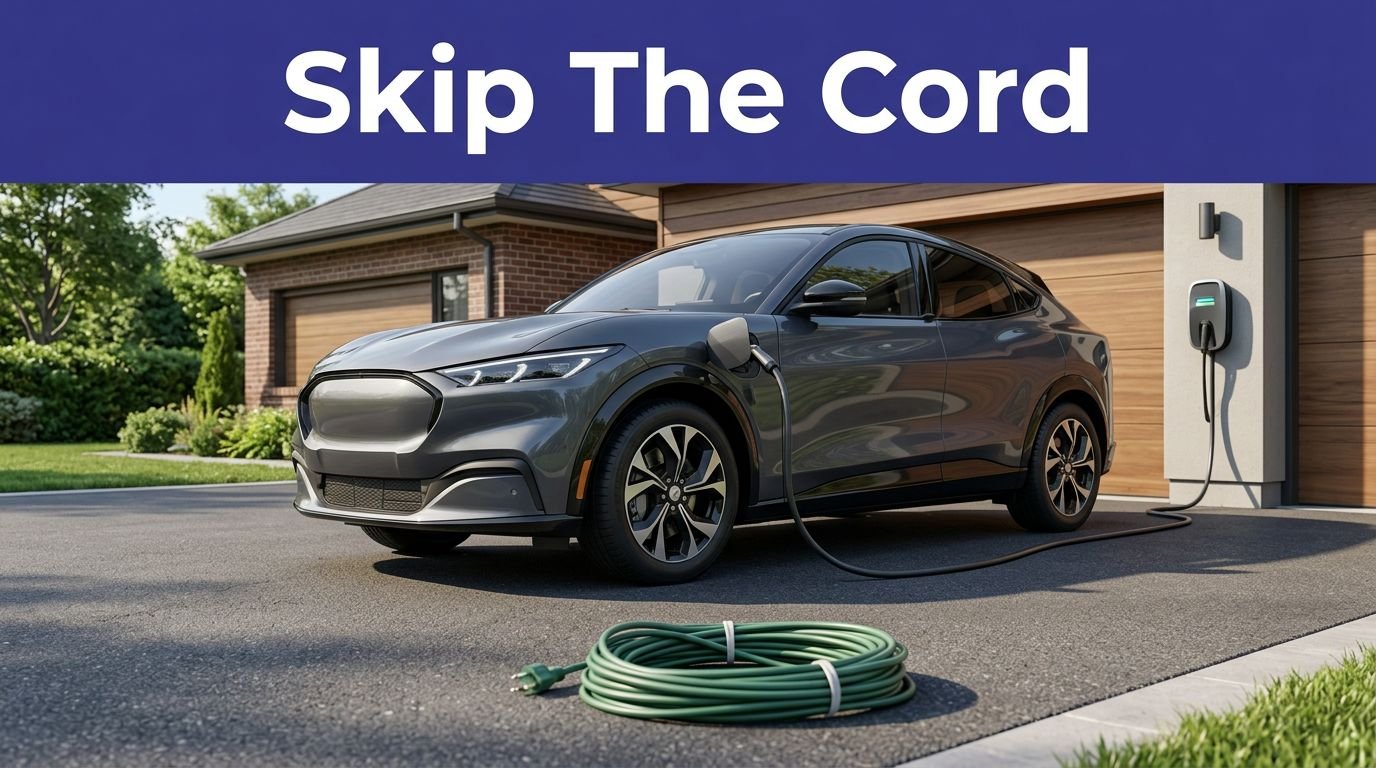
NM-B Romex can be convenient inside finished, dry residential spaces. However, it is not a universal outdoor or underground cable. Conduit installations often utilize THHN/THWN-2 copper wire because these conductors are rated for various environments when installed correctly.
For the equipment grounding conductor, NEC Table 250.122 commonly points to 10 AWG copper for a 60-amp circuit. If the ungrounded conductors are increased in size to account for voltage drop, the grounding conductor may also need to be increased proportionally under the adopted code to maintain proper ampacity and safety.
That last technical detail is where a quick hardware-store purchase can turn into a very expensive bundle of mistakes if you do not verify your requirements beforehand.
Run length, voltage drop, and panel capacity
A short run from a nearby panel to a garage charger is easier to size than a long run across a house or to a detached garage. When your charger is located in a distant building, installing a sub-panel is often the most practical solution.
Voltage drop is a primary concern for these long runs. The NEC treats a 3 percent branch-circuit voltage drop as a design recommendation rather than a blanket requirement, but significant drops can still reduce charging performance and increase conductor heating. An electrician can calculate the drop using conductor resistance, current, voltage, and the full circuit length.
For long distances, a 240-volt run may justify upsizing your conductors. While copper wire is standard, many professionals use aluminum wire to save on material costs for long feeder runs. For a 60-amp circuit, 3 AWG aluminum is a common and code-compliant alternative to #6 copper when feeding a sub-panel. When comparing aluminum wire to copper wire, remember that you must account for differences in ampacity and temperature rating. Always ensure your chosen conductor is rated for the environment, whether it is in a conduit or direct burial.
Temperature and conductor grouping also matter. Conductors in a hot attic, a crowded raceway, or a bundled installation may require ampacity correction or adjustment factors. While the 90 degree Celsius rating printed on THHN insulation assists with these calculations, it does not automatically allow you to exceed the temperature limitations of your breaker or charger terminals. In most cases, the equipment terminations dictate the final allowable ampacity.
Finally, your main service panel requires a professional load calculation. Adding a 60-amp EV circuit to a 100-amp service is not always impossible, but your existing loads must be evaluated. Electric ranges, heat pumps, water heaters, and clothes dryers all contribute to the total demand. If the main panel lacks capacity, installing a sub-panel can help manage load distribution more effectively. Regardless of the setup, a charger running overnight still counts toward your total load calculation, as the utility meter remains active 24 hours a day.
What a safe installation should confirm
Before the circuit breaker is installed, the electrician should verify the complete path from the electrical panel to the EVSE.
That includes:
- The charger’s maximum configured current and the required circuit rating for your 60 amp breaker.
- The conductor material, insulation type, wire gauge, and temperature rating for all connections.
- The compatibility of the circuit breaker with the panel and its 75°C termination rating, when applicable.
- The cable route, physical protection, wet-location exposure, conduit fill, and ambient temperature.
- The home’s service capacity and the local permit and inspection requirements.
- The grounding, disconnect, receptacle, and ground fault requirements for the chosen equipment.
A two-pole 60 amp breaker must be listed for the specific panel, not merely forced into an open space because it seems to fit. Your EV charger should also be installed according to its manufacturer instructions, which function as your primary guide for the overcurrent protection device, maximum conductor size, and specific connection methods.
If a receptacle is used, garage and outdoor installation rules may require ground fault protection. Those details vary with the adopted NEC edition and the local authority having jurisdiction.
The cleanest plan is to provide the electrician with the EV charger model, its installation manual, the panel information, and the approximate route length. Those four items answer more questions than a blurry photo of a breaker ever will.
Frequently Asked Questions
Can I use 6 AWG wire for a 60-amp EV charger installation?
While 6 AWG copper is rated for 65 amps under the 75°C column, it is only acceptable for certain installation methods, such as THHN or THWN-2 in conduit. If you are using NM-B Romex cable, the code restricts you to the 60°C column where 6 AWG is only rated for 55 amps, making it insufficient for a 60-amp circuit.
Why does my 48-amp EV charger require a 60-amp breaker?
The National Electrical Code treats EV charging as a continuous load, requiring the circuit to be sized at 125 percent of the charger’s maximum current draw. Since 48 amps multiplied by 1.25 equals 60 amps, a 60-amp breaker is necessary to satisfy these safety regulations and prevent nuisance tripping.
Do I need a neutral wire for my EV charger installation?
Most hardwired 240-volt EV chargers do not require a neutral wire because they only use two hot legs and a ground. However, if you are installing a NEMA 14-50 receptacle or using specific equipment that draws 120 volts for internal controls, a neutral wire must be included in the circuit.
Does wire length affect the gauge I should choose?
Yes, long cable runs can lead to voltage drop, which may decrease charging efficiency and increase heating within the conductors. In these cases, it is often recommended to upsize the wire gauge or use materials like aluminum to maintain proper voltage levels over the entire distance.
Conclusion
Determining the correct 60 amp wire size is essential for a reliable EV charger installation. When installing your 60 amp breaker, you must match the wire type to the specific wiring method used for the circuit.
For many installations, 6 AWG copper THHN in conduit is sufficient to handle the required load. However, if you are using NM-B Romex cable, you must step up to 4 AWG copper because of the stricter temperature limitations associated with that cable type. Whether you are selecting copper wire or considering aluminum wire for longer runs, always ensure your choice meets the necessary ampacity requirements for your specific setup. Carefully planning your circuit breaker selection and wiring will ensure your system remains safe and efficient during every charge.
This post may contain affiliate links. If you make a purchase through these links, I may earn a small commission at no extra cost to you.