An EV charger may look like a large phone charger with a car attached. That comparison ends the moment you ask extension cord EV charging to carry electricity for hours. A cheap household cord can become warm, overloaded, and unsafe long before your battery is full.
So, can you use an extension cord to charge an EV? For normal home charging, you shouldn’t. Electric Safety Foundation International says never use an extension cord or multiplug adapter with an electric vehicle. They stress that maintaining proper electrical safety means using only the charging cable supplied by the vehicle maker or an extension cable approved for that specific vehicle.
The reason isn’t that your car is being dramatic. The wiring has a real job to do, and it doesn’t appreciate improvisation. Here’s what can go wrong, what the electrical code expects, and what to do instead.
Key Takeaways
- Standard household extension cords aren’t a safe substitute for a dedicated EV charging outlet.
- EV charging is a continuous electrical load, often lasting several hours.
- The cord can trigger serious overheating risks at the plug, socket, or damaged section without tripping a breaker.
- A dedicated Level 2 charger paired with a dedicated circuit is the safer long-term solution for regular home charging.
- Always follow the vehicle and charging cable manufacturer’s instructions, plus local electrical requirements.
Why Extension Cord EV Charging Creates a Safety Problem
An EV draws power continuously. That’s the part people miss.
You plug in at 8 p.m., go inside, watch something questionable on television, fall asleep, and wake up at 6 a.m. The portable charger has been carrying electricity for most of the night. It isn’t handling a quick burst like a vacuum cleaner or a lawn trimmer.
A Level 1 charger usually connects to a standard 120-volt household receptacle. Charging may draw around 12 amps, depending on the vehicle and equipment settings. That load can continue for 10 hours or longer.
A household extension cord adds more connection points and more resistance. The plug may fit, but “fits” is a low bar. A cord can be plugged in and still be a poor choice for sustained EV charging.
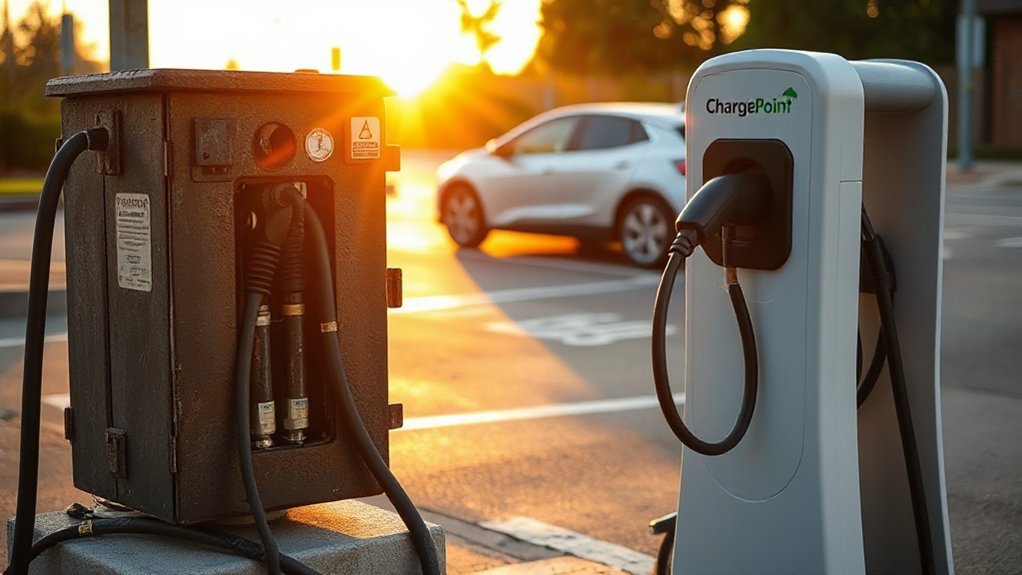
Heat is the main concern. Loose connections, worn receptacles, undersized conductors, coiled cable, crushed insulation, or corrosion can all increase heat. The warmth may build at the wall outlet or extension-cord plug rather than at the breaker panel. Your circuit breaker doesn’t inspect every inch of the cord like a tiny electrical detective. It reacts to the amperage rating, and a dangerous connection may heat up without drawing enough extra current to trip it.
Potential problems include:
- Melted plugs or receptacles
- Damaged insulation
- Voltage drop that affects charger performance
- Electric shock and fire hazards resulting from severe overheating risks
- A tripped circuit or damaged EVSE
The Electric Safety Foundation’s EV charging guidance gives the direct advice most drivers need: don’t use an extension cord or multiplug adapter for EV charging.
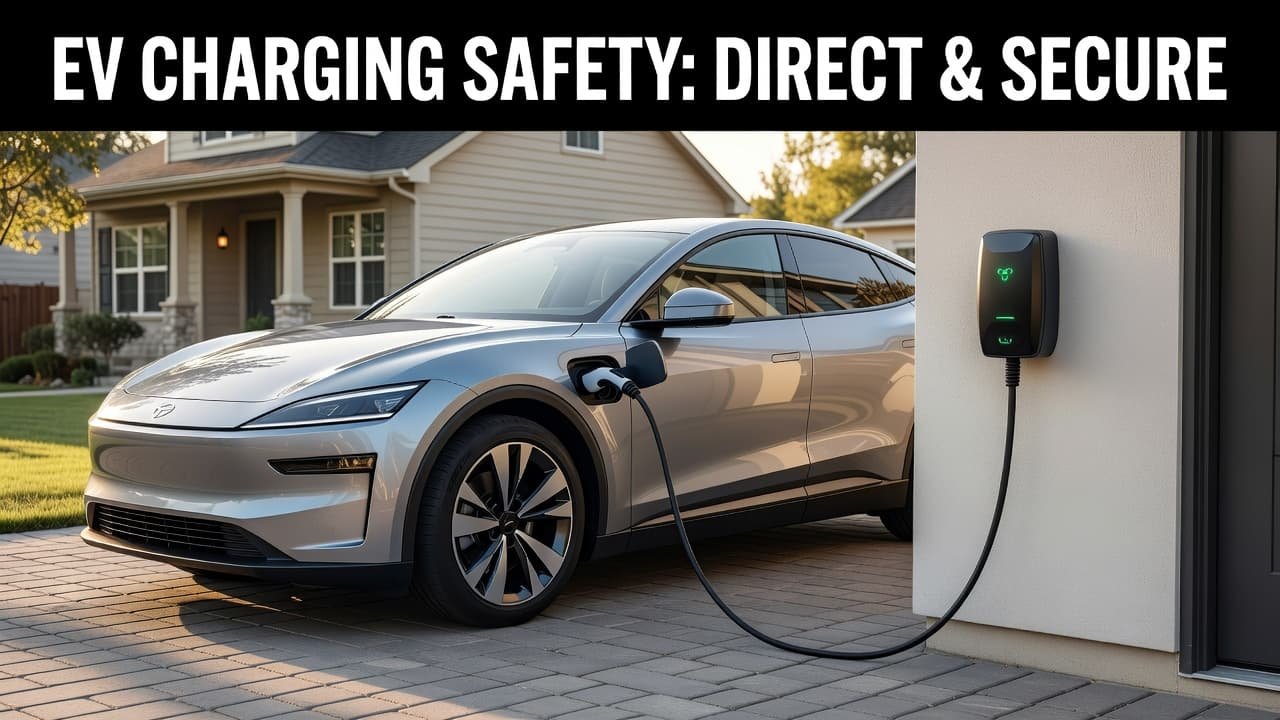
A dedicated charging station removes the extra connection that causes so many problems.
What the NEC Says About EV Charging Cords
In the United States, electric vehicle charging installations fall under NEC Article 625, which covers electric vehicle power transfer systems. The rules address circuit sizing, grounding, wiring methods, disconnects, and charging equipment.
The National Electrical Code also places limits on EVSE cable length. Code-based guidance commonly cites a maximum usable output cord length of 25 feet, unless the equipment includes an approved cable-management system. That limit applies to the EV charging equipment itself, whether it uses a standard J1772 connector or a Tesla NACS plug. It doesn’t mean you can add a 50-foot extension cable and call the whole setup compliant.
That distinction matters.
An EVSE, or electric vehicle supply equipment, isn’t simply a cable. It monitors the connection between the vehicle and the electrical supply. It can provide ground-fault protection and communicate the available current to the vehicle. A random extension cord doesn’t add those safety functions. It only adds more wire and another pair of connection points.
The circuit also needs proper sizing to handle strict power requirements. EV charging is treated as a continuous load under NEC-based calculations, which often necessitates a dedicated circuit for the hardware. A common example is a 32-amp charger on a 40-amp circuit, because the circuit is sized at 125% of the continuous charging load.
That doesn’t mean every 32-amp charger belongs on every 40-amp circuit. The breaker, conductors, receptacle, disconnect, panel capacity, and installation method all matter. A qualified electrician should verify the complete circuit rather than glance at the breaker and declare victory.
The SWEPCO explanation of charging station code requirements also discusses charger cord lengths and installation requirements. Local jurisdictions may adopt different NEC editions or add local rules, so your permit office and electrician have the final word.
The EVSE’s built-in cable length and a separate extension cord are not the same thing. One is part of listed charging equipment, the other usually isn’t.
Why “Heavy-Duty” Doesn’t Automatically Make a Cord Safe
This is where internet advice gets messy.
You may see recommendations for a 10-gauge or 12-gauge outdoor extension cord, preferably UL listed and featuring a weatherproof design. That sounds sensible. A heavy duty cord is generally better than a thin indoor cord, but better doesn’t make it an approved EV charging method.
The wire gauge is only one piece of the setup. You also need to consider:
- The EVSE’s current rating and amperage rating
- The outlet’s condition and rating
- The branch circuit’s capacity
- The plug and receptacle temperature
- The cord’s length
- Whether the cord is fully uncoiled
- Exposure to rain, snow, vehicles, and foot traffic
- The manufacturer’s instructions
- Local code and inspection requirements
A long cord also creates voltage drop. The farther electricity travels through a conductor, the more resistance it encounters. If the conductor is too small for the distance and load, the power delivery can falter as voltage at the charger falls. The vehicle may charge more slowly, stop charging, or report a fault.
Then there’s the physical problem. A heavy duty cord stretched across a driveway becomes a trip hazard. A tire can crush it. A garage door can pinch it. Water can collect around a connection. Someone can unplug it, step on it, or drag a grounded plug through dirt before connecting it to the vehicle.
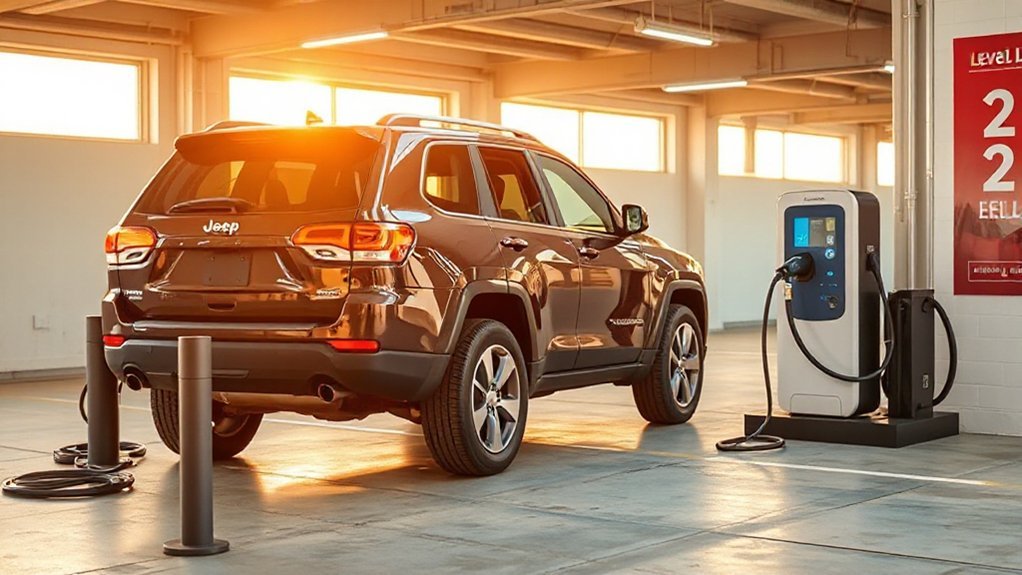
None of that becomes safe because the packaging says heavy duty.
Some EV owners use an extension cord for a short emergency charge. That may be tolerated in a specific situation by a particular manufacturer or electrician, but it isn’t a general recommendation. Your owner’s manual controls your vehicle. Chevrolet’s Bolt guidance, for example, warns against extension cords, power strips, splitters, grounding adapters, surge protectors, and similar devices.
When the manufacturer says no, the answer is no. The car doesn’t know that your heavy duty extension cord was expensive.
Can You Use an Extension Cord With a Level 1 Charger?
A Level 1 charger is the setup most likely to tempt people into using an extension cord. It uses a standard household outlet and adds only a modest amount of range each hour. If the outlet is 30 feet from the driveway, the solution appears obvious.
The safer answer is to install a properly located receptacle instead.
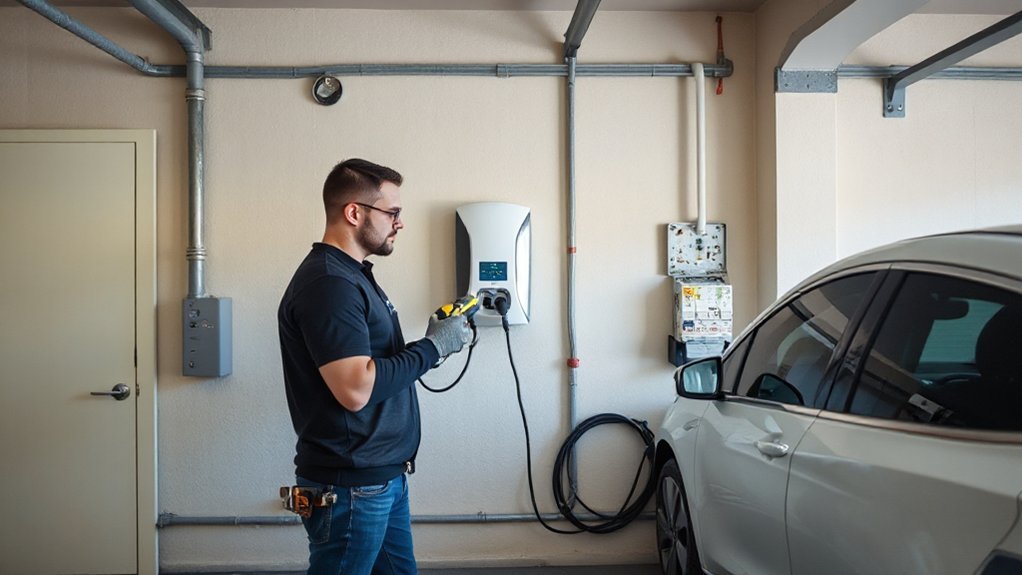
Have an electrician inspect the existing outlet before relying on it for overnight charging. Older receptacles may have worn contacts, loose wiring, reversed polarity, missing grounding, or connections shared with other high-load appliances. A receptacle that handles a lamp perfectly may not be suitable for hours of EV charging.
The outlet should feature a properly grounded plug and be protected as required by the installation. Outdoor receptacles need weather-resistant equipment and appropriate covers. The charging circuit may also need GFCI protection, depending on the receptacle and local code requirements.
If your portable charger has adjustable current settings, use the manufacturer’s instructions. Lowering the charging current can reduce the electrical load, but it does not turn an extension cord into approved charging equipment. A smaller load is still a continuous load.
Watch for warning signs during charging:
- The plug or receptacle feels hot
- You smell melted plastic or burning insulation
- The EVSE stops and restarts
- The outlet is discolored
- The circuit breaker trips repeatedly
- The cord jacket is cracked, crushed, or wet
- The vehicle reports a charging fault
Stop charging if any of these occur, especially because overheating risks can quickly lead to severe fire hazards. Do not keep touching the plug to see whether it gets hotter. Electricity isn’t a cooking show.
Level 2 Charging Needs a Proper Circuit
Level 2 charging uses a 240-volt supply and can deliver much more power delivery than Level 1. Common home chargers operate at 30, 32, 40, or 48 amps, though the exact output depends on the vehicle, EVSE, and circuit.
That kind of load makes an ordinary extension cord an especially poor idea.
A Level 2 charger usually needs a dedicated circuit. Depending on the equipment and standards like J1772 or Tesla NACS, it may connect to a properly rated receptacle or be hardwired. An electrician must account for the panel’s available capacity, wire size, breaker, conduit, disconnect requirements, grounding, and location.
Hardwiring eliminates one plug connection, but it doesn’t remove the need for correct installation. The charger still needs to be listed for its use, installed according to its instructions, and protected by the required circuit equipment.
The choice between a receptacle and hardwired installation depends on the home charging station and your situation. A receptacle offers easier replacement if you change equipment, while hardwiring can reduce connection points and may suit a permanent installation. Neither approach should involve a household extension cord.
If your parking space is far from the electrical panel, ask about one of these options:
- Install a new receptacle closer to the vehicle.
- Install a hardwired EVSE near the parking space.
- Use a longer listed EVSE cable within its approved limits.
- Reconfigure the parking position or charging location.
- Use public charging until a safe home installation is ready.
A licensed electrician can also identify whether a load-management system or panel upgrade is needed. That costs more than buying a cord, but so does repairing a burned receptacle.
What to Do Instead of Using an Extension Cord
Start with the manufacturer’s instructions for both the car and the EVSE. Look for language about an extension cable, outdoor use, current settings, receptacle requirements, and power delivery.
Next, identify the charging level you actually need. If you drive a short distance each day, a correctly installed Level 1 outlet may be enough. If you need reliable overnight recovery, a Level 2 charger may save time and reduce the temptation to build a cable maze across the driveway.
Use equipment with recognized safety certification, such as UL or ETL, and buy from a reputable manufacturer. Certification doesn’t excuse poor installation, but it helps distinguish tested EVSE equipment from an anonymous charging cable with impressive packaging.
Keep your electrical safety in mind by protecting the charging cable from standing water, vehicle traffic, sharp edges, and excessive bending. Ensure any setup uses a grounded plug and a weatherproof design to prevent fire hazards. Don’t use a damaged cable. Don’t cover a warm cable with a rug or pile it under objects. Don’t connect power strips, splitters, adapters, or multiple extension cords to reach the car.
If a dedicated outlet isn’t available tonight, use a public AC charger or DC fast charger instead. A few dollars at a charging station is cheaper than replacing an outlet, repairing an EVSE, or explaining a preventable fire to your insurance company.
Frequently Asked Questions
Can I use a heavy-duty extension cord for my EV in an emergency?
While some manufacturers or electricians may tolerate an extension cord for a very brief emergency charge, it is generally discouraged. Even a heavy-duty cord adds extra resistance and connection points that can cause dangerous overheating during a continuous electrical load.
Why does EV charging cause standard extension cords to overheat?
Electric vehicle charging is a continuous electrical load that often lasts for many hours overnight. This prolonged current flow can cause heat to build up at the plug, socket, or any damaged section of the cord without necessarily drawing enough extra current to trip your circuit breaker.
What is the best alternative if my EV charger won’t reach the outlet?
The safest solution is to have a licensed electrician install a new, dedicated receptacle closer to your parking space or set up a hardwired Level 2 charging station. You can also utilize public charging stations while arranging for a proper home installation.
The Safe Answer on Extension Cord EV Charging
For ordinary home use, extension cord EV charging isn’t a safe or code-friendly solution. The problem isn’t only the cord’s thickness. It includes the outlet, circuit, connections, environment, equipment listing, and the manufacturer’s rules.
A properly installed Level 1 charger or Level 2 charger gives your electric vehicle a charging path designed for the load. It also keeps the cable where it belongs, instead of turning your driveway into an obstacle course with a battery at the end.
That extension cord may look harmless at first. If the car needs several hours of power, treat the setup like the continuous electrical load it is. Prioritize electrical safety by using approved charging equipment connected directly to a suitable outlet or hardwired circuit. That is the boring answer, which is exactly what you want when the alternative involves heat, smoke, and a very expensive vehicle.
This post may contain affiliate links. If you make a purchase through these links, I may earn a small commission at no extra cost to you.