Your home EV charger spends most of its life sitting on the wall, looking innocent. Then one rainy Tuesday, it flashes an error, refuses to charge, and suddenly you’re negotiating with your car like it has a personal grudge.
Regular EV charger maintenance prevents many of those surprises. A few simple visual checks can catch damaged cables, loose mounting, overheating, moisture, or software problems before they turn into a no-charge morning, while electrical work belongs to a qualified electrician.
This post may contain affiliate links. If you make a purchase through these links, I may earn a small commission at no extra cost to you.
Key Takeaways
- Inspect the cable, connector, charger housing, and warning lights before every charging session.
- Keep the charger clean, dry, well-ventilated, and firmly mounted, while storing the cable loosely to prevent wear and tear.
- Watch for heat, burning smells, unusual sounds, water intrusion, damaged parts, or repeated breaker trips, and stop using the charger if they appear.
- Handle only exterior checks and basic troubleshooting at home; internal electrical work belongs to a qualified electrician.
- Keep software current and record error codes, failed sessions, inspections, and repairs to spot recurring problems early.
Why EV charger maintenance matters at home
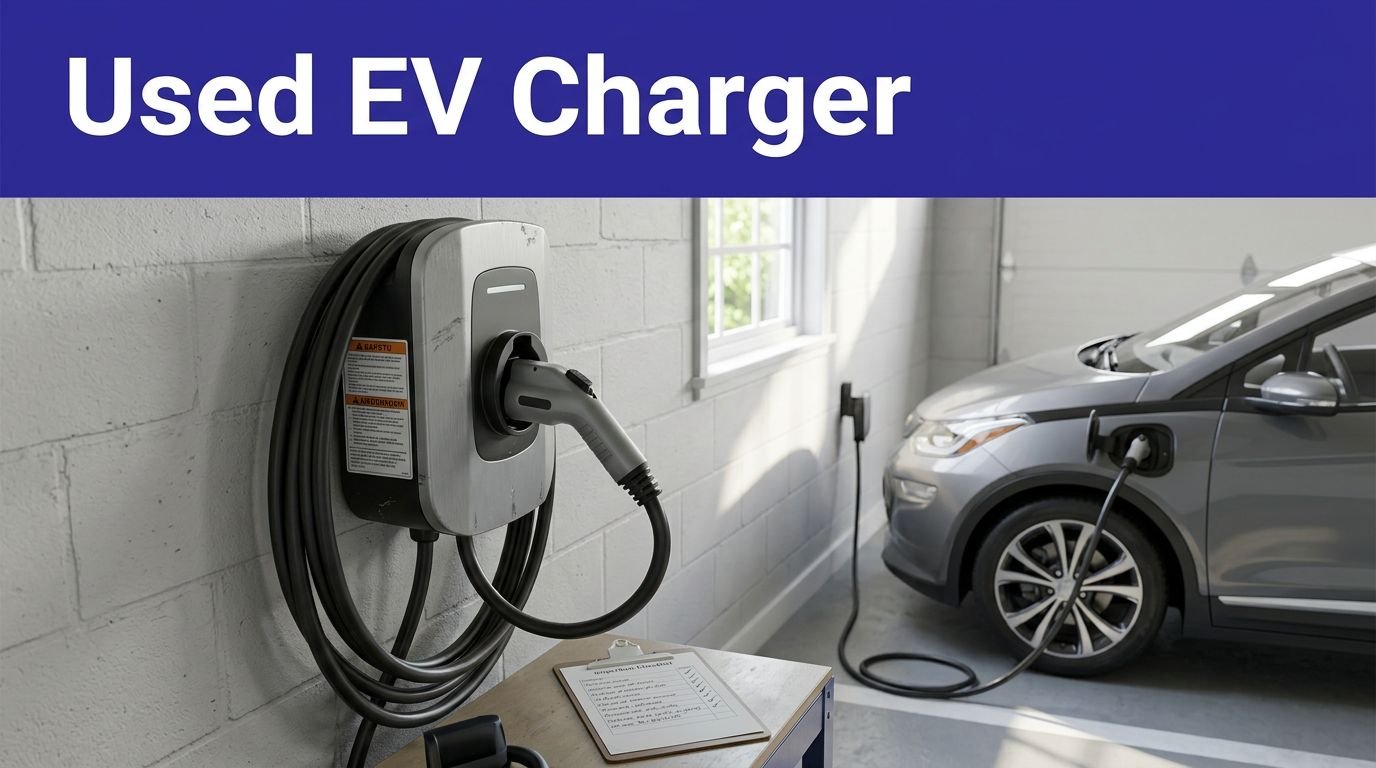
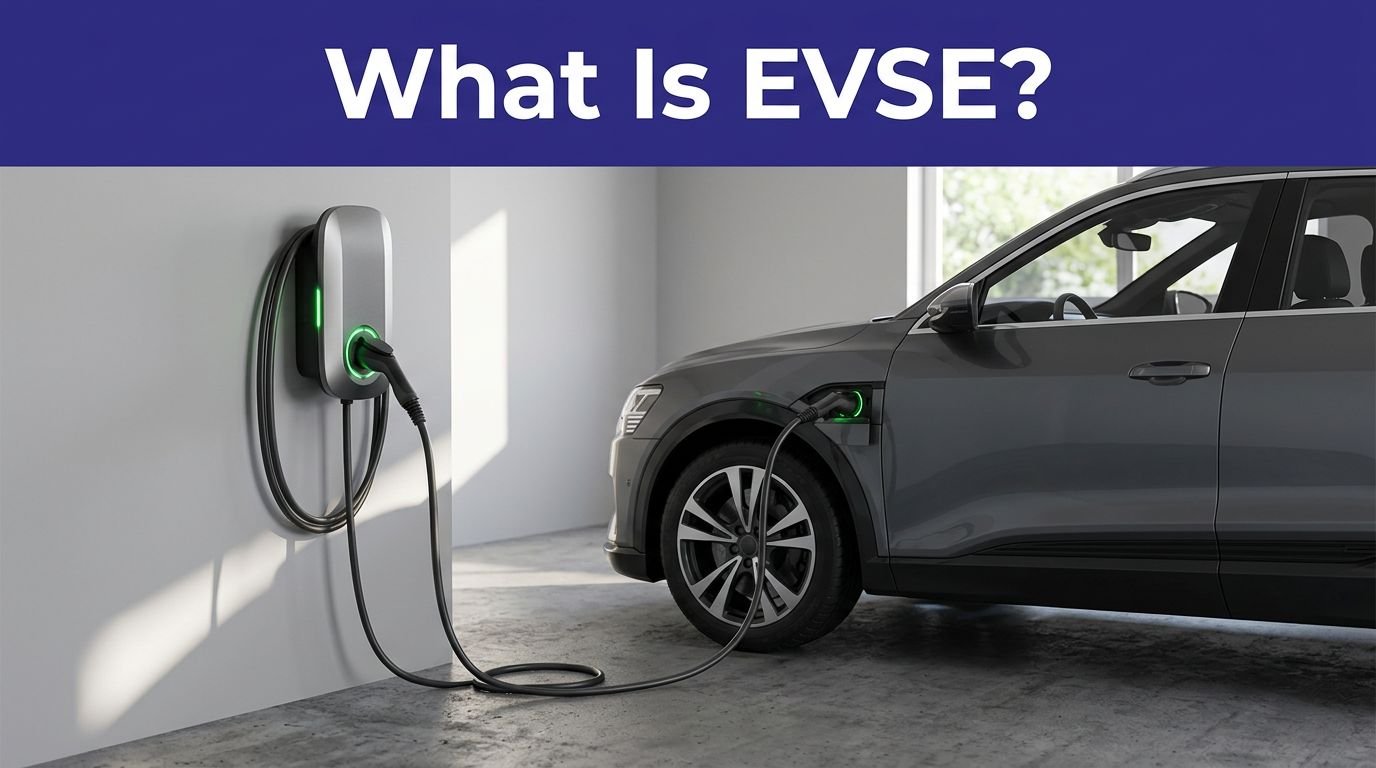
Home Level 2 chargers are a type of electric vehicle charging station, also known as electric vehicle supply equipment or EVSE. Unlike commercial EV charging stations, they usually have fewer connectors, no payment terminal, and less public abuse. Still, basic charging station maintenance is needed, and preventative maintenance helps identify problems before a charging interruption.
The equipment still handles high electrical loads for hours at a time. Heat, dust, water, sunlight, and other environmental factors add to the wear and tear. So does the person who drags the cable across the driveway like they’re pulling a stubborn garden hose.
A damaged connector can cause poor contact and heat. A worn cable can expose conductors. A loose wall unit can put stress on the wiring behind it. Repeated breaker trips may point to a circuit problem, a ground-fault issue, or a failing charger. Software updates can affect reliability, even when the hardware looks fine.
The visual inspection guidance from Skywell focuses on the things homeowners can spot first, including visible damage, loose connections, and signs of wear. Those same visual habits can support a broader fleet maintenance program. That first look matters because you don’t need a multimeter to notice a cracked plug or a cable that smells like burnt plastic.
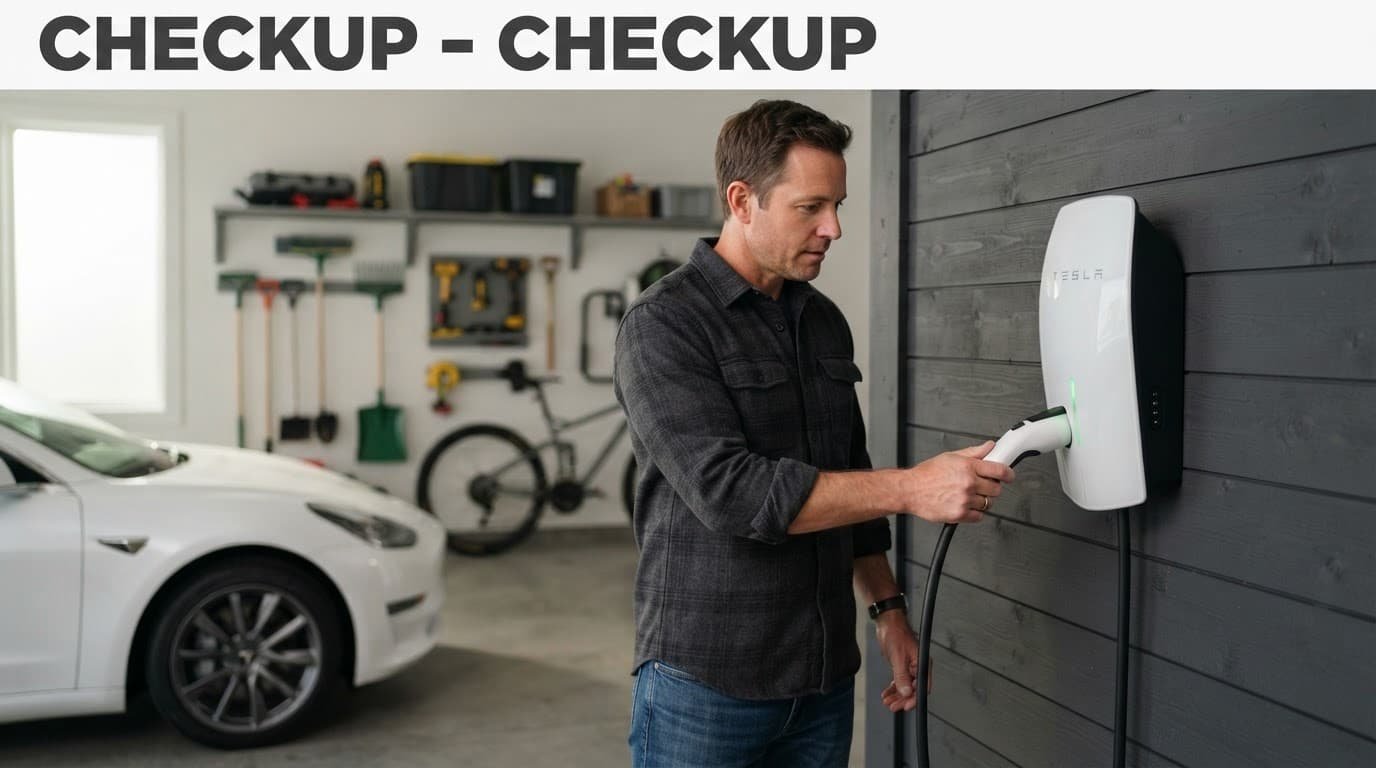
If anything looks burned, melted, cracked, wet inside, or unusually hot, stop using the charger. Don’t perform the classic homeowner move of staring at it harder and hoping the problem becomes embarrassed.
A monthly home EV charger maintenance checklist
You don’t need a tool belt, a certification, or a dramatic soundtrack. Most charging station maintenance checks take only a few minutes.
Before every charging session
Give the charging plugs and cables a quick look before plugging in:
- Check the cable for cuts, crushed sections, exposed wires, kinks, or flattened spots.
- Inspect the vehicle plug and charger socket for dirt, corrosion, bent contacts, or melted plastic.
- Make sure the connector clicks firmly into the vehicle and doesn’t hang loosely.
- Look at the charger lights or app for fault warnings before leaving the car unattended.
- Keep the connector off the ground and away from standing water, snow, oil, and driveway traffic.
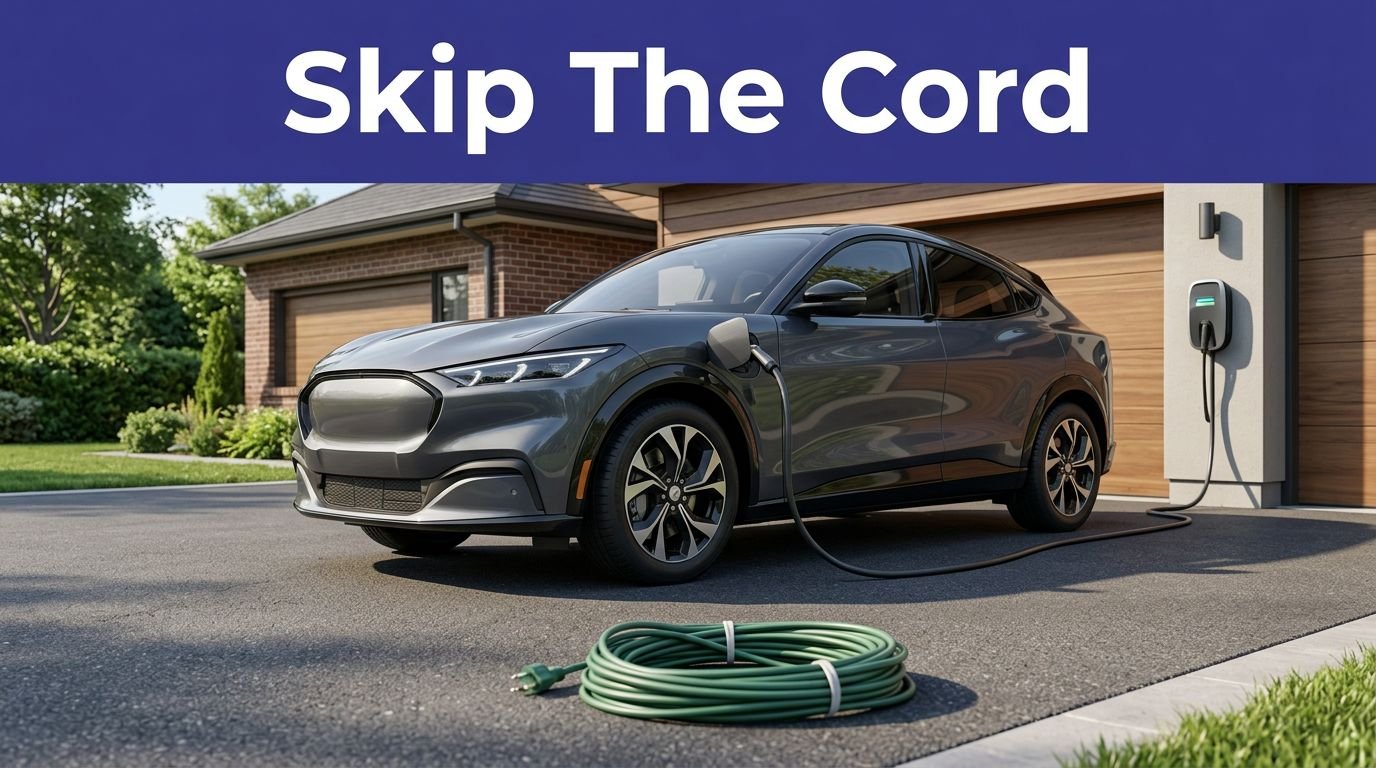
Don’t use an extension cord or power strip with a home EV charger unless the manufacturer expressly allows that setup. Most aren’t designed for the continuous current involved. An extension cord that feels fine while running a lamp can become dangerously hot during a long EV charging session.
Once a month
Wipe the outside of the charger with a dry or slightly damp cloth, following the manufacturer’s cleaning instructions. Never spray water into vents, sockets, buttons, or cable connections. A pressure washer has no place near an EVSE, no matter how satisfying it looks in other parts of the garage.
Check that the wall unit remains firmly attached. Look for new gaps between the housing and wall, loose screws, damaged conduit, or cable strain near the entry point. Don’t remove the cover to tighten internal terminals. That job belongs to an electrician.
Review the charging app, if your unit has one. Look for failed sessions, repeated interruptions, unusual temperature warnings, or a sudden drop in charging speed. One failed session may be a car setting. A pattern is a clue.
With the seasons
Summer heat can expose ventilation and load problems. Keep the charger away from direct afternoon sun when possible, and don’t cover it with a blanket, plastic bag, or whatever was closest during the last garage cleanup.
In winter, remove ice gently. Don’t yank a frozen connector from the vehicle. After heavy rain, check for water around the outlet, disconnect, and cable entry point. A weather-rated charger still needs correct installation and drainage.
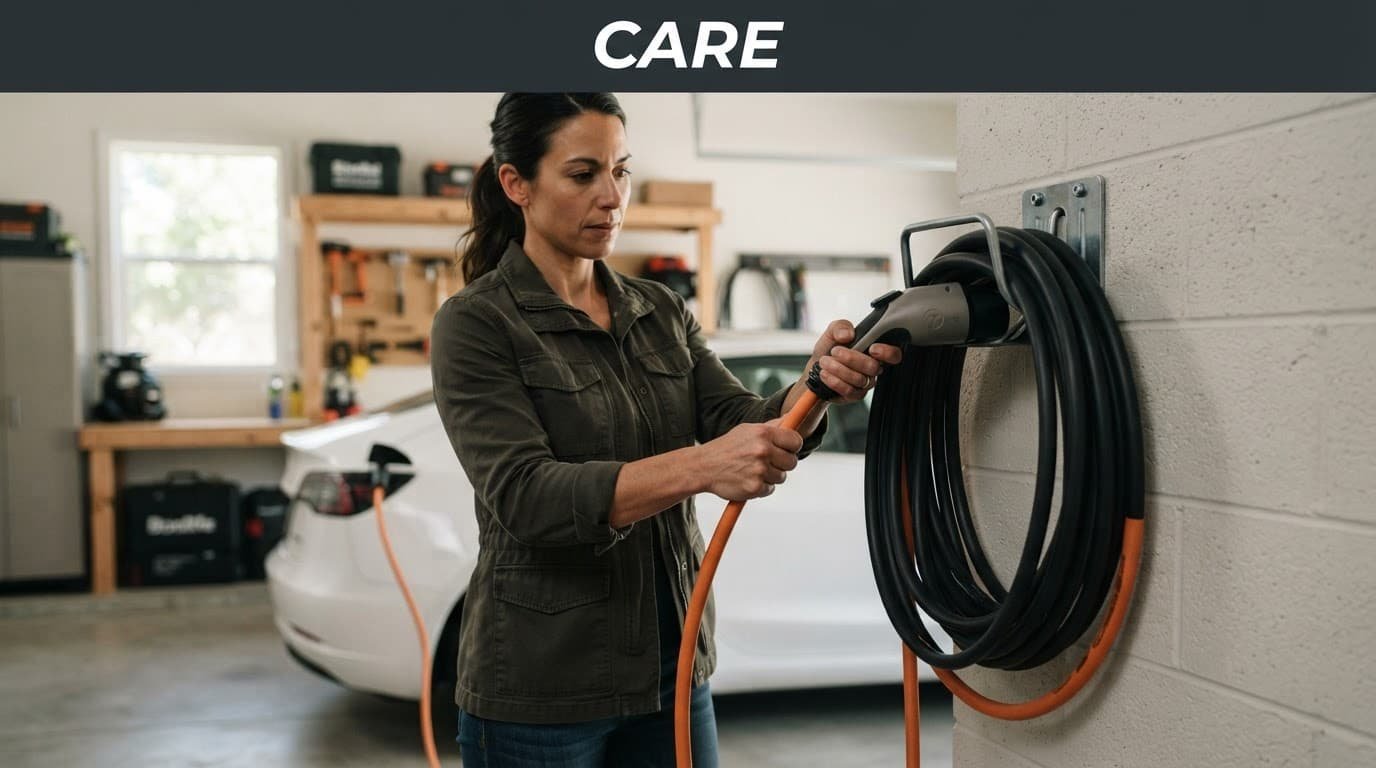
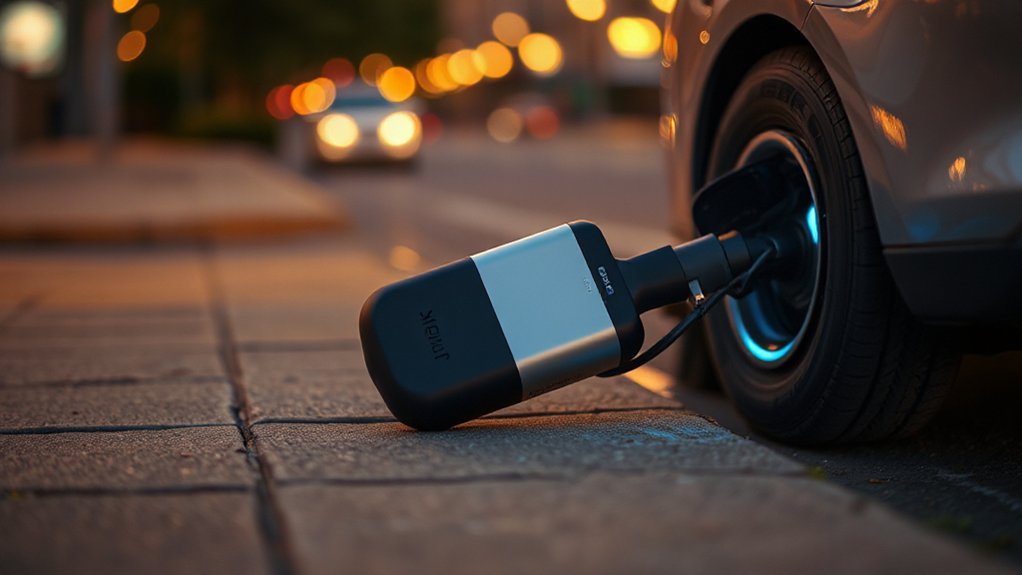
The cable deserves its own small ceremony. Coil it loosely on a wall hook to limit wear and tear, never around the charger in a tight knot. Don’t drive over it, shut it in a garage door, or leave it stretched across a walkway where someone can trip over it.
Electrical safety: know when to stop

Charging station maintenance at home generally covers the outside inspection. Internal electrical work is not homeowner territory.
A hardwired Level 2 charger connects to a dedicated circuit that may carry substantial current for long periods. Even after you switch off the visible controls, parts of the installation can remain energized. Treat the charger with the caution appropriate for high-voltage systems, not like a broken toaster.
Stop using the unit and arrange service if you notice:
- A breaker or ground-fault device trips repeatedly.
- The plug, outlet, cable, or housing becomes unusually hot.
- You smell burning insulation or see discoloration.
- The charger makes new buzzing, clicking, or crackling sounds.
- Charging stops when the cable moves slightly.
- Water has entered the housing or electrical connection.
- The unit reports an isolation, ground, overtemperature, or internal fault.
A qualified electrician can check circuit capacity, grounding, terminations, voltage, protective devices, and other electrical components for signs of heat damage. Ask the electrician to follow the manufacturer’s service instructions and document what was tested. The EV charger inspection form from SafetyCulture includes useful inspection categories such as PPE, socket and RCD testing, cable runs, load control, photos, and corrective actions.
Technicians working inside equipment should de-energize it and follow applicable lockout/tagout procedures. That means isolating the power source, securing it against re-energization, and verifying the equipment is safe before work begins. Homeowners shouldn’t improvise this process with a sticky note on the breaker that says, “Please don’t.”
An annual professional inspection, supported by routine inspections, makes sense for a heavily used charger, an outdoor installation, an older electrical panel, or a home with previous breaker problems. Waiting for break-fix repair is less desirable, and the same escalation rules can be documented in a fleet maintenance procedure. A newer indoor unit with light use may need less frequent service, but its cable and connector still deserve regular checks.
Level 2, DC fast charging, and the cost of upkeep
EV charger maintenance is usually simpler at home than at commercial EV charging stations. The difference involves more than speed, including parts, users, environmental exposure, and business systems. Fleet maintenance adds further operational demands.
| Charger type | Typical maintenance concerns | Cost picture |
|---|---|---|
| Home Level 2 chargers | Cable, connector, wall mount, breaker, ground-fault protection, software updates | Usually limited to inspections, occasional electrical service, and repairs |
| Commercial Level 2 | Multiple cables, payment systems, charging network connections, vandalism, weather, uptime tracking, fleet maintenance | Illustrative budgets often run around $400 to $500 per charger annually, but site conditions, labor, equipment, and maintenance plans change the total |
| DC fast chargers | High-current hardware, cooling systems, contactors, power electronics, networking, payment systems | More expensive service calls and more specialized technicians |
A home Level 2 charger generally has fewer failure points than fast-charging equipment. DC fast equipment pushes much more power through complex EV charging infrastructure, often with cooling hardware and network connections that need attention. It may serve dozens of drivers, so a damaged connector affects charging station reliability, not just one annoyed driver in a garage.
Commercial operators also track charging station uptime, failed sessions, response times, and repair costs across a charging network. NEVI standards commonly set uptime expectations near 97 percent for funded public charging. Those requirements don’t apply to your garage, but they explain why site hosts use remote diagnostics, routine inspections, and preventative maintenance instead of waiting for complaints.
For homeowners, the calculation is simpler than it is for site hosts managing an electric fleet and its fleet maintenance needs. Homeowners can compare the maintenance costs of scheduled care and maintenance plans against break-fix repair, an emergency electrician, a replacement cable, a damaged vehicle inlet, or a missed trip. The cheapest charger is the one that doesn’t turn a small warning into a Friday-night repair.
Software updates and a sensible troubleshooting order
Not every charging failure is physical, and connectivity is part of charging station maintenance. A charger can have a perfect-looking cable and still fail because of firmware, Wi-Fi, vehicle settings, or a communication error between the car and EVSE.
When charging fails, work through the problem in this order:
- Check the vehicle’s charge limit, departure schedule, and battery setting. The car may be following a timetable you forgot existed.
- Inspect both ends of the cable and reconnect them firmly.
- Read the charger lights, vehicle display, and app. Check charging station software for logs, status information, or error details, then write down the exact error code.
- Check whether the charger has pending software updates or a lost connection to the charging network.
- Restart the charger only as the manufacturer’s manual instructs.
- If a breaker or GFCI trips again, stop resetting it and call a qualified professional. Repeated resets can create a break-fix repair cycle.
- Contact the installer, manufacturer, or a qualified service provider about a persistent or unexplained charging station failure. Provide the model, serial number, error code, date, and photos to help preserve warranty support.
Remote diagnostics can show failed sessions, temperature warnings, communication errors, and repeated restarts before someone visits the property. A connected charging network may reveal patterns across sessions. Software updates can correct known bugs and improve compatibility, but don’t interrupt an update by switching off power unless the instructions tell you to do so.
Keep a simple EV charger maintenance record. Note inspection dates, error codes, breaker trips, firmware changes, electrician visits, and replaced parts to support fleet maintenance when relevant. It takes less time than trying to remember whether the charger started acting strange “sometime after Thanksgiving.”
The maintenance guidance from BENY also emphasizes visual checks, physical damage, and loose connections. Those notes become more useful when paired with your own records, because recurring faults are easier to diagnose than isolated stories.
Frequently Asked Questions
How often should I inspect my home EV charger?
Give the cable, connector, and charger lights a quick look before every charging session. Perform a more thorough exterior and mounting check once a month, with additional checks after severe weather or unusual charging behavior.
Can I clean my EV charger with water or a pressure washer?
Use a dry or slightly damp cloth and follow the manufacturer’s cleaning instructions. Never spray water into vents, sockets, buttons, or cable connections, and keep the pressure washer far away from the EVSE.
What should I do if my EV charger keeps tripping the breaker?
Stop resetting the breaker repeatedly and stop using the charger until it has been checked. Repeated trips can indicate a circuit, ground-fault, or charger problem that requires a qualified electrician.
Can I repair the inside of an EV charger myself?
No. Internal electrical work can involve energized parts and should be handled by a qualified electrician following the manufacturer’s instructions and appropriate safety procedures.
Do EV chargers need software updates?
They can, because firmware and connectivity problems may cause charging failures even when the cable and housing look fine. Check the manufacturer’s app or instructions for updates, and don’t interrupt an update unless the instructions tell you to do so.
Conclusion
An EV charger doesn’t need constant attention, but EV charger maintenance starts before it fails. Inspect the cable and connector before use, clean the exterior without flooding it, watch for heat and moisture, keep the software current, and treat repeated breaker trips as a stop sign.
EV charger maintenance is mostly about noticing small changes while the equipment still works. The wall box may look quiet and boring, which is exactly what you want. In this case, boring means ready for the next drive.