Are EV Charging Stations Universal? Plug and Compatibility Guide
Check EV charging compatibility across J1772, CCS1 and NACS using the vehicle, approved adapters, network access and site rules.
As an Amazon Associate, EV Charging may earn from qualifying purchases. This helps support our independent guides at no extra cost to you. Learn more.
Key takeaways
- Physical connector fit alone does not establish compatibility.
- Check AC and DC capabilities separately.
- Use approved adapter combinations and verify each intended station.
Not every station works with every EV
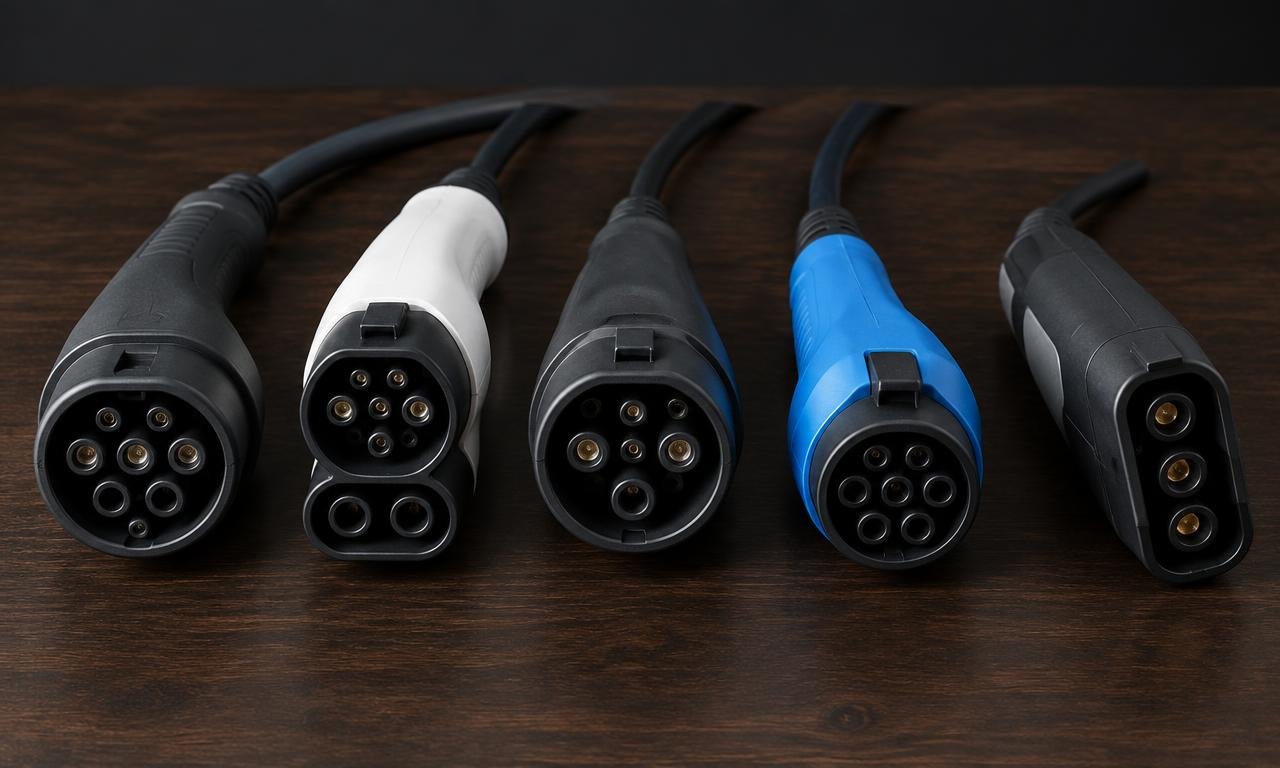
EV charging stations are not universally interchangeable. In North America, compatibility depends on the connector, AC or DC charging type, vehicle capability, any approved adapter and network access. A plug that physically fits is an important start, but it does not settle the entire question.
The good news is that the check becomes straightforward when you do it in the right order. Identify your exact vehicle, choose the charging type you need and confirm the station in official tools. This guide explains that process without claiming that one accessory or network can charge every EV in every situation.
Shop this guide
Compare current options and prices
Start with the inlet on your exact car
Look up the charging inlet and supported charging methods for the model year and trim you own. Vehicle families can change connectors over time, and some configurations differ within a familiar name. Use the owner's manual or manufacturer support information rather than a generic brand assumption.
Keep AC and DC specifications separate. A car may support both but use different parts of the inlet or different adapters. Some vehicles have more limited fast-charging capability than a casual glance at the port suggests.
Write down the supported combinations you actually expect to use: home charging, workplace charging and highway charging. This short personal list is more useful than memorizing every connector ever sold. You can add unusual travel situations when they become relevant.
J1772 is an AC charging connection
Many North American EVs use J1772 for Level 1 or Level 2 AC charging. The station supplies AC electricity and the car's onboard charger handles conversion for the battery. The vehicle's AC limit remains relevant even if the station can provide more power.
A compatible NACS vehicle may use an approved J1772-to-NACS AC adapter at such a station. Confirm the vehicle maker's guidance and the adapter's intended direction and ratings. An adapter does not turn an AC station into a highway DC fast charger.
For public Level 2 locations, check access conditions as well as connector type. A compatible station inside a workplace garage may be restricted to employees, and a hotel may limit use to guests. Electrical compatibility does not create permission to park or charge.
CCS1 is a DC fast-charging arrangement
CCS1 uses a connector arrangement that includes additional DC contacts below the J1772-style upper portion. It is common on many North American non-Tesla EVs from earlier model years. The exact vehicle must support the relevant DC charging capability.
At a CCS1 station, charging performance still depends on the car, battery conditions and equipment. A high-rated station does not guarantee its maximum power throughout the session. Confirm compatibility first, then evaluate expected speed for your vehicle.
If an adapter is needed between a different inlet and CCS1 equipment, use only a manufacturer-supported arrangement. Do not infer DC capability from an adapter that is intended solely for AC charging. The connector names can overlap while the electrical use is entirely different.
NACS and J3400 do not mean unrestricted access
NACS, standardized as SAE J3400, can support AC and DC charging with compatible equipment. That includes both home-style AC uses and DC fast-charging uses, but the same connector shape does not make those sessions equivalent.
Tesla identifies different Supercharger access categories, including Tesla-only sites and locations available to eligible non-Tesla vehicles. Some provide an integrated adapter; others require the approved vehicle-specific arrangement. Confirm your exact car and site using the official app or compatibility information.
A native NACS inlet may remove the need for a physical adapter at a matching site, but you should still verify supported access and any setup requirements. The car, station and network must work together. The shape alone cannot answer all three questions.
Older standards still matter for some vehicles
Some used EVs rely on charging standards that are less common in new models. If you are buying one, map the actual compatible stations along your normal routes before deciding that public charging will be easy. A large total station count can hide a small number relevant to that car.
Check whether the equipment is available, accessible and suitable at the times you travel. Do not assume a network's newest installation includes every connector used by older vehicles. Read the station details rather than relying on the network logo.
A vehicle can still be a good fit with a less common connector if its routine is well supported. The important step is making that decision with real local access in view, not discovering the limitation during the first long trip.
Adapters bridge specific supported combinations
Treat an adapter as a solution to one documented connection problem. Identify the source connector, vehicle inlet, charging type and approved direction. Then confirm the ratings and manufacturer support for the complete arrangement.
Do not stack adapters or use extensions unless the relevant manufacturers explicitly support that setup. More pieces do not create universal compatibility. They can introduce additional limits and make a failed session harder to diagnose.
Keep the adapter's instructions and inspect it externally before use. Stop using damaged equipment or a connection that shows abnormal heat or repeated faults. A purchase listing's universal claim is not a reason to force a connector or ignore a warning.
Network authorization is another layer
Some charging sessions use an app, account, card reader or supported automatic authentication. The available method depends on the station, network and vehicle arrangement. Set up the required account and payment method before relying on an unfamiliar network.
Confirm whether a membership or automaker program changes pricing and how the session must be started to receive that rate. An account that can locate a station may not automatically provide the expected discount. Read the actual plan and session terms.
If charging fails, distinguish authentication problems from physical compatibility or equipment faults. Follow the displayed guidance and contact official support. Repeatedly trying several apps without understanding which account controls the session can create more confusion than progress.
Physical access can defeat electrical compatibility
Check parking orientation, cable reach and restrictions. A station can be electrically suitable but awkward for a car whose port is on the opposite side. Follow the site layout and avoid blocking adjacent stalls or stretching cables into traffic paths.
Towing adds another consideration. Look for specific information about trailer access or pull-through arrangements rather than assuming every fast-charging site accommodates the vehicle and trailer together. Recent site photos can help, but current signs and rules still apply.
Also check opening hours and parking fees. A compatible connector behind a closed gate is not a useful overnight backup. The best station choice combines electrical suitability with practical access when you need it.
Build a dependable personal charging map
Save a few verified options near home, work and regular travel routes. Include at least one alternative where a failed or occupied station would otherwise create a problem. Check current status before making a station essential to the journey.
For each option, know the connector, required approved adapter, access method and approximate charging type. You do not need an elaborate spreadsheet; a small set of confirmed choices can cover most ordinary driving.
Revisit the list when you change vehicles, receive a manufacturer update or travel somewhere new. Network expansion can add useful options, while site changes can remove an old assumption. Compatibility is something to verify for the actual trip, not a fact established forever by the first successful session.
Use five checks before plugging in
Confirm the vehicle's supported charging type, the station connector, any approved adapter, network access and the site's practical rules. Then inspect the connection and follow the manufacturer and operator instructions. Verify that energy is flowing before leaving the car.
If one of those checks remains unresolved, choose a known supported option or obtain clarification. Do not let a nearly matching plug or an enthusiastic product description substitute for approval of the complete combination.
Charging is becoming easier to navigate, but universal is still too broad a word. The useful goal is a set of compatible stations and equipment that reliably supports your life. Once you know those combinations, everyday charging can feel much simpler than the alphabet of connector names suggests.
Sources & further reading

Written by
LarryLeoLarryLeo started EV Charging while researching his own next car purchase. He digs into the pros, cons and real cost savings of going electric — using government, standards-body and manufacturer sources — and shares what he finds so other buyers can decide with confidence.
Why trust EV Charging Guide
Our guides are researched from government, standards-body and manufacturer sources, reviewed for accuracy, and updated when rules or products change. Brands cannot pay for placement. Read our editorial policy.