EV Charging at San Jose Airport (SJC): Locations and Parking Rules
Find SJC charging locations, connector details and parking restrictions, including why an EV stall is not guaranteed long-term parking.
As an Amazon Associate, EV Charging may earn from qualifying purchases. This helps support our independent guides at no extra cost to you. Learn more.
Key takeaways
- SJC lists J1772 charging in Lots 2 and 5 on a first-come basis.
- Electricity is free under the listed terms, but regular parking fees apply.
- Vehicles not actively charging in EV stalls may be cited.
Plan airport charging as a bonus, not a guarantee
San José Mineta International Airport offers EV charging in designated parking areas, but you should not build a flight-day plan around finding an open connector. Availability is first come, first served, and charging spaces have rules that matter if you will be away for several days. A parking reservation is not a promise of a charging stall.
The most reliable approach is to arrive with enough energy for parking and your onward journey, or with a clearly planned charging stop after returning. Airport charging can be useful when the timing and rules fit. This guide uses SJC's published information, checked for this update; it is not a live availability report or a claim that we personally tested the stations.
Where SJC lists its chargers
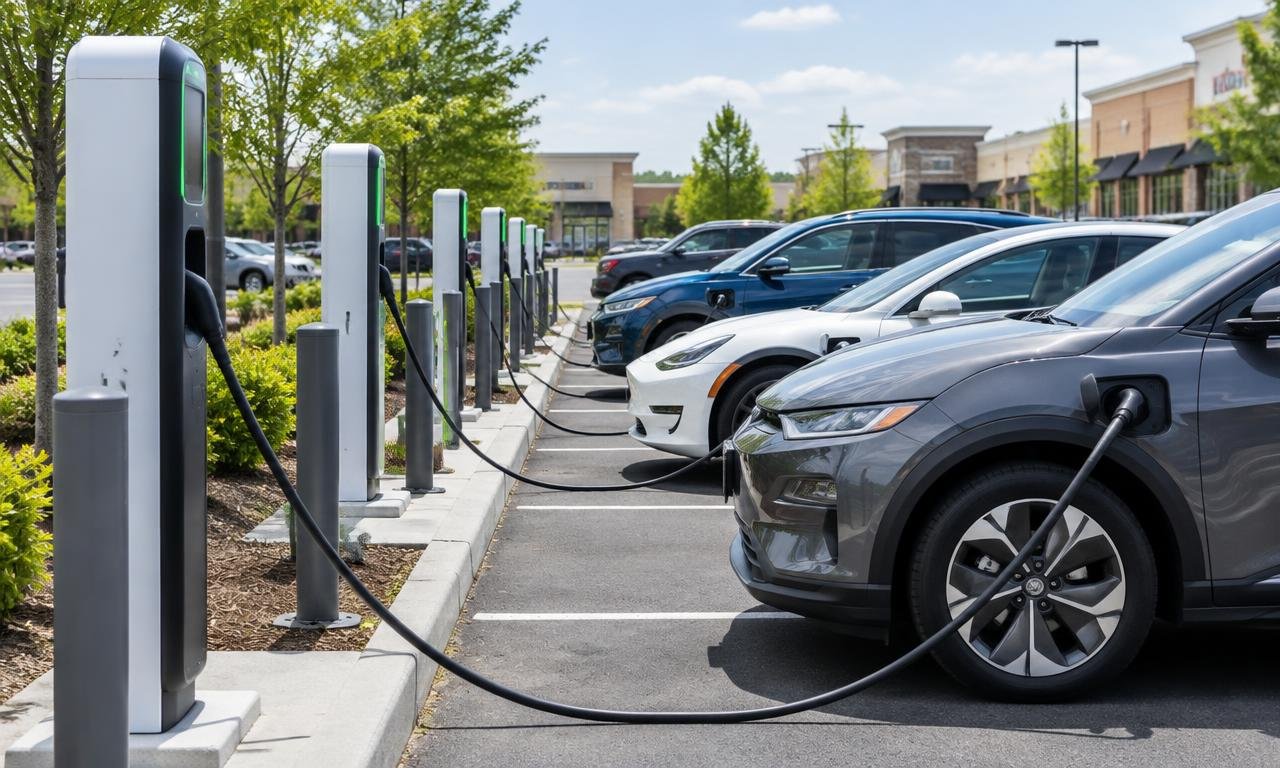
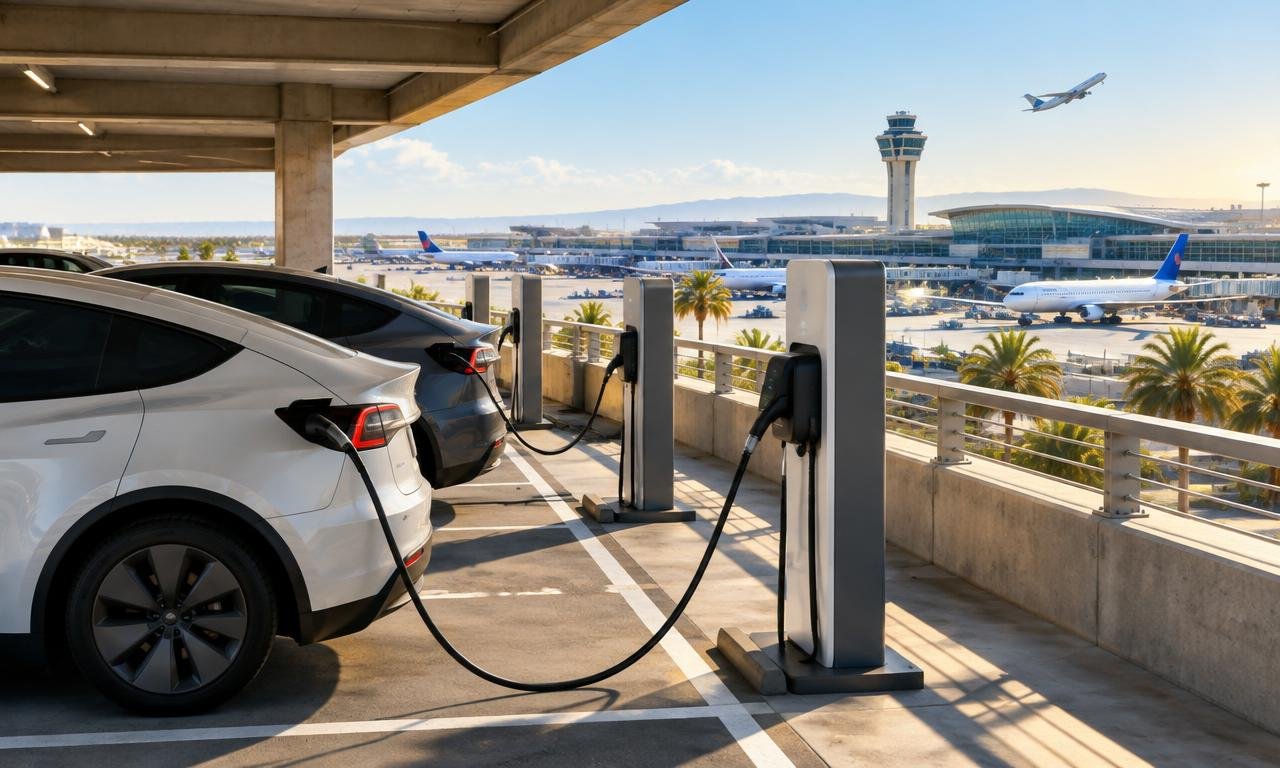
SJC lists charging in Terminal A Garage, Lot 2, and Hourly and Daily Lot 5 near Terminal B. The airport describes ChargePoint CT4000 equipment with J1772 connections and output up to 7.2 kW. Its page lists three stations serving six vehicles in Lot 2 and five stations serving nine vehicles in Lot 5.
The airport states that electricity is free to use, while regular parking charges apply. It also says charging is permitted only in designated spaces using the provided equipment; customers may not use their own charging equipment. Vehicles occupying EV stalls without actively charging may be cited.
Recheck the airport's official charging and parking pages before traveling. Counts, access and policies can change. Follow signs at the site and seek clarification from airport parking staff if the current conditions differ from what you expected.
Understand the long-stay parking problem
An airport visit can last days, while a Level 2 charging session may finish much sooner. If you leave the car in an EV stall after charging ends, the airport's active-charging rule becomes relevant. Do not assume that being away on a flight creates an exemption.
Before choosing a charging stall for a trip, establish how you will comply with the parking rules. If you cannot return to move the vehicle when required, ordinary parking with adequate starting charge may be the more practical plan. Do not count on remotely restarting a session as a way to justify occupying the space.
This is the important distinction between charging at an airport and parking at an airport. The two services can overlap, but the availability of a connector does not automatically make it suitable for your entire travel itinerary.
Confirm your car's AC compatibility
The listed J1772 equipment is AC charging. A compatible J1772 vehicle can use the appropriate connection directly, while a NACS vehicle may require its manufacturer-approved J1772-to-NACS AC adapter. Check the exact vehicle's instructions before departure.
Do not confuse that adapter with a DC fast-charging adapter used at a Supercharger. Connector terminology can look similar while describing very different equipment. Bring only the approved accessory required for the listed station and vehicle combination.
An adapter does not change the station's maximum output or the car's AC limit. The effective rate may be lower than the station's stated maximum because of vehicle limits or operating conditions. Confirm a session has started and is delivering energy before relying on it.
Estimate what a short session can accomplish
Use energy rather than a promised number of miles. At a constant 7.2 kW, one hour represents up to 7.2 kWh supplied before losses and other limitations. Two hours would represent up to 14.4 kWh under the same idealized assumption. Actual battery energy will be lower and the station may not sustain that rate for your session.
Compare that with your vehicle's consumption and the journey you need to make. A short top-up can be useful, but it should not be mistaken for a highway fast-charging stop. If you arrive with a large deficit shortly before a flight, the available time may not solve it.
Leave room for finding the stall, starting the session and moving the car as required. Flight-day schedules already contain enough small surprises. Charging should not become the one task that makes a comfortable arrival time suddenly feel optimistic.
Separate electricity cost from parking cost
Free electricity does not mean the airport visit is free. Regular parking fees still apply, and the selected lot should fit your terminal access, duration and budget. Compare the whole parking decision rather than choosing a lot solely because it has chargers.
Check current parking prices through SJC's official information for your dates. Do not rely on an old travel article's daily rate. If booking parking, read the reservation terms and understand what the booking guarantees.
A hypothetical energy saving can be small compared with an unnecessary change in parking cost or an extra hour of paid parking. Make the charging decision in the context of the trip, not as a mission to collect free kilowatt-hours at any inconvenience.
Prepare your account and access method
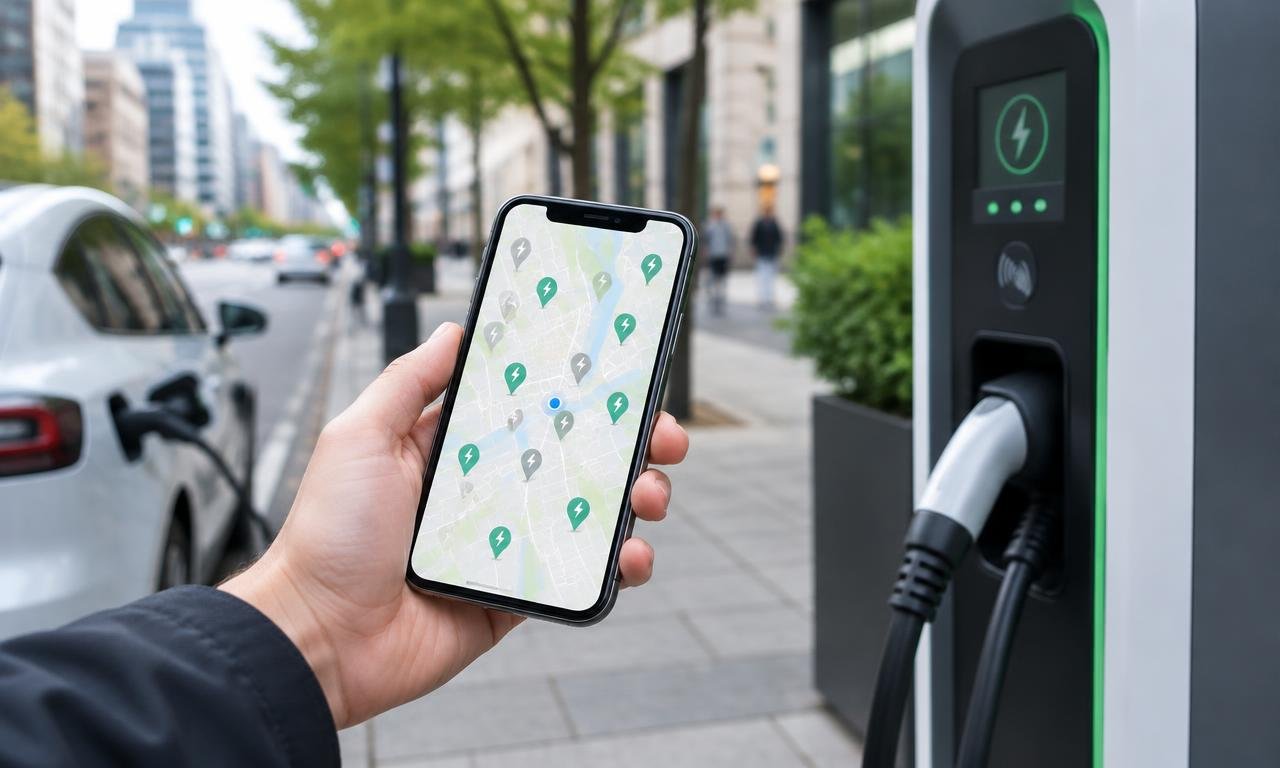
Review the station operator's supported access method before arrival and make sure any needed account or app is ready. Do this while you have time to resolve a password or payment-profile issue, even if the electricity at the listed airport stations is free.
Keep the phone charged and the relevant information accessible. Do not assume airport Wi-Fi or mobile reception will behave exactly where you park. If a station requires a particular activation method, follow its current instructions.
At the stall, confirm the identifier and connection status. If the equipment does not work, report the issue through the operator's official support channel or follow airport guidance. Do not spend so long troubleshooting that you compromise the time needed for your flight.
Build a backup around the return journey
Identify a compatible off-airport charging option that fits the route you expect to take home. Check access hours, current pricing and the connector before relying on it. A nearby map pin is not enough if the station is behind a closed gate when your flight lands.
Keep sufficient reserve to reach that option with room for a diversion. Consider traffic, weather and a delayed arrival. The backup should remain useful when the trip does not run perfectly, because that is usually when you need it.
If possible, charge adequately before heading to the airport so the return journey is straightforward. Follow your vehicle's storage and charge-limit guidance for the length of the trip. Avoid promising yourself that an uncertain airport session will fix a deliberately low arrival charge.
Check the vehicle before leaving it parked
Confirm that the car is secured and any unnecessary energy-consuming features are set appropriately for storage, following the manufacturer's guidance. Some settings can affect energy use while parked. Do not disable safety or security features blindly just to chase a generic battery-saving tip.
Note the parking location and keep access details available for your return. If you have used a charging stall, make sure the arrangement complies with the active-charging rule and any posted restrictions. A remote charging notification does not create permission to remain after the session ends.
Do not confuse a dead low-voltage battery with an empty traction battery. Assistance services may address different problems, and an airport jump-start offering does not necessarily mean EV traction-battery charging is available. Describe the vehicle's actual condition when requesting help.
Use a simple flight-day decision
Before leaving home, check the official SJC charging and parking information, verify connector compatibility and establish a return-route backup. Arrive with a reasonable charge reserve. If a suitable stall is available and you can follow its rules, use it as planned.
If the stalls are full, unavailable or unsuitable for your parking duration, continue with ordinary parking rather than improvising with personal equipment or unauthorized outlets. The airport explicitly limits charging to its designated arrangement.
The best airport charging plan is one that does not threaten the flight or the trip home. At SJC, the available Level 2 stations can be helpful, but their limited availability and active-charging rules deserve as much attention as the word free.
Sources & further reading

Written by
LarryLeoLarryLeo started EV Charging while researching his own next car purchase. He digs into the pros, cons and real cost savings of going electric — using government, standards-body and manufacturer sources — and shares what he finds so other buyers can decide with confidence.
Why trust EV Charging Guide
Our guides are researched from government, standards-body and manufacturer sources, reviewed for accuracy, and updated when rules or products change. Brands cannot pay for placement. Read our editorial policy.