Airport EV Charging: Can You Stay Plugged In for Days?
Airport EV charging can work for multi-day trips when parking rules allow it. Compare airport policies, fees, charger types and backup plans before you fly.
As an Amazon Associate, EV Charging may earn from qualifying purchases. This helps support our independent guides at no extra cost to you. Learn more.
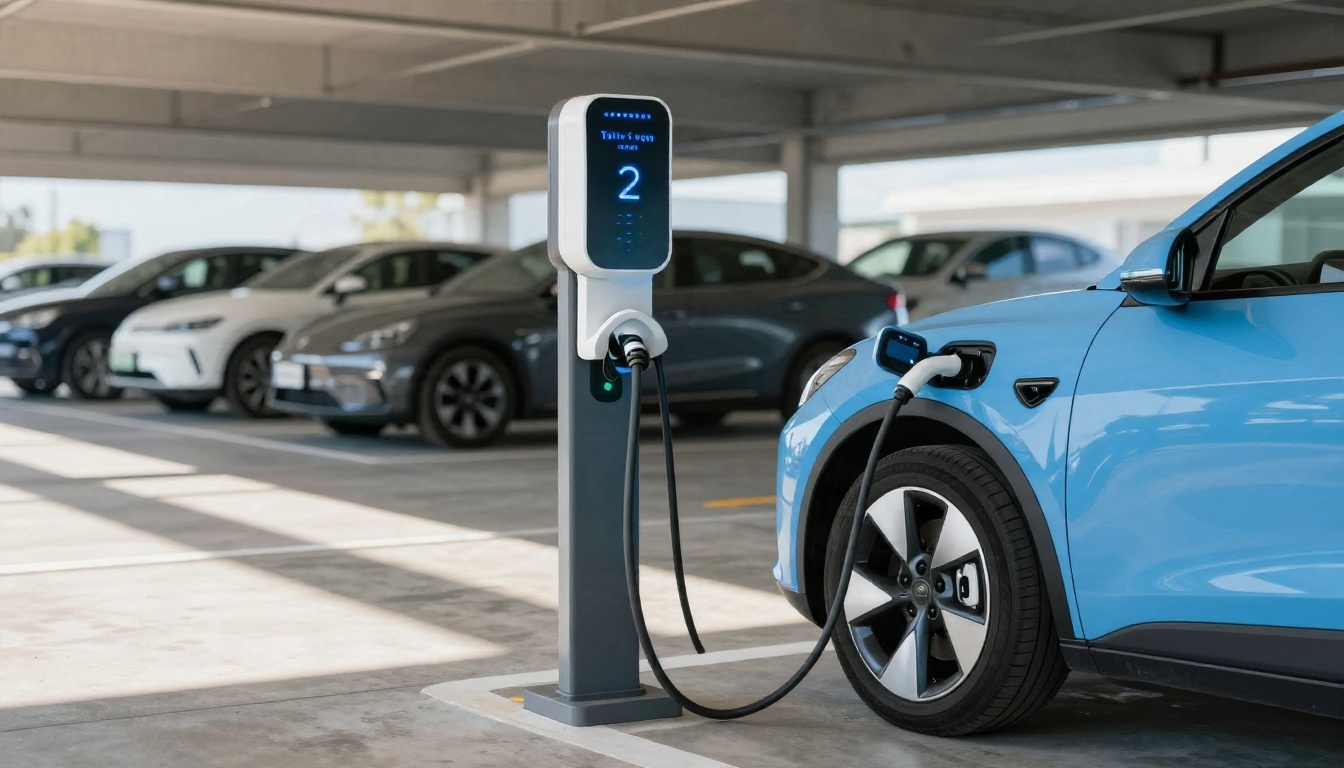
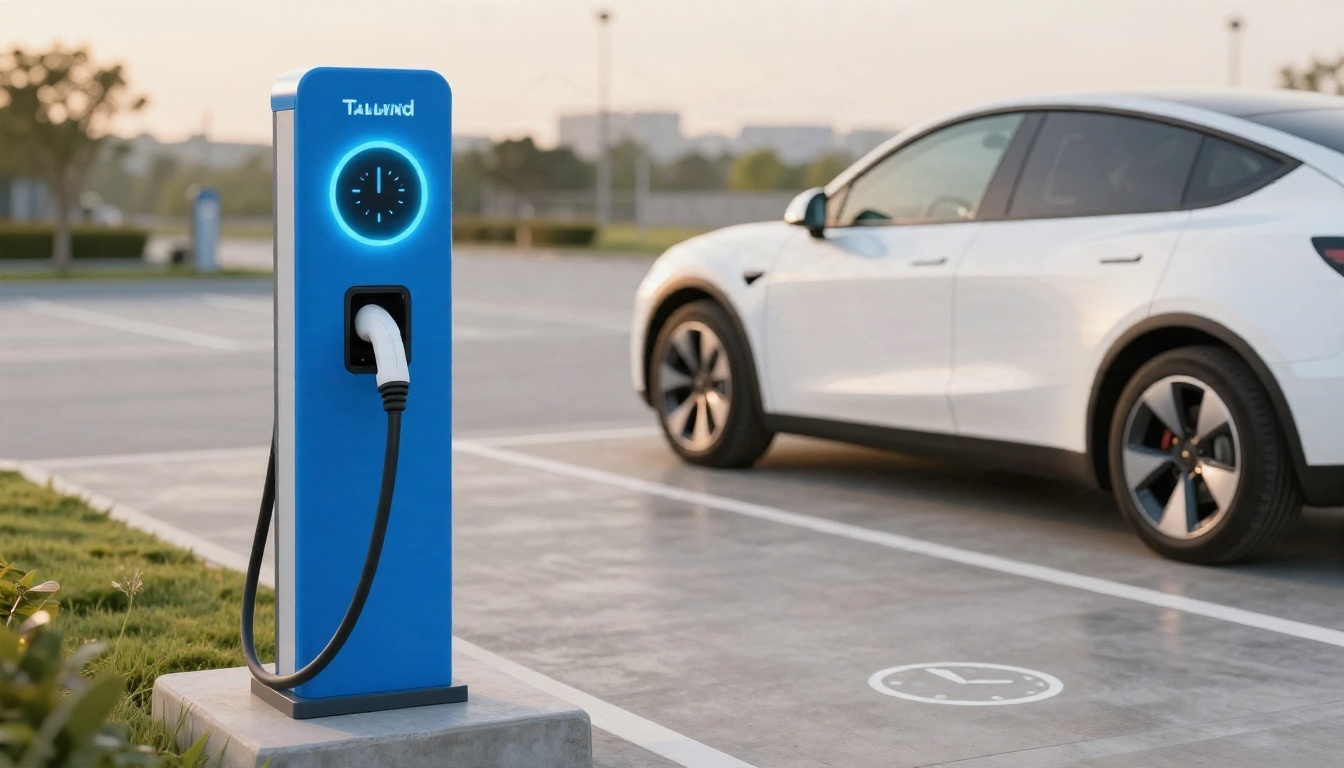
Yes, you can leave an EV plugged in at an airport for several days where the facility allows that stay. A dedicated stall in a long-term garage may suit your trip, while a charger restricted to active charging won't.
The tricky part of airport EV charging is that your battery may finish charging long before your flight home. Start with the rules for that designated space, then consider the connector, payment method and cost.
This post may contain affiliate links. If you make a purchase through these links, I may earn a small commission at no extra cost to you.
Key Takeaways
- An L2 charger can suit extended stays, but its charging speed doesn't establish permission to stay.
- Free electricity can come with paid garage entry, access restrictions or separate fees.
- SFO publishes long-term plug-in options, while DFW charger locations include one-hour zones, showing airport charging policies vary.
- Arriving with enough charge for an unpowered space gives you a fallback when stations are occupied or unsuitable.
The Parking Rules Decide How Long You Can Stay
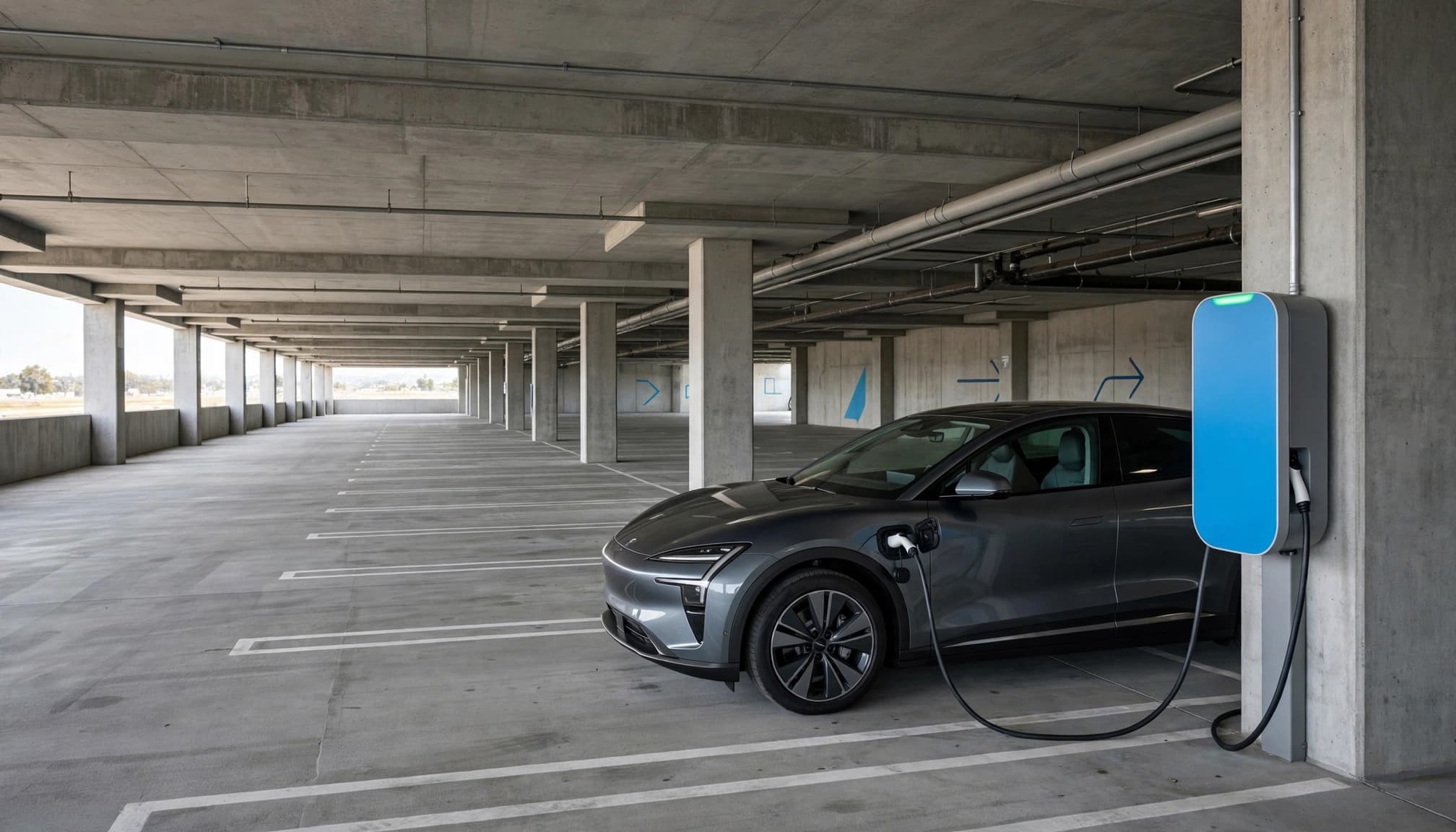
Parking Permission and Charging Permission Are Separate
A five-day airport parking reservation doesn't automatically give you five days in a charging stall. The airport may allow extended vehicle stays elsewhere while reserving its EV spaces for vehicles actively receiving electricity.
San Jose illustrates the distinction. Our SJC charging and parking guide explains that vehicles occupying EV stalls without actively charging may be cited. The airport also limits charging to designated spaces using its provided equipment. Always review the posted signs near the stall, because your flight doesn't pause those conditions.
Finishing a Session Can Change Your Position
A car can remain physically connected after reaching its charge limit. Whether it can remain in that space is a separate question.
An app notification saying "charging complete" tells you about the session. It doesn't grant an exemption from a time limit or active-charging requirement.
If your trip makes moving the car impossible, choose a facility arrangement that doesn't require you to move it after charging.
Where published information doesn't establish permission for a multi-day charging stay, an unpowered stall is the practical fallback.
Level 1, Level 2 and DC Charging Fit Different Stays
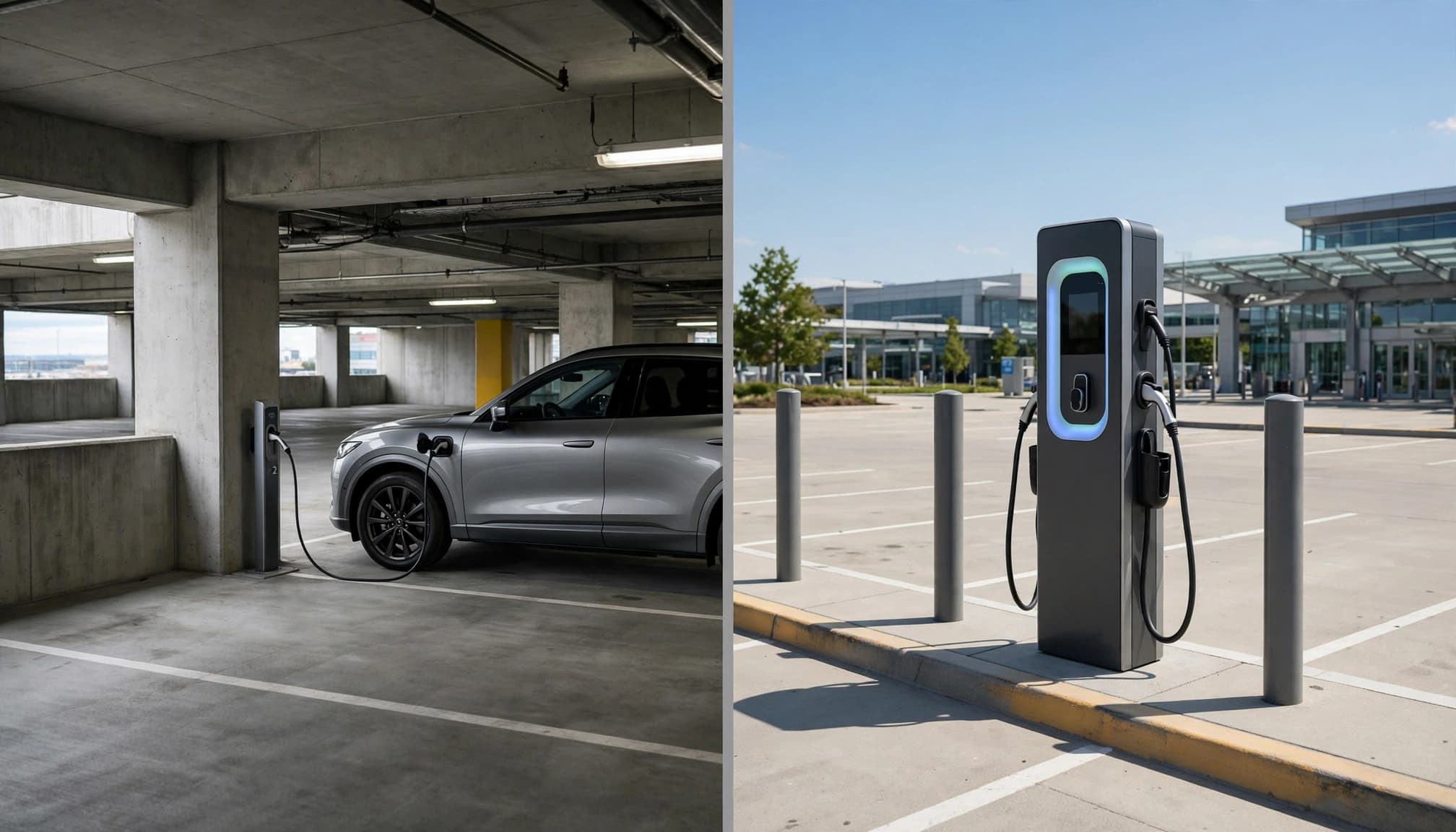
Slow AC Charging Can Match a Long Trip
Level 1 uses a standard 120V supply. Level 2 generally uses 208V or 240V AC, with the vehicle's onboard charger converting that electricity for the battery.
Both can make sense when a car will sit for days. 240V equipment is common at airport facilities; OneStopParking's long-term parking guide describes it as standard at facilities offering charging.
Low-powered outlets also have a sensible role: a week-long stay leaves plenty of charging time. They're a proposed way to spread limited infrastructure funding across more spaces, although outlets still need suitable electrical capacity and authorization.
DC Fast Charging Suits a Short Stop
DC fast charging, often delivered by an L3 charger, sends DC electricity directly to the battery. It's intended for a comparatively quick charging stop.
Many airport-area EV charging stations serve arriving drivers, taxis, rental vehicles and people waiting for passengers. Short term pickup or drop-off areas are a very different setting from a long-term garage.
A DC fast charger is a poor choice for leaving your vehicle while flying away. Use it before entering the garage or after collecting the car, subject to that station's access rules.
Airport EV Charging Options Compared
This researched comparison separates published facilities from permission to occupy a charging bay throughout a trip.
| Airport | Published Charging Details | Price Information | Long-Stay Consideration |
|---|---|---|---|
| Austin, Garage 2 | Two ChargePoint J1772 Level 2 ports; public access 24 hours | ChargeHub lists $2 per hour | The listing doesn't establish multi-day occupancy permission |
| SFO | Public-garage Level 1 and Level 2 options, including long-term garages | Charging is free; parking charges are separate | First come, first served |
| DFW | Four Level II chargers at each of five terminal locations | Complimentary charging with terminal attendant service | Listed self-parking chargers are in one-hour parking areas |
| New Orleans | Charging in Economy and Long Term garages | No charging price established here | Published locations don't establish a multi-week charging allowance |
SFO's long term parking facilities are directly relevant to travelers leaving cars behind. DFW's one-hour locations require a different plan.
These are facility descriptions, not reservations. First come, first served means an available vehicle stall and an available charging port are two different things. A station map for a parking garage also doesn't establish that equipment is working or compatible with your vehicle.
Austin: Two Level 2 Ports With Hourly Billing
ChargeHub lists two ChargePoint J1772 AC ports at Austin International Airport's Garage 2. The listing gives public access as 24 hours and charging as $2 per hour.
That's the charging rate, separate from airport garage fees. Round-the-clock access also doesn't mean unlimited occupancy.
For payment and activation, the listing identifies the ChargeHub app, network apps, network RFID, Visa and Mastercard. Those options belong to this station listing; they shouldn't become assumptions about every airport pedestal.
With only two listed ports, this is a limited resource. A plan that depends on finding one empty as you arrive leaves little room for a busy departure day or a quick day trip.
ChargeHub also identifies a Tesla Supercharger nearby at 2901 Spirit of Texas Drive. That provides a possible airport-area charging stop, rather than a place to leave your car during a flight.
Tesla compatibility still matters. A nearby Supercharger pin doesn't establish access for every EV, and an adapter alone doesn't grant network permission. Treat it as a separate charging station with its own vehicle eligibility and payment requirements.
SFO: Long-Term Plug-In Parking With Free Charging
SFO's official electric-vehicle facility information describes free public-garage charging on a first-come, first-served basis. Its facilities may provide Level 1, described as 110V or 120V, or 240V power.
The airport lists substantial plug-in capacity in its long-term garages. Garage 2 has 18 preferred stalls per floor on levels 2 through 6, plus 24 on level 1. Garage 1 lists six per floor on levels 2 through 6.
Those are SFO's published stall descriptions. They don't establish that every stall provides high-rate AC.
ChargeHub separately lists 106 AC ports in Long-Term Garage 2 as free. That's a third-party classification, so it should remain separate from the airport's description.
Free charging also doesn't provide free parking for your trip. Our explanation of public charging costs and fees covers that distinction.
For a traveler, the useful feature is charging located within long-term parking itself. Availability remains first come first served, so arriving with a usable battery reserve still matters.
DFW and New Orleans Have Different Published Details
DFW Lists Chargers in One-Hour Parking Areas
DFW's official EV page lists four Level II SemaConnect units at each of five locations: A10, A20, A35, E16 and E35. That's 20 listed units.
The important detail is that they're in garage short-term zones with a one-hour limit. That description doesn't establish permission to occupy a plug during a several-day trip.
DFW also advertises complimentary EV charging with terminal attendant services. Complimentary electricity doesn't mean the valet service itself is free.
For someone flying away, managed charging offers a more relevant service category than assuming a terminal charging stall supports extended occupancy.
New Orleans Lists Economy and Long Term Locations
New Orleans airport places charging on the first floor of the Economy Garage and the first and second floors of the Long Term Garage.
Those locations help drivers choose a garage. The published information described here doesn't establish a multi-week charging allowance, a charging price or a guaranteed space.
Keep the distinction clear: charging available in a long-term garage and permission to occupy one particular charging stall for the entire trip are separate facts. Neither should be stretched into a blanket airport policy.
Access, Payment and Adapters Need Separate Attention
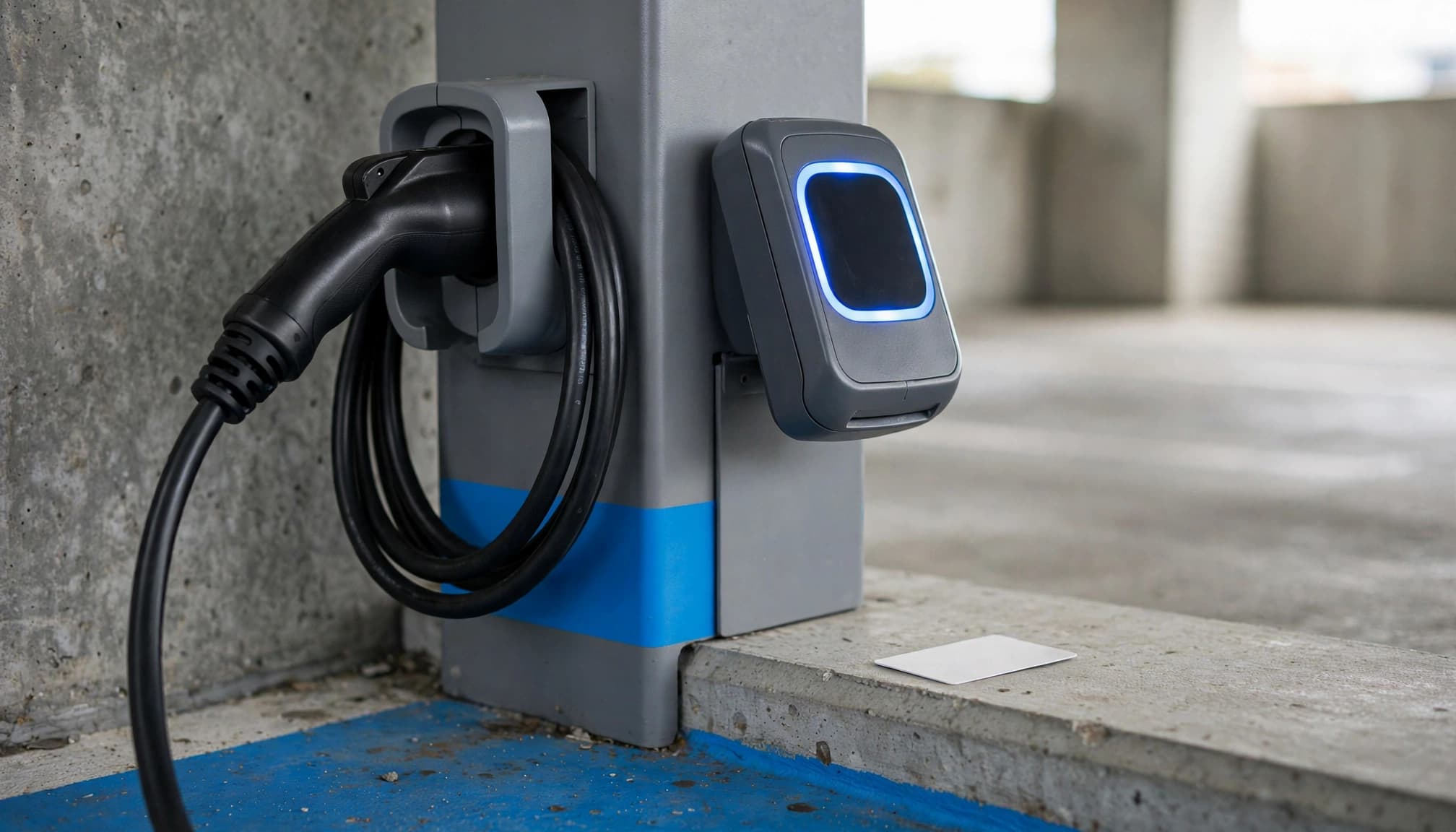
A Map Listing Doesn't Start a Session
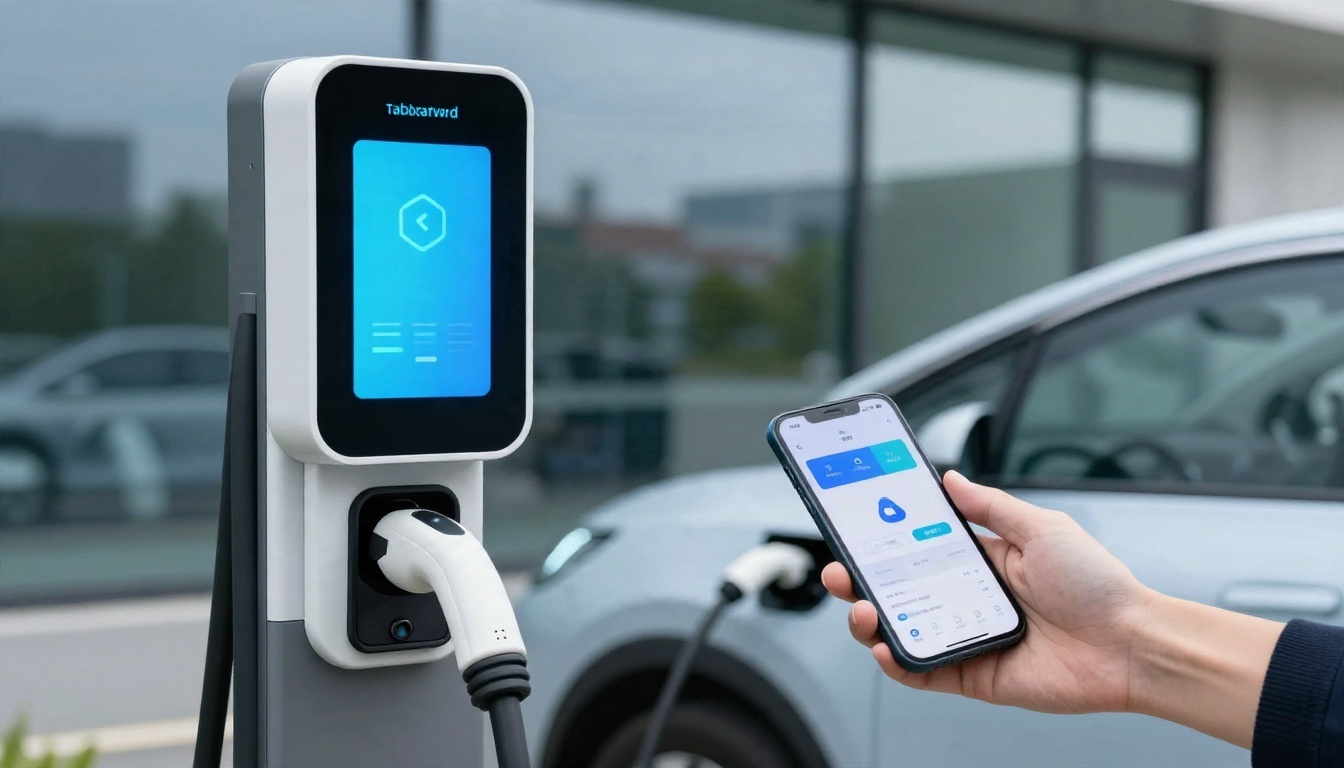
A station finder can display a charging station without being able to activate it. Payment may require the network's app, an activated RFID card, supported roaming access or a bank card.
Set up the account and payment method before departure. Carrying a physical card is useful, although every pedestal won't have a card reader.
Vehicle apps can also help drivers find compatible EV charging stations as backups. Ford's public charging guidance describes finding stations through the Ford app and BlueOval Charge Network.
Our charging apps and payment guide explains these different roles. Once connected, look for an active session and delivered energy before leaving the garage.
AC and DC Adapters Do Different Jobs
J1772 is an AC charging connection. A Tesla using a compatible J1772-to-NACS AC adapter can charge at an appropriate J1772 station.
That adapter doesn't provide CCS DC fast-charging capability. DC charging needs the correct vehicle support, DC-rated connection or approved adapter, and operator access.
The same caution applies in the other direction. A vehicle approved for selected NACS Superchargers doesn't automatically support every NACS AC pedestal through the same adapter.
Physical fit is only one requirement. Vehicle capability and network permission matter too.
Calculate Charging Costs Separately From Parking
Your total can include garage rates, electricity, time-based charging, session fees, idle fees and a valet attendant surcharge.
Here's a calculation with labeled assumptions. Assume a 60 kWh usable battery, arrival at 30%, a target of 80%, and 7.2 kW AC charging with 90% charging efficiency.
The battery needs:
60 kWh × (80% − 30%) = 30 kWh
Estimated charging time is:
30 kWh ÷ (7.2 kW × 0.90) = 4.63 hours
At Austin's listed $2 hourly rate, that charging duration would cost approximately $9.26, assuming proportional billing and no additional fees. Facility storage fees remain separate.
That illustrates why a several-day stay and a charging session have different lengths. Our EV charging time calculator lets you use your own battery size, starting charge and AC charging limit.
The unknown that matters is billing after charging ends. An hourly rate alone doesn't tell you whether billing stops, continues or changes to an idle fee. Don't extrapolate it into a week-long bill without those terms.
Valet Charging and Portable Equipment Have Trade-Offs
Valet Can Solve the Movement Problem
SFO advertises valet with EV charging, and DFW describes complimentary terminal attendant charging.
In a managed charging arrangement, staff can handle vehicle movement around the charging session. That service model suits a traveler who can't return from another city to move a car.
The published information here doesn't establish a particular movement schedule or guaranteed departure charge level for either airport. The useful distinction is that a managed service can accommodate vehicle movement while you're away. An unattended self-park space leaves that responsibility with you.
Your Own Charger Adds Security and Safety Concerns
Some drivers avoid leaving a portable EVSE connected for days because it may be stolen. EVSE means electric vehicle supply equipment, commonly called the portable charging unit.
A vehicle's connector lock may protect only part of the setup. It doesn't make every component secure.
An accessible outlet also isn't permission to use it. SJC, for example, prohibits customers' own charging equipment in its designated charging arrangements.
Avoid improvised connections or cables across walkways. Damaged equipment, overheating and repeated electrical faults belong with the operator, manufacturer or a qualified electrician. Don't bypass protections to keep a session running.
A Practical Flight-Day Plan
A workable plan should survive an occupied stall without turning departure into a scramble.
- Arrive with enough energy for an unpowered space and a reachable charging stop after your return. Account for weather and vehicle features that consume energy while parked.
- Choose a charging space only when its facility conditions match your absence. A requirement to move after charging is incompatible with leaving the vehicle unattended for days.
- Start the session using a supported method. Match the station number, confirm energy delivery and save your stall location.
- Keep a return-route charging option outside the garage. DC networks featuring an L3 charger, such as Electrify America, can serve a short charging stop after you collect the car.
Equipment can lose power or stop a session while you're away. Remote monitoring helps you notice that, but it doesn't guarantee a restart.
The backup plan earns its place before anything goes wrong.
Frequently Asked Questions
Can I Leave My EV Plugged In for a Week?
Yes, where the facility permits week-long occupancy of that charging space. A long-term facility designation alone doesn't establish that permission.
Where active charging or a shorter time limit applies, choose a standard space or a managed charging service.
Will the Car Keep Charging After It Reaches Its Limit?
Normally, the vehicle manages charging and stops adding energy at its selected limit. It may later draw power for battery management or other permitted functions.
Remaining connected doesn't necessarily mean it's actively charging under airport facility rules.
Should I Set the Battery to 100%?
Use the charging guidance for your vehicle and battery chemistry. An airport stay doesn't create a universal reason to select 100%.
Choose a suitable limit that supports the return drive rather than assuming every EV needs the same setting.
Sources Behind the Airport Comparison
Airport facility details come from SFO's electric-vehicle facility information, DFW's EV amenities page and New Orleans airport's garage amenities pages.
Austin's port count, hourly rate and access methods come from ChargeHub's Garage 2 listing. The separate SFO equipment count is also a ChargeHub listing, rather than an airport-issued equipment count. These are researched facility comparisons, not hands-on station tests.
Choose a Space That Fits Your Whole Trip
Leaving an EV connected for several days can work when the facility arrangement allows it. Charging speed alone won't answer that question.
The strongest plan also works without an available charging stall. Arrive with a reserve, use charging that fits your absence, and keep a reachable option for the drive home. That leaves you free to catch the flight without leaving a compliance problem behind.
Sources & further reading

Written by
LarryLeoLarryLeo started EV Charging while researching his own next car purchase. He digs into the pros, cons and real cost savings of going electric — using government, standards-body and manufacturer sources — and shares what he finds so other buyers can decide with confidence.
Why trust EV Charging Guide
Our guides are researched from government, standards-body and manufacturer sources, reviewed for accuracy, and updated when rules or products change. Brands cannot pay for placement. Read our editorial policy.