How to Check for a Utility EV Charging Rate
Compare an EV charging rate using your utility tariff, interval data, household costs, fees, and charging schedule to see whether the plan truly saves money.
As an Amazon Associate, EV Charging may earn from qualifying purchases. This helps support our independent guides at no extra cost to you. Learn more.
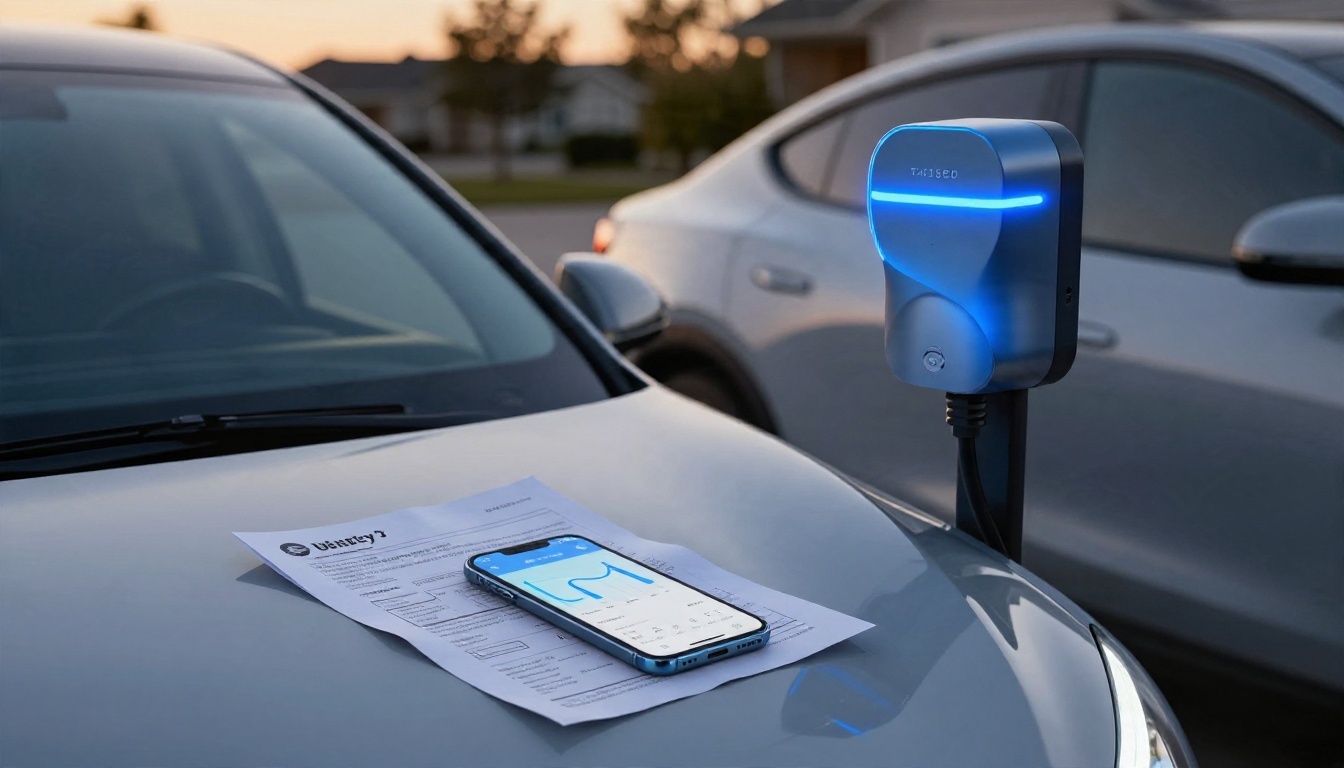
To find out whether your utility offers an EV charging rate, open its residential rate library and search for EV, time-of-use, and time-of-day plans. The published tariff explains who qualifies, what electricity costs, and whether the plan covers your car or your whole household.
That last part matters. Cheap overnight charging can come with more expensive afternoon cooling, cooking, and laundry.
Start with the utility and rate code printed on your bill, then follow the money through the full plan.
This post may contain affiliate links. If you make a purchase through these links, I may earn a small commission at no extra cost to you.
Find the Rate Attached to Your Address
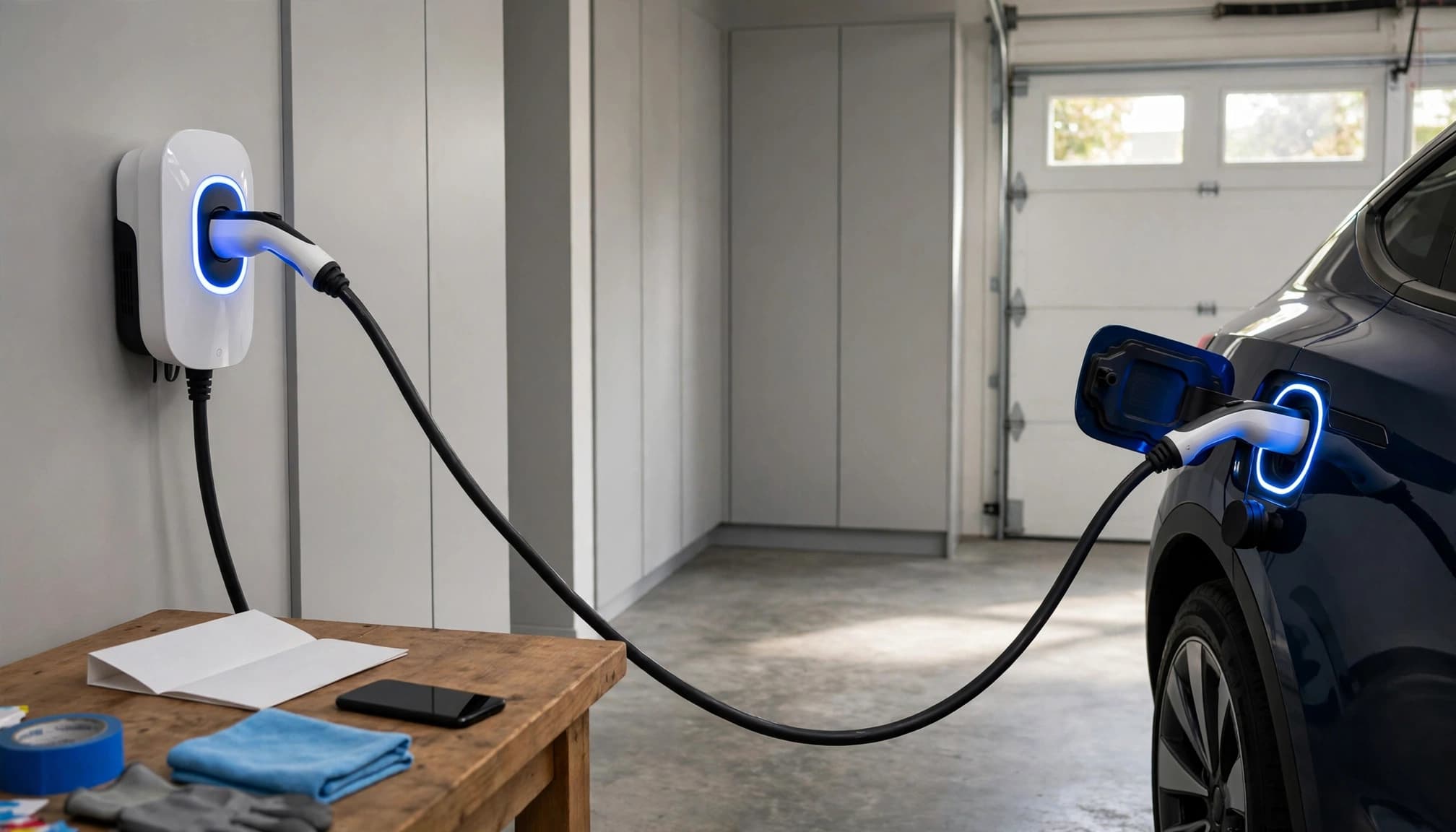
Start With Your Electric Bill
Your bill identifies the electric utility, account service address, and current rate name or schedule code. Those details narrow the search to plans available in your service territory.
In states with retail electricity choice, the supplier and delivery utility may be different companies. A utility's delivery discount doesn't automatically reduce a separate supplier's energy charge.
Gather 12 months of bills and download hourly or 15-minute usage data from your account. Monthly totals show how much electricity you use. Interval data shows when you use it, which is what time-of-use pricing needs.
Search the Utility's Rate Library
Use this sequence:
- Open the utility's residential rates or electric-vehicle section.
- Search for "EV rate," "time-of-use rates," "time-of-day," and "tariff."
- Open the full rate schedule and enrollment terms.
- Record the schedule number, effective date, eligibility, prices, and billing periods.
Real naming examples include BGE's Residential Electric Vehicle Time-of-Use, Schedule EV, and Con Edison's Electric Vehicle Time-of-Use offering. Names differ; the underlying questions don't.
A national electricity-price table won't answer this account-specific question. EIA explains that it doesn't publish individual utility tariffs.
Understand Which Kind of EV Charging Rate You Found
A program with "EV" in its name can change your electricity price, provide a charging credit, or subsidize equipment. Those are different benefits.
Whole-Home and EV-Only Plans
A whole-home time-of-use plan reprices electricity used by your vehicle and everything else behind that meter. Your air conditioner gets a vote, too.
An EV-only plan applies separate pricing to qualifying charging consumption. It may require another meter or utility-approved measurement through a vehicle or charger.
Here's how the main options differ.
| Plan Type | What Changes | Main Trade-Off |
|---|---|---|
| Whole-home TOU | Household electricity prices vary by time | Expensive peak-hour household use |
| EV-only tariff | Qualifying charging receives separate pricing | Metering requirements and possible added fees |
| Managed-charging program | Credits reward eligible charging behavior | Equipment, connectivity, and participation rules |
The plan's scope matters more than its marketing name.
Credits and Rebates Need Separate Math
Managed charging lets a utility coordinate or influence charging under defined program rules. Participation might involve scheduled charging, event-based adjustments, or sharing charging data.
A charger rebate reduces equipment or installation expense. It doesn't necessarily change your electricity price.
Separate recurring savings from one-time incentives. A $300 rebate, for example, belongs in the installation calculation rather than being treated as $300 of annual electricity savings.
Read Every Charge and Every Time Window

Build the All-In Energy Price
The advertised off-peak number may cover only electricity supply. Delivery charges, fuel adjustments, and other per-kilowatt-hour riders can sit elsewhere on the bill.
Add applicable variable charges together before comparing energy prices. Then include differences in monthly customer charges, meter fees, and program fees.
Also look for demand charges. These bill a tariff-defined peak power draw in kW, rather than total energy consumption in kWh. Monthly energy totals alone can't establish that peak.
Dividing your entire bill by kilowatt-hours gives a historical average. It doesn't necessarily reveal the incremental price of charging.
Record the Calendar and Enrollment Terms
Write down exact peak, off-peak, and super-off-peak hours. Include seasons, weekdays, weekends, and holiday definitions.
Midnight isn't automatically the cheapest time. Neither is Sunday.
Read enrollment conditions alongside the prices: EV registration requirements, smart-meter requirements, eligible equipment, data sharing, minimum participation periods, and exit rules. For connected programs, the exact charger or vehicle model can matter.
Keep the tariff's effective date with your comparison. A webpage's update date and a rate schedule's effective date aren't interchangeable.
If the plan includes bill protection, distinguish a temporary guarantee from permanent pricing. Its duration and covered charges determine how useful it is.
Compare the Whole Household Bill
Here's the part that deserves your attention: replay the same household usage under both plans.
For each billing period, multiply energy in each time window by its applicable price. Add fixed charges, demand charges where applicable, taxes, and other adjustments. Subtract eligible credits.
This calculation uses labeled assumptions, not a quoted utility offer.
| Monthly Component | Existing Flat Plan | Proposed Whole-Home TOU |
|---|---|---|
| Household: 300 kilowatt-hours off-peak, 300 kilowatt-hours peak | $120 at $0.20/kWh | $135 at $0.10 off-peak and $0.35 peak per kilowatt-hour |
| EV: 300 kWh, all off-peak | $60 | $30 |
| Additional monthly plan fee | $0 | $10 |
| Compared Total | $180 | $175 |
The EV saves $30, but the household pays $15 more and the plan adds $10. Net savings: $5 per month.
This comparison excludes charges identical under both plans. Any charges that change belong in the calculation.
A 50% reduction in the car's energy charge can produce only a small reduction in the household bill.
Repeat the calculation across 12 months. Summer cooling and winter heating can change the result substantially.
Keep EV consumption separate where possible. Otherwise, a weather-driven bill increase can get blamed on the car.
Match Charging Speed to Off-Peak Hours
An electricity rate measures cost per kWh. Charging power measures how quickly energy moves, in kW. Similar words, different jobs. DC fast charging power affects how quickly energy enters the battery, while the utility rate sets its cost.
DOE's charging-level overview distinguishes the equipment and electrical supply involved.
| Charging Type | Electrical Supply | Typical Range Added |
|---|---|---|
| Level 1 charging | Standard 120-volt AC outlet | About 2 to 5 miles of range per hour |
| Level 2 | Dedicated 240-volt circuit and EVSE | Often about 10 to 30 miles per hour |
| DC fast charging | High-power commercial DC equipment | Vehicle-dependent; substantial range in minutes |
For DC fast charging, figures such as 60 to 80 miles in 20 minutes or 100 miles in 30 minutes are useful illustrations, not promises. Vehicle efficiency, charging power, temperature, and battery state of charge change the result. A DC fast charger uses high-power commercial equipment, so DC fast charging isn't suitable for an ordinary home installation.
At home, the EVSE's output can exceed the power the vehicle's onboard AC charger accepts. That charger power output limit sets the vehicle's maximum AC charging rate. Buying a higher-output station doesn't override that limit.
A short discounted window may make Level 2 charging useful, even when Level 1 covers your driving over a longer night.
Our charging time calculator helps compare the available window with your battery, starting charge, target, and vehicle limit. Leave room for colder weather and days with extra driving.
Calculate Session Cost and Charging Time
Price the Energy You Buy
Use this calculation to estimate charging costs.
Charging energy in kWh × electricity price per kWh = energy cost
For a fully depleted 66-kilowatt-hour battery at $0.20 per kilowatt-hour, the battery-energy calculation is:
66 × $0.20 = $13.20
Adding only half that capacity, 33 kilowatt-hours, costs $6.60 on the same basis.
Actual metered consumption is higher than energy stored in the battery because charging has losses. When using an EPA electricity-consumption rating, don't automatically add another loss allowance; that rating already includes charging losses.
For context, EIA reports a 2025 residential average of 17.30 cents per kWh. A local price of $0.12 to $0.15 is possible, but it's no longer a sound national assumption.
Allow Enough Time to Finish
The simplified formula is:
Charging time in hours = energy needed in kWh ÷ charging power in kW
A 60-kilowatt-hour battery receiving a constant 10 kW takes about six hours to charge from empty, before losses and power reductions.
A 33-kilowatt-hour Level 2 top-up at 7.2 kW takes about 4.6 hours ideally. At $0.20 per kilowatt-hour, its battery-energy cost remains $6.60.
Use energy needed, not full battery capacity, for a partial charge. Real sessions also depend on battery conditioning and the vehicle's charging controls.
Account for Installation, Solar, and Battery Limits
Level 2 charging requires a dedicated 240-volt circuit and charging equipment, commonly called EVSE. Treat a $1,000 to $2,000 equipment-and-installation allowance as a starting budget, not a ceiling. Electrical capacity, cable route, permitting, and separate-meter work can push costs higher.
DOE's home charging guidance explains the basic options. Our Level 2 installation cost guide separates equipment from the full electrical scope.
A qualified electrician should handle installation and capacity assessment. Stop using damaged or overheating equipment; repeated trips and faults need an electrician or manufacturer-supported diagnosis.
Charging also slows as battery state of charge rises, especially during DC fast charging. Tapering can begin within the 50% to 80% region, with much slower charging near full. Follow the vehicle's recommended daily limit.
Cold batteries can accept less power. High temperatures can trigger protective reductions; prolonged heat exposure also affects battery aging.
Solar can reduce daytime grid purchases nearly to zero when surplus production covers charging. The economics still include installation costs and any export credit you give up. "Solar-powered" doesn't automatically mean free.
Compare Public Charging and Gasoline Fairly
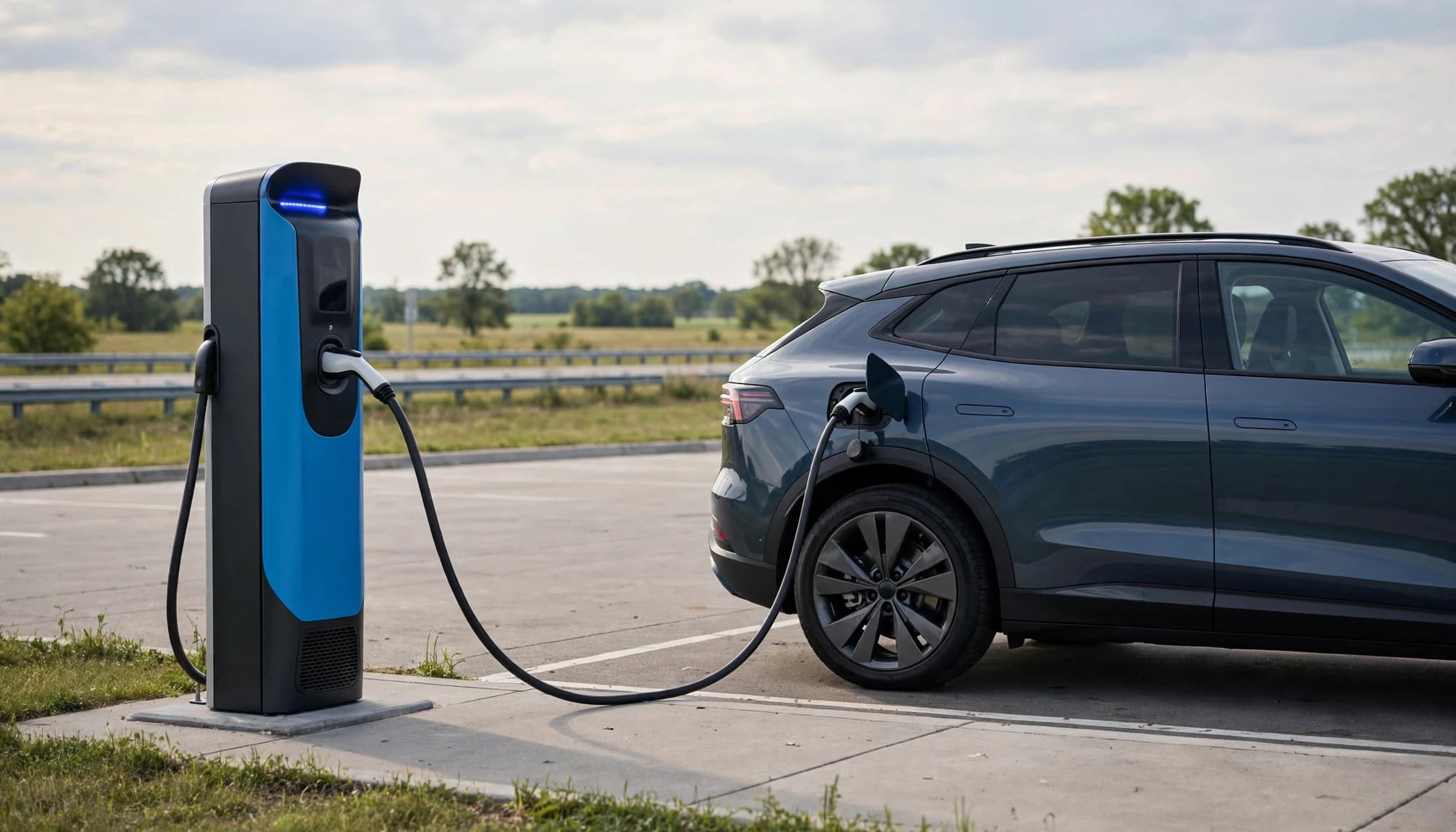
A home tariff doesn't set the price at a public station. Prices at public charging stations can include energy, time, connection, parking, and idle charges.
For budget sensitivity, test home charging at $0.15 to $0.40 per kilowatt-hour, public Level 2 at $0.20 to $0.50 per kilowatt-hour, and DC fast charging at $0.25 to $0.60 per kilowatt-hour. These are planning scenarios, not nationwide November 2026 price quotes. Actual prices can fall outside them.
A 66 kWh battery-energy purchase at $0.30 to $0.60 per kilowatt-hour costs $19.80 to $39.60. That's where a roughly $20 to $40 fast-charging estimate comes from, before losses or additional fees.
Electrify America's Pass+ offers paid-member discounts. ChargePoint pricing is generally set by station hosts, so an account doesn't guarantee a universal discount or waived connection fee.
For driving costs, assume 30 kWh per 100 miles and $0.20 per kilowatt-hour: that's $6 per 100 miles, or a cost per mile of $0.06. A 30-mpg car at an assumed $3.60/gallon has gasoline costs of $12 per 100 miles, or $0.12 per mile. At $0.50/kWh, the EV costs $15 per 100 miles.
Our EV savings calculator lets you include your home/public charging mix. Fuel savings alone don't establish total ownership savings.
Key Takeaways Before You Enroll
- Identify the plan's scope, because whole-home pricing changes more than your charging bill.
- Compare complete annual bills using interval data, all applicable charges, and a realistic charging schedule.
- Separate recurring tariff savings from rebates, installation expenses, and managed-charging credits.
Once enrolled, use one clear charging schedule and leave enough time to reach your departure target. Overlapping vehicle and charger schedules can create an empty charging window.
Sources for the Underlying Charging Rules
DOE's electric-vehicle reference guide explains charging levels and representative range additions. Its charging operation and maintenance guidance covers electricity-cost components and demand-charge considerations.
For an account-specific decision, the applicable utility tariff supplies the eligibility, prices, billing periods, and enrollment rules.
Frequently Asked Questions
What If My Utility Has No EV-Specific Plan?
A general residential time-of-use plan may still offer cheaper charging periods. Its name doesn't need to mention electric vehicles.
If the available plan charges the same per-kilowatt-hour price all day, moving charging to midnight doesn't create an energy-price saving. Managed-charging credits or equipment rebates may still be separate options.
Do I Need a Wi-Fi Charger to Get Off-Peak Prices?
A time-based tariff can bill according to the meter's recorded usage without requiring a Wi-Fi charger. Many vehicles can schedule charging themselves.
A managed-charging program may require supported connected equipment. Our guide to off-peak charging without charger Wi-Fi explains that distinction.
How Much Does a Full Charge Cost Compared With Gas?
Using an assumed $0.1658/kWh, a 40-kilowatt-hour battery-energy refill costs $6.63 before charging losses. If that energy provides 150 miles, the calculated cost is about 4.42 cents per mile.
A 25-mpg gasoline car at an assumed $3.11/gallon costs 12.44 cents per mile. These are arithmetic inputs, not current local price claims. Different vehicles and charging prices produce different results.
Choose the Plan That Lowers Your Total Bill
The useful EV charging rate is the one that fits your household's actual electricity use. A low overnight number is only part of that decision.
Start with your rate code, the effective tariff, and interval data. Then compare the total annual cost, including new fees and the charging schedule you can comfortably maintain.
That gives you a firmer answer than the word "EV" on a plan's name.
Safety note: This article is general information, not professional electrical advice. Working with 240V circuits can cause serious injury or fire. Hire a licensed electrician and follow local codes and permit requirements.
Sources & further reading

Written by
LarryLeoLarryLeo started EV Charging while researching his own next car purchase. He digs into the pros, cons and real cost savings of going electric — using government, standards-body and manufacturer sources — and shares what he finds so other buyers can decide with confidence.
Why trust EV Charging Guide
Our guides are researched from government, standards-body and manufacturer sources, reviewed for accuracy, and updated when rules or products change. Brands cannot pay for placement. Read our editorial policy.