How to Find Fast Chargers on a Road Trip: Apps and Planning Tips
Plan stops around reliable DC fast chargers, keep a backup, and arrive with a buffer. Here's how experienced EV drivers do it.
As an Amazon Associate, EV Charging may earn from qualifying purchases. This helps support our independent guides at no extra cost to you. Learn more.
Key takeaways
- Use your car's route planner plus a third-party map for backups.
- Charge to about 80% — DC charging slows down above that.
- Carry a portable charger as a last-resort backup.
Plan with two tools
Your car's built-in navigation often preconditions the battery for faster charging. Cross-check stops with the DOE Station Locator or a crowd-sourced app showing recent check-ins and outages.
Shop this guide
Compare current options and prices
Charge smart, not full
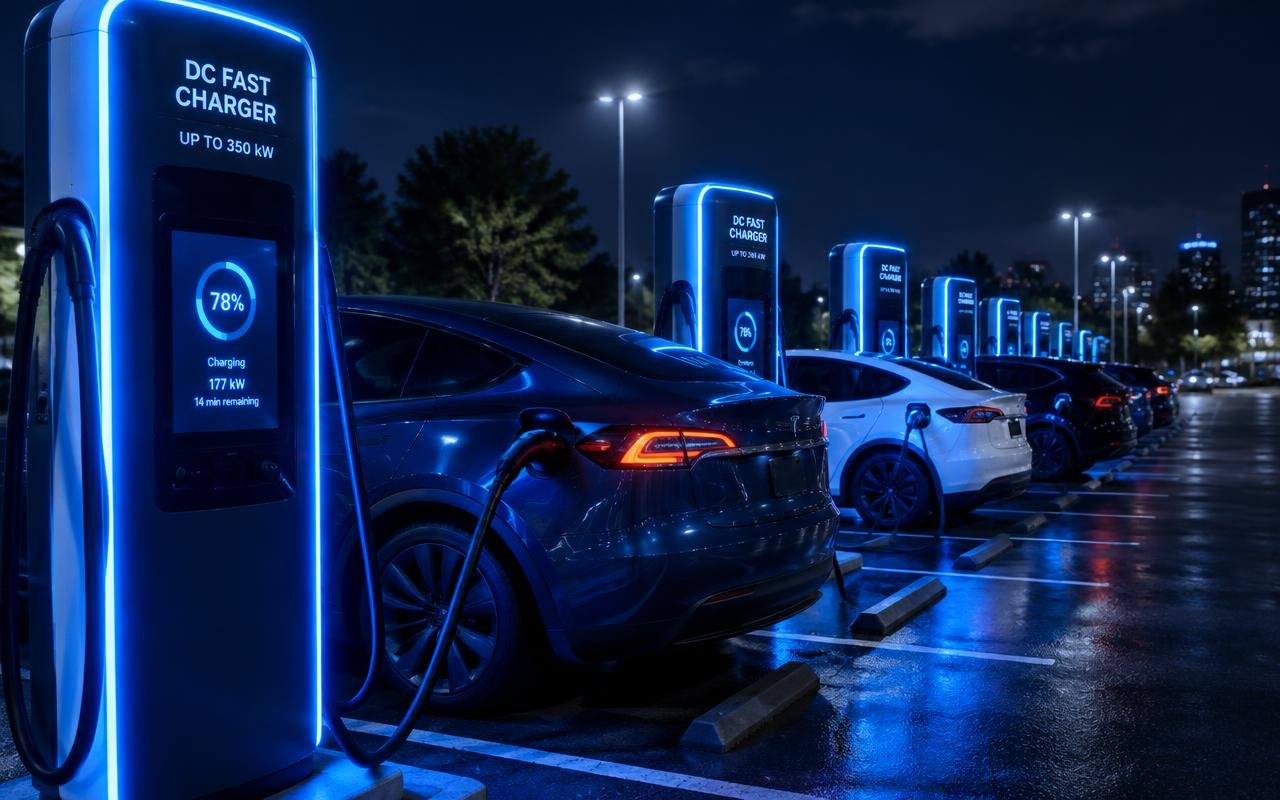
DC fast charging is quickest between roughly 10% and 80%. Short, frequent stops are usually faster overall than charging to 100%.
Have a backup
Identify a second charger near each planned stop, and pack a portable charger and the adapters your car needs. Arriving with a 15–20% buffer reduces stress if a station is busy.
Sources & further reading
Written by
LarryLeoLarryLeo started EV Charging while researching his own next car purchase. He digs into the pros, cons and real cost savings of going electric — using government, standards-body and manufacturer sources — and shares what he finds so other buyers can decide with confidence.
Why trust EV Charging Guide
Our guides are researched from government, standards-body and manufacturer sources, reviewed for accuracy, and updated when rules or products change. Brands cannot pay for placement. Read our editorial policy.
Related Posts
EV Charging for Apartment Renters Without a Garage
How to Charge an EV if You Live in an Apartment or Condo