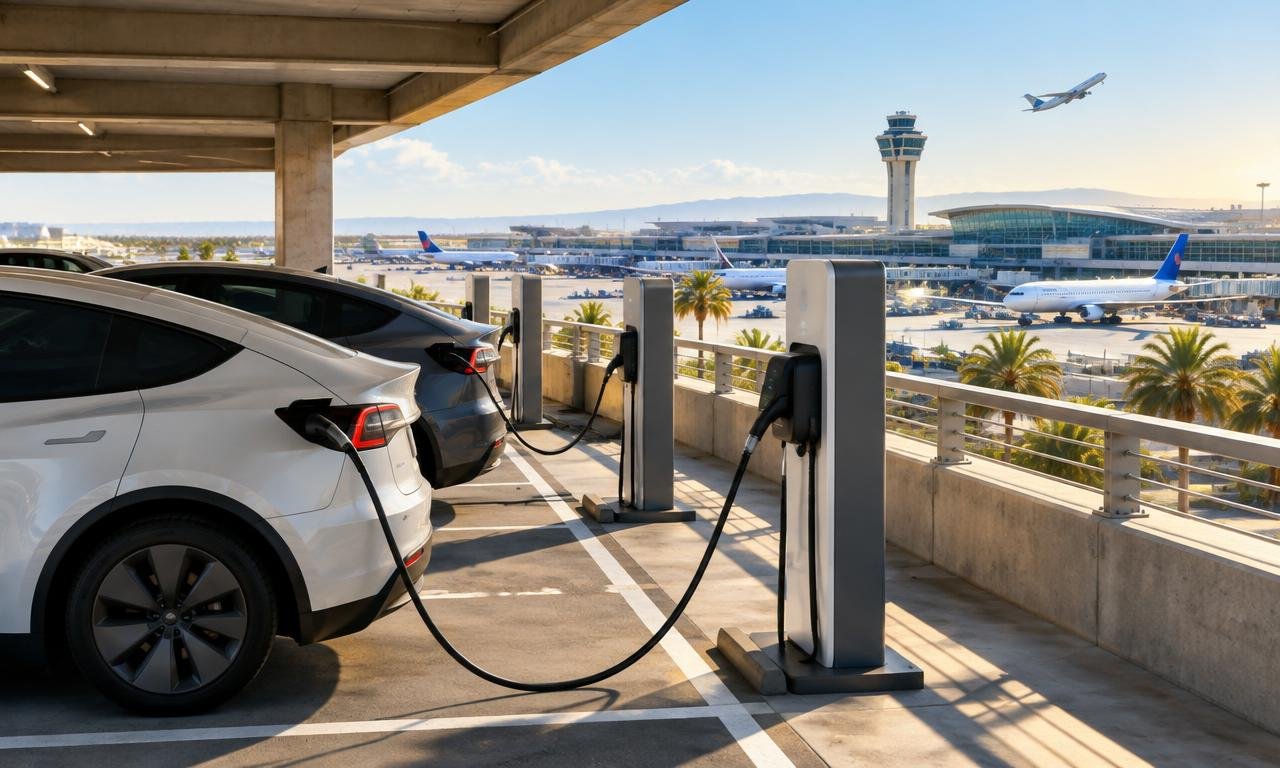
How to Charge an EV if You Live in an Apartment or Condo
No garage? Plan EV charging around your apartment or condo with renter-friendly options, public charging backups and clear questions for property managers.
As an Amazon Associate, EV Charging may earn from qualifying purchases. This helps support our independent guides at no extra cost to you. Learn more.
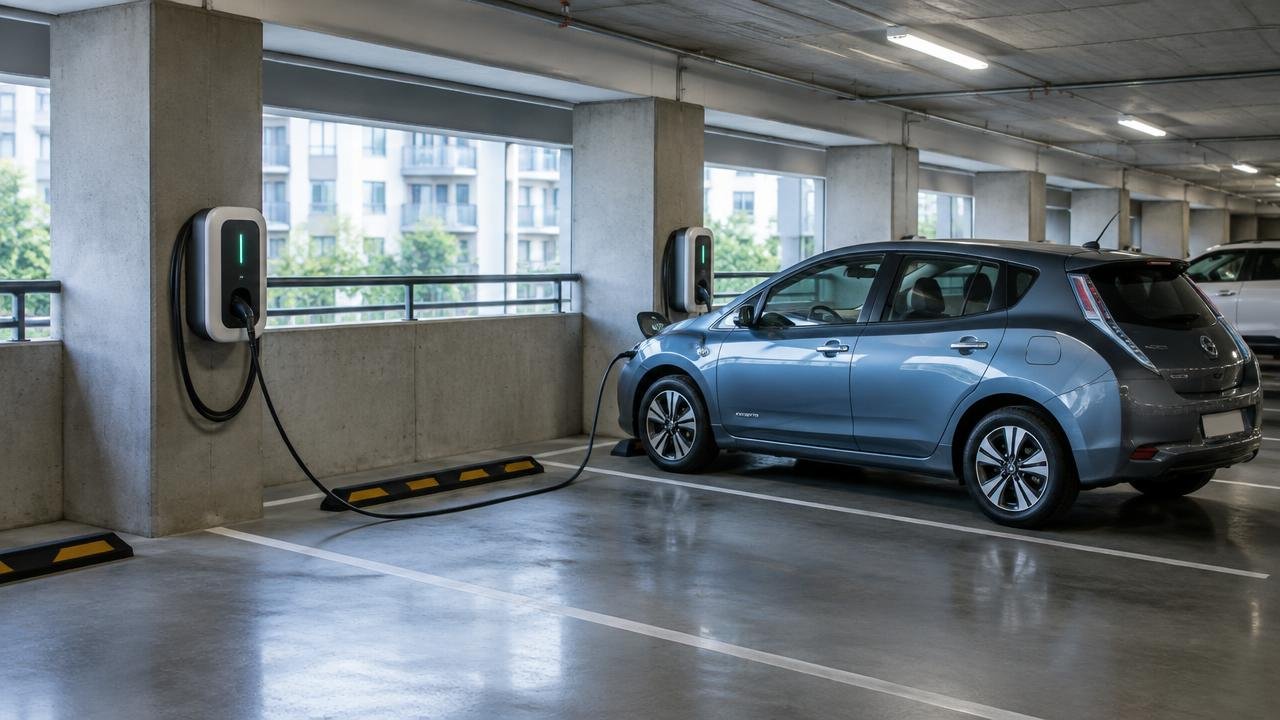
Key takeaways
- Build a primary charging routine and a backup around parking access, driving needs and the time your car is already parked.
- Renters without garages can consider approved outdoor charging, shared building stations, workplace charging and public sites—not improvised extension cords.
- Get written property approval and a licensed electrical assessment; verify local rights, costs, billing and maintenance before committing.
Start with a charging routine, not a garage
An apartment address doesn't automatically rule out an EV. What matters is whether you can reliably put back the energy you use, at a price and with a routine you can live with. That might mean a charger in your assigned space, a shared building station, workplace charging, or public charging near places you already visit.
The awkward part isn't necessarily the plug. It's access: who controls the parking space, when you're allowed to use it, and what happens when your usual charger is occupied. A charger behind a locked gate you can't enter is excellent infrastructure for somebody else.
I'm LarryLeo, a car buyer researching these arrangements, not reporting an apartment-charging setup I've personally tested. This guide combines the practical questions renters and condo owners need to ask before buying a vehicle or paying for equipment.
Shop this guide
Compare current options and prices
Match the charging time to your actual driving
Start with a normal week of driving, including errands and weekends. Then write down the places where your car already sits for several hours. Charging during that parked time is a different proposition from making a special trip every time the battery needs attention.
Level 1 means charging from a 120-volt household outlet with suitable equipment. Level 2 uses 240-volt service in typical residential settings or 208-volt service in many commercial settings. DC fast charging supplies direct current to a compatible vehicle for shorter charging stops. Think of these as different refill rates, not different grades of electricity.
DOE says Level 1 can meet many drivers' daily needs when a suitable outlet on a dedicated circuit is available near the parking location. That isn't a promise for every commute. Compare your vehicle's documented charging capability with the hours you'll actually be connected, not just the hours you're home.
For a deliberately hypothetical example, suppose your driving requires 10 kilowatt-hours of energy each day. A kilowatt-hour, or kWh, measures an amount of energy; kilowatts, or kW, measure the delivery rate. At an assumed steady 5 kW, delivering 10 kWh takes two hours mathematically. Real charging time also depends on the vehicle, battery conditions, losses and station output. Use the calculation as a planning check, not a guaranteed finish time.
For a closer look at overnight charging, see our Level 1 versus Level 2 commute guide.
Renters without a garage: build a plan around accessible parking
No garage can mean three very different situations: an assigned outdoor stall, an unassigned apartment lot, or street parking. Separate them before shopping for a portable charger. Portable describes equipment you can carry; it doesn't create an approved electricity supply or permission to use somebody else's outlet.
With an assigned outdoor space, ask the property manager whether an existing outlet can be evaluated for EV charging or whether a permitted installation is possible. Get written permission covering the space, equipment, electricity payment and cable route. Ask a licensed electrician to assess the circuit and equipment before treating that outlet as your nightly charging plan.
With unassigned parking, an outlet beside one space may not help when another resident parks there. Ask about shared charging spaces, reservations, time limits and enforcement. If management is considering chargers, explain your likely parking hours and ask other interested residents to join the request. A small, concrete proposal is easier to evaluate than a vague request for more amenities.
With street parking only, start with workplace and public stations, including any officially installed curbside charging. Check the local parking rules and station access rather than assuming a curbside plug gives you unrestricted overnight parking. Don't plan to run an extension cord from an apartment window or across a sidewalk. The U.S. Fire Administration says not to use extension cords or multiplug adapters for EV charging.
Before committing to an EV, rehearse the routine without charging: visit the proposed station when you would actually need it, check the walk home, and identify another site. Ask yourself whether that walk still feels workable after dark or in bad weather. Those practical details deserve as much attention as the car's screen size.
Turn nearby public charging into a repeatable routine
Use DOE's Alternative Fueling Station Locator to search near home, work and regular destinations. Filter for the charging equipment and connector your vehicle can use. A map pin is a starting point, not a reservation or a guarantee that the space will be available when you arrive.
Confirm access hours, parking charges, charging prices and any session or idle fees with the site or charging operator. Check whether a garage closes before your shift ends and whether charging spaces require a separate parking payment. Save the operator's support number and check how payment works before you arrive with a low battery.
Level 2 charging fits places where you already spend substantial time. A short grocery stop may be a helpful supplement without replacing a full week's driving. DC fast charging can cover a gap or support a public-charging routine, but verify your exact vehicle's compatibility and expected charging behavior rather than assuming every fast charger delivers the same result.
Choose a primary site and a backup in a different location. Several connectors at one site may still leave you without an alternative if access is blocked. Keep enough battery margin to reach the backup comfortably; follow the vehicle maker's guidance for charging targets rather than making a near-empty arrival part of the routine.
Our charging plug and compatibility guide explains what to check before relying on a station or adapter.
Ask whether workplace charging really covers your schedule
Workplace charging is worth investigating because the car may already be parked for hours. DOE provides workplace planning resources covering employee demand, access, operation and charging policies. Ask your employer or facilities team about existing stations before assuming none are available to you.
Get the details: who can use them, what charging costs, whether you must move the car during a shift, and what happens when all spaces are occupied. A station that requires a lunchtime move isn't convenient if you can't leave your workstation. Ask whether access works for evening or weekend staff, too.
Keep a non-work fallback. Days off, remote work and a job change can all disrupt an otherwise tidy plan. If charging only works when you commute to one particular building, include the inconvenience and cost of public charging in your buying decision.
Bring the landlord or condo board a decision-ready request
For an apartment, start with the property manager or owner. For a condo, ask the association who can approve work in your space and on common property. Ownership of a unit doesn't necessarily tell you who controls the parking area or the electrical route to it.
Put your request in writing. Identify the space, expected parking hours, proposed charging arrangement and who would pay for assessment, installation and electricity. Ask for a licensed electrician's site review before choosing hardware. DOE identifies parking, electrical access, billing and legal concerns as distinctive multifamily issues.
Have the proposal address permits, inspections, equipment ownership, maintenance, insurance requirements and what happens when you move. If the charger will be shared, add rules for access and payment. Ask whether the building prefers a resident-funded installation or a property-managed service open to multiple residents.
Check current state and local rules rather than assuming you have a universal right to install. DOE's laws-and-incentives search is a useful starting point for finding jurisdiction-specific provisions. Read the applicable law or contact the relevant agency to confirm coverage, exceptions and application requirements. Don't treat a general mention of right-to-charge laws as approval to begin work.
State or utility programs may help a property install charging, but eligibility and funding need checking directly. Ask who must apply, whether approval is required before work starts, and which costs are eligible. Don't subtract a possible rebate from your budget until its actual terms fit the project.
An outdoor outlet needs an electrical assessment, not optimism
A normal-looking outlet next to your stall is promising, but appearance doesn't establish suitability. DOE describes Level 1 home charging with a nearby outlet on a dedicated branch circuit: an individual circuit reserved for the charging load. The building's electrician needs to verify what the outlet serves and whether the installation is appropriate.
Use a licensed electrician, follow manufacturer instructions, and obtain required permits under local rules. DOE notes that EV charging is treated as a continuous electrical load, meaning it can draw power for an extended period. That is why a plug fitting into a receptacle isn't the whole safety assessment.
The U.S. Fire Administration recommends equipment certified by a nationally recognized testing laboratory and says to plug Level 1 equipment directly into an outlet designed for its amperage. It also says not to use damaged charging equipment. Don't solve a cable-reach problem with an extension cord, a multiplug adapter or improvised wiring.
Outdoor charging is possible, including in rain, with outdoor-rated equipment and the proper installation. Follow the equipment maker's wet-weather instructions and have the electrician address outlet protection and placement. Plan the cable route so it doesn't cross a walkway, interfere with an accessible route, or get caught under a tire. Check the distance to the vehicle's actual charge-port position, not just the nearest bumper.
If the parking space is exposed, our outdoor charger and weather-rating guide explains the buying questions to bring to your installer.
For shared building chargers, ask who runs the service
A building charger is both electrical equipment and a shared parking service. Before relying on it, ask how residents gain access, whether guests can use it, and how occupied spaces are handled. Agreeing on these details early is less awkward than negotiating through windshield notes.
Ask management how electricity is billed and whether charging fees are separate from parking or rent. Request an explanation of any session limits, idle charges and account fees. Find out who handles faults and how residents report a broken connector or a vehicle blocking the space.
For app-controlled equipment, ask what happens if your phone has no signal, the building's internet goes down, or the operator changes. Don't assume offline charging is supported. Request the documented behavior for the proposed equipment and service, plus a clear support contact.
For a larger project, ask the electrician and charging provider whether managed charging is appropriate. That means coordinating the power available to multiple vehicles rather than assuming every port always runs at maximum output. Ask what energy a resident can reasonably expect during the available parking window and how the system behaves when demand increases.
Make the buying decision with time and money on the same page
Compare complete routines, not just advertised electricity rates. Record energy charges, parking, session fees and the time needed to get to and from each station. For an installation proposal, separate the equipment quote from electrical work, permits and any recurring service charges. There isn't one apartment-charging price that sensibly fits every building.
A workable plan has a dependable primary option, a realistic backup and clear permission for anything on the property. If those pieces aren't in place, resolve them before buying rather than hoping a portable charger will fill the gap. The goal isn't a perfect charging arrangement. It's one that fits an ordinary Tuesday without becoming your second job.
Frequently asked questions
Can I own an EV if I rent an apartment without a garage?
Yes, if you have a reliable way to replace the energy you use. Start with workplace charging, accessible public stations or approved charging in an outdoor parking space. Check actual access, prices and a backup location before buying. A portable charger alone does not solve a lack of parking or an approved outlet.
Can I use a regular apartment parking-lot outlet?
Only with property permission and an electrical assessment confirming that the outlet, circuit and equipment are suitable. DOE describes Level 1 charging using a nearby outlet on a dedicated circuit. Follow manufacturer instructions and have a licensed electrician address local requirements; do not use an extension cord to reach the car.
Does my landlord or condo association have to approve a charger?
That depends on your jurisdiction, property arrangement and the applicable law. Start with DOE’s laws-and-incentives search, then confirm the current legal text and requirements locally. Submit a written proposal covering electrical assessment, permits, costs, billing and responsibility rather than assuming a right-to-charge provision guarantees every request.
Can public charging replace home charging?
It can, provided the stations fit your vehicle, schedule and budget. Verify access hours and fees, visit at the times you expect to charge, and identify a backup site. Include parking and walking time in the decision, not just the charging rate shown on an app.
Is it safe to charge outdoors when it rains?
DOE says outdoor installation and use can be safe, including in rain, when outdoor-rated equipment is used. Follow the charging equipment manufacturer’s wet-weather instructions, use an appropriate installation and keep equipment in good condition. Have a licensed electrician address outlet protection and avoid cables crossing walking routes.
Sources & further reading
- U.S. DOE AFDC — Charging Electric Vehicles at Home
- U.S. DOE AFDC — Electric Vehicle Charging for Multifamily Housing
- U.S. DOE AFDC — Electric Vehicle Charging Stations
- U.S. DOE AFDC — Workplace Charging for Electric Vehicles
- U.S. DOE AFDC — Alternative Fueling Station Locator
- U.S. DOE AFDC — Search Federal and State Laws and Incentives
- U.S. Fire Administration — Electric Vehicle Fire Safety

Written by
LarryLeoLarryLeo started EV Charging while researching his own next car purchase. He digs into the pros, cons and real cost savings of going electric — using government, standards-body and manufacturer sources — and shares what he finds so other buyers can decide with confidence.
Why trust EV Charging Guide
Our guides are researched from government, standards-body and manufacturer sources, reviewed for accuracy, and updated when rules or products change. Brands cannot pay for placement. Read our editorial policy.
Related Posts
EV Road Trip Planning: How to Find Fast Chargers and Avoid Range Anxiety
Tesla Supercharger vs Electrify America: Cost, Speed and Reliability Compared