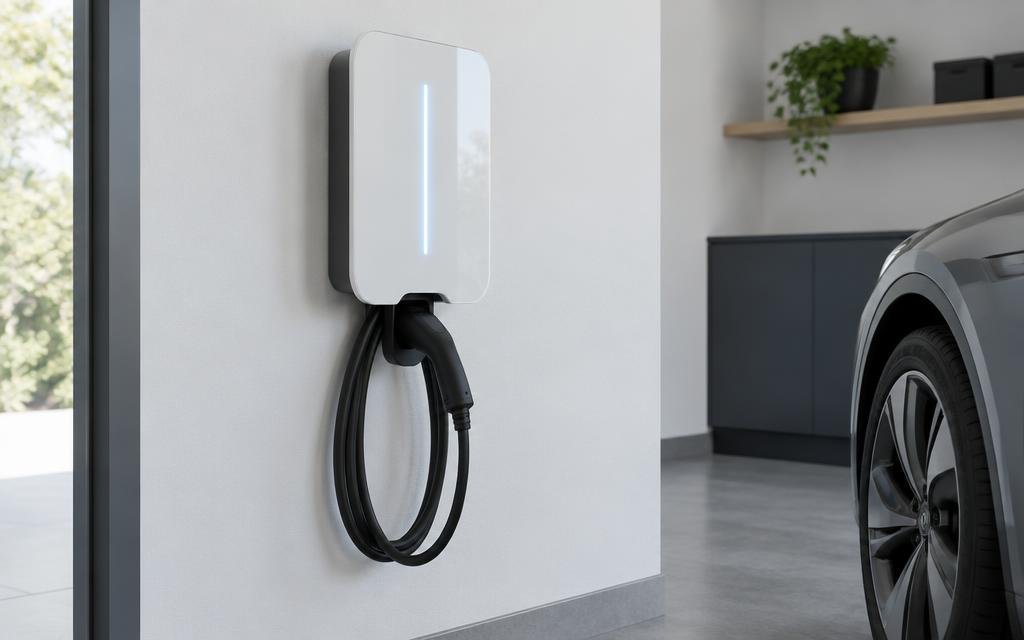
Must-Have EV Charging Accessories for New Owners
A researched shortlist of EV charging accessories: approved adapters, cable holders, portable EVSE, and weather protection, plus unsafe extras to skip.
As an Amazon Associate, EV Charging may earn from qualifying purchases. This helps support our independent guides at no extra cost to you. Learn more.
Key takeaways
- Choose adapters for an exact vehicle, connection direction, and charging type; AC and DC adapters are not interchangeable.
- Put certified equipment, electrician-reviewed electrical suitability, and useful cable storage ahead of accessory bundles.
- Skip extension cords, power strips, and adapters without documented approval, compatibility, and ratings.
Buy for your parking spot, not an accessory bundle
You’re getting ready for an EV, and the accessory lists are already multiplying. Before filling a cart, ask what comes with the car, where you’ll normally charge, and which other charging locations you actually expect to use. An accessory should have a job before it gets a place in your garage.
I’m researching this as a car buyer, not reporting hands-on tests. This shortlist uses documented compatibility, electrical suitability, and practical storage as its selection criteria. It isn’t an electrician’s installation guide, and I haven’t tested the products discussed here.
Start by checking the supplied charging cable, outlet adapters, connector adapters, and storage accessories against the owner’s manual. ESFI, the Electrical Safety Foundation International, recommends manufacturer-provided or approved cables, equipment certified by a Nationally Recognized Testing Laboratory, inspection before use, and proper storage. That’s a more useful shopping filter than a bundle with lots of pieces.
Keep the list focused: charging access, cable management, and weather exposure. Tire equipment and general home accessories are outside this shortlist. If an extra doesn’t solve a problem you can identify, it can wait. Sometimes the useful purchase is the one you discover you don’t need.
Shop this guide
Compare current options and prices
Adapters need an exact match—not a familiar logo
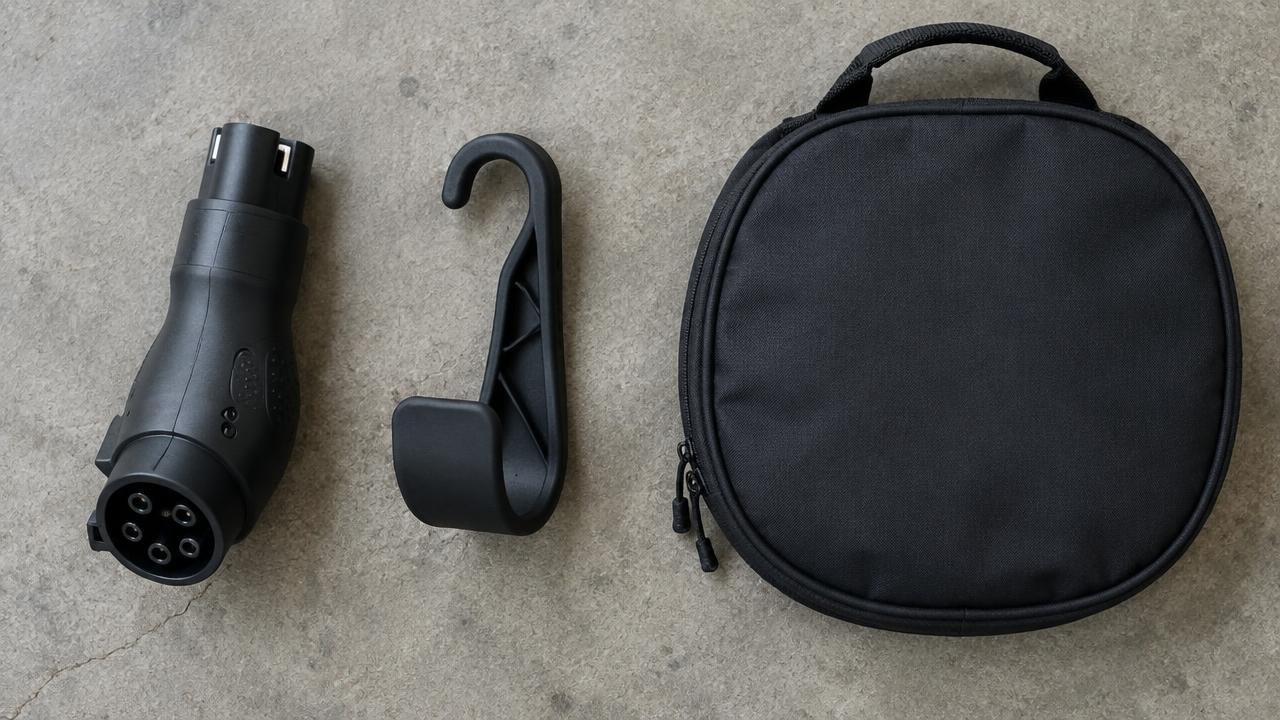
Found a charger you want to use, but the connector doesn’t match your car? That’s when an adapter may earn its place. Write down the station’s connector, the vehicle’s inlet, and whether the connection uses AC or DC. Those are different charging types, and their adapters aren’t interchangeable just because the plugs look related.
Ford’s Fast Charging Adapter is a useful example. It connects a compatible vehicle’s CCS1 inlet to NACS DC fast-charging equipment. Ford says it does not work with Level 1 or Level 2 AC equipment, including Tesla Destination Chargers and NACS home chargers. Think specific connection, not universal translator.
For Supercharger use, Ford instructs owners to use only NACS DC adapters sold or provided by Ford or Tesla. It warns against using NACS AC adapters with NACS DC fast chargers and does not guarantee aftermarket-adapter compatibility. Those are Ford’s requirements; another automaker needs its own compatibility check.
For an AC J1772/NACS connection, ask your vehicle manufacturer which exact equipment-and-adapter combination it permits. Spell out the direction: a J1772 charging handle connecting to a NACS vehicle inlet, for example. A product name containing NACS, J1772, or Tesla doesn’t settle that question. If the documentation leaves the direction or charging type unclear, leave the adapter out of the cart.
Use the J1772/NACS adapter guide to organize your compatibility questions, but verify the final answer with your automaker before ordering.
Read the ratings before the shopping reviews
A promising adapter still needs a documentation check. Look for supported vehicles and charging equipment, current and voltage ratings, environmental limits, and instructions. Current, measured in amps, is a bit like the flow through a hose; a rating describes a limit, not a promise of what your car will receive.
Ford lists its particular DC adapter at up to 500 amps and 1,000 volts, with an IP67 environmental-protection rating. Those specifications belong to that adapter. They don’t mean a connected vehicle will charge at those limits, and they aren’t specifications you can transfer to another product.
Outlet adapters deserve the same care. Tesla’s Gen 2 Mobile Connector manual specifies a maximum current of 32 amps, controlled by the appropriate adapter. Its table lists 32 amps with the 14-50 and 6-50 adapters, and 24 amps with the 14-30 and 10-30 adapters. The outlet’s name or appearance isn’t the portable unit’s charging-current specification.
Bring the exact EVSE manual and proposed outlet-adapter list to a licensed electrician. EVSE means electric vehicle supply equipment—the equipment used to supply charging power to the car. Have the electrician assess the circuit, receptacle, protective devices, permits, and local-code requirements. An online adapter chart isn’t a replacement for that assessment.
Give the cable somewhere sensible to live
Picture the car parked where you’ll charge it. Where does the cable go afterward? A holder and connector holster are worth considering if the equipment doesn’t already provide suitable storage. ESFI recommends proper storage to prevent damage and keeping the charging cable off the floor to reduce tripping hazards and help maintain the cord’s life.
Check the charger’s storage instructions before choosing an organizer. You want a documented connector match and cable support consistent with those instructions. Ask whether the stored cable crosses your walking route and whether you can return the connector to its resting place without pulling the cable tight.
Then check what you already have. A separate organizer should improve the actual parking layout, not duplicate the charger’s existing storage provision. For mounting that affects the charging installation, ask the installer to confirm both the location and the method. A tidy-looking photo isn’t the same thing as a suitable arrangement.
Compare layouts in the garage cable organizer and holder guide, then check the selected arrangement against your charger's instructions.
Choose portable equipment for a place you’ll actually use it
A portable EVSE sounds reassuring. The useful question is where you’d plug it in. Start with a confirmed destination outlet, not an imagined emergency socket. Ask what outlet is available and whether EV charging is permitted, then arrange an equipment and electrical-suitability check rather than relying on a photograph.
Tesla’s Gen 2 Mobile Connector manual shows why this homework matters. It specifies operating parameters and adapters, warns against using adapters in outlets they weren’t designed for, and says not to use damaged or defective equipment. It also prohibits opening, repairing, tampering with, or modifying the connector. Those restrictions belong in the buying decision, not in a drawer afterward.
Compare the exact vehicle connector, approved outlet adapters, electrical ratings, environmental restrictions, certification, and storage provisions. Check the current price after unsuitable options are out of consideration. Portability doesn’t make an unsupported outlet-and-adapter combination acceptable.
The portable EV charger guide for road trips and camping can help structure that destination-based shortlist.
Have the outlet checked before adding conveniences
An existing receptacle may look like the easy answer. Have a licensed electrician assess it before treating it as a charging solution. ESFI recommends an electrical-system inspection, appropriate GFCI protection—ground-fault protection—and qualified installation. Follow manufacturer instructions, required permits, and local code; this is not a wiring walkthrough.
Keep inspecting after installation, too. ESFI says to visually inspect the cable before use and never use a damaged charger. Tesla says not to use its Mobile Connector if it’s cracked, frayed, broken, otherwise damaged, or malfunctioning. A storage hook can organize equipment; it cannot make damaged equipment acceptable.
For a plug-in setup, ask the electrician and equipment manufacturer about receptacle suitability, plug support, and cord arrangement. Tesla’s Gen 2 manual specifically requires managing the power-supply cord so it cannot contact the floor when installed and plugged in. Follow your actual model’s instructions rather than borrowing another charger’s illustration.
Weather protection needs to fit the equipment’s rules
Charging outdoors doesn’t automatically mean buying a cover. ESFI says to use only outdoor-rated charging stations outdoors and to cover chargers according to manufacturer specifications to avoid water damage. A cover belongs within an approved outdoor setup; it doesn’t turn unsuitable equipment into outdoor equipment.
DOE’s winter guidance notes that heavy snow or sleet can freeze charging connectors. It identifies a magnetic inlet cover or bag as a possible precaution and recommends hanging up the connector according to manufacturer recommendations. Before buying, check compatibility with the car, connected handle, and equipment instructions.
That winter suggestion isn’t permission to charge in every condition. Tesla’s Gen 2 Mobile Connector manual warns against use during severe rain, snow, electrical storms, or other inclement weather. It also prohibits plugging into an outlet submerged in water or covered in snow. An accessory seller’s cover doesn’t override those restrictions.
Leave extension cords and mystery adapters out
If the cable won’t reach, revisit the parking and installation plan. ESFI says never to use an extension cord or multiplug adapter for EV charging. Tesla’s Gen 2 manual also prohibits an extension cord, multi-outlet adapter, multi-plug, conversion plug, or power strip to connect the Mobile Connector. A heavy-duty label doesn’t change those instructions.
Skip unlisted or undocumented adapters, generic plug-conversion bundles, and products whose compatibility cannot be confirmed by the vehicle and equipment manufacturers. Certification and automaker approval are separate checks: ESFI recommends certified equipment, while Ford’s Supercharger guidance requires specific approved adapters. One assurance doesn’t replace the other.
My research-based buying order is an approved charging arrangement first, cable storage next, a connector adapter for a supported connection when needed, portable EVSE for a confirmed use case, and weather protection where appropriate. That keeps the shopping list tied to your charging routine instead of turning it into a collection of possibilities.
Before choosing the installation location, review what EV charger cable length you need and discuss the actual reach with your installer.
Frequently asked questions
Can one NACS adapter handle both home charging and Supercharging?
Don’t assume it can. Ford says its NACS DC Fast Charging Adapter does not work with Level 1 or Level 2 AC chargers. Check the exact adapter’s charging type, connection direction, vehicle compatibility, and automaker approval before buying.
Should I buy a portable charger immediately?
Check the vehicle’s supplied equipment first, then name a place where you’d use a portable unit. Confirm permission to charge, compatible equipment, an appropriate outlet, and manufacturer requirements. Have a licensed electrician assess electrical suitability before relying on that destination.
Is a heavy-duty extension cord acceptable for occasional charging?
Not under the ESFI guidance and Tesla Gen 2 Mobile Connector instructions reviewed here: both prohibit extension cords. If reach is the problem, work on an appropriate equipment and installation plan instead of adding an extension.
Do I need a weather cover for an outdoor charger?
Not automatically. Use outdoor-rated equipment and follow its instructions. A compatible inlet cover may help with winter freezing, but it cannot override the charger’s weather restrictions or make an unsuitable outlet safe to use.
Sources & further reading

Written by
LarryLeoLarryLeo started EV Charging while researching his own next car purchase. He digs into the pros, cons and real cost savings of going electric — using government, standards-body and manufacturer sources — and shares what he finds so other buyers can decide with confidence.
Why trust EV Charging Guide
Our guides are researched from government, standards-body and manufacturer sources, reviewed for accuracy, and updated when rules or products change. Brands cannot pay for placement. Read our editorial policy.
Related Posts
Best EV Charging Cable Organizers and Holders for Your Garage
ChargePoint Home Flex vs Emporia vs Grizzl-E: Which Home Charger Fits You?