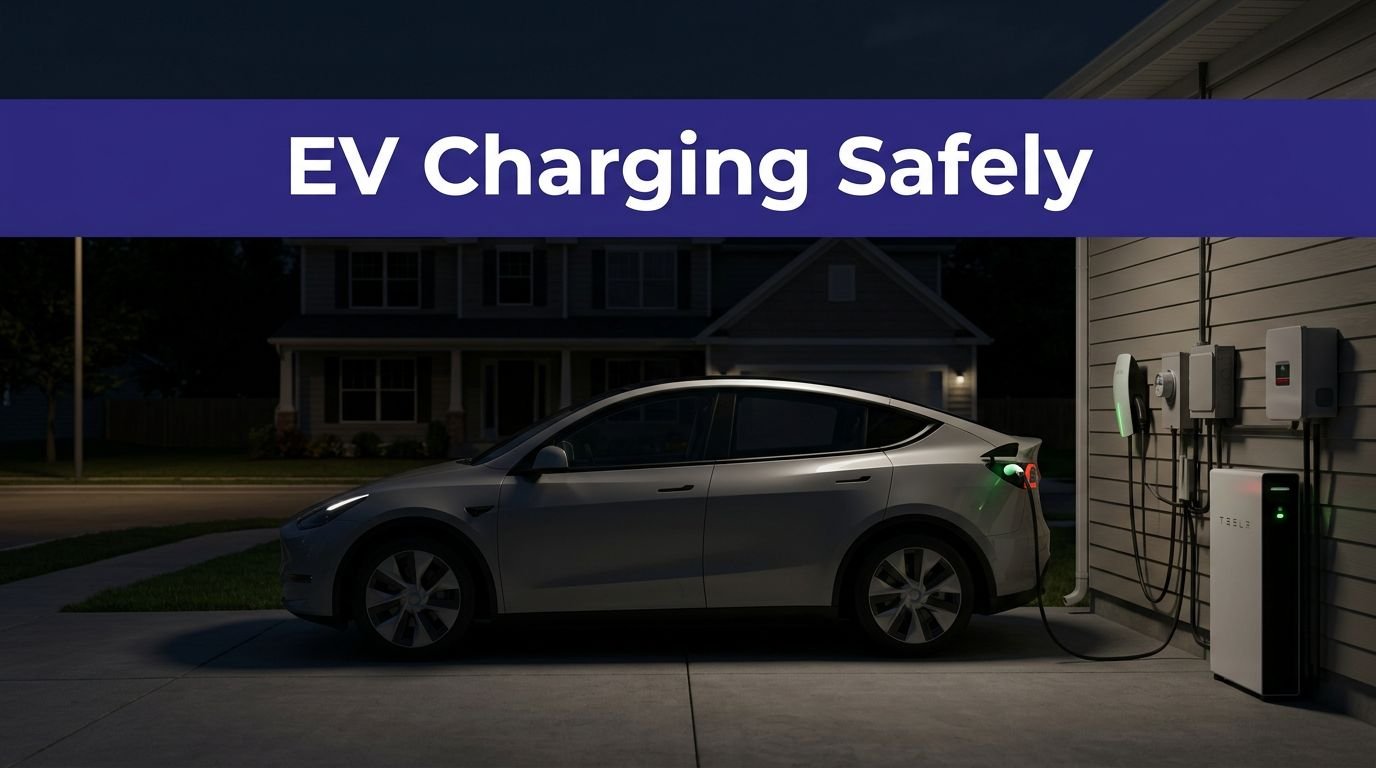
A NEMA 14-50 outlet sounds like one of those technical terms people nod along to at the hardware store. You might hear someone say, “Yep, totally. Give me the fourteen-fifty,” while you are left wondering if it is a simple plug, a specialized circuit, or something more complex.
When it comes to EV charging, this hardware is a significant upgrade for your home. This outlet can make refueling your vehicle fast, convenient, and relatively painless, but only when it is installed according to safety standards. While the physical shape of the plug is straightforward, the safety details are where many people run into trouble. Understanding how this outlet supports a Level 2 EV charger is the first step toward a reliable and efficient home setup.
Key Takeaways
- A NEMA 14-50 outlet is a 240-volt receptacle on a 50-amp circuit, though EV charging is limited to 40 amps of continuous power.
- This outlet is popular because it supports a Level 2 EV charger and can add about 25 to 30 miles of range per hour for many electric vehicles.
- For safety, the connection must be on a dedicated circuit with the correct wiring, proper torque, and GFCI protection where required by local electrical codes.
- A standard residential-grade receptacle is often insufficient for daily EV charging. You should prioritize installing an industrial-grade outlet to ensure long-term reliability.
- If you plan on heavy daily usage, a hardwired installation is often the more durable and secure option for your home charging setup.
What a NEMA 14-50 outlet actually does
A NEMA 14-50 outlet is a four-prong, 240-volt receptacle that serves as a high-capacity power source. It is typically installed on a 50-amp circuit and features two hot wires, a neutral wire, and a ground wire. The presence of the neutral wire is the primary feature that distinguishes it from a NEMA 6-50 outlet, which is more commonly found powering shop equipment and welders.
For EV owners, the appeal of this configuration is straightforward. The NEMA 14-50 outlet is compatible with many plug-in Level 2 chargers, including mobile connectors from manufacturers like Tesla and various portable units from brands such as Lectron. This setup allows for significantly faster charging than a standard 120-volt wall outlet, providing a convenient middle ground without the need to install a permanently hardwired charging station.
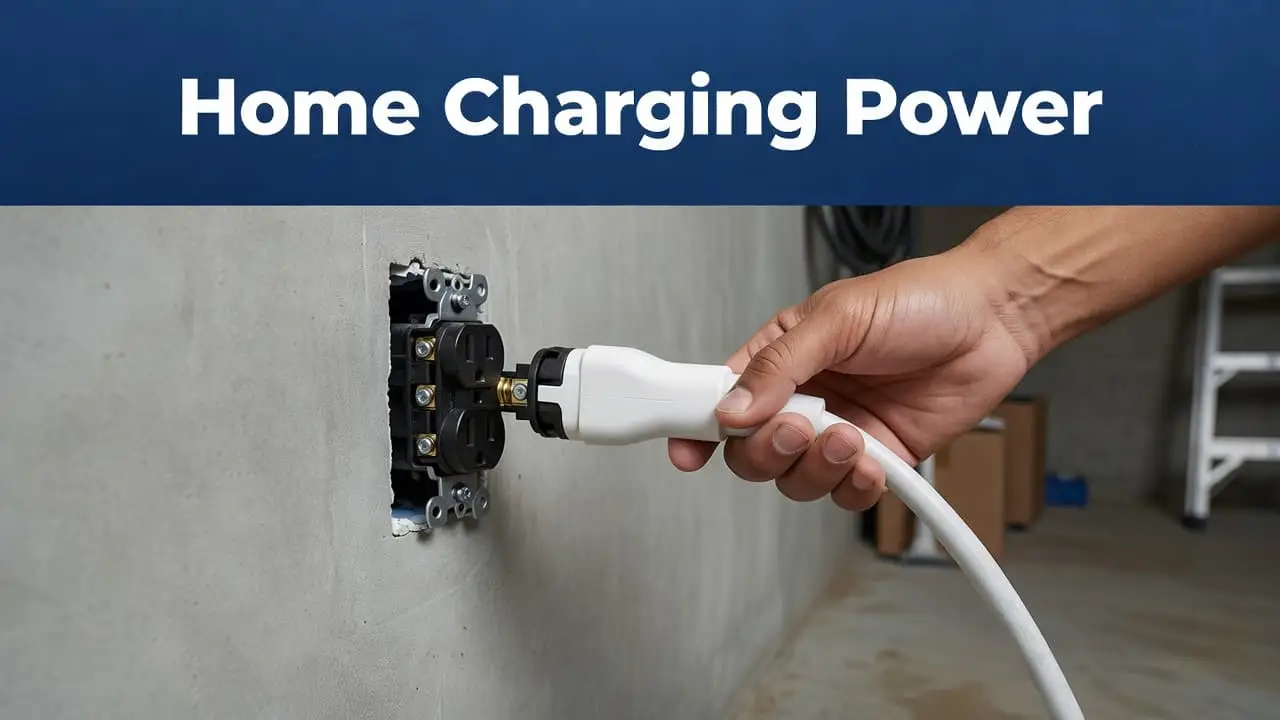
It is important to understand that a 50-amp circuit does not mean your vehicle will charge at a full 50 amps. According to the National Electrical Code, EV charging is classified as a continuous load. Because of the 80% rule defined by the National Electrical Code, the maximum usable limit is 80 percent of the circuit capacity. Therefore, even with a 50-amp amperage rating on your breaker, you are limited to 40 amps of continuous load.
In practical terms, this provides the outlet with approximately 9.6 kW of available power. However, your actual charging speed may be lower because your vehicle’s onboard charger establishes its own limit. While the outlet can supply 9.6 kW, the car ultimately determines how much power it will accept.
While the NEMA 14-50 outlet has become a standard for electric vehicle charging, it was originally designed for different purposes, such as powering electric ranges, large appliances, and RV connections. Electric vehicles have simply adopted this robust power source as a primary method for home refueling.
How much charging speed you really get
A NEMA 14-50 setup is popular because it hits the sweet spot for most homeowners. It offers much faster charging than Level 1 equipment, but it typically costs less and feels less permanent than a hardwired installation.
For many electric vehicles, a 40-amp Level 2 EV charger adds around 25 to 30 miles of range per hour. That is a solid overnight refill for daily driving. If you drive 40 miles a day, you can recover that energy in a couple of hours and get back to your routine. Because this setup draws power directly from your electrical panel, it provides a consistent and reliable flow of energy.
This quick comparison helps put those speeds in perspective.
| Charging setup | Typical circuit | Continuous output | Rough range added per hour | Best fit |
|---|---|---|---|---|
| Level 1, 120V outlet | 15 to 20 amps | 12 to 16 amps | 3 to 5 miles | Light daily driving |
| NEMA 14-50 plug-in charger | 50 amps | 40 amps, about 9.6 kW | 25 to 30 miles | Most home charging |
| Hardwired Level 2 | 60 amps | 48 amps, about 11.5 kW | 30 to 40 miles | Heavier daily use |
Those numbers vary by vehicle. A Nissan Leaf may charge at a different rate than a Tesla Model Y because onboard chargers are not all the same. Ambient temperature, the current state of your battery, and specific charger settings also play a role in the total output.
Still, the general story holds. A NEMA 14-50 outlet is the practical answer for home charging. It is not the slowest, nor is it the most expensive, but it remains highly useful.
It also gives you significant flexibility. If your plug-in charger malfunctions, you can simply unplug the device and replace it. If you move, you may be able to take your portable EVSE with you. Whether you want to use a Tesla Mobile Connector today or a different universal plug-in EVSE later, having a dedicated outlet keeps your future options open.
The safety details that decide whether it’s a good idea
The plug shape alone does not make an outlet safe for EV charging.
That sounds obvious. It should be obvious. And yet, melted receptacles keep showing up in garages like a terrible sequel nobody asked for. When the installation is done incorrectly, a NEMA 14-50 outlet can quickly become a serious fire hazard.
The 80% rule is the whole deal
EV charging is a sustained load. Your car does not blast power for six minutes and call it a day. It can pull current for hours, often overnight. That is why the 80 percent rule matters so much.
A proper EV charging setup should have:
- a dedicated 50-amp branch circuit,
- a receptacle rated for this kind of continuous use,
- a breaker sized for the circuit,
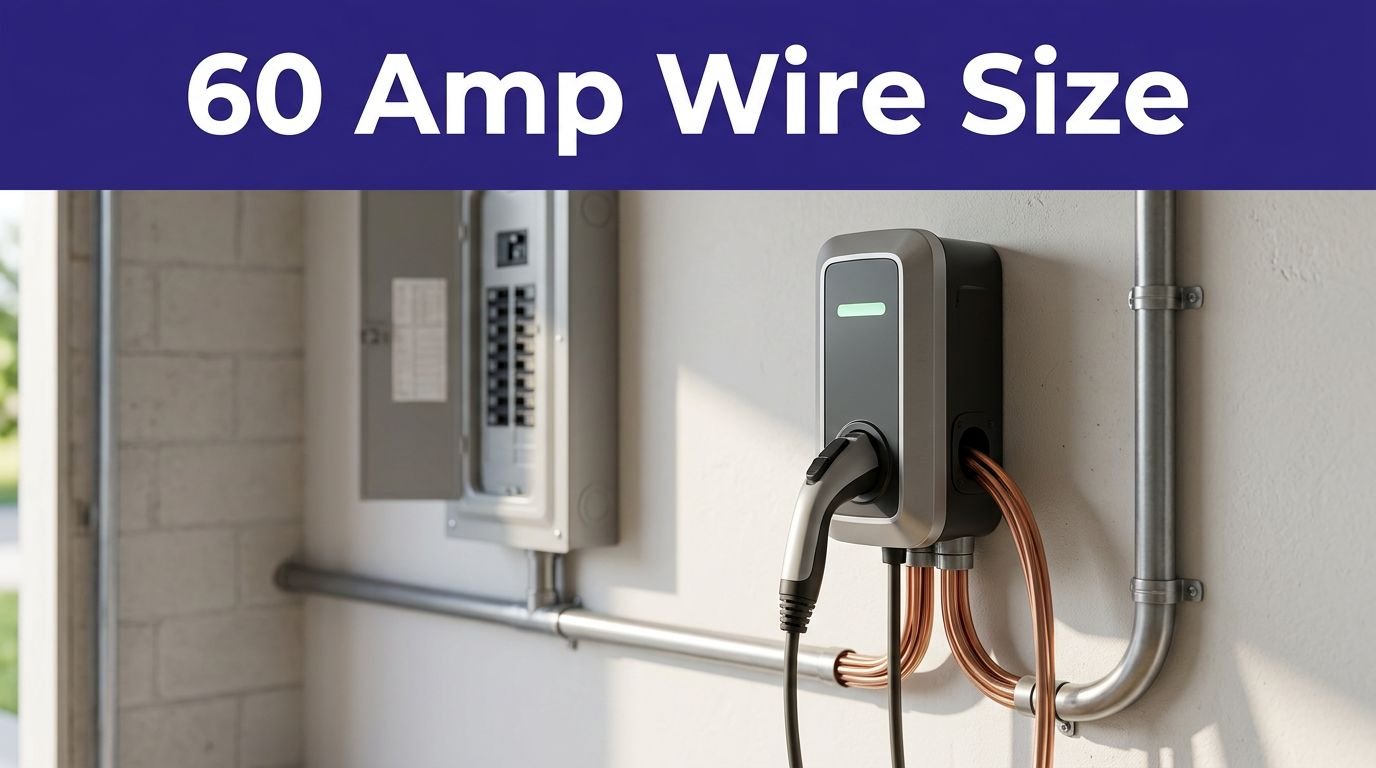
- and wire sized for the load, commonly 6 AWG copper wire for a 50-amp installation.
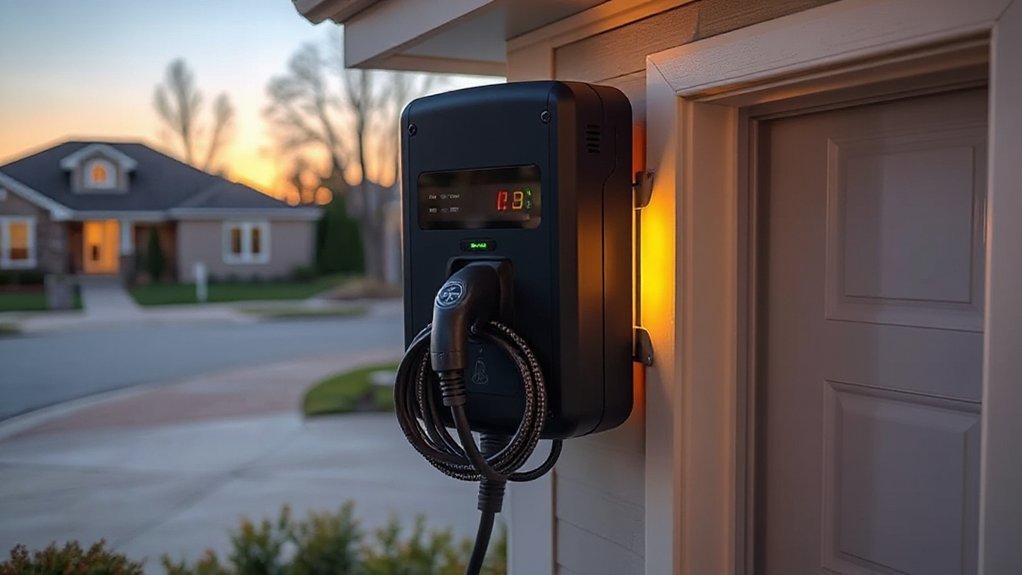
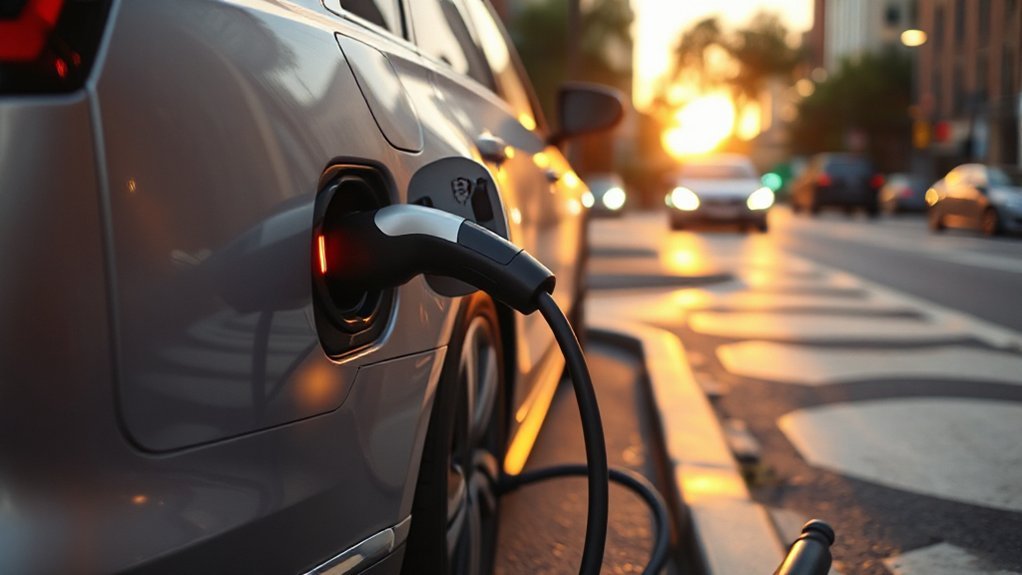
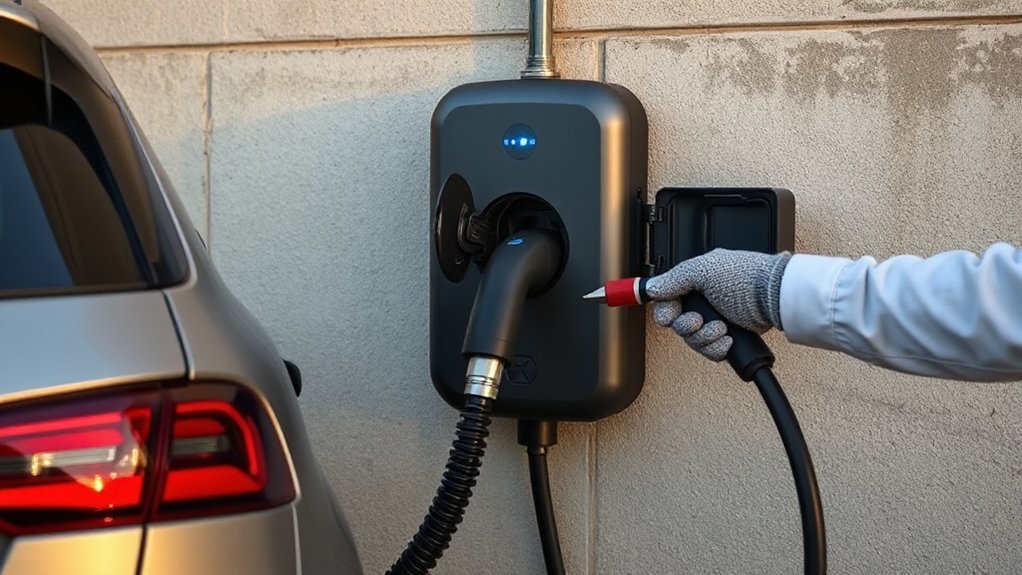
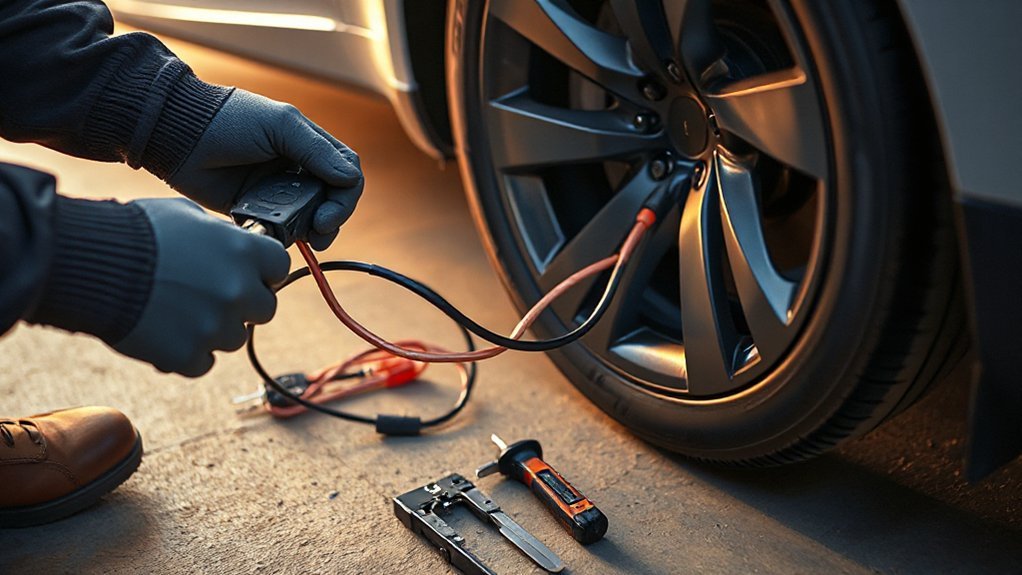
NEC 625.40 requires a dedicated branch circuit for EV charging. So no, you should not share that line with garage lights, a freezer, and your buddy’s mystery mini-fridge from college. That is how projects turn into stories.
A GFCI breaker matters too. Under NEC 210.8(A) and 625.54, receptacles used for EV charging are subject to GFCI requirements, and garages and outdoor locations bring their own code triggers as well. Local code adoption can vary, so the final word is your local permitting office and inspector, not the loudest guy in a comment thread.
If you want a practical breakdown, Qmerit has a good piece on NEMA 14-50 outlets and GFCI breakers.
Cheap receptacles are where trouble starts
This is the part that gets weirdly expensive. A lot of failures happen because someone installed a residential-grade 14-50 that was never meant for repeated, high-current EV charging. Always hire a licensed electrician to ensure the work is done to code.
Homeowners see the same outlet pattern and think, “Same holes, same deal.” Nope. That is like saying flip-flops and work boots are both shoes, so let us frame a roof in either one.
For EV charging, use an industrial-grade outlet or a high-quality commercial-grade outlet that carries UL certification. Some products carry an EV marking, often a small green car symbol. Heavy-duty options from Hubbell, LIDER, and the Leviton 1450R are built for tougher duty than bargain-bin range outlets.
Proper installation of terminal connections is critical. Loose connections create heat, and heat creates damage. The terminal screws should be tightened to the manufacturer’s torque specifications with a torque tool, not just “pretty snug, I think.” Many installers are aiming for specs around 75 in-lbs, depending on the device.
If the charger plugs in and out often, wear increases. That is one reason many electricians recommend leaving the EVSE plugged in full-time. If you want a blunt warning with photos and failure examples, Emporia’s outlet safety guide is worth reading. So is this engineer-led video on 14-50 failures, which is less polished and more “please don’t melt things.”
When a 14-50 outlet makes sense, and what to ask before installing one
A NEMA 14-50 outlet remains a practical choice for many homeowners. If you prefer the flexibility of a plug-in charger, own a mobile connector, or anticipate swapping charging hardware in the future, this setup offers significant convenience.
However, a hardwired installation often makes more sense when the charger will remain in one spot for years and draw high power daily. Hardwired units eliminate the potential failure point of a receptacle, avoid outlet wear, and can frequently support 48 amps of continuous current on a 60-amp circuit. Furthermore, many modern hardwired chargers include integrated thermal monitoring to detect heat issues at the connection point, providing an extra layer of protection. This is why many experts now recommend fixed units like the ChargePoint Home Flex or Emporia hardwired chargers for daily commuters.
If you decide to proceed with a 14-50 outlet, ask a licensed electrician these five questions before work begins at your electrical panel:
- Are you installing a dedicated circuit rated for 50 amps, and what specific wire gauge will you use to handle the load?
- Are you using a high-quality, industrial-grade receptacle rather than a standard residential-grade outlet that may wear out quickly?
- Does the installation include the required GFCI protection, and have you verified if the specific charger model is prone to nuisance tripping when paired with this breaker?
- Will every termination point be torqued to the manufacturer specifications using a torque wrench?
- If the outlet is located outdoors, are you using an appropriate weather-rated box and cover assembly?
Always secure a permit and request an inspection if local building codes require them. This is not just red tape; it is the best way to identify issues like improper breaker sizing, undersized electrical boxes, or incorrect wiring before they become safety hazards.
Finally, if a contractor dismisses these questions with a claim that they have always done it that way, consider it a significant warning sign. You want a professional who prioritizes current safety standards and technical precision over outdated habits.
Frequently Asked Questions
Can I use a standard 14-50 outlet from a home improvement store for my EV charger?
While it may look identical, you should avoid standard residential-grade outlets found at general hardware stores. EV charging is a continuous, high-draw load that requires an industrial-grade or heavy-duty receptacle to prevent overheating and premature failure.
Why does my NEMA 14-50 outlet need a dedicated circuit?
The National Electrical Code requires a dedicated circuit for EV charging to ensure the line can handle a sustained, high-amperage load without interruption. Sharing this circuit with other household appliances increases the risk of tripped breakers and dangerous electrical fires.
Is it better to plug and unplug my charger or leave it connected?
It is generally better to leave your charging station plugged in full-time to minimize wear on the outlet’s contact points. Constant plugging and unplugging can loosen the connection over time, which increases electrical resistance and generates excess heat.
Does a 50-amp outlet mean I can charge my car at 50 amps?
No, you are limited by the 80% rule defined by the National Electrical Code. Because EV charging is a continuous load, a 50-amp circuit is capped at a maximum of 40 amps of continuous output to ensure safe operation and prevent overheating.
Final Thoughts
A NEMA 14-50 outlet remains one of the most reliable and popular methods for EV charging at home, and for good reason. It provides a perfect balance of fast charging speeds for most daily drivers, high flexibility, and broad compatibility with modern electric vehicles.
However, the best results do not come from just any NEMA 14-50 outlet slapped on the wall. A properly installed setup is essential to ensure long-term performance and to prevent the risk of a potential fire hazard. This means using a dedicated circuit, robust GFCI protection, high-quality hardware, appropriately rated wiring, and secure terminations.
When you prioritize these safety details, your home charging station becomes a reliable utility in the best possible way. Your car charges efficiently overnight, and you can enjoy the peace of mind that comes with a safe, professional installation.
This post may contain affiliate links. If you make a purchase through these links, I may earn a small commission at no extra cost to you.