An electric vehicle charger can look like it was designed by three committees that never met. One cable fits your car, another fits the station, and a third fits nothing except your growing sense of betrayal.
EV charger compatibility is less about the vehicle badge and more about four checks: the vehicle inlet, AC/DC charging type, the vehicle’s acceptance limit, and station permissions. A Ford, Hyundai, Nissan, or Tesla may need a different answer depending on its model year and trim.
Before you leave home, take five minutes to check the inlet, charging type, vehicle limit, and station rules. That small check can save you from parking beside a charger that is technically nearby but completely useless to your car.
This post may contain affiliate links. If you make a purchase through these links, I may earn a small commission at no extra cost to you.
Key Takeaways
- EV charger compatibility depends on the vehicle inlet, AC or DC charging type, the vehicle’s charging limit, and station access rules.
- Connector families such as J1772, Type 2, CCS, NACS, and CHAdeMO are not automatically interchangeable, even when they appear to serve similar purposes.
- A charger’s advertised power is not a promise of charging speed. The vehicle, battery temperature, state of charge, onboard hardware, and charging curve determine how much power the car can accept.
- Check the exact model year and trim, use only approved adapters, and confirm the specific station’s connector, operating status, payment method, and access rules before plugging in.
- If a connector will not latch or the session will not start, do not force it. Inspect the connection, verify authentication and vehicle settings, and move to another stall if necessary.
Start with the vehicle’s charging port
For an electric vehicle, the inlet is the first thing to inspect. Not the brand. Not the color of the car. The inlet.
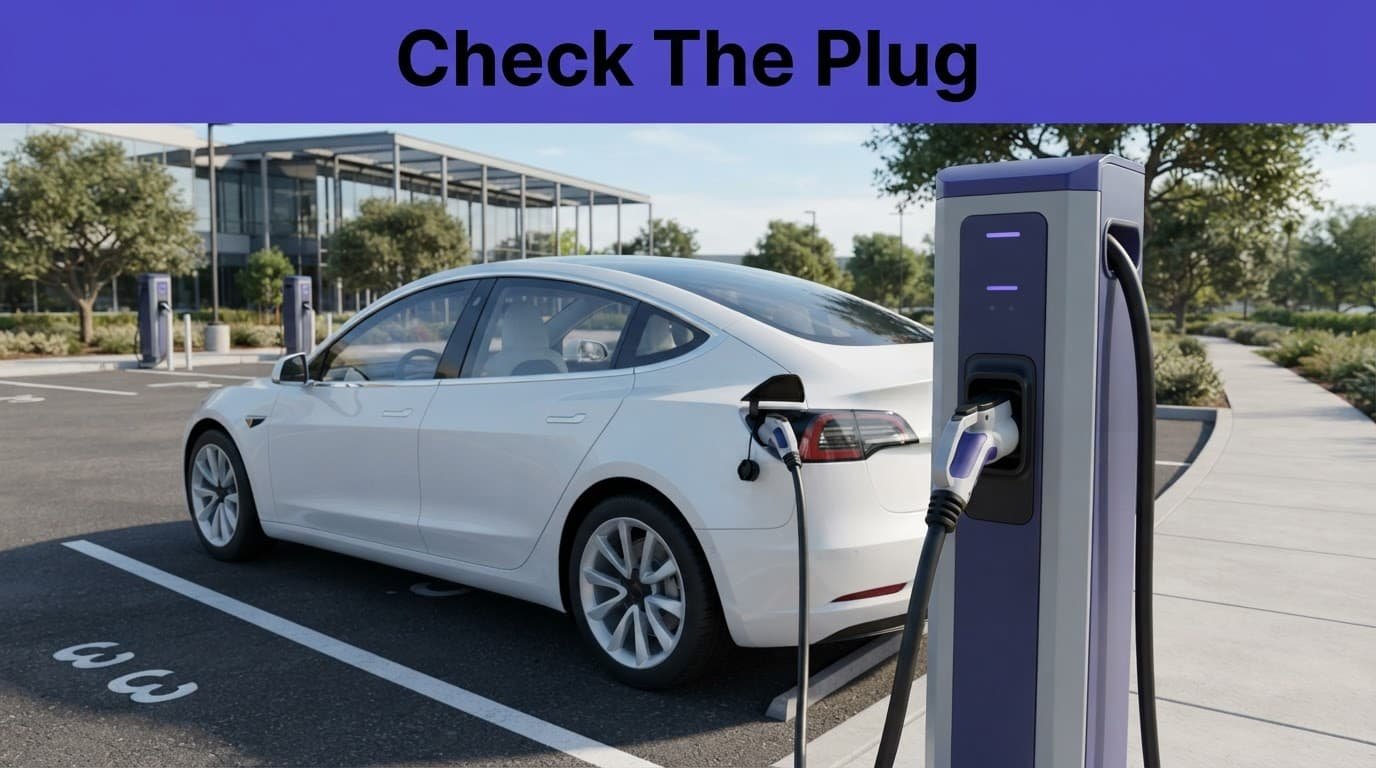
Open the charge-door cover and compare its shape with the connector shown in the charger app or station listing. You may see a single AC inlet, a combined AC and DC inlet, or a Tesla-style inlet.
Find the connector name in the manual
Your owner’s manual, vehicle settings, and manufacturer app usually identify the inlet standard. Search the manual for the connector designation used by your vehicle.
The same car name can hide different hardware. A 2023 model may use one standard, while a newer version uses another. The trim can matter, too. Never rely on a friend’s identical-looking vehicle unless you enjoy learning about connector standards in a parking lot.
A vehicle’s AC inlet and DC-capable inlet can also have different capabilities. Some cars accept AC charging but don’t support DC fast charging at all.
Check the actual charging capability
The inlet shape tells you what can physically connect. It doesn’t tell you how quickly the vehicle can charge.
Look for the vehicle’s maximum AC input and maximum DC charge rate. A charger may advertise 250 kW. Your car may accept 100 kW, 50 kW, or less, so that rating doesn’t guarantee the same charging speed. The charger isn’t broken because your vehicle refuses to drink the entire fire hose.
Battery temperature, state of charge, and the vehicle’s charging curve can reduce power during a session. That’s normal. A cold battery or a battery above roughly 80% can charge much more slowly than the headline number suggests.
Match AC and DC charging standards
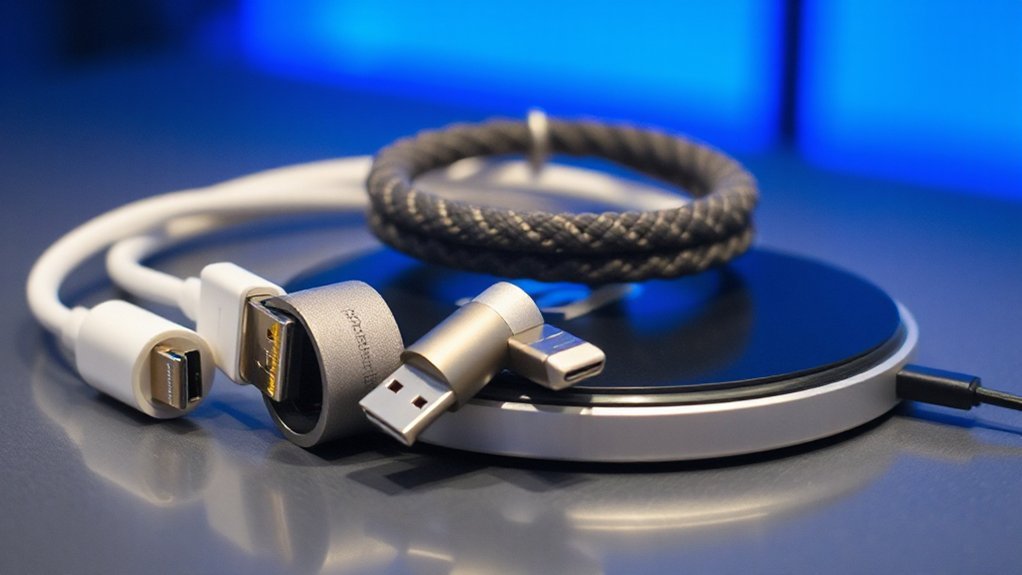
A charging cable isn’t one universal straw. EV plug types divide into families, and each family handles a different kind of electricity.
The U.S. Department of Energy’s consumer charging guide separates Level 1 and Level 2 charging from public DC fast charging. That distinction matters because an adapter that works for AC charging may be useless at a DC station.
Type 1 and Type 2 handle AC charging
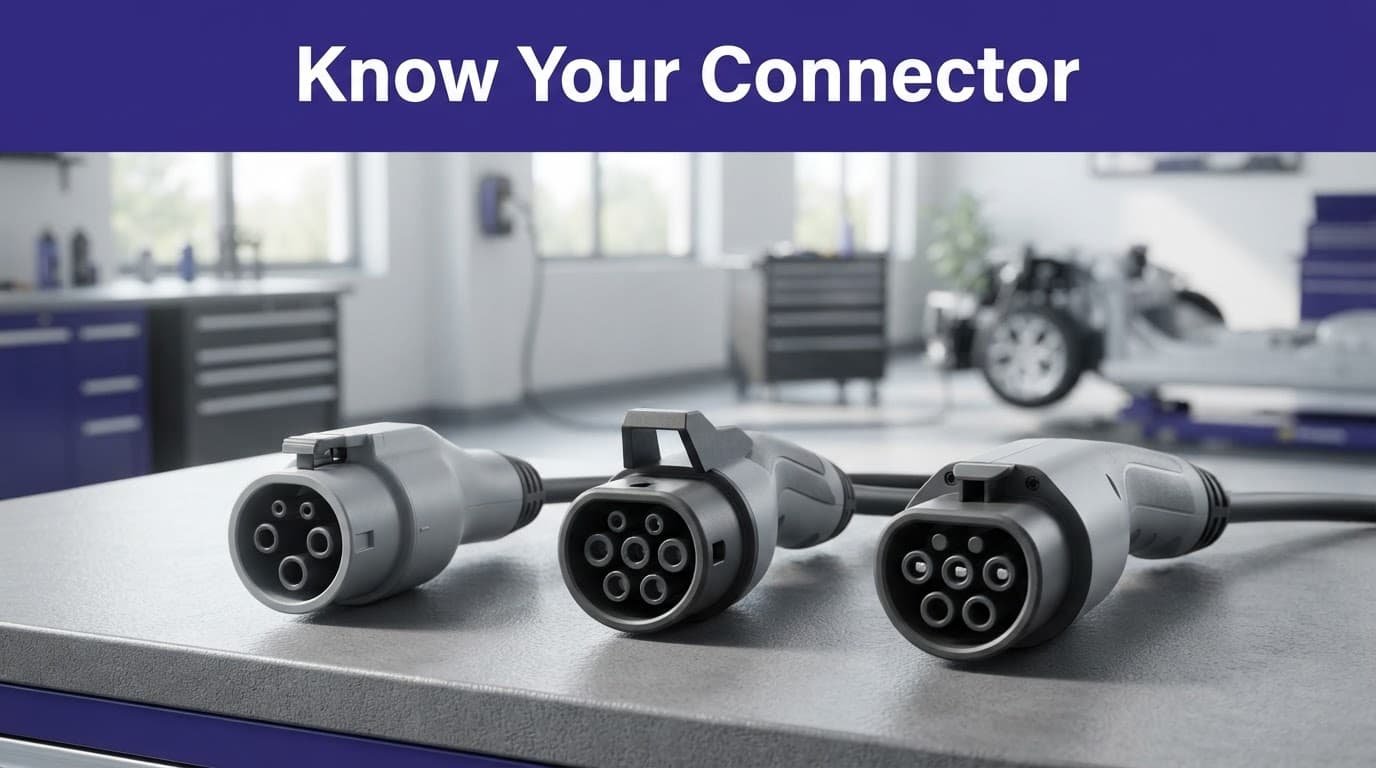
In North America, many non-Tesla vehicles use the SAE J1772 connector, often called the Type 1 connector. It supports Level 1 and Level 2 AC charging.
Europe generally uses the Type 2 plug, also known as the Mennekes connector, for many electric vehicles. Type 2 hardware can support single-phase or three-phase AC charging, depending on the car, cable, and electrical installation. European public AC stations commonly deliver up to 22 kW, though the vehicle may accept less.
Type 1 and Type 2 aren’t interchangeable just because both are AC connectors. A travel adapter may solve a physical plug mismatch in some situations. It doesn’t magically change the vehicle’s electrical design, communication protocol, or charging limits.
If you’re taking an imported EV across regions, compare the car’s exact inlet with local plug types and the station’s cable type. This is not the time for “it looks close enough.”
CCS combines AC and DC in one inlet
The Combined Charging System, or CCS, adds two large DC pins below the AC portion of a CCS connector.
CCS1 uses a J1772-style upper section and is common on older North American EVs. CCS2 uses a Type 2 upper section and is the main European version. Both designs let one vehicle inlet handle regular AC charging and DC use.
The Alternative Fuels Data Center’s station information describes CCS as a connector that supports AC charging at Levels 1 and 2, plus DC capability through the combined inlet. That doesn’t mean every CCS vehicle can use every available rate. The battery system and onboard hardware still set the limit.
CCS is a connector family, not a promise of maximum speed. A CCS1 car might charge at 50 kW on one station and 150 kW on another. The vehicle’s software may still limit the session.
NACS and CHAdeMO need separate checks
NACS is the consumer name for the Tesla-style connector. In U.S. government guidance, the standard is associated with SAE J3400. This NACS connector uses one compact inlet for AC and DC use.
The CHAdeMO plug is a separate direct-current connector found on some older vehicles, including earlier Nissan Leaf models. It isn’t compatible with CCS simply because both are DC systems. CHAdeMO is now legacy hardware in North America and Europe. Drivers who depend on it should check availability before every longer trip.
The European Alternative Fuels Observatory’s charging overview provides regional context for Type 2 and CCS2 infrastructure. Regional charging infrastructure offers useful clues, but your vehicle’s own port always gets the final vote.
Charging levels can change the answer

Connector fit is only half the story. You also need the right power supply and a vehicle that can use it.
| Charging level | Typical supply | Common power range | Best use |
|---|---|---|---|
| Level 1 charging | 120-volt AC household outlet | About 1-2 kW | Overnight or low-mileage driving |
| Level 2 | 208-240-volt AC circuit | About 3.3-19.2 kW | Home, workplace, and destination charging |
| Level 3 | Managed DC equipment | About 50-350 kW or more | Road trips and quick public stops |
These are broad ranges, not guarantees. Station power output and the vehicle’s charge rate affect actual charging speed. The battery, onboard charger, cable, temperature, and state of charge also matter.
NEMA 14-50 is an outlet, not the charger
A standard 120-volt outlet can power Level 1 charging. It is simple, widely available, and slow. Depending on the vehicle and circuit, you may gain only a few miles of range per hour.
A NEMA 14-50 receptacle is commonly used with Level 2 chargers for home charging. A properly installed 50-amp circuit often supports a 40-amp continuous load, providing approximately 9.6 kW at 240 volts. The portable EVSE or wall unit still needs to be rated and configured for that circuit.
The DOE charging-station overview is a useful reference for the basic charging categories. Have a licensed electrician verify the panel, wiring, breaker, receptacle, and local requirements. Electricity is not a personality test. You don’t win by being confident near exposed conductors.
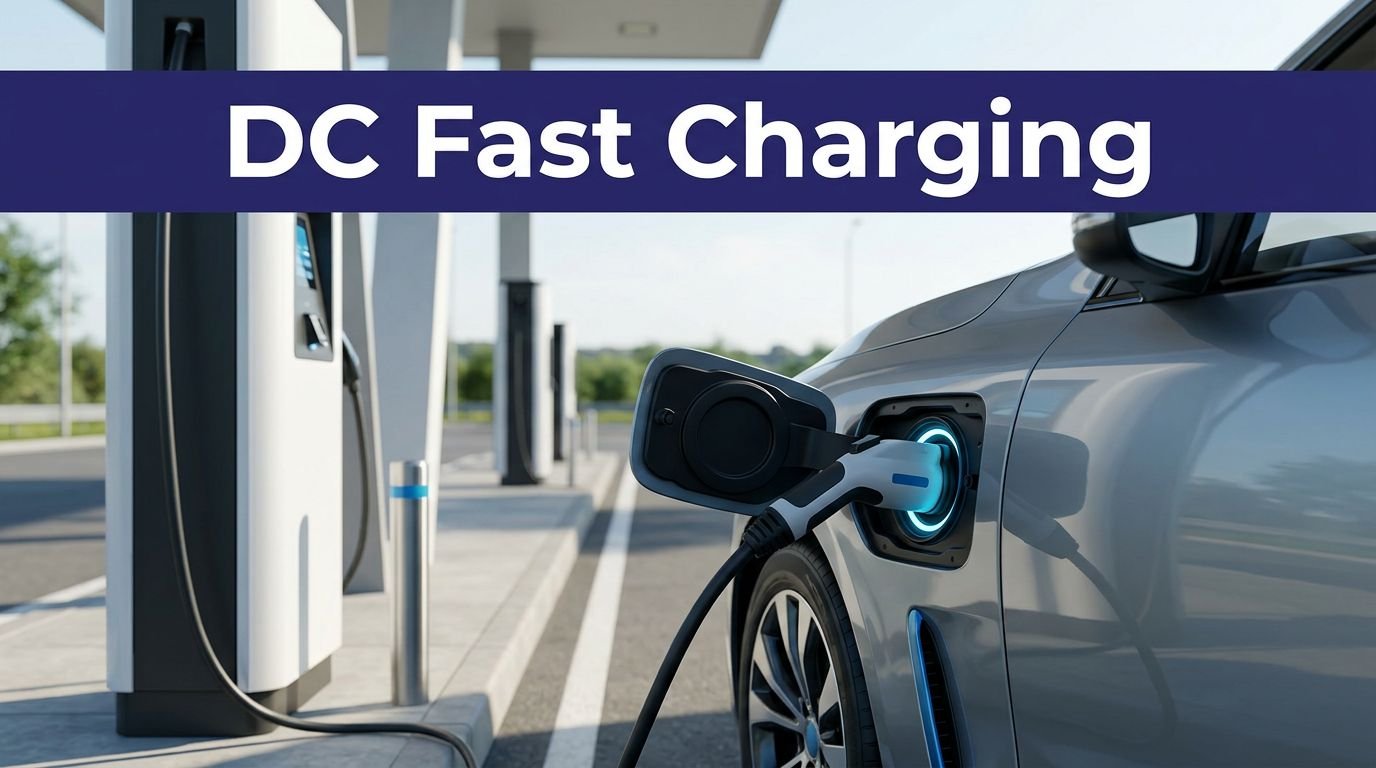
DC fast charging bypasses the onboard charger
Level 1 and Level 2 stations send AC electricity to the vehicle. The car’s onboard charger converts it for the battery.
DC equipment performs that conversion outside the vehicle and sends managed direct current to the battery. That’s why it can deliver far more power. It’s also why a J1772-only car can’t become a fast-charging car through a basic J1772 adapter.
A vehicle with a CCS1 or NACS DC-capable inlet may use a fast charger, but the car still controls the session. The station offers power. The vehicle decides how much it can safely accept.
Public charging requires a three-part compatibility check
A shared charging session adds software and network rules to the physical connection. You need the right port, an eligible site, and a way to authenticate and pay through the charging network.
NACS adoption doesn’t mean every car has NACS
NACS is the North American Charging Standard. Automotive manufacturers including Ford, General Motors, Rivian, Volvo, Polestar, Mercedes-Benz, Nissan, Hyundai, Kia, BMW, Toyota, Lexus, Honda, Acura, Subaru, Volkswagen Group brands, Mazda, and Stellantis have announced NACS or SAE J3400 plans for North America.
That list sounds tidy until you check the model years. The transition also spans charging infrastructure and different networks. Some brands sell vehicles with CCS1 and others with NACS during the same transition period. Some provide approved adapters, while others introduced native NACS ports on newer vehicles.
Use the manufacturer’s compatibility page to check your exact vehicle identification, model year, and trim. Confirm adapter compatibility and whether the required adapter is approved there. “The brand supports NACS” is not enough information to plug in safely or successfully.
Tesla Supercharger access is site-specific
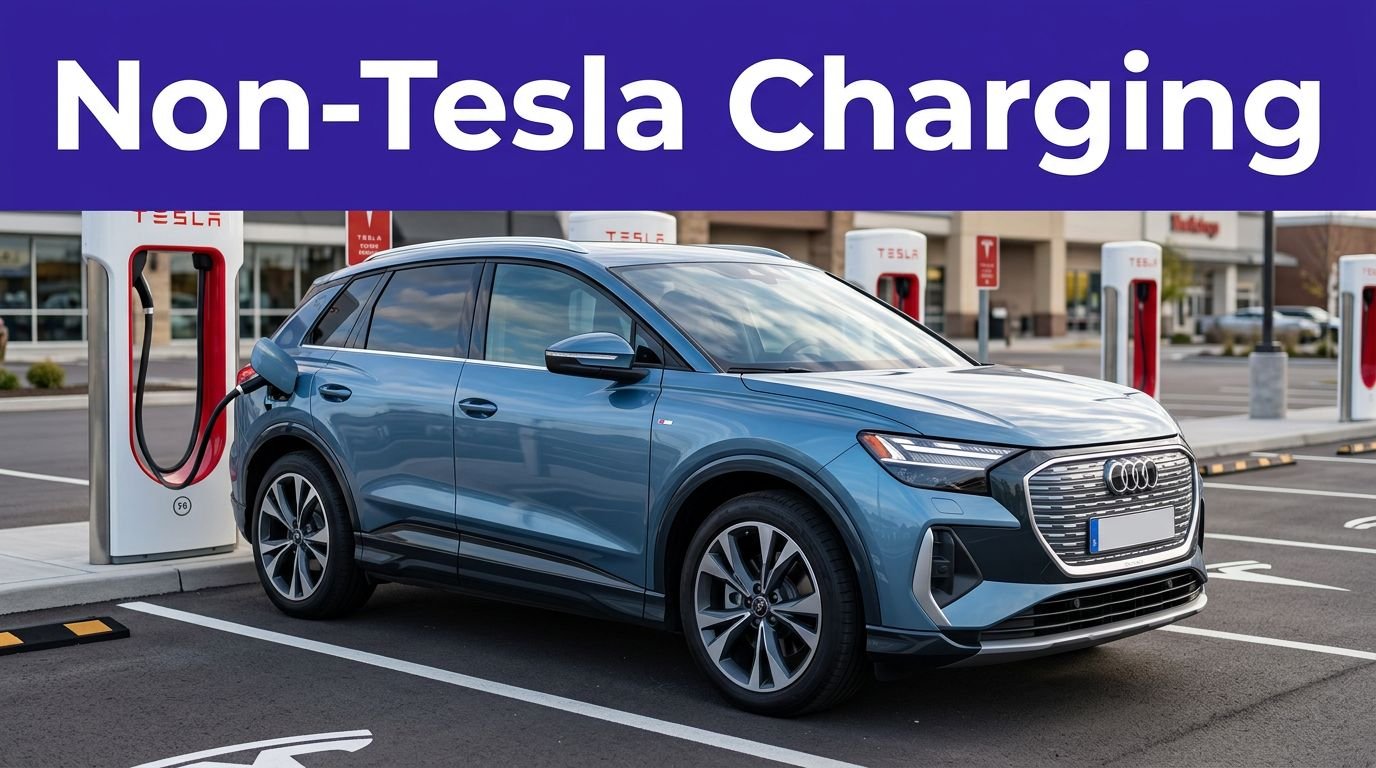
Non-Tesla vehicles can use select Tesla Superchargers when they have a native NACS port or an approved NACS DC adapter. Tesla’s current Supercharger guidance for other EVs tells drivers to check whether their vehicle and the selected site are supported.
Use this three-part test:
- Confirm that your vehicle has NACS or is approved for the required CCS1-to-NACS adapter.
- Check that the specific charging station allows non-Tesla vehicles.
- Confirm how the session starts, whether through the vehicle, Tesla app, or another supported payment method.
A J1772-to-NACS adapter for home charging or public AC use is not the same as a CCS1-to-NACS adapter for high-power DC sessions. The names are annoyingly similar. The jobs are not.
Adapters also have power, temperature, and approval limits. Don’t buy the cheapest plastic mystery tube online and ask it to manage hundreds of volts beside your expensive battery.
Use this five-minute check before plugging in
You don’t need a degree in electrical engineering. Use the same repeatable routine for home charging and public charging.
- Identify the vehicle inlet. Confirm whether it is J1772, CCS1, NACS, Type 2, CCS2, or CHAdeMO.
- Separate AC from DC. Use Level 1 charging or Level 2 stations with the vehicle’s AC inlet. Use DC stations with the vehicle’s DC-capable inlet.
- Check the charging station listing. Verify the connector, operating status, access rules, payment method, power output, and advertised charge rate.
- Confirm adapter compatibility. Check the adapter’s vehicle list, model-year coverage, charging type, and power rating.
- Check the session before leaving the car. Make sure the plug locks, the vehicle recognizes the connection, and the station shows charging rather than a fault.
The AFDC station locator can help you find nearby public stations and compare available connector types. Network apps may show more current availability, so check both when the trip matters.
When the charger won’t start
If the connector won’t latch, stop. Don’t force it. A port that needs muscle is issuing a warning, not inviting a wrestling match.
A failed session in an electric car usually comes down to one of these problems:
- The station cable is the wrong connector.
- The adapter is not fully seated or isn’t approved for the vehicle.
- The car is locked, not in park, or has charging scheduled for a later time.
- The charging network requires app authentication or a payment method.
- The station is offline, occupied, or reporting a temporary fault.
- The battery is too cold, too hot, or near full.
- The cable or connector has visible damage.
Unplug, inspect the connection, and restart the session through the correct app or payment method. If the station still fails, move to another stall rather than repeating the same ritual twelve times while a queue forms behind you.
For a slow session, check the charging level first. Level 1 charging from a household outlet won’t suddenly behave like a 350-kW highway charger because you stared at it with greater determination.
Frequently Asked Questions
How do I know whether an EV charger will fit my car?
Check the vehicle’s charge port and compare it with the connector listed for the station. Confirm the exact connector standard, model year, and trim rather than relying on the vehicle brand or appearance alone.
Can I use a DC fast charger with any electric vehicle?
No. The vehicle must have a DC-capable inlet such as CCS1, CCS2, NACS, or CHAdeMO, depending on the charging network and region. A J1772-only vehicle can use AC charging but cannot become a fast-charging vehicle through a basic adapter.
Does a higher-kilowatt charger make my car charge faster?
Only if the vehicle can accept that power. The vehicle’s charge limit, battery temperature, state of charge, onboard hardware, and charging curve can all reduce the actual charging rate.
Can any EV use a Tesla Supercharger?
No. Access is limited to supported vehicles, approved adapters, and participating Supercharger sites. Check the manufacturer’s compatibility information and the specific station’s rules before you arrive.
What should I check before starting a public charging session?
Verify the connector, AC or DC charging type, station status, access rules, payment method, power rating, and adapter approval. After plugging in, make sure the connector locks, the vehicle recognizes it, and the station shows that charging has started.
The plug is only the first test
Reliable EV charger compatibility comes from matching four things: the vehicle inlet, charging type, charge rate, and station access rules. Connector shape gets you started, but it can’t confirm the car’s charging speed or network eligibility.
Check the model year, use approved adapters, and confirm the specific site before you arrive. Once that’s routine, public charging becomes less of a guessing game and more of a quick hardware check, which is where it should have started.