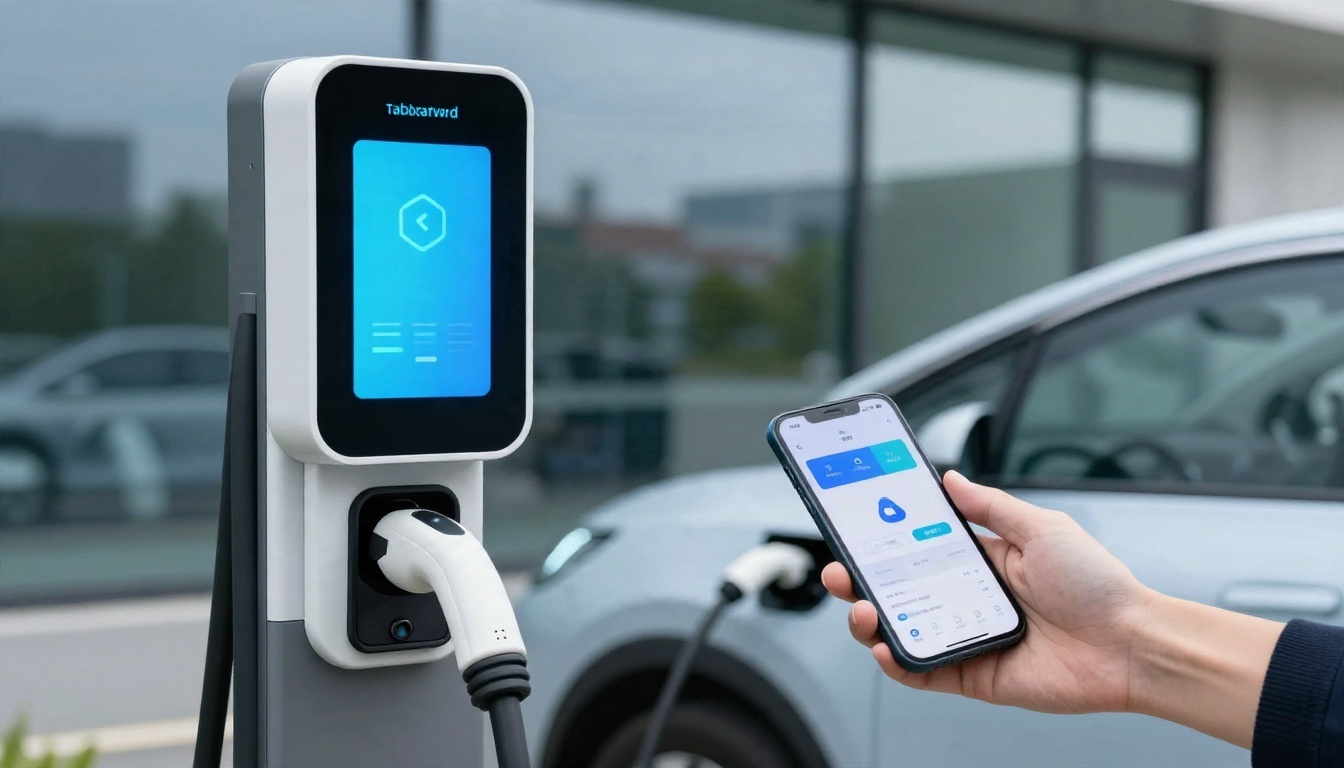
EV Charging Idle Fees vs Parking Fees: The Difference
EV charging idle fees can stack with parking costs. Learn when timers start, compare network policies, and avoid or dispute surprise charges.
As an Amazon Associate, EV Charging may earn from qualifying purchases. This helps support our independent guides at no extra cost to you. Learn more.
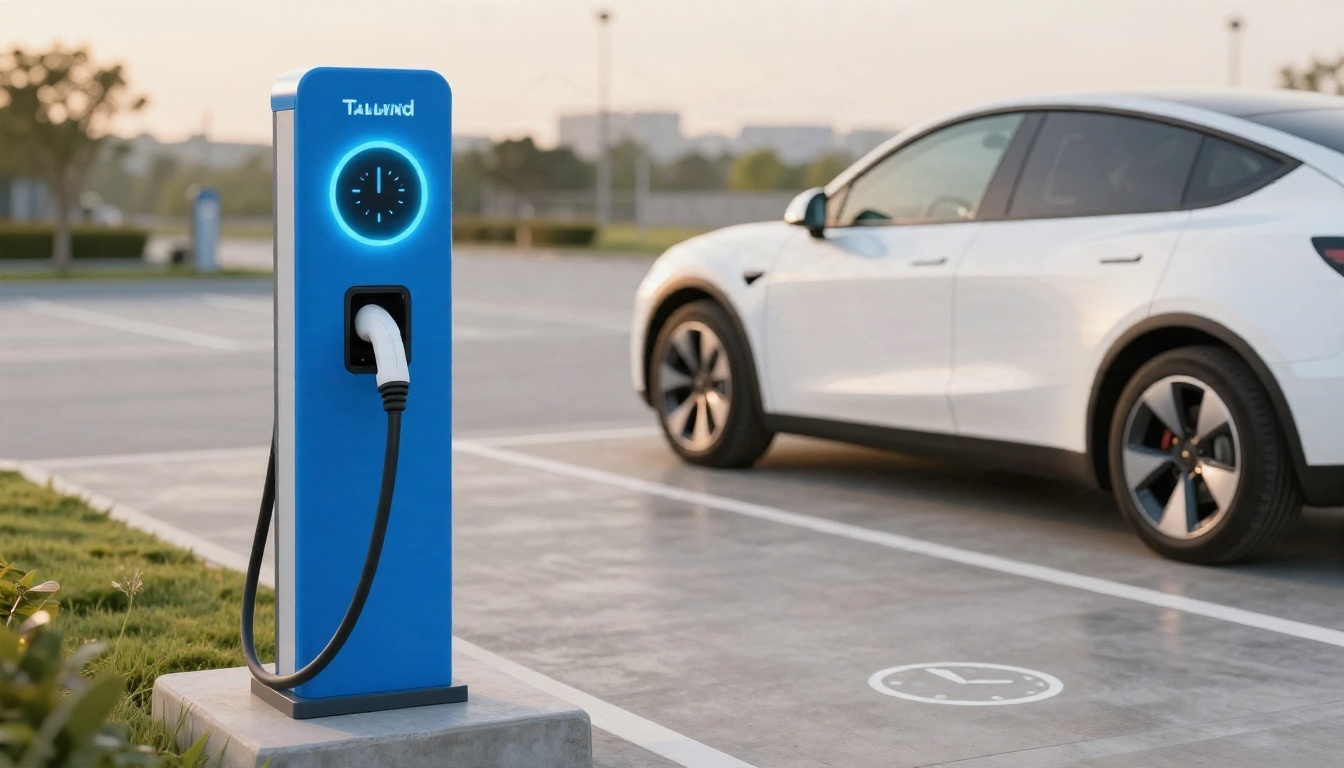
EV charging idle fees apply when you keep occupying a charger after charging ends and the grace period expires. Parking fees pay for your time in a parking space, whether your car is charging or not. Both can apply during the same visit.
That distinction matters when the electricity looks inexpensive but the final bill tells another story. Let's separate the charges, the timers, and the rules that actually affect your wallet.
This post may contain affiliate links. If you make a purchase through these links, I may earn a small commission at no extra cost to you.
Key Takeaways
- This charge usually starts after charging finishes and the stated return window ends. A parking fee can start when you enter the property.
- Stated return windows commonly run 5 to 15 minutes. Rates often fall around $0.50 to $1.00 for each billable minute, but network policies differ.
- Electricity, parking, idle charges, and session fees are separate costs. Paying one doesn't automatically cover the others.
How Idle Fees Differ From Parking Fees
This charge puts a price on continued occupancy of a charging bay. The electricity has stopped, but the next driver still can't use that space.
A parking fee comes from the property's parking arrangement. A garage can charge admission or an hourly rate while the charging network bills separately.
Here's how those charges compare.
| Charge | What You're Paying For | When It Can Apply |
|---|---|---|
| Energy fee | Electricity delivered, usually per kWh | While charging |
| Idle fee | Occupying the charger after the permitted window | After charging ends and the stated return window expires |
| Congestion fee | Remaining at a busy charger beyond a stated threshold | Potentially while still charging |
| Parking fee | Use of the parking space or facility | Throughout your stay |
| Session fees | Starting a charging transaction | Once per session, where applicable |
The takeaway: free electricity doesn't necessarily mean free parking. Our explanation of free public charging costs covers that distinction.
Unplugging also doesn't grant permission to stay in a charging-only bay. Parking restrictions, time limits, tickets, and towing policies operate separately.
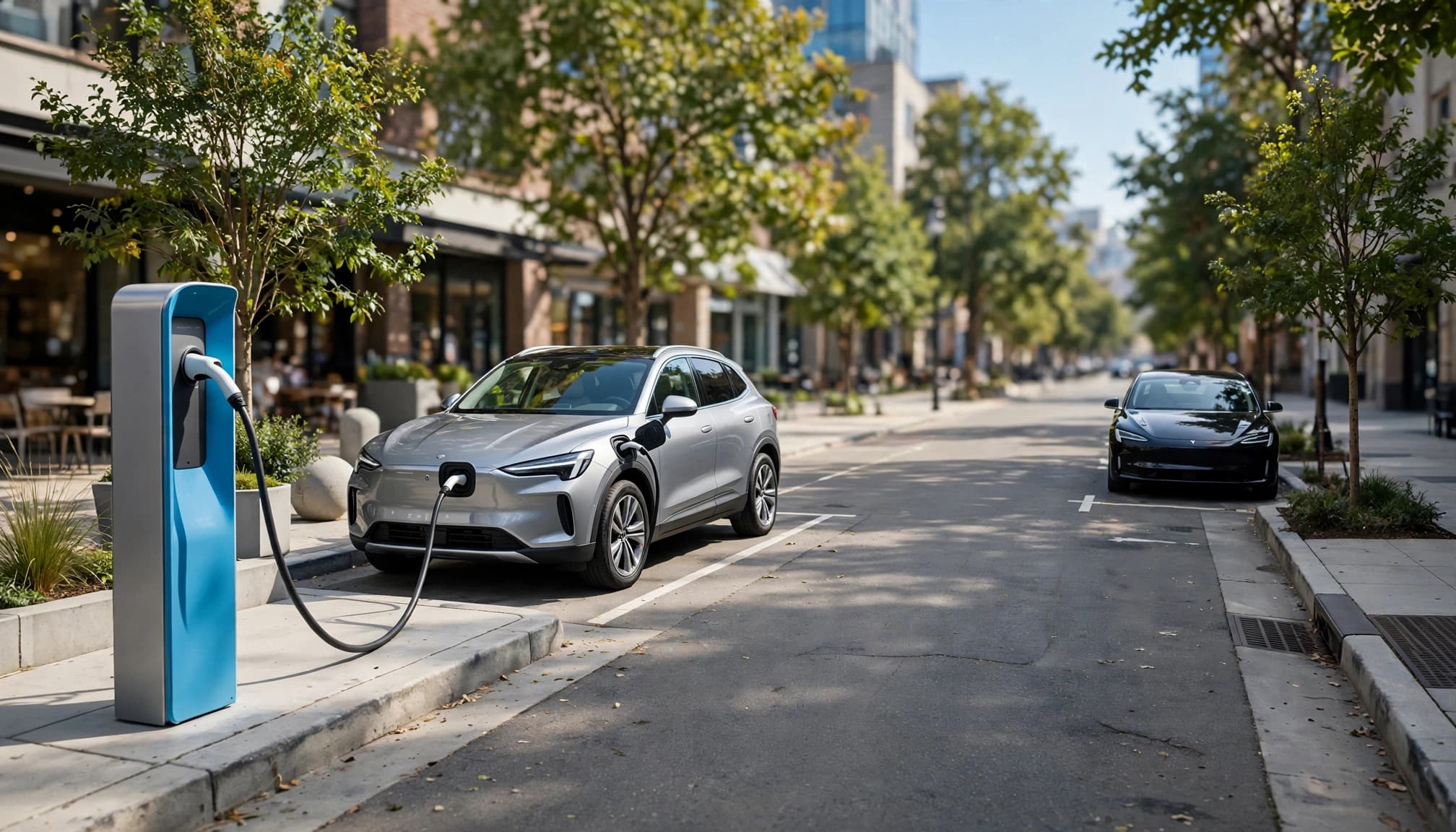
When EV Charging Idle Fees Start
The Grace Period Gives You Time to Return
The return window is the time between the charging-completion trigger and billable idle time. Usually, it lasts 5 to 15 minutes.
The published Supercharger congestion policy gives five minutes. Electrify America publishes a ten-minute window after charging completes.
Treat that time as room to return and move, rather than extra parking you can count on. A charger can finish earlier than the estimate you saw when you plugged in.
The Trigger Matters More Than the Name
A conventional charge begins after charging ends while the vehicle remains connected. Some overstay fees instead begin after a maximum connection time.
Congestion fees can work differently again. At a busy site, reaching a specified battery percentage can trigger the return window even while electricity is flowing.
That's why "my car was still charging" doesn't settle every fee dispute. The relevant question is which trigger the displayed terms established.
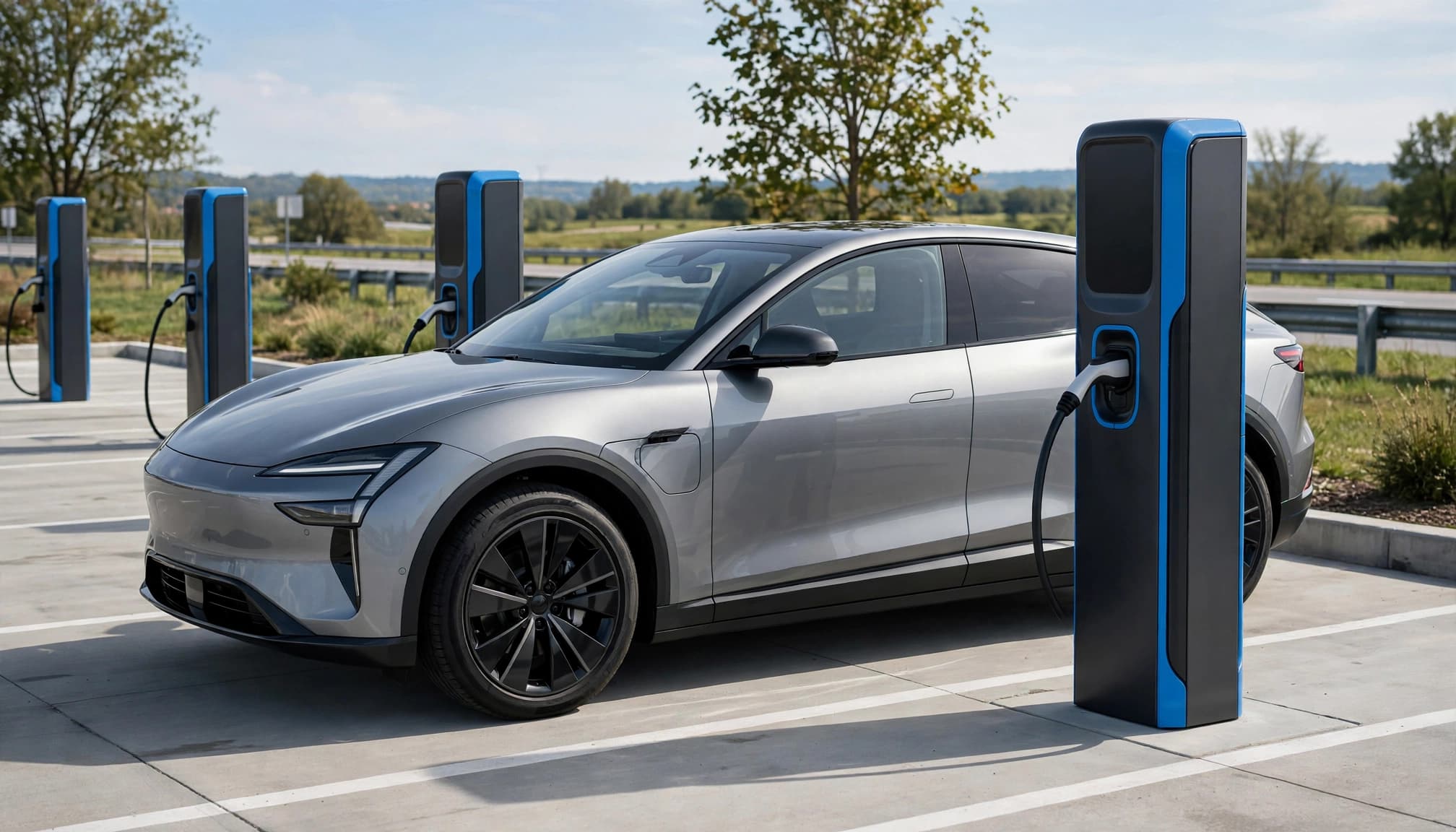
Four Ways Networks Structure Idle Charges
Fixed Rates and Escalating Charges
The simplest structure combines a return window with a fixed per-minute charge. Once the window closes, each additional billable minute adds the same amount.
An escalating structure increases the rate after a longer overstay. A tariff might raise the charge after 30 to 60 minutes. That is a fee-design option, not a universal rule followed by the networks below.
These models create different consequences for a short delay and a prolonged stay. Any escalation threshold belongs in the pricing disclosure before the session begins.
Peak-Hour and Occupancy Triggers
A peak-hours-only structure applies during designated busy periods. Time-of-use pricing also varies by time, but it changes the price of electricity, not an idle or parking charge. Outside those hours, the same overstay might carry no idle charge.
An occupancy-triggered structure depends on how much of the site is in use. Fees activate when the site's utilization rate passes its stated threshold, and some policies increase them as the site fills.
Clock time and actual occupancy are different conditions. A station can be busy at noon on Tuesday and nearly empty during a posted evening peak.
Published U.S. Policies by Charging Network
This comparison reflects official network information available in November 2026. These policies aren't one nationwide parking tariff, and each network sets its own idle fee rules.
| Network | Published Trigger | Grace Period | Published Rate or Pricing Rule |
|---|---|---|---|
| Supercharger | Busy site plus the displayed charge threshold or charging completion | 5 minutes | Congestion fee up to $1.00/minute; location-dependent |
| Electrify America | Charging session complete | 10 minutes | FAQ states $0.40 per minute |
| ChargePoint | Station-owner or roaming-partner overstay conditions | Varies | No universal network-wide rate |
| EVgo | Applicable idle or congestion conditions | No universal period stated | No universal rate stated in its terms |
Electrify America's published $0.40 rate shows that the commonly quoted $0.50 to $1.00 range has exceptions.
Tesla's Supercharger fee policy describes congestion charges and the five-minute allowance. A post-charge-only explanation misses the possibility of a busy-site battery threshold.
Electrify America's FAQ states the ten-minute window and $0.40 idle charge.
ChargePoint's idle-fee explanation says independently owned stations can have different fees. Some also charge for connected time, which isn't automatically a post-charge idle fee.
EVgo's terms of service authorize applicable idle and congestion charges without establishing one universal rate or allowance. Its session or transaction charges shouldn't be mistaken for idle fees.
What a 30-Minute Overstay Adds to Your Bill
Let's make the arithmetic visible. This calculation uses labeled assumptions, not a quoted total for a particular station.
Assume a session delivers 40 kWh at $0.50 per kWh. The energy charge is:
40 kWh × $0.50 = $20.00.
Now assume you move the vehicle 30 minutes after charging ends. Electrify America's published ten-minute grace period and $0.40 per minute idle rate make 20 minutes billable:
(30 minutes minus 10 minutes) × $0.40 = $8.00.
Finally, assume the garage charges $6 for your stay. Your total is $20 for electricity, $8 for idle time, and $6 for parking, or $34 before applicable taxes or other fees.
That $8 isn't additional electricity. It's the charge for occupying the charger after the allowed window.
For comparison, the same 20 billable minutes would cost $10 at $0.50/min or $20 at $1.00/min. These are sensitivity calculations, not additional Electrify America rates.
Read the receipt by category. A correct energy calculation doesn't establish that the idle timer or parking charge was correct.
What the 80% Rule Actually Means
Charging Curves Explain the Road-Trip Advice
Many EVs reduce power during DC fast charging as the battery fills, and charging often slows near an 80% charge. That changing power profile is the charging curve.
Because the final portion can be slow, leaving near 80% and making another stop can take less time than charging to 100%. The comparison depends on your vehicle, charger access, detour, and energy needed for the next leg.
Our EV road-trip planning guide explains why departure charge should follow the route. Needing more than 80% isn't a failure of charging etiquette.
A Battery Threshold Needs an Actual Policy
The Reddit claim that the network automatically stops charging at 80% at busy sites, with an override available, is unverified. It shouldn't be treated as a network-wide rule.
Tesla's published congestion policy instead uses the threshold communicated for the site.
Electrify America has a different, documented example. Its congestion-reduction pilot automatically ends charging at 85% at participating locations. The ten-minute return window then begins. That isn't a network-wide 85% limit.
A proposal discussed online would charge $0.50 per minute above 80% after five minutes, alongside a $1.00-per-minute no-charging idle fee. That's a proposal, not an established tariff. It also raises a fair question: how should a policy accommodate drivers who need extra range?
How to Avoid Fees Without Watching the Clock Constantly
You don't need to hover beside the charger. You do need a return plan.
- Read the displayed tariff before starting. Check the energy rate, idle or congestion trigger, return window, maximum connection time, and separate parking conditions.
- Save the terms and enable notifications. A screenshot preserves what was displayed. Allow app push notifications or SMS alerts where available.
- Set a backup reminder earlier than expected completion. Estimates change as charging power, battery conditions, and the vehicle's charge limit change.
- End the session, unplug, and move the vehicle. Disconnecting alone leaves the bay blocked and may violate the property's parking rules.
The network app can help with both payment and alerts. Our guide to charging apps and payment explains why finding a charger and authorizing a session are separate jobs.
For a meal or appointment that may run long, choose parking arrangements that fit your schedule. A rapid-charging bay is a poor place to leave your return time open-ended.
How to Dispute an Incorrect Idle Fee
Rebuild the Session Timeline
Start with the receipt, session identifier, charger number, and timestamps. Keep screenshots of the tariff, completion notification, and any fault message.
Compare charging completion, when the grace period ended, and the last billed minute. Those events should explain the charge.
A payment-card authorization hold is another thing entirely. It may temporarily exceed the final transaction, so use the completed receipt when identifying the disputed amount.
Ask for a Specific Billing Adjustment
Contact the charging network about that charge. Contact the parking operator about a garage or lot charge. They may be separate businesses with separate records.
State the discrepancy plainly: the grace period was omitted, the wrong rate was applied, or a charger fault was treated as normal completion.
Request the session event log and correction of the disputed minutes. A missed notification can support your explanation, but it doesn't automatically cancel a disclosed fee.
Why Busy Sites Need More Than Idle Fees
Idle fees can reduce charger blocking by discouraging charger hogging and improving bay turnover. Moving a finished vehicle gives the next driver access, which can shorten queues and increase completed sessions, or throughput.
But fees have limits. They can't repair broken equipment or add another charging bay.
Dynamic load sharing addresses a different constraint: available electrical capacity. It allocates power among active chargers so several vehicles can charge within the site's supply limit.
That can support more simultaneous connections, though individual charging speeds may fall when demand exceeds available power. It doesn't free a bay occupied by a finished vehicle.
More reliable chargers, additional bays, sensible power sharing, and clear turnover rules can work together. Charging drivers for staying longer is only one part of that system.
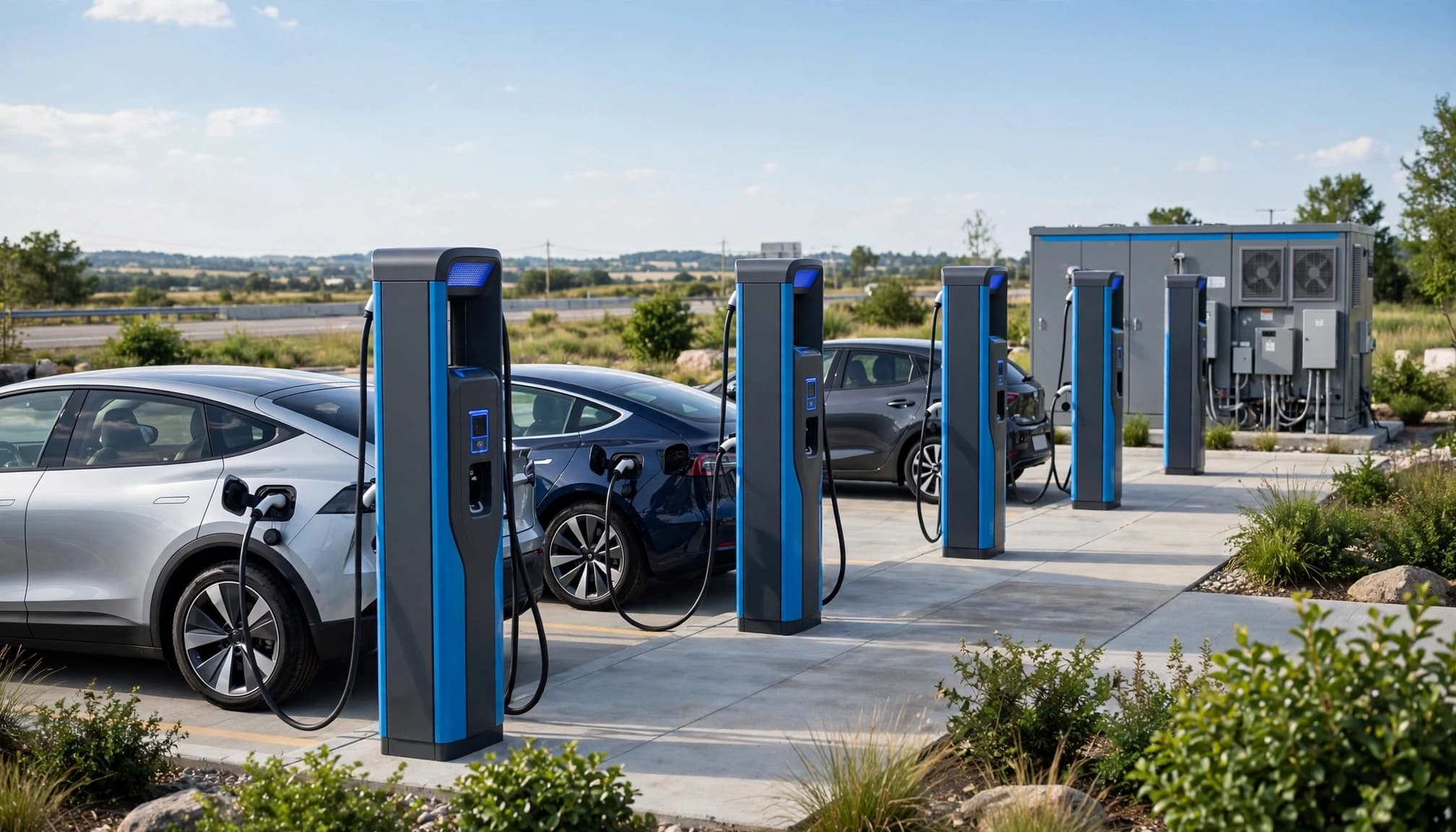
What Operators Need to Bill Fairly
Accurate Events and Tariff Rules
A charging point management system, or CPMS, needs tariff rules, return-window timers, and billing events that match the published policy.
It also needs accurate detection of charging completion versus an active session. Zero power by itself can be ambiguous: the vehicle may be paused, finished, or affected by a fault.
Faulted or offline equipment should suppress inappropriate idle billing. That's a fair-billing practice, not a promise that every network automatically refunds every fault-related charge.
Clear Prices and Useful Notifications
Drivers need the trigger, rate, and grace period before starting. App push messages, SMS alerts, and charger-screen prompts should explain when charging ends and when fees begin.
For federally funded charging infrastructure covered by the rule, 23 CFR 680.116 requires pre-transaction pricing disclosure and clear explanation of additional fees. That requirement shouldn't be presented as applying to every privately operated charger.
A billing system that mistakes a charger failure for normal completion can turn an equipment problem into an unfair overstay charge.
Primary Sources for Charging Costs
Electrify America's pricing page distinguishes energy pricing from possible post-session idle charges and identifies the charger screen and app as locations for station pricing.
The Department of Energy's charging operation and maintenance guidance explains the electricity, maintenance, and networking costs behind public charging operations.
Frequently Asked Questions
Does Paying for Parking Cover the Idle Fee?
Only if the site's terms explicitly combine them. A garage parking payment normally doesn't settle a charging network's separate idle charge. Likewise, paying for electricity doesn't cancel the garage's parking bill.
Can Free Charging Still Carry Idle Fees?
Yes. Complimentary electricity and permission to occupy the charger indefinitely are different benefits. An included charging offer can still leave you responsible for idle time, parking, or other disclosed charges.
Does Tesla Still Charge Idle Fees?
Tesla publishes congestion-fee rules for Superchargers. The fee can begin at a busy site's stated battery threshold or after charging ends. Treating every such charge alike can hide that important difference.
Keep the Two Clocks Separate
Your parking clock and charging clock can run independently. The first covers your stay on the property. The second can lead to additional charges after charging ends or a congestion threshold is reached.
Read both sets of terms before starting. Then move when the charging bay's permitted window ends. That keeps the full cost visible and leaves the charger available for the next driver.
Sources & further reading

Written by
LarryLeoLarryLeo started EV Charging while researching his own next car purchase. He digs into the pros, cons and real cost savings of going electric — using government, standards-body and manufacturer sources — and shares what he finds so other buyers can decide with confidence.
Why trust EV Charging Guide
Our guides are researched from government, standards-body and manufacturer sources, reviewed for accuracy, and updated when rules or products change. Brands cannot pay for placement. Read our editorial policy.