Federal EV Charger Tax Credit (30C) in 2026: What Changed and Who Still Qualifies
The 30C cutoff is June 30, 2026. Review earlier installations by date, location, qualifying costs and tax-return limitations.
As an Amazon Associate, EV Charging may earn from qualifying purchases. This helps support our independent guides at no extra cost to you. Learn more.
Key takeaways
- Current IRS instructions exclude property placed in service after June 30, 2026.
- Earlier installations must also meet location and other eligibility requirements.
- Keep itemized records and use the applicable Form 8911 guidance.
The deadline changed, and it matters now
Under current IRS instructions, the federal Section 30C Alternative Fuel Vehicle Refueling Property Credit is unavailable for property placed in service after June 30, 2026. If you are arranging a new installation after that date, do not include this credit in the budget under the current rule. Older articles describing availability through 2032 are out of date on this point.
If your equipment was placed in service by the deadline, the date alone does not establish eligibility. Location, property use, qualifying costs and tax limitations still need review. This guide helps you organize that review using official sources. It is general information, not a determination that your installation qualifies or a substitute for advice about your tax return.
Shop this guide
Compare current options and prices
What the residential provision covers in principle
The IRS describes a personal-use credit of 30 percent of qualifying cost, capped at $1,000 for each single item of qualified property at a main home. Eligible location rules include qualifying low-income or non-urban census tracts. Original use and other requirements also apply.
Those conditions are separate tests. Buying an eligible-looking charger does not establish that the address qualifies. Living in a qualifying tract does not establish that every expense on an installation invoice counts. And a calculated credit amount is not necessarily the amount ultimately usable on your return.
Keep the review organized around those separate questions. It is much easier to resolve one missing fact at a time than to ask whether an entire project is tax-credit eligible based on a product receipt and a neighborhood name.
Establish the placed-in-service date
Start with the actual project timeline. Record purchase, delivery, electrical completion, commissioning and any inspection dates. Ask your tax preparer which records establish when the property was placed in service under the applicable guidance. Do not assume that paying a deposit or receiving the box is the controlling event.
This distinction matters around the deadline. A charger purchased before June 30 but completed later raises a different question from equipment already installed and operational by that date. Do not change or backdate records to make the timeline fit. Preserve the original documents and resolve uncertainty using the official rules.
If the contractor's invoice does not clearly describe completion, request a factual statement of the work performed and dates. The useful document explains what happened. It should not be a contractor's unsupported promise that the IRS will accept the claim.
Verify the address through the official location process
Use the IRS location guidance for the relevant placed-in-service period. A ZIP code, city name or broad description such as rural is not a substitute for the required census-tract determination. Properties close together can fall on different sides of a boundary.
Save the address used, the tract identifier and the official eligibility information consulted. Record when you checked it. This makes it possible for your preparer to reproduce the result instead of relying on a screenshot with no context.
If a map places the property incorrectly or the address is ambiguous, resolve that discrepancy before claiming eligibility. Do not choose a nearby qualifying point because it looks close enough. The installation's actual location is the fact that matters.
Build an itemized project record
Collect the charger invoice, installation invoice, proof of payment and a description of the installed equipment. Separate the charging project from unrelated work when the contractor handled several tasks at once. A combined home-improvement invoice can be difficult to evaluate without a breakdown.
Ask your preparer to determine which costs are qualifying rather than assuming every dollar spent near the garage belongs in the calculation. Keep potentially relevant items visible, including equipment and installation work, but do not silently classify them yourself when the treatment is uncertain.
Also record rebates, reimbursements and other incentives associated with the project. Their interaction with the tax calculation needs review. The goal is a complete factual file, not the largest possible number assembled by leaving inconvenient payments out of view.
Understand the arithmetic without assuming the result
For a purely illustrative qualifying cost of $2,000, 30 percent is $600 before applicable limitations. For an illustrative $4,000 qualifying cost, 30 percent is $1,200, which exceeds the stated $1,000 personal-use cap for a single item. These examples explain arithmetic; they do not establish eligibility or the final tax benefit.
A credit is not the same thing as a retail discount applied at checkout. You may pay the full project cost before tax filing, and the return calculation can limit the usable amount. Ask your preparer how the credit interacts with your specific return rather than treating the headline percentage as cash already received.
Do not confuse the charger credit with a vehicle-purchase incentive. They concern different property and rules. A qualifying vehicle does not automatically make a home charging installation qualify, and an ineligible vehicle-purchase transaction does not by itself answer the charger question.
Use the correct forms for the relevant year
The IRS directs claimants to Form 8911 and its associated instructions and schedules. Use the revision applicable to the tax year and check the official future-developments information before filing. Tax software prompts can help organize inputs, but they do not verify that the underlying facts are correct.
Bring your preparer the timeline, location evidence, itemized costs and incentive records together. Include any uncertainty explicitly. A note saying that the completion date needs confirmation is more useful than a guessed date entered with confidence.
If you already filed and later discover an error, ask about the appropriate correction process. Do not assume that a revised article automatically tells you how to amend a return. The relevant year, original filing and nature of the error determine what needs to happen.
Keep business projects separate from household examples
Commercial, investment and certain tax-exempt projects involve different provisions and procedures. A business should not use the residential percentage-and-cap example as a complete calculation. Mixed-use property can also require a more careful assessment than this household overview provides.
Describe the actual ownership and use to your adviser. Who paid for the equipment, where it is installed and how it is used are facts that should be clear before discussing a credit amount. Avoid selecting whichever category produces the most attractive headline without support.
For a larger project, establish tax and documentation responsibilities early. The electrical contractor, property owner and tax adviser may each hold different records. A shared checklist helps prevent a completed installation from arriving at filing time with important evidence scattered across several inboxes.
A new project after the cutoff still needs a sensible budget
If the installation will be placed in service after June 30, 2026, compare it on its full cost without assuming this federal credit. Home charging may still be worthwhile for convenience or operating costs, but those benefits should stand on their own calculation.
Check current utility, state or local programs separately. They may have different deadlines, funding limits and equipment requirements. Confirm eligibility directly with the program administrator before ordering or beginning work, especially when preapproval is required.
Compare lower-current designs and supported load-management options if the initial installation price is high. Those are practical project choices, not tax strategies. A well-matched design can reduce cost without relying on an incentive that does not apply.
Keep the conclusion tied to verified facts
For an earlier installation, work through the date, location, property requirements, costs and return limitations with the official guidance and a qualified preparer. Retain the documents supporting each answer. A complete record is more valuable than an online calculator that asks only how much the charger cost.
For a new installation after the cutoff, remove the federal credit from the expected savings unless the law changes and official guidance confirms a new applicable provision. Do not rely on an old retailer banner or a recycled article date.
The key update is straightforward, even though individual tax treatment can be detailed: June 30, 2026 is the current placed-in-service cutoff. Use that fact early in the decision, then evaluate any earlier qualifying project carefully rather than assuming the word charger settles the rest.
Sources & further reading

Written by
LarryLeoLarryLeo started EV Charging while researching his own next car purchase. He digs into the pros, cons and real cost savings of going electric — using government, standards-body and manufacturer sources — and shares what he finds so other buyers can decide with confidence.
Why trust EV Charging Guide
Our guides are researched from government, standards-body and manufacturer sources, reviewed for accuracy, and updated when rules or products change. Brands cannot pay for placement. Read our editorial policy.
Related Posts
EV Charger Installation Rebates: How to Find Utility and State Incentives
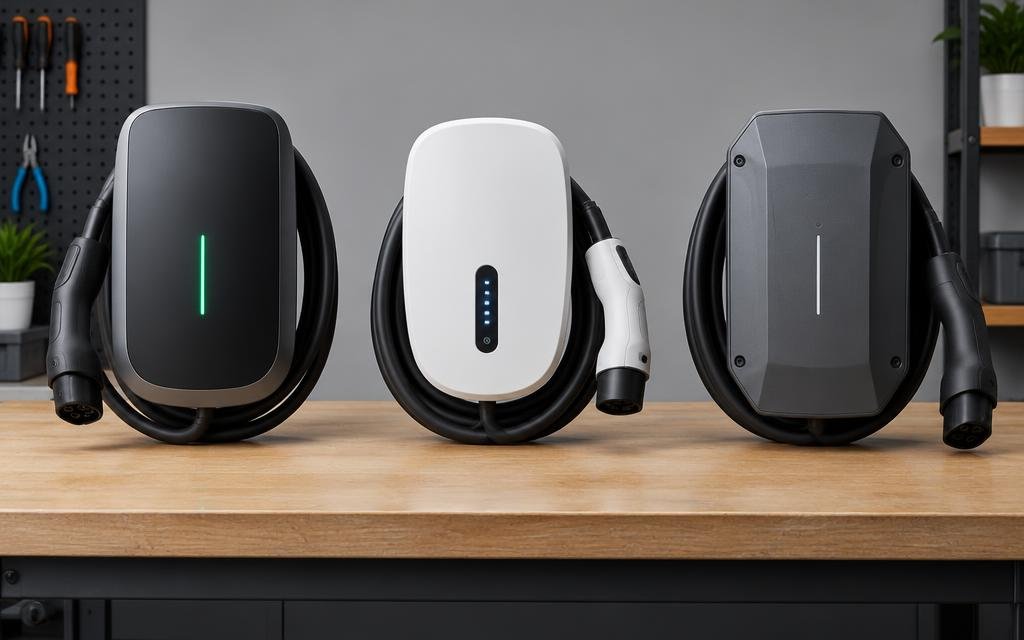
ChargePoint Home Flex vs Emporia vs Grizzl-E: Which Home Charger Fits You?