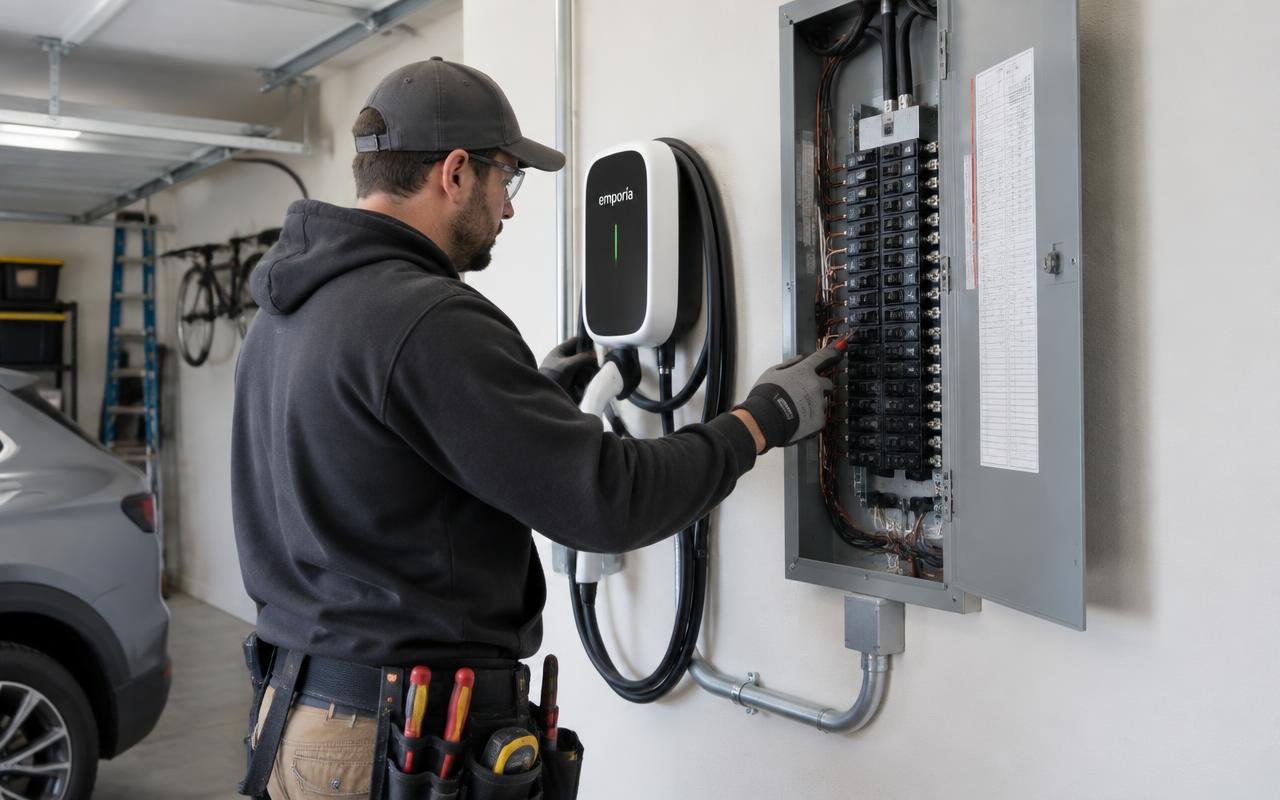
How to Charge Two EVs at Home With One Circuit
A two-EV household doesn't always need two big circuits. Power-sharing chargers and smart scheduling can get both cars full by morning.
As an Amazon Associate, EV Charging may earn from qualifying purchases. This helps support our independent guides at no extra cost to you. Learn more.
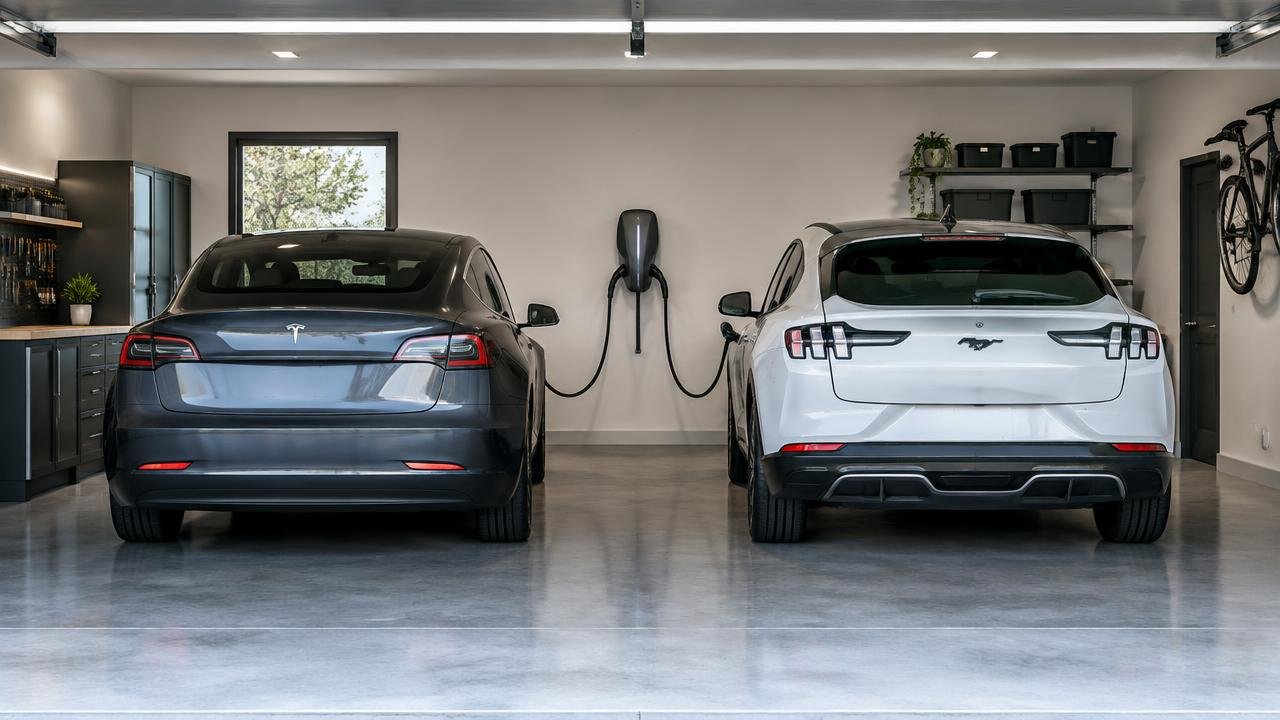
Key takeaways
- Power-sharing chargers split one circuit between two cars.
- Most households can refill two cars overnight with shared power.
- Smart scheduling can stagger charging into off-peak hours.
Option 1: power sharing
Some chargers can be linked so two units share one circuit, dividing the available current between cars. When one car finishes, the other gets the full amount.
Shop this guide
Compare current options and prices
Option 2: a dual-port charger
A dual-port unit has two cables on one box. It's simpler to install but both cars must park within reach.
Do the math on your driving
If each car drives 40 miles a day, that's roughly 10–13 kWh each. Even split between two cars, a 40-amp circuit can usually replace that overnight. Use our charging time calculator to check your own numbers.
Safety note: This article is general information, not professional electrical advice. Working with 240V circuits can cause serious injury or fire. Hire a licensed electrician and follow local codes and permit requirements.
Sources & further reading

Written by
LarryLeoLarryLeo started EV Charging while researching his own next car purchase. He digs into the pros, cons and real cost savings of going electric — using government, standards-body and manufacturer sources — and shares what he finds so other buyers can decide with confidence.
Why trust EV Charging Guide
Our guides are researched from government, standards-body and manufacturer sources, reviewed for accuracy, and updated when rules or products change. Brands cannot pay for placement. Read our editorial policy.
Related Posts
NEMA 14-50 vs Hardwired EV Charger: Which Installation Is Better?
40 Amp vs 48 Amp EV Charger: Is the Faster Charger Worth It?