Why a 350-kW Station May Charge Your EV More Slowly
350 kW charging is a station’s maximum, not a promise. Learn how your EV’s battery temperature, charge level and limits shape real charging speed.
As an Amazon Associate, EV Charging may earn from qualifying purchases. This helps support our independent guides at no extra cost to you. Learn more.
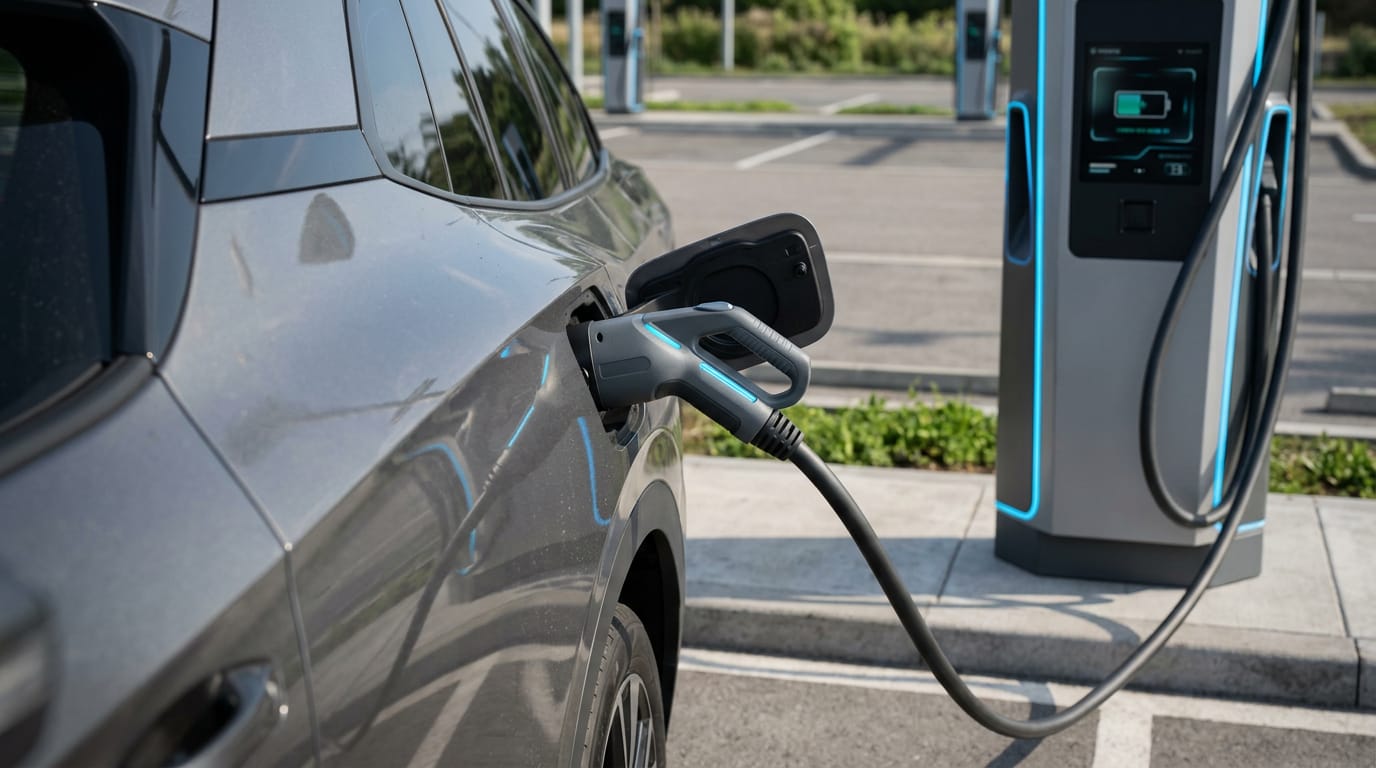
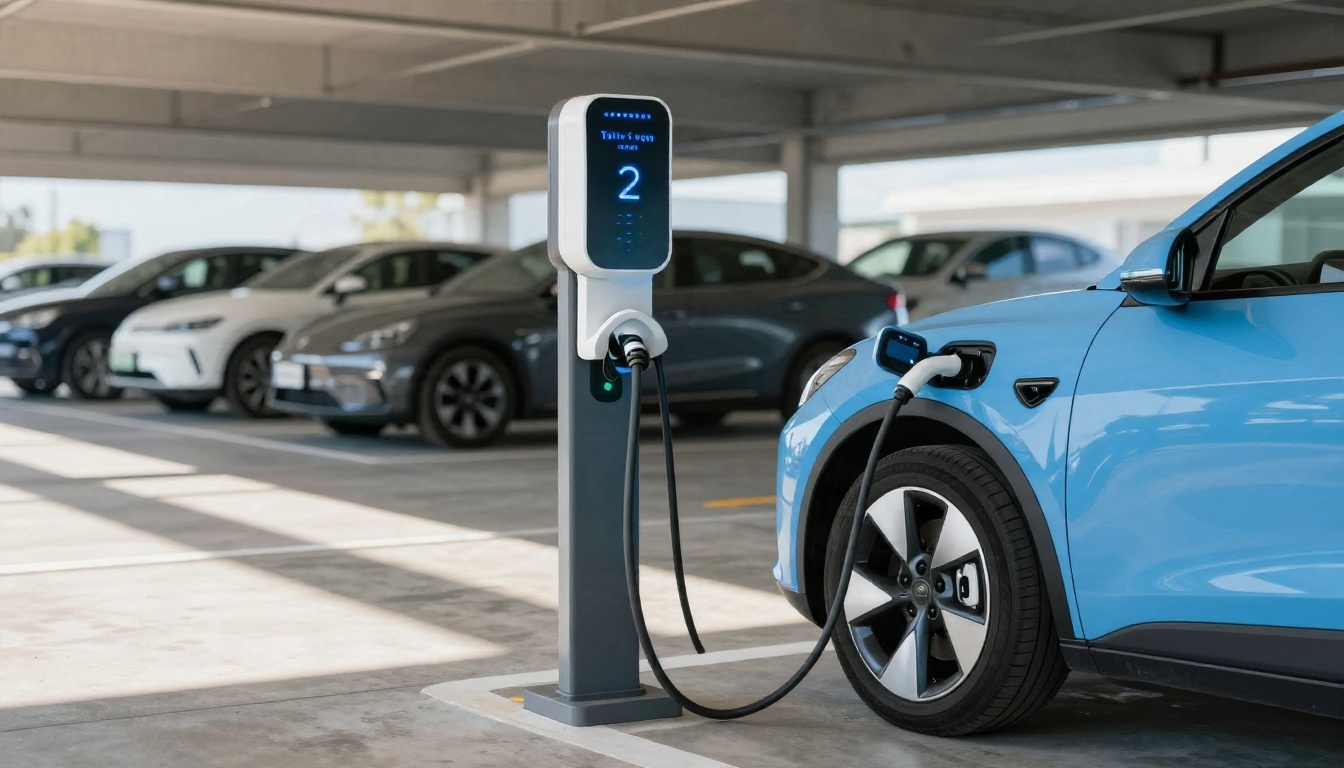
A 350-kW station may deliver less power because your EV controls how much electricity its battery can accept. With 350 kW charging, the advertised number is a maximum equipment capability, while your actual rate depends on the vehicle, battery temperature and state of charge.
That gap can feel personal when you're watching the screen and waiting to get back on the road. But lower power doesn't automatically mean something is wrong, and chasing the biggest number can distract you from what matters: how quickly you get the energy you need.
Let's start with what that rating promises, then work through what your car is doing.
This post may contain affiliate links. If you make a purchase through these links, I may earn a small commission at no extra cost to you.
Key Takeaways
- A 350-kW rating describes the station's maximum capability under suitable conditions. Your EV can accept less.
- Battery temperature and state of charge affect charging power, even when the vehicle supports high-power charging.
- Preconditioning can improve a cold battery's readiness, but it doesn't remove normal charging taper.
- Average power across a useful charging session tells you more about travel time than a brief peak.
- AC charging limits, DC charging limits and connector compatibility describe different things. Keep those specifications separate.
The useful question is whether the session makes sense for your vehicle's starting charge, battery conditions and energy needs.
What a 350-kW Rating Actually Means
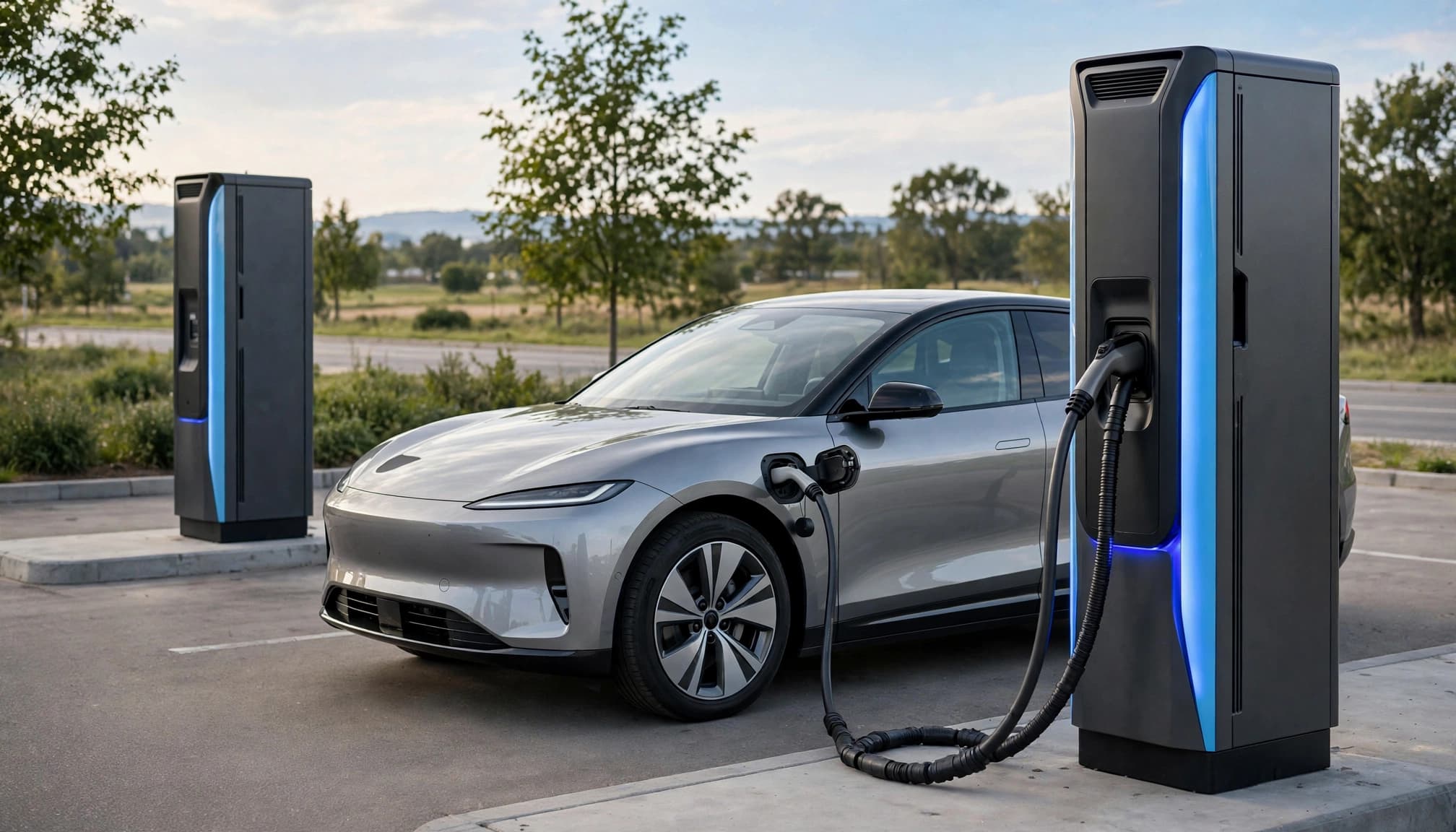
The Number Describes Power, Not Stored Energy
Kilowatts measure the rate of energy transfer. Kilowatt-hours measure an amount of energy.
So 350 kW tells you how quickly compatible equipment can supply energy under suitable conditions. It doesn't describe battery capacity, a guaranteed session average or how much energy your car needs.
NREL's high-power charging classification places vehicles or charging equipment capable of facilitating charging at 200 kW and above in the high-power charging category. That classification describes capability. It doesn't promise that every connected vehicle will receive the equipment's maximum output.
This distinction matters because the station and the car each have their own specifications. Putting those two numbers beside each other is the beginning of understanding the session.
Maximum Capability Isn't a Constant Output
A fast charger doesn't push its full advertised output into every battery that connects. The charging system operates within limits communicated between the vehicle and charging equipment.
Your car may have a lower maximum DC charging rate. It may also accept less than its own maximum because its battery is cold, hot or already fairly full.
That means two things can be true together: the station can be rated for 350 kW, and your car can be behaving normally at a lower rate.
Think of that rating as available headroom. Your vehicle decides how much of that headroom it can use at that moment. And that decision can change while you stand there watching.
Your EV Controls What Its Battery Accepts
The Battery Management System Has a Job
The battery management system, usually shortened to BMS, monitors the pack and controls its operation within the vehicle manufacturer's limits.
During DC fast charging, the vehicle communicates its charging requirements to the equipment. Those requirements depend on the battery's condition, including temperature and state of charge.
The charger doesn't get to overrule the battery because the sign outside has a bigger number.
This is also why an EV's published maximum charging rate needs context. It's a capability achieved within an operating window, rather than a setting you can switch on whenever you want.
The vehicle's charging controls continue making adjustments throughout the session. A rate that was acceptable several minutes ago may no longer suit the battery as it fills.
Your Car Has Its Own DC Power Ceiling
A vehicle cannot gain a higher DC charging capability simply by connecting to a more powerful station. The battery system and vehicle charging hardware still have their own limits.
A station with additional capacity can give a compatible car room to reach its supported rate. It cannot create a new vehicle specification.
Also, a vehicle's maximum isn't necessarily available across every part of its charge range. Battery conditions can reduce acceptance before the car reaches that published ceiling.
Our guide to charging power and electrical units separates equipment ratings, vehicle limits and the numbers displayed during charging.
The practical takeaway? Judge the session against your car's capabilities and conditions. Comparing it only with the number printed on the charger leaves out half the conversation.
State of Charge Changes the Charging Rate
A Nearly Full Battery Usually Accepts Less
State of charge, or SOC, is the battery percentage shown by your vehicle. It describes how full the battery is relative to its managed usable range.
As the battery fills, the vehicle commonly reduces charging power. This reduction is called tapering.
The precise shape varies by vehicle and battery system. Some charging curves hold a relatively broad plateau. Others reach a higher peak and then reduce power sooner.
What they have in common is that the battery's starting percentage matters. Plugging in with a low charge and plugging in near full are different charging jobs, even at the same station.
That's why a lower number late in a session often needs no dramatic explanation. The car is approaching a different part of its charging curve.
Eighty Percent Isn't a Universal Switching Point
You've probably heard that charging slows above 80%. That's a useful planning shorthand, but it isn't a universal technical threshold.
Taper can begin earlier. It can happen gradually. Some vehicles reduce power in several stages rather than making one obvious drop.
And the rate at 80% doesn't tell you everything about what happened before it.
A charging rate measured at 20% and one measured at 80% describe different operating conditions. Comparing them as though they should match can make normal behavior look like a fault.
This matters when comparing your session with another driver's result. Their starting percentage may explain much of the difference before temperature enters the discussion.
Charge targets also serve different purposes. A road-trip stop, a daily top-up and preparation for a long departure don't require the same ending percentage. Our guide to 80% and 100% charging limits explains that separate decision.
Battery Temperature Can Limit Charging Power
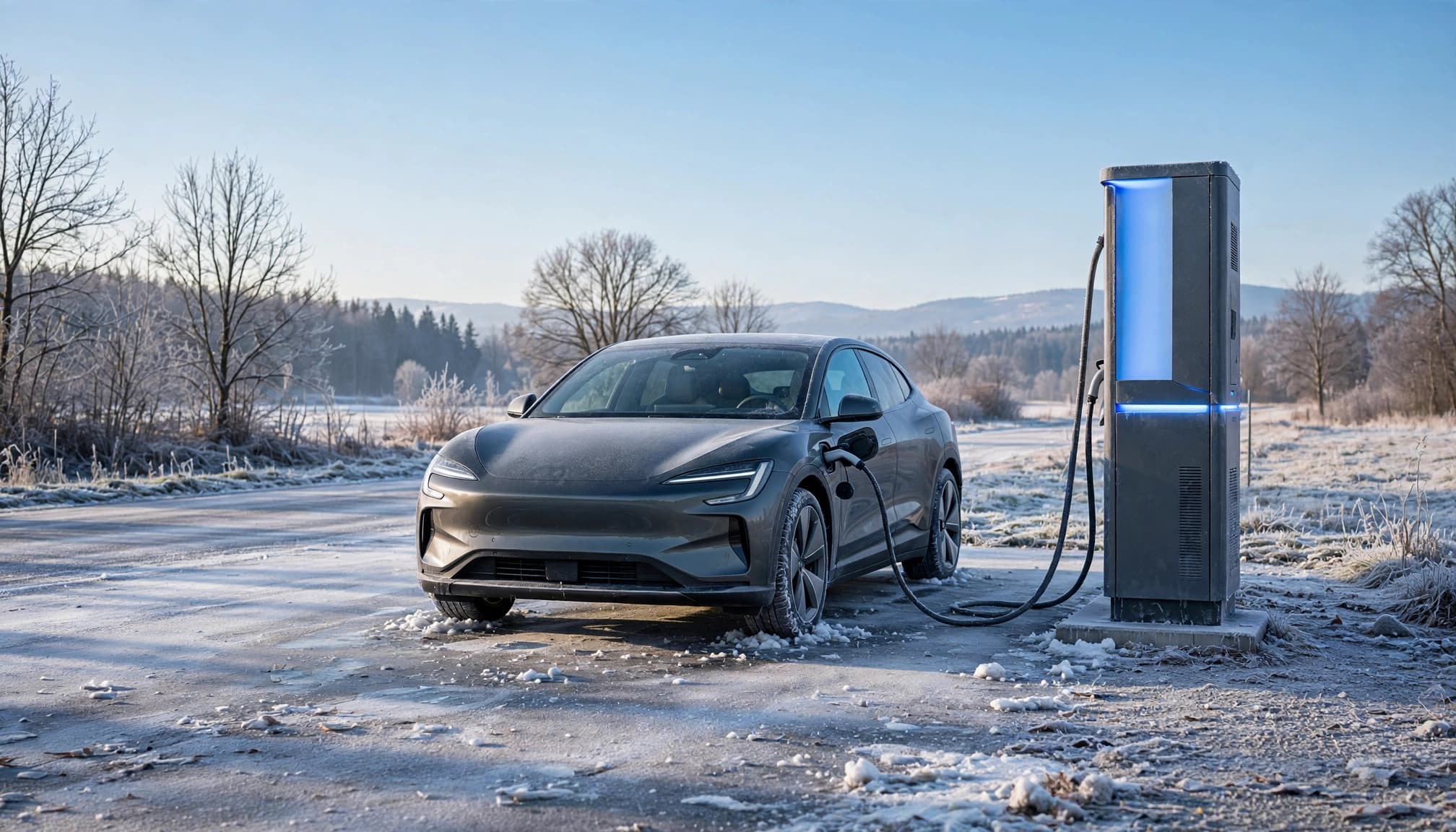
Cold Batteries Need More Care
A cold lithium-ion battery cannot always accept charging power at the same rate as a battery within its preferred operating range.
At low temperatures, the processes that move lithium through the battery slow down. High charging current under unsuitable conditions can increase the risk of lithium plating, where lithium deposits on the anode instead of entering its intended storage structure.
The vehicle limits charging to manage that risk. Sometimes charging begins slowly and improves as the pack warms.
That's inconvenient when you're cold and hungry. It's also a reason for the controls to exist.
Outside air temperature doesn't give you the battery's exact temperature. A pack that sat outdoors overnight and one that has been thermally prepared can behave differently in the same weather.
A Hot Battery Can Need Protection Too
Warm enough and excessively hot are different conditions. A battery outside its preferred temperature range may need cooling before it can accept its highest charging rate.
The vehicle's thermal management system handles that work, and charging power can change as conditions change.
NREL's high-power charging test conditions include starting battery temperatures of 23°C, 40°C and -7°C. They also include different starting charge levels and whether vehicles were pre-driven or temperature-soaked.
Those are test conditions, not promised charging results. They show why a meaningful comparison needs more than a charger rating and a photograph of the screen.
Temperature also explains why the first number you see may not describe the whole stop. The battery's condition can improve during charging, while rising SOC eventually pushes power downward.
Both processes can happen in the same session. The screen shows the combined result.
Preconditioning Prepares the Battery Before Arrival
Cabin Comfort and Battery Preparation Are Different
A comfortable cabin doesn't prove that the battery is ready for high-power charging.
Cabin conditioning changes the passenger compartment's temperature. Battery preconditioning prepares the pack for an intended task, which can include DC fast charging.
Some vehicles coordinate those functions. Others handle them separately, and the available controls vary.
On supported vehicles, built-in navigation can trigger battery preparation when a compatible fast charger is selected as the destination. Tesla's Trip Planner, for example, can prepare the battery while routing to a Supercharger.
That preparation takes time and energy. Starting close to the station gives the system less opportunity to change the battery's temperature before you arrive.
The exact amount of preparation needed varies with the vehicle and conditions. There isn't one universal countdown that fits every battery.
Preparation Improves Readiness, Not Every Limit
Preconditioning can reduce the slow warm-up period that would otherwise happen after plugging in. That can help the vehicle reach stronger charging power sooner.
But a prepared battery still follows its normal charging curve. It still has a vehicle-specific maximum. Its power still commonly tapers as SOC increases.
So preconditioning doesn't turn a nearly full battery into a low-SOC battery. Those are separate influences.
Our guide to EV battery preconditioning explains how preparation fits into a fast-charging trip.
The practical habit is straightforward: use the vehicle's supported fast-charging preparation features before arrival when available. Let that work happen during the drive rather than expecting the station to make up for a cold pack instantly.
And keep expectations grounded. Preparation removes an avoidable obstacle when temperature is the problem. It doesn't guarantee that the display will reach the station's advertised maximum.
Read the Charging Curve, Not One Screenshot
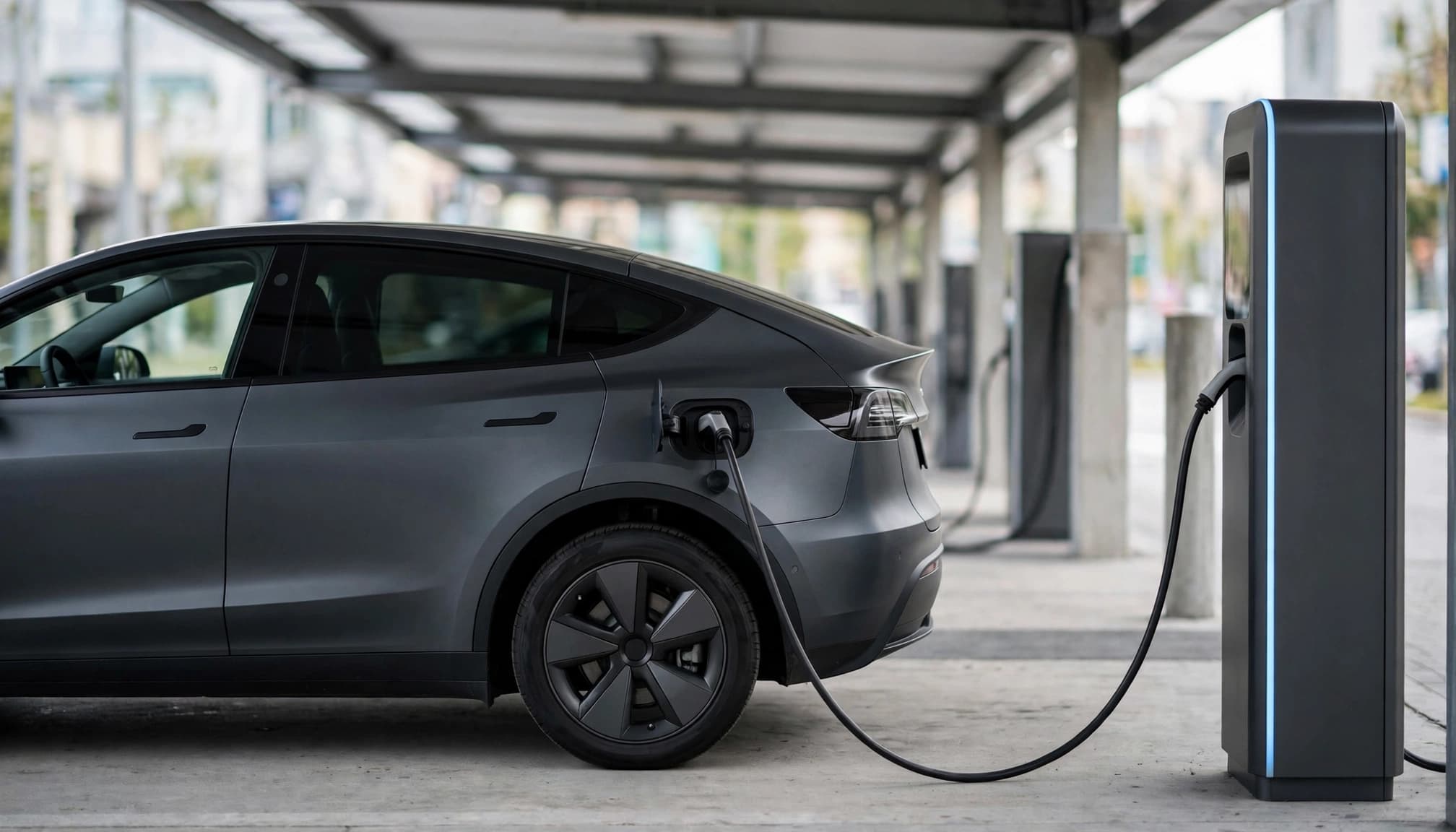
A Peak Is Only One Point
A charging curve shows how power changes during a charging session, often plotted against battery percentage.
The peak is the highest point on that curve. Useful information, yes. The entire story? Hardly.
A car can reach an impressive maximum briefly, then spend much of the session at lower power. Another car can have a less dramatic peak but sustain a useful rate across more of the charge range.
For travel, the full shape matters because energy accumulates over time. A short burst contributes less energy than the same power sustained for longer.
That's the part a screenshot leaves out. It captures an instant without showing how long that instant lasted or what followed.
Rising and Falling Power Can Both Be Normal
Power doesn't always start high and then decline.
A cold battery may begin at a lower rate and accept more as it warms. Later, the rate can fall as SOC increases. A session can therefore rise, flatten and taper without any single number defining its quality.
Some curves also have steps rather than a smooth slope. Vehicle control strategies aren't required to produce a tidy graph for us.
The meaningful pattern is how power relates to the battery's changing conditions.
If you're looking at a charging graph, pay attention to the starting percentage, how long higher power lasts and where the decline begins. Those details help explain charging time much better than the peak alone.
This is why 350 kW charging should be understood as an available capability within a larger charging process. A station label cannot describe your vehicle's entire curve, and a brief maximum cannot predict every minute of your stop.
Average Charging Power Explains Your Waiting Time
Energy Divided by Time Gives Average Power
Average power describes how quickly energy was delivered across a defined period.
The calculation is:
Average power in kW = energy in kWh ÷ time in hours.
For arithmetic alone, 60 kWh delivered over 20 minutes corresponds to an average of 180 kW. That calculation doesn't identify the peak, the battery percentage range or a particular vehicle's performance.
It tells you something useful and limited: the average rate across that measured interval.
The measurement period matters too. An average for active energy transfer differs from an average that includes connecting, authorizing payment and waiting for the session to begin.
Both can be useful. They answer different questions.
Constant-Power Calculations Have a Narrow Purpose
Dividing required energy by 350 kW gives a constant-power calculation. Real charging sessions commonly take longer because power changes and the battery may not receive every unit measured upstream.
These calculations show the relationship between sustained power and time.
| Sustained Power | Energy Delivered in 10 Minutes |
|---|---|
| 100 kW | About 16.7 kWh |
| 200 kW | About 33.3 kWh |
| 350 kW | About 58.3 kWh |
The takeaway is that sustained power matters. These are mathematical relationships, not predictions for a specific EV.
You also need the correct energy quantity. Battery energy added, station-metered energy and the change in the dashboard's estimated range describe different things.
For travel planning, a realistic charging-time estimate across your intended battery range is usually more useful than dividing battery capacity by the station's maximum rating.
And once charging starts, the vehicle's estimated completion time can give you more relevant guidance than a calculation built around constant maximum power. It has information about the actual battery that the station's sign doesn't.
The Charger and Car May Display Different Numbers
Delivered Energy and Stored Energy Have Different Boundaries
Charging isn't lossless, and a vehicle can use energy during a session for tasks besides increasing stored battery energy.
Battery heating, cooling and other vehicle systems can consume energy. The station's energy measurement and the battery's net gain therefore don't have to match exactly.
This is a measurement-boundary issue. Where does the number begin, and what does it include?
A station display may describe power delivered at its measurement point. A vehicle display may describe a different quantity. The labels and implementation determine the meaning.
That doesn't make either number automatically misleading. But it does mean you shouldn't subtract two unexplained figures and declare all of the difference a fault.
Range Added Is Another Estimate
Miles added per minute sounds intuitive because you're trying to travel, not complete an electrical engineering exam.
Still, that figure relies on an assumed relationship between energy and driving distance. Vehicle efficiency, speed, weather and other conditions influence the distance that stored energy will support.
Kilowatts describe charging power more directly. Kilowatt-hours describe energy more directly.
For a useful session record, the important quantities are starting SOC, ending SOC, elapsed time and energy delivered. Peak power adds context, but it doesn't replace those measurements.
This is also where comparisons can become unfair. One driver reports a momentary power reading. Another reports an average that includes the slowest part near full. A third reports estimated miles added.
Those numbers aren't interchangeable. Before drawing a conclusion, identify what was measured and over which part of the session.
A clean comparison uses the same quantity, the same charge window and a clearly defined period. Otherwise, the arithmetic can be correct while the comparison is still unhelpful.
AC and DC Charging Have Separate Vehicle Limits
Home Charging Uses the Onboard AC Charger
With AC charging, the vehicle's onboard charger converts incoming alternating current into direct current for the battery.
That onboard charger's capability can limit home or destination charging, even when the wall equipment has a larger rating.
At an assumed 240 volts, 40 amps corresponds to 9.6 kW and 48 amps corresponds to 11.52 kW before losses. Those are electrical calculations, not guaranteed battery charging rates.
An EV whose onboard AC charger accepts less power cannot use the extra capacity simply because the wall unit offers it.
This is the same broad lesson about matching capability, but it applies to a different charging arrangement.
DC Fast Charging Uses a Different Path
DC fast-charging equipment supplies direct current to the vehicle through its supported DC charging system. The onboard AC charger's rating isn't the limit used to describe that session.
A high DC charging specification therefore doesn't imply equally high AC capability at home.
This is an easy place to get tangled up. A brochure can advertise a large fast-charging number while your home app shows a much smaller rate, and both can be correct.
Our 40A versus 48A comparison covers the separate home-charging decision.
For this discussion, keep the categories clear. The relevant vehicle specification at a public DC fast charger is its DC charging capability, alongside the battery's condition and charging curve.
A home charging limit can't predict the DC result. A DC peak can't tell you what your garage installation will deliver. Mixing them creates expectations neither system was designed to meet.
Connector Compatibility Comes Before Charging Speed
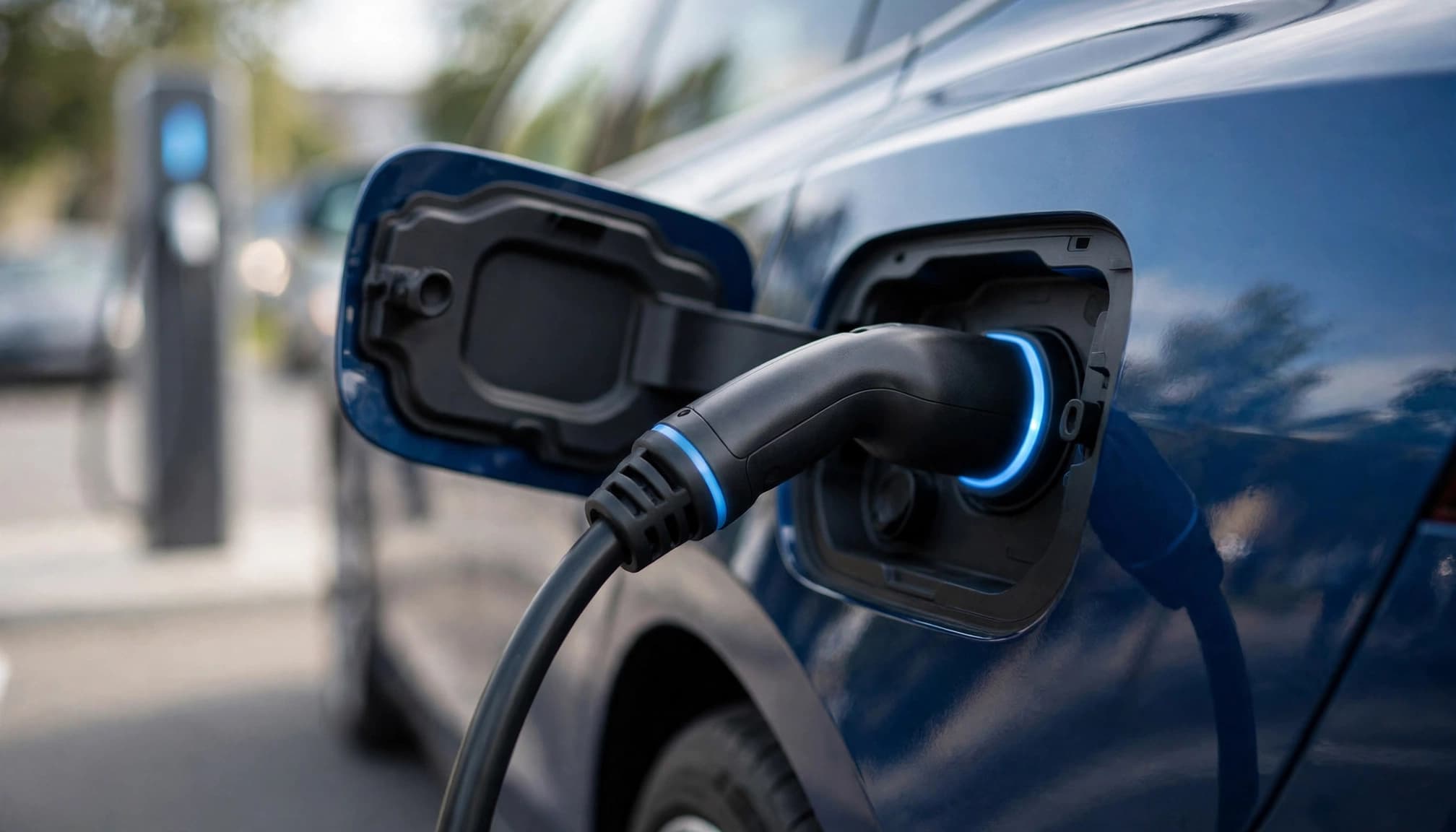
A charging connector tells you something about the supported connection. It doesn't, by itself, tell you the power your battery will accept.
In North America, J1772 is associated with AC charging. CCS1 adds DC contacts to the connection arrangement. NACS, standardized through SAE J3400, supports AC or DC with compatible equipment.
The vehicle, charging equipment and any adapter must support the intended arrangement.
An adapter intended for AC charging cannot substitute for a supported DC fast-charging adapter. The connector fitting into place doesn't establish every other part of compatibility.
Our explanation of J1772, CCS and NACS connectors separates those functions.
Once a supported DC session is operating, connector names still aren't a charging-time guarantee. Cars using the same connector family can have different battery systems, maximum charging capabilities and charging curves.
That's why "it uses the same plug" is such an incomplete comparison.
For buyers, connector compatibility answers whether a supported connection is possible. Vehicle charging performance answers how the battery behaves during that connection. Keep both questions in view.
Use only manufacturer-supported adapters for the intended charging arrangement. Don't modify charging equipment or improvise a connection to chase a higher number. There's no useful shortcut there.
How to Assess an Unexpectedly Slow Session
A low reading deserves context before it earns a diagnosis.
NREL's station impact analysis identifies vehicle battery specifications and temperature effects among the factors relevant to DC fast charging. That broader view is more useful than treating the station rating as the only variable.
Start With the Conditions You Can Observe
Use a short sequence rather than changing several things at once:
- Note your starting battery percentage and whether the session is already approaching a high SOC.
- Identify whether the battery was cold-soaked, thermally prepared or showing a temperature-related charging message.
- Allow the session's initial setup and ramp-up to complete, then look at the trend rather than one reading.
- Compare delivered energy and elapsed time across the useful part of the stop.
- Record any vehicle or station warning before ending or reporting the session.
These observations help separate a normal taper or warm-up pattern from a session that needs further attention.
A screenshot with the battery percentage and time is more informative than a screenshot of power alone. A few readings across the session are more informative still.
Keep the Conclusion Proportional to the Evidence
A low number establishes that charging power was low at that moment. It doesn't establish which component was responsible.
Repeatedly unplugging and reconnecting can also consume time without changing battery temperature or SOC in a helpful way.
If the session reports an error, won't remain connected or shows a warning, use the station's support channel with the stall identifier and displayed message. Those are actionable details.
Stop using equipment with visible damage, exposed conductors, smoke or signs of overheating. Don't touch damaged components. Safety concerns deserve a different response than disappointment over a power reading.
For a session that continues normally, focus on the trend and estimated time needed for your next leg. Moving stalls solely to restart a normal high-SOC taper won't change the battery's underlying acceptance.
Plan the Stop Around the Energy You Need
Charging to Full Can Extend a Roadside Stop
The energy you need for the next leg may be much less than the energy required to reach 100%.
Because charging commonly tapers as the battery fills, the final portion can take a disproportionate amount of time. Whether that extra time is worthwhile depends on the route and the energy you need.
Sometimes a higher departure charge is sensible. A long gap between reliable charging opportunities, difficult weather or destination needs can justify it.
The point is to make that choice deliberately, rather than treating a full battery as the automatic finish line at every stop.
Leave a suitable arrival reserve. Faster charging at lower SOC doesn't justify arriving with an uncomfortably small margin or ignoring changing travel conditions.
Total Stop Time Includes More Than Charging
A road-trip stop has several parts: reaching the site, finding an available compatible connection, starting the session, transferring energy and leaving.
A charging peak addresses only one part of that experience.
Likewise, a charging session that overlaps with a meal or rest break may add less travel delay than its full duration suggests. The useful measure is how the stop fits your trip.
That's why the fastest-looking station isn't automatically the most convenient choice for every vehicle or route.
Use the energy needed for the next leg and a reasonable reserve as the planning target. Then consider the vehicle's expected charging behavior across that range.
You're trying to make progress comfortably. Watching a high-SOC battery taper while holding out for a prettier screen number doesn't help with that.
A well-planned stop can be successful even if the power never approaches 350 kW. What matters is whether it delivers the required energy within a practical amount of time.
Battery Protection and Long-Term Health Need Context
It can feel as though the car is holding something back when charging slows. In a technical sense, it is limiting power. But that limit is part of managing the battery within its intended operating conditions.
Temperature control is a real engineering requirement. NREL's work on thermal implications of fast charging addresses thermal challenges associated with charging at power levels up to 350 kW.
That doesn't support a blanket claim that every fast-charging session causes major battery damage. Nor does it support the opposite claim that charging habits can never affect aging.
Battery design, thermal management, temperature, age and usage all matter. There isn't one degradation percentage that applies to every EV.
Also, charging taper and permanent battery degradation are different things. Seeing lower power near full doesn't, by itself, show that your battery has lost capacity.
For routine charging decisions, consider actual costs, convenience and the vehicle manufacturer's charging guidance together. Our discussion of daily DC fast charging covers those trade-offs.
The sensible goal is to use the battery as intended and make charging fit your needs. Trying to defeat protective controls would work against that goal.
A car that reduces charging power under certain conditions can be functioning correctly. Whether a separate problem exists requires more evidence than one disappointing reading.
Compare EVs Using a Meaningful Charging Window
Peak Power Doesn't Rank Whole Sessions
If you're shopping for an EV, a maximum charging specification is useful background. It isn't a complete road-trip comparison.
More useful information includes charging time over a stated SOC window, energy added during that interval and the conditions under which it was measured.
A 10% to 80% time is common, but even that needs context. Different battery capacities mean the same percentage change can involve different amounts of energy.
Driving efficiency adds another layer. Two cars can store different amounts of energy while gaining a similar amount of usable driving distance.
That doesn't make comparison impossible. It means the metric should match the question you're asking.
Good Comparisons Disclose Their Conditions
A meaningful comparison identifies starting SOC, ending SOC, battery preparation, relevant temperatures and the measurement interval.
It also distinguishes a manufacturer specification from an independent test result. Neither should be presented as the other.
For industry readers, average power across a defined window is more useful than an isolated maximum. For drivers, time to add enough energy for the next leg may be more intuitive.
Both approaches reward sustained performance instead of a brief headline number.
The same care applies when comparing your session with someone else's. A warm, low-SOC arrival and a cold, high-SOC arrival don't offer equal starting conditions.
So when you see an impressive charging claim, look at what it measures. A defined charge window and transparent conditions give that number meaning.
The phrase "up to" can describe a real capability. Your travel planning still needs the rest of the curve.
Frequently Asked Questions About 350 kW Charging
Can Every EV Use a 350-kW Charger?
Every EV cannot use every station. The vehicle, charging equipment, network access and any adapter must support the intended connection.
Even when the connection is compatible, the EV may accept far less than 350 kW. The station's rating doesn't increase the vehicle's maximum DC charging capability.
Will a 350-kW Station Always Be Faster?
A higher station rating only helps when the vehicle can use the additional power under the conditions of that session.
If battery acceptance is already below the available charging capability, choosing a higher advertised rating doesn't remove that vehicle-side limit.
Why Does Power Fall Even With a Preconditioned Battery?
Preconditioning addresses battery temperature. It doesn't remove SOC-related taper or raise the vehicle's designed maximum charging rate.
A properly prepared battery can therefore charge strongly earlier in the session and slow later as it fills. Those behaviors are consistent with normal battery management.
Does Charging Below 350 kW Mean I'm Being Overcharged?
Power alone doesn't determine the bill. Kilowatts measure the delivery rate; kilowatt-hours measure delivered energy.
For energy-based billing, cost depends on billed energy and the applicable rate. Time-based charges and other session fees involve different calculations. Lower power alone doesn't establish an incorrect charge.
Does a Slow Session Mean the Battery Is Damaged?
One slow session doesn't establish battery damage. High SOC, unsuitable battery temperature and the vehicle's normal charging curve can all explain lower acceptance.
Persistent warnings or repeated abnormal behavior deserve attention through the vehicle's service process. A single reading without its operating context isn't enough for a battery-health conclusion.
Judge the Session by Useful Energy and Time
A 350-kW station gives a capable EV access to high charging power under suitable conditions. Your actual session still depends on the vehicle's limits, battery temperature and state of charge.
The most useful measure is energy added over a meaningful period. That tells you more about your stop than a momentary peak or the number on the cabinet.
Use supported battery preparation, plan for the next leg and recognize normal taper. A successful charging stop gets you back on the road with the energy you need, even when the screen never says 350 kW.
Sources & further reading

Written by
LarryLeoLarryLeo started EV Charging while researching his own next car purchase. He digs into the pros, cons and real cost savings of going electric — using government, standards-body and manufacturer sources — and shares what he finds so other buyers can decide with confidence.
Why trust EV Charging Guide
Our guides are researched from government, standards-body and manufacturer sources, reviewed for accuracy, and updated when rules or products change. Brands cannot pay for placement. Read our editorial policy.