Your electric vehicle might be plugged in all night, yet you may still find yourself wondering about the actual EV charging time required to reach a full charge. Understanding the basics of home charging helps take the mystery out of the process so you can plan your daily commute with confidence.
The answer depends on four specific numbers: battery capacity, state of charge, charging power, and charging losses. Once you identify these, calculating your EV charging time stops being a guessing game and becomes a straightforward math problem.
The formula is simple. Finding the right values for your battery capacity and power output takes a little detective work, so let us walk through it without turning your garage into a physics lecture.
Key Takeaways
- Focus on the specific energy you need to add, rather than the total battery capacity of your vehicle.
- Calculate charging time by dividing the energy required by your usable charging power.
- Keep in mind that your EV, charging equipment, circuit, and home wiring can all act as bottlenecks for charging power.
- A Level 1 charger is slow, but it remains a practical solution for those with light daily driving needs.
- Level 2 charging is significantly faster, although your battery may naturally slow its intake as it approaches a full charge.
The Home EV Charging Time Formula
The basic calculation looks like this:
Charging time = energy needed / charging power
For a more realistic estimate, include charging losses:
Charging time = energy needed / (charging power x charging efficiency)
Energy needed depends on how much of the battery you want to replace:
Energy needed = usable battery capacity x percentage charged
Say your EV has a usable 77 kilowatt hours battery. You arrive home at 20% and want to leave at 80%. You need 60% of the battery:
77 kilowatt hours x 0.60 = 46.2 kWh
Now imagine your home charger delivers 9.6 kW power output. The ideal calculation is:
46.2 kWh / 9.6 kW = 4.8 hours
That number assumes every bit of electricity reaches the battery. Real charging loses some energy through the vehicle’s onboard charger, wiring, and battery temperature management. At 90% efficiency:
46.2 / (9.6 x 0.90) = 5.35 hours
So, plan on roughly five and a half hours, not four hours and 48 minutes. Your car isn’t cheating. Electricity is simply not a perfectly obedient little river.
The Alternative Fuels Data Center’s electricity basics explains the difference between charging levels and the equipment involved. The important detail is that the charging equipment does not decide the entire charging speed. Several parts of the system get a vote, and each influences the final charging speed you experience at home.
Find the Four Numbers You Need
1. Usable battery capacity
Look for the usable battery capacity in your owner’s manual, vehicle app, or manufacturer specifications. Some automakers publish gross capacity, which includes a buffer that the driver cannot access. Always use the usable figure when you have it available to ensure your calculations are accurate.
If you cannot find it, a vehicle efficiency database such as FuelEconomy.gov’s EV technology guide can help you understand your vehicle’s rated energy use, though it may not list every specific battery detail.
2. Current and target state of charge
The state of charge is the battery percentage shown on your dashboard.
Subtract the current percentage from your target percentage. Then, convert the result into a decimal:
- 25% to 80% equals 55%, or 0.55
- 40% to 90% equals 50%, or 0.50
- 10% to 100% equals 90%, or 0.90
Charging from 10% to 100% takes longer than the simple math suggests because many EVs reduce power near the top of the battery. The final few percentage points can move at the speed of a person searching for their keys while holding the keys.
3. Actual charging power
Charging power is measured in kilowatts, or kW. You can calculate the approximate kW power output with this formula:
Volts x amps / 1,000 = kilowatts
A 240-volt circuit delivering 40 amps provides:
240 x 40 / 1,000 = 9.6 kW
That does not mean your battery receives 9.6 kW every second. The EV’s onboard AC charger may accept less, and the EVSE, commonly called the home charger, may be limited by its own settings.
4. Charging efficiency
A practical estimate uses an efficiency factor between 0.85 and 0.95. Your exact result changes based on various environmental and technical factors. For instance, factors like battery temperature, cable length, your specific charging equipment, battery condition, and the vehicle itself will all influence the final outcome.
Use 0.90 when you need a reasonable planning estimate. Use your vehicle’s measured charging data when you want the highest level of accuracy.

Photo by Andersen EV
Compare Level 1 and Level 2 Charging at Home
Most home charging falls into two categories.
Level 1 charging uses a standard 120-volt household AC outlet. A portable Level 1 charger may deliver about 1.4 kW, which usually adds only a few miles of range per hour.
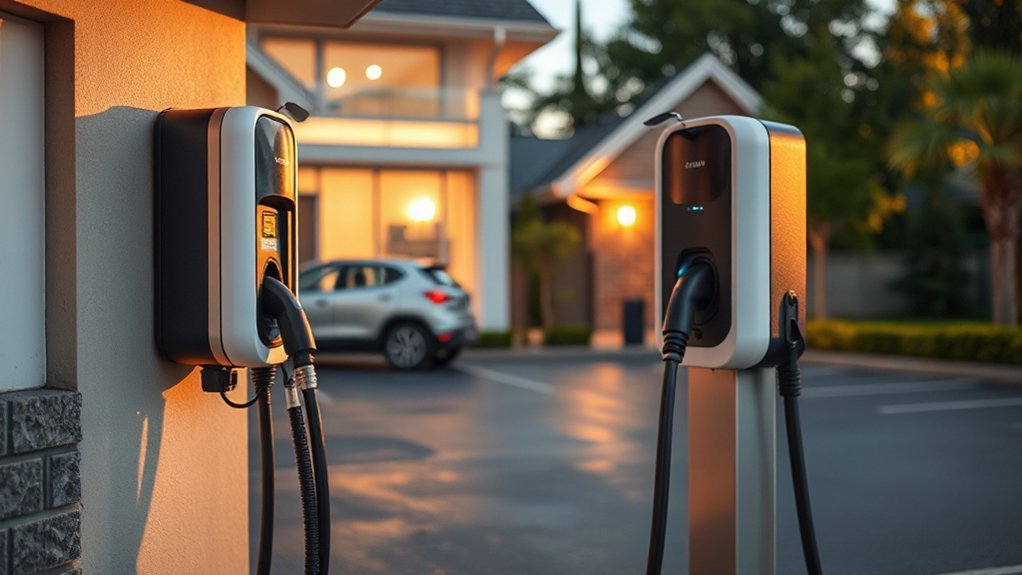
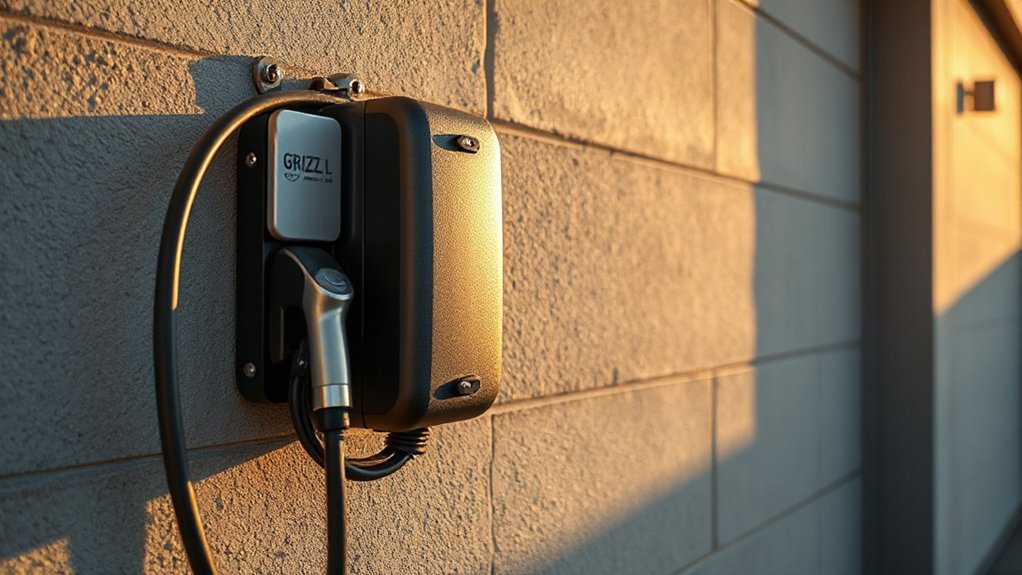

Level 2 charging uses 208 or 240 volts and requires a suitable circuit. Home Level 2 equipment commonly delivers between 3.8 and 11.5 kW, although some vehicles and installations support higher speeds.
Here are rough examples using a typical EV. The actual miles of range added depends on the vehicle’s efficiency.
| Home setup | kW power output | Miles of range per hour | Best fit |
|---|---|---|---|
| Level 1, 120V at 12A | 1.4 kW | 3 to 5 miles | Light daily driving |
| Level 2, 240V at 16A | 3.8 kW | 12 to 18 miles | Smaller batteries, moderate use |
| Level 2, 240V at 32A | 7.7 kW | 25 to 30 miles | Most overnight charging |
| Level 2, 240V at 40A | 9.6 kW | 30 to 40 miles | Faster home charging |
| Level 2, 240V at 48A | 11.5 kW | 35 to 45 miles | Large batteries, short charging windows |
The takeaway is simple: voltage helps, but amperage does the heavy lifting. A 240-volt connection at 32 amps is much faster than a 120-volt outlet at 12 amps.
In the United States, EV charging is generally treated as a continuous load. A 40-amp circuit commonly supports a 32-amp charging setting under the 80% rule, though local electrical codes and equipment requirements control the final installation. Always consult a licensed electrician before selecting a hardwired charger or upgrading a panel for your home charging needs.
Use the Slowest Limit in the System
Your home charging speed is determined by the lowest limit among four distinct components:
- The EV’s onboard charger
- The EVSE’s maximum output
- The circuit’s allowable amperage
- The home’s electrical service
Suppose you install an 11.5 kW power output wall unit, but your BEV accepts only 7.2 kW on AC. The vehicle wins that argument. You paid for more capacity, but the car will still charge at about 7.2 kW.
The reverse can happen too. Your Battery Electric Vehicle may accept 11.5 kW, but a 40-amp circuit may limit the EVSE to 32 amps, or roughly 7.7 kW.
Panel capacity matters as well. An older home may have a full electrical panel, limited service capacity, aluminum wiring, or a long run to the garage. A charger is not the place to conduct an experiment with a warm outlet and optimistic thinking.
A qualified electrician can check the panel, breaker, wiring, grounding, receptacle, and load calculation. The National Fire Protection Association’s EV safety guidance also recommends following manufacturer instructions and using properly installed equipment.
Work Through a Real Charging Example
Let’s calculate the charging time for a battery electric vehicle (BEV) with a 77 kilowatt hours capacity that arrives home at 25 percent and needs to reach an 80 percent charge. Note that if you are charging a plug-in hybrid, the process is identical, though the calculation will yield much faster results due to their significantly smaller battery packs.
First, find the battery percentage to replace:
80 percent – 25 percent = 55 percent
Next, calculate the energy required:
77 kWh x 0.55 = 42.35 kWh
Now compare two home setups.
With Level 1 charging
Assume the portable cable provides 1.44 kW and charging efficiency is 90 percent:
42.35 / (1.44 x 0.90) = 32.7 hours
That is more than a full day. If you drive only 20 or 30 miles daily, Level 1 may still replace your commuting energy overnight. If you return from a long trip with a nearly empty battery, Level 1 becomes less efficient for your needs.
With 32-amp Level 2 charging
Assume 240 volts at 32 amps:
240 x 32 / 1,000 = 7.68 kW
Now calculate the time:
42.35 / (7.68 x 0.90) = 6.1 hours
A six-hour estimate is practical for overnight charging. The car may take longer if the battery temperature is low, the cabin is being pre-conditioned, or the charging rate slows down as the battery approaches its maximum capacity.
For a quick miles-based estimate, divide the miles you need by your vehicle’s efficiency. If you need 180 miles and the EV averages 3 miles per kWh, you need about 60 kWh before accounting for charging losses. That approach is useful when you know your trip distance but do not know the battery’s exact usable capacity.
Why Your Actual Charging Time May Change
The formula gives you a planning number rather than a promise carved into a garage wall. While these calculations work well for home charging, your experience will differ significantly when using a public charging station on a road trip. In those scenarios, you will rely on DC Fast Charging or DCFC, such as a Tesla Supercharger, to achieve a rapid charge in minutes rather than hours.
Battery temperature plays a major role in your results. A cold battery may limit power until it warms up, which is why some EVs use preconditioning to optimize battery temperature before a scheduled departure or a session at a fast charger.
Charging behavior also changes as your battery fills. Your charging rate typically slows down significantly as the battery approaches full capacity to protect the cells. This is why most drivers focus on reaching an 80 percent charge, as the time required to go from 80% to 100% can often take as long as the initial session.
Your vehicle’s energy efficiency also fluctuates based on speed, weather, hills, tire pressure, and climate control usage. A 3.5 miles per kWh estimate on a mild day might drop during a winter highway trip when the heater is working hard.
For the most accurate estimate, check your vehicle app or dashboard after a few home sessions. Compare the energy delivered, starting state of charge, ending state of charge, and elapsed time. Your car will eventually provide more accurate data than a brochure.
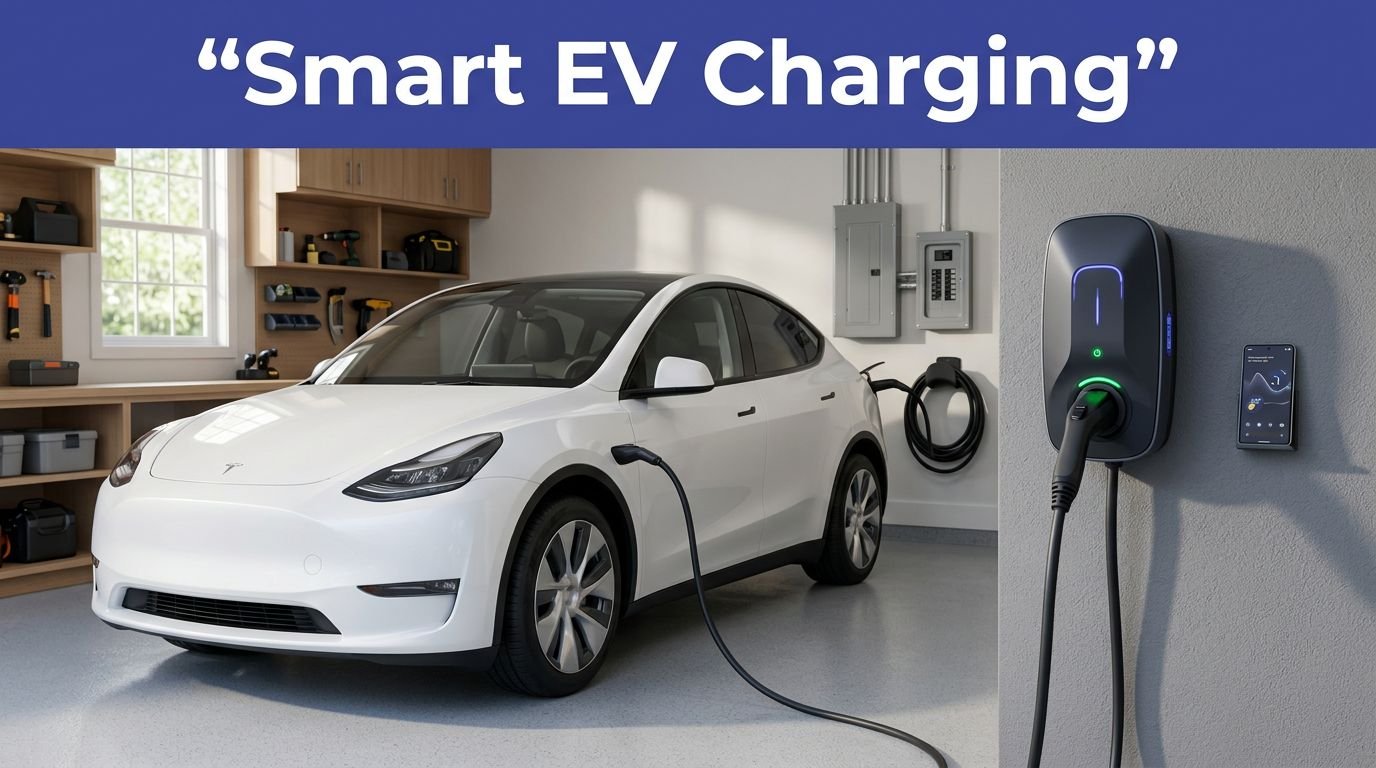
Smart charging is another factor, as it can schedule your top-up charging during lower-rate utility periods to save money. This changes the cost and timing of your routine, but it does not alter the basic formula. Just ensure your vehicle has enough charge before departure, especially when your charging schedule overlaps with a cold morning.
Frequently Asked Questions
Why does my charging speed slow down near the end of the session?
Most electric vehicles automatically reduce their intake speed as the battery approaches a full state of charge. This safety mechanism protects the battery cells from heat and degradation, often making the final 20% of the charge take significantly longer than the initial 80%.
Can I use a regular wall outlet to charge my EV every day?
Yes, a standard 120-volt outlet is perfectly capable of charging your vehicle through Level 1 charging. While it is slow, it serves as a practical solution if your daily commute is short and you have enough time to keep the battery topped up overnight.
Does the weather impact my home charging time?
Yes, extreme temperatures can influence how efficiently your car charges. Batteries often require energy for thermal management to reach an ideal operating temperature, which may cause the vehicle to pull power for heating or cooling rather than charging the battery pack itself.
What should I do if my charger delivers less power than expected?
Your charging system is limited by the weakest link in the chain, which could be your home wiring, the circuit breaker, or the vehicle’s own onboard charger. If you suspect your equipment is underperforming, consult with a licensed electrician to verify that your panel and installation are properly configured for the power output you need.
Conclusion
Calculating your total EV charging time ultimately relies on one straightforward equation: divide the energy your battery needs by the power it can actually receive, then account for standard charging losses.
Successful home charging requires a solid understanding of your vehicle battery capacity and the desired state of charge for your daily routine. By identifying these variables, you can easily decide between the convenience of a Level 1 charger for short trips or the faster performance of Level 2 charging to ensure a full battery every morning. Once you track a few real world sessions, the mystery disappears and your car’s overnight charging schedule becomes entirely predictable.
This post may contain affiliate links. If you make a purchase through these links, I may earn a small commission at no extra cost to you.