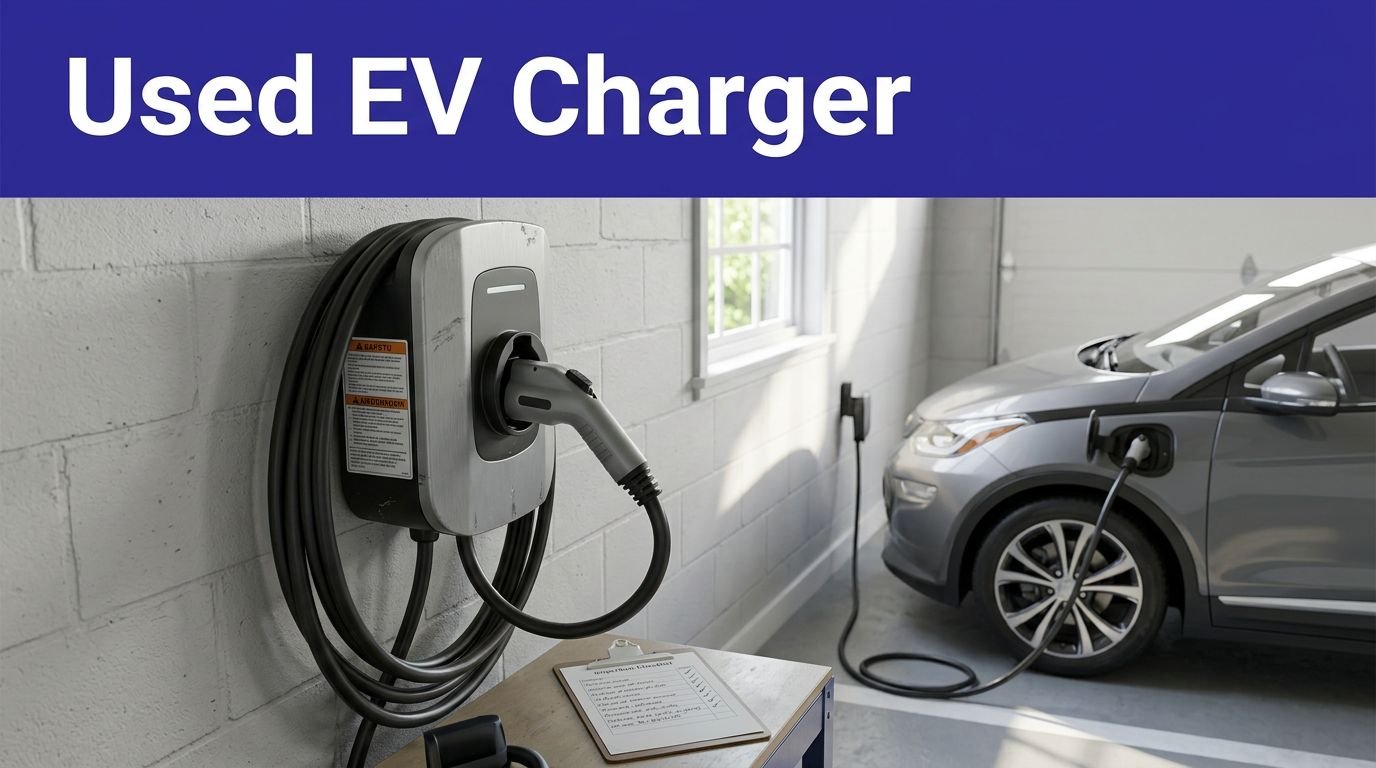
Choosing the right EV charger cable length sounds like a tape-measure job. Then you park nose-in, the charge port sits on the opposite fender, and the cable reaches your electric vehicle with all the grace of a garden hose in a windstorm.
Get the length wrong and your expensive home charger becomes a wall-mounted sculpture. Get it right, and the connector reaches without dragging across a walkway, hanging from the port, or forcing you to park like you’re docking a ferry. The best EV charging cable is the shortest listed option that covers your parking path and leaves enough slack for safe use.
This post may contain affiliate links. If you make a purchase through these links, I may earn a small commission at no extra cost to you.
Key Takeaways
- Measure the real route from the charger to the vehicle’s charge port, including corners and parking orientation, rather than relying on a straight-line distance.
- Choose the shortest listed cable that reaches with modest slack; for many home installations, that means 16 to 25 feet or approximately 5 to 7.5 meters.
- Match the cable’s connector, charging mode, voltage, and amperage rating to the vehicle, EVSE, and circuit. A longer cable with the wrong connector or rating is still the wrong cable.
- In the United States, the usable EVSE output cable is generally limited to 25 feet unless the charging system includes a listed cable management system.
- Avoid household extension cords and uncertified products. If the cable needs to be longer, move the charger or use an approved, listed cable management solution.
How to measure your EV charger cable length
Don’t measure the straight-line distance between the wall charger and the car. Cars don’t park like diagrams. They arrive crooked, passengers open doors, and someone eventually puts a bicycle in the one place you needed to keep clear.
Park the vehicle exactly as you normally do. Then measure the real route for the EV charging cable, because it determines the charging cable length you need. Follow the path around the front or rear corner, not across the hood, under a tire, or through a pedestrian route.
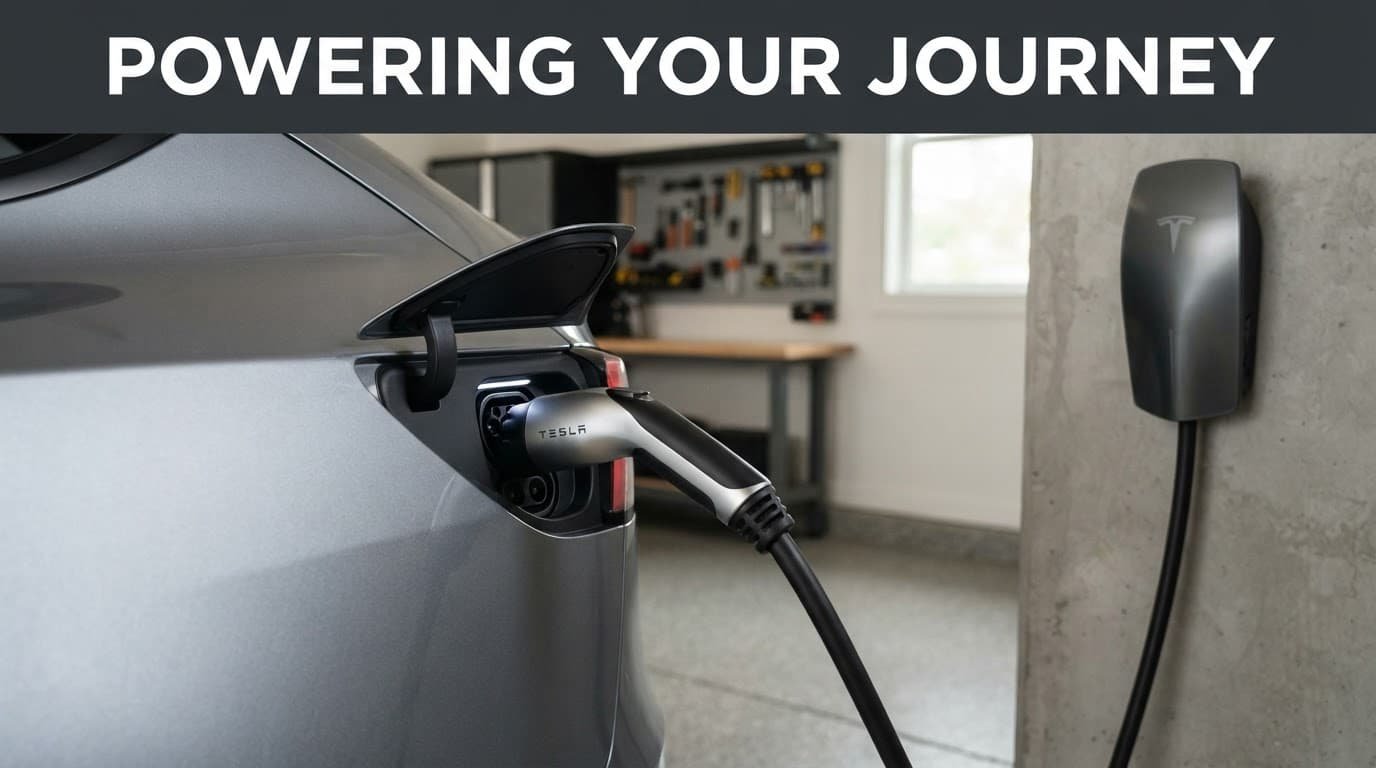
Check four things before buying:
- The charge-port position on your vehicle, including whether it sits at the front, rear, or side. Account for your parking orientation, whether you park nose-in, rear-in, or at an angle.
- The position of the home charger and the direction the cable exits.
- Whether the cable is UL listed and how you’ll store it when not in use.
- The space needed to walk around the vehicle without stepping over the cable.
Many EV cables are sold in lengths around 16 to 25 feet in North America. European products commonly list options such as 4, 5, 6, 7.5, or 10 meters. Longer isn’t automatically better. Extra cable adds weight, takes longer to coil, and creates more material to store away from tires, doors, water, and curious pets.
| Parking situation | Practical starting point |
|---|---|
| Charger beside the charge port | 16 feet |
| Charger near the front or rear corner | 20 to 25 feet |
| Two charging points in a shared driveway or a difficult route | Reposition charger or use a listed cable management system |
Leave a little working slack so the plug doesn’t pull sideways. A few feet is useful. A giant coil lying on the garage floor is not a plan. That’s how the cable meets the car, the tire, and your blood pressure.
The 25-foot rule is more precise than it sounds
In the United States, NEC Article 625.17(C) limits the overall usable length of the EVSE output cable to 25 feet, or 7.5 meters, unless the charging equipment includes a listed cable management system. The limit applies to the usable EVSE output portion of an EV charging cable, not to the branch-circuit run feeding the EVSE.
That wording matters. The output cable runs between the EVSE and vehicle connector. It doesn’t mean the distance from your electrical panel to the car must be 25 feet or less.
The standard cap is 25 feet for the usable EVSE output cable, not a universal limit on every wire in the charging installation.
A Level 2 charging installation summary describes the same 25-foot requirement and the exception for cable management. The exact rules adopted at your property depend on local code enforcement and the NEC edition in use. An electrician should confirm the home charger installation before work begins.
A UL listed cable management system can support a longer reach when it is part of the listed EVSE or charging system. That could involve an approved reel, support arrangement, or other equipment designed and tested with the charger. It doesn’t mean you can buy a random 30-foot cable and declare the garage code-compliant through optimism.
There is also a separate rule for some cord-and-plug-connected equipment. The power-supply cord for fastened-in-place EVSE is limited to 6 feet under NEC 625.44(B). That supply cord is different from the EVSE output cable, which is the part you connect to the vehicle.
Look for a recognized safety listing, such as UL, and a manufacturer data sheet identifying UL listed EV charging equipment. That sheet should document cable quality, copper conductors, and weather resistance, and identify an EV-rated cable type. Avoid ordinary outdoor extension cords, even those wearing a tough-looking jacket.
Match the connector, charging mode, and amperage
Length comes after compatibility. A 25-foot cable with the wrong connector is still a 25-foot mistake.
Type 1, Type 2, J1772, and NACS
In North America, many non-Tesla AC charging systems use the J1772 connector, also called Type 1. Tesla vehicles and newer North American charging equipment increasingly use NACS. Your electric vehicle’s inlet and the wall unit must accept the same connection for a compatible EV charging cable, unless a manufacturer-approved adapter is part of the setup.
Type 2 is the common AC connector across Europe. It became the normal choice for public and home AC charging. It fits Europe’s infrastructure and supports single-phase systems or charging through a three-phase cable, depending on the setup. A Type 2 charging cable is often sold separately for a wallbox.
A connector adapter and an extension cable aren’t interchangeable. An adapter changes the connector interface, while J1772 extension cables add another cable and another pair of connection points. That creates more places for resistance, heat, water, and mechanical stress to cause trouble.
Why a Mode 3 charging cable is preferred for home Level 2 charging
A Mode 2 cable is a portable charging cordset with control and protection built into an in-line box. It usually connects the vehicle to a household socket or another conventional outlet. It’s useful for travel and backup charging, but the outlet and circuit still need to be suitable for the load.
A Mode 3 charging cable works with dedicated EV supply equipment, such as a home charger or public AC station. The EVSE manages communication between the vehicle and the electrical supply. It also coordinates charging current and protective functions required by the system.
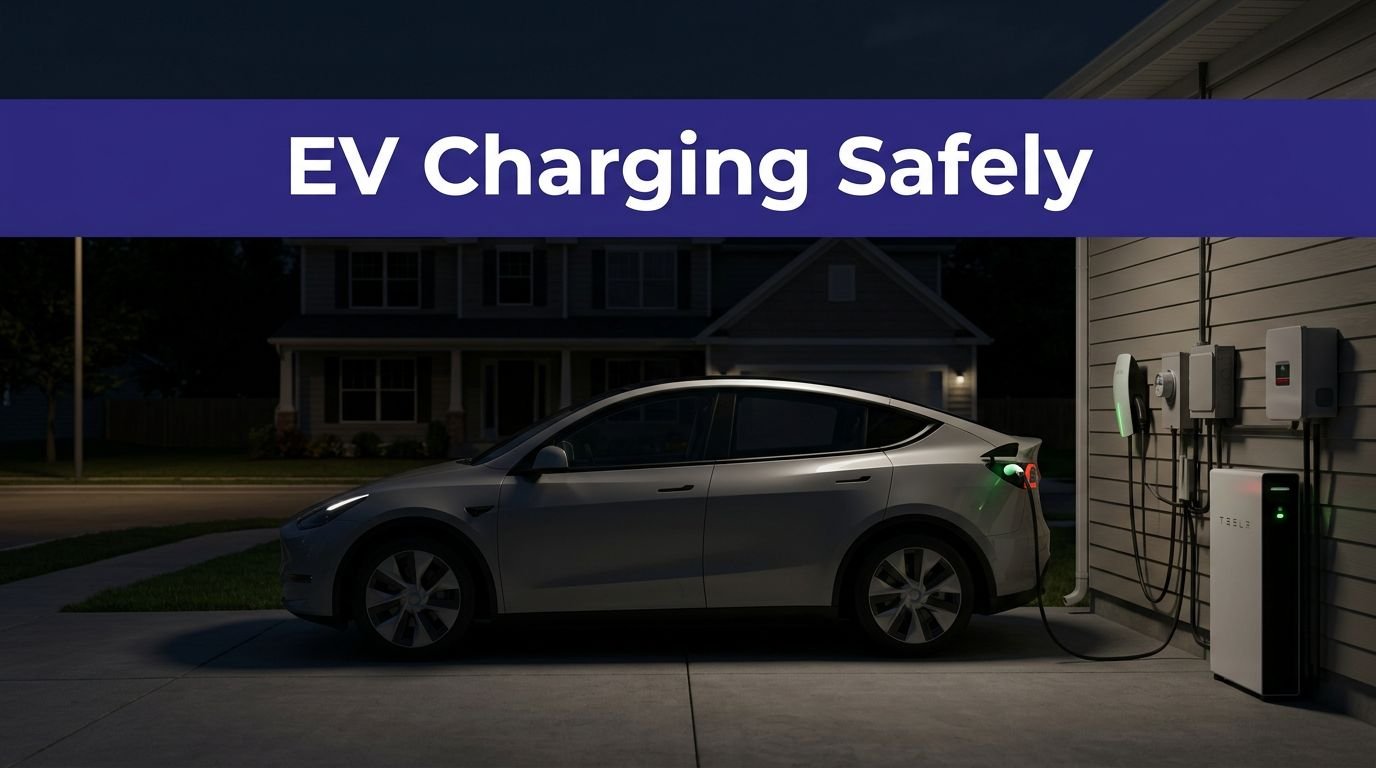
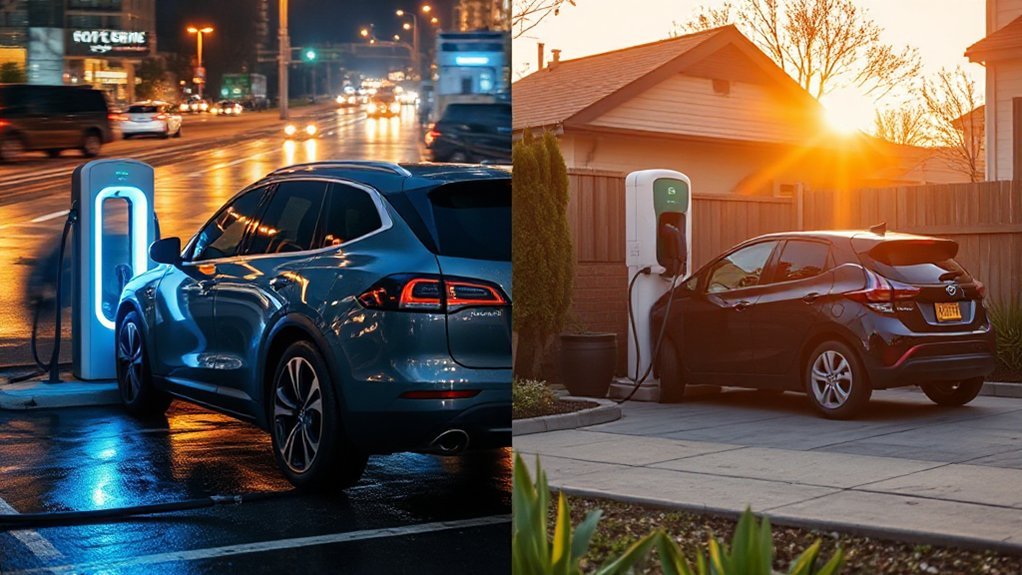

For regular home charging, Mode 3 is usually the cleaner choice. The wall unit is installed on a dedicated circuit, the cable is designed for repeated high-current use, and there isn’t an in-line control box dangling at knee height like a small plastic lunchbox.
Choose the current rating before the cable length
The cable’s amperage rating must meet or exceed the maximum current delivered by the EVSE. A 32-amp cable isn’t suitable for a 48-amp wall charger simply because both products use the same connector.
At 240 volts, common AC charging ratings look like this:
| Cable rating | Approximate output at 240 V |
|---|---|
| 32A | 7.7 kW |
| 40A | 9.6 kW |
| 48A | 11.5 kW |
| 50A | 12.0 kW |
Actual charging speed can be lower, so check the onboard charger before choosing a cable. The vehicle’s onboard charger may accept less power than the EVSE offers. A car limited to 7.2 kW won’t charge at 11.5 kW because the cable arrived with bigger numbers.
The vehicle, EVSE, branch circuit, connector, and cable all need to work as one system. A 48-amp EVSE often needs a 60-amp circuit under continuous-load rules. The electrician must size it for the equipment, installation method, and local requirements.
Longer cables have longer copper conductors, which can increase electrical resistance and voltage drop. A properly designed, UL listed cable accounts for that. A cheap oversized-looking cable from an unknown seller may not.
Tethered units or untethered units: Which setup suits your garage?
Tethered units have a permanently attached charging cable connected to the wall connector. You open the holster, plug into the car, and start charging. There’s no separate cable to remember, misplace, or discover under a pile of reusable shopping bags.
Tethered units work well when one vehicle uses one charger. A fixed-cable setup can be a convenient choice for a single-vehicle home charger. It also makes the required reach a fixed decision.
If the cable’s too short, you’re stuck with the reach you bought. With tethered units, extra cable needs a proper hook or holster, so it doesn’t collect dirt on the floor.
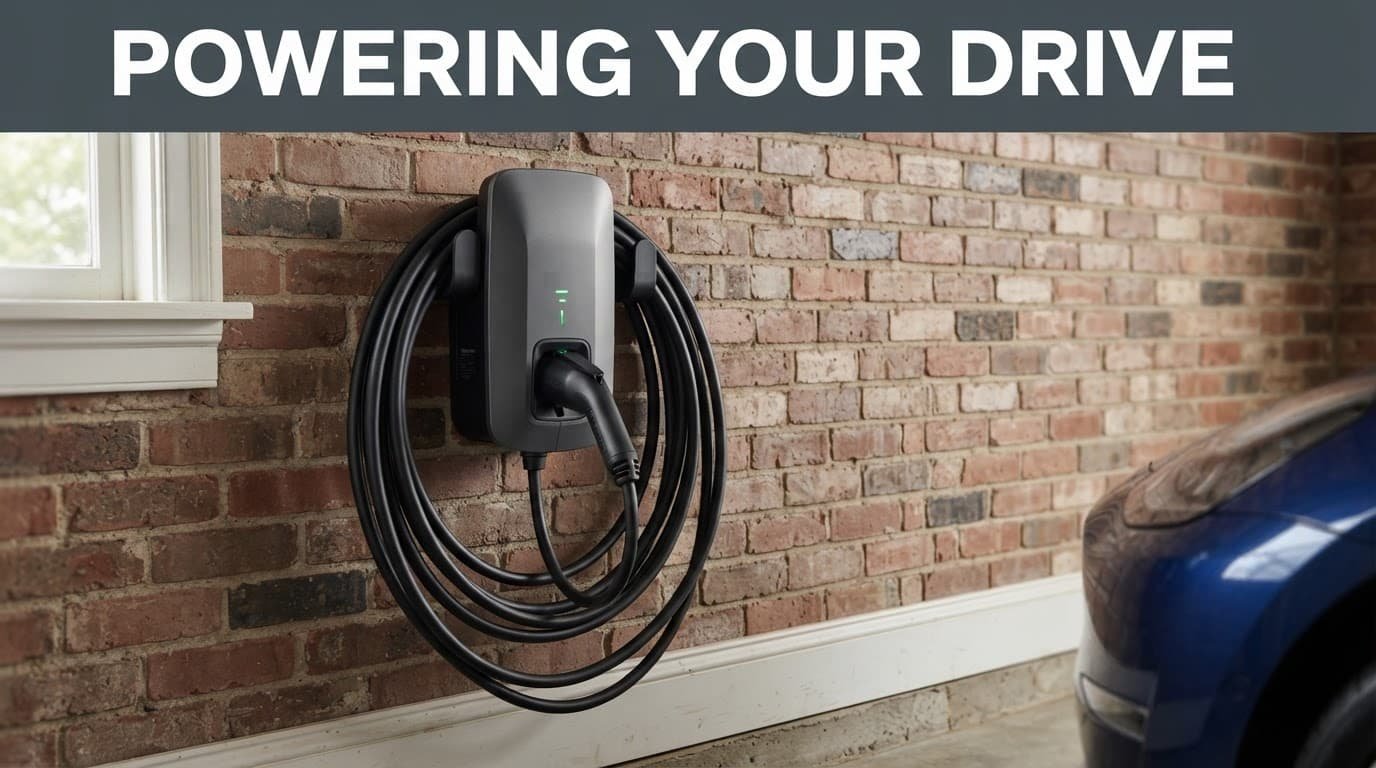
Untethered units have a socket on the wallbox and use a removable cable. You can choose a 5-meter Type 2 charging cable for one parking position or keep a longer cable for awkward spaces. Replacing the cable is easier if it wears out or your household changes vehicles.
The trade-off is extra handling. Untethered units suit households that may change cable lengths or share one charger. You have to store the cable, protect both connectors, and confirm a replacement cable is UL listed with the correct Type 2, J1772, or NACS compatibility and current rating. Untethered Type 2 systems are common in Europe. Tethered designs are also widely used, especially when convenience matters more than sharing one wallbox between several vehicles.
Why an extension cable is usually the wrong fix
A household extension cable is unsuitable for an EV load. A charging session can run for hours at high current, unlike powering a leaf blower for ten minutes.
Electrical resistance creates heat, and a long or undersized cable can add voltage drop. A loose or poorly made connector can heat at the connection point, while tight coiling during charging traps more heat. Rain, road salt, dirt, or a connector sitting in a puddle can turn a garage shortcut into an electrical safety problem.
Purpose-built J1772 extension cables and NACS extension cables do exist. But “EV,” “heavy duty,” or “UL listed” on a product page is not enough to prove suitability. Unknown-seller claims can make cable quality hard to verify under heat, water, tight coiling, or mechanical stress. Use J1772 extension cables only when the vehicle and EVSE manufacturers permit them. The specific product must be UL listed for that use, with matching voltage, amperage, connector, and weather ratings.
A fleet guide to NEC Article 625 shows how cable length, mounting, protection, and equipment listing fit together in larger installations.
Better fixes include moving the wallbox, changing the parking orientation, or installing the EVSE closer to the charge port. An extension cable is not a substitute for a properly designed branch-circuit run. The branch-circuit distance is separate from vehicle-cable length. An electrician can select conductors and installation methods for the distance, rather than asking a cord to perform a job it was never built to do.
Use This EV Charging Cable Checklist
Before ordering, run through these five checks:
- Identify the vehicle connector and charging mode. Confirm whether you need J1772, Type 2, NACS, Mode 2, or Mode 3 equipment.
- Park the vehicle in its normal position, then measure from the charger to the inlet. Test the worst-case position if two vehicles share the driveway.
- Measure the real cable path and add only enough slack to prevent tension at the connector. Avoid an extension cable as a fix, and use J1772 extension cables only with manufacturer approval for your system.
- Match the cable’s amperage rating and voltage rating to the EVSE. Check the vehicle’s onboard charger and circuit limits as well.
- Confirm that the product is UL listed, then review its bend rating, storage method, and manufacturer warranty.
For an outdoor installation, choose equipment with weather resistance and an IP rating suited to its exposure. The wallbox may be weather-resistant, while the vehicle connector still needs to stay off wet ground. A hook, holster, or approved cable hanger keeps the handle supported and the cable out of the tire path.
An EV owner discussion about why EVSE cables are often limited to 25 feet captures the practical frustration behind the rule: driveways rarely behave like neat laboratory test spaces. Measure first, then choose equipment that solves the actual parking problem without creating a new one.
Frequently Asked Questions
How long should an EV charging cable be?
Choose the shortest cable that reaches the vehicle’s charge port along the actual parking route and leaves enough slack to prevent tension. Many home installations use cables between 16 and 25 feet, but the best length depends on the charger and parking position.
Is a 25-foot EV charging cable the maximum length?
In the United States, NEC Article 625.17(C) generally limits the usable EVSE output cable to 25 feet. A longer reach may be permitted when the charging equipment includes a listed cable management system.
Can I use a regular extension cord with an EV charger?
No. Household extension cords are not designed for hours of continuous, high-current EV charging and can create heat, voltage drop, and connection risks. Use purpose-built equipment only when it is listed for the specific vehicle and EVSE system.
Should I choose a tethered or untethered EV charger?
A tethered unit is convenient when one vehicle regularly uses one charger because the cable is always available. An untethered unit is more flexible for shared chargers or households that may need different cable lengths, but the removable cable must be stored and matched correctly.
Does a longer charging cable reduce charging speed?
A longer cable can increase resistance and voltage drop, but a properly designed, listed cable accounts for those factors. Actual charging speed is also limited by the vehicle’s onboard charger, EVSE output, circuit, and cable amperage rating.
Choose reach without creating risk
The right cable length is the shortest listed option that reaches your vehicle’s charge port with modest slack. For many home installations, that means 16 to 25 feet, but the parking route matters more than the number printed on the box.
Check the 25-foot NEC limit for the usable EVSE output cable, match the connector and current rating, and avoid uncertified extension cords. If the cable needs to be longer, move the charger or use a listed system with approved cable management. Remember, the vehicle’s onboard charger can limit actual power or output, even when the cable and EVSE have higher ratings. The goal is simple: plug in without stretching, tripping, overheating, or parking like you’re trying to fit a bus into a shoebox.