Is Level 1 Charging Enough for a 30-Mile Daily Commute?
Level 1 charging may cover a 30-mile round trip overnight, but efficiency, winter driving, outlet safety and charging hours affect the result.
As an Amazon Associate, EV Charging may earn from qualifying purchases. This helps support our independent guides at no extra cost to you. Learn more.
For home electric vehicle charging, yes, Level 1 charging can cover a 30-mile round-trip commute if your EV is reasonably efficient and stays plugged in long enough. At a typical 120 volts and 12 amps, an EV that gets 3 miles per kWh needs roughly eight to nine hours to replace those miles.
That's workable, but winter, errands, and shorter nights can eat into your margin.
Start with how much energy your car uses and how many hours you can charge.
This post may contain affiliate links. If you make a purchase through these links, I may earn a small commission at no extra cost to you.
Key Takeaways
- Expect roughly 2 to 5 miles of range per charging hour. Your vehicle's efficiency makes a big difference.
- A 30-mile round trip can fit overnight charging. A 30-mile one-way commute is a different calculation.
- A healthy, suitable outlet matters as much as available charging time. Avoid extension cords.
- Level 2 becomes worthwhile when you regularly fall behind, need faster recovery, or have a narrow charging window.
What Level 1 Charging Delivers
Level 1 uses a 120-volt outlet, commonly a NEMA 5-15 outlet (also called a receptacle). A Level 1 charger is common shorthand for portable EVSE. The EVSE supplies AC power, which the vehicle's onboard charger converts to DC for the battery.
These are useful planning figures, not promises for every vehicle.
| Specification | Level 1 Planning Figure |
|---|---|
| Supply voltage | 120 volts AC |
| Charging current | Usually 12 amps; up to 16 amps on a suitable 20-amp circuit |
| kW power output | About 1.3 to 1.9 kW |
| Range added | Roughly 2 to 5 miles of range per hour |
| BEV, empty to 80% | About 40 to 50+ hours |
| Plug-in hybrid charging | About 5 to 6 hours, depending on battery size |
You'll sometimes see 12 to 15 amps quoted. Here's the important distinction: a standard 15-amp circuit supports 12 amps for continuous charging, not a continuous 15-amp load.
The DOE's home charging guidance describes portable cordsets supplied with vehicles. A portable charger cable is part of the EVSE, not the vehicle's onboard charger. Inclusion varies by model and model year, so don't assume every new EV includes one.
Vehicle-side connectors include the J1772 connector and NACS. A suitable AC adapter may connect compatible equipment, but a DC fast-charging adapter doesn't automatically work for AC charging.
How Much Range Can You Add Overnight?
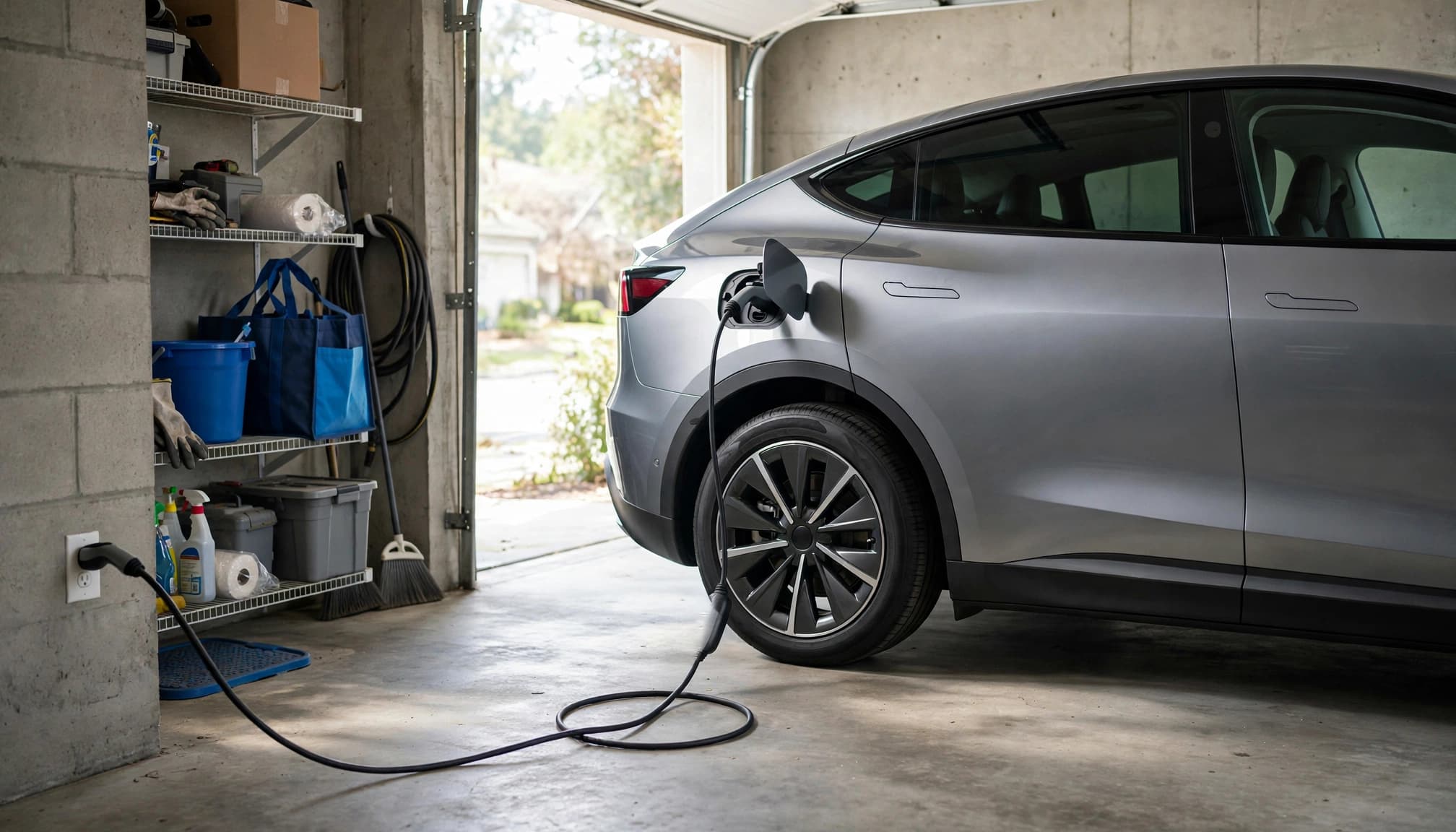
Eight Hours Can Be Tight
The familiar estimate is about 30 to 50 miles overnight. That's achievable for many efficient EVs over eight to twelve hours, but it isn't a guaranteed overnight allowance.
At 2 miles per charging hour, eight hours restores only 16 miles. At 5 miles per hour, the same night restores 40.
Quite a spread. This is why another owner's experience can sound reassuring and still tell you little about your own driveway.
Use your car's recent miles-per-kWh figure, especially if your commute includes highway speeds, hills, or heating.
Ten to Twelve Hours Gives You Breathing Room
Arriving at 6 p.m. and leaving at 7 a.m. gives you thirteen potential charging hours. A late arrival and early departure might leave seven.
Count hours when charging actually runs. A utility-rate schedule, delayed start, or charge limit can shorten the session.
Also count the whole day's driving. A 30-mile commute plus school pickup and groceries could become 40 miles. The car has to replace all of it, even when those extra trips don't feel like much.
Calculate Whether Your Commute Fits
Start With Power, Losses, and Efficiency
Use this formula:
Miles added = charge rate (kW) × charging hours × charging efficiency × miles per kWh.
The charge rate is the power delivered at the wall before charging losses. For a standard 12-amp setup:
120 volts × 12 amps ÷ 1,000 = 1.44 kW at the wall.
Assume 85% wall-to-battery efficiency for planning. This is a planning assumption, not a universal measured value. Conversion losses and vehicle systems use some incoming electricity.
At 3 miles per kWh, ten charging hours provide:
1.44 × 10 × 0.85 × 3 = 36.7 miles.
Replacing 30 miles takes about 8.2 hours under these assumptions. Our charging-time calculator and guide expands the calculation for different charging targets.
See What Vehicle Efficiency Changes
Holding charging power and the 85% efficiency assumption constant shows why vehicle choice matters.
| Driving Efficiency | Miles Added in 10 Hours | Hours to Replace 30 Miles |
|---|---|---|
| 2 miles/kWh | 24.5 miles | 12.3 hours |
| 3 miles/kWh | 36.7 miles | 8.2 hours |
| 4 miles/kWh | 49.0 miles | 6.1 hours |
An efficient car has room to spare. A less-efficient vehicle might need nearly the entire night and then some.
Use battery-side driving efficiency here. If your consumption figure already measures electricity at the wall, don't apply charging losses a second time.
Why a Full Charge Takes So Long
The U.S. DOT's charging-speed reference estimates 40 to 50+ hours for a battery electric vehicle to reach 80% from empty on Level 1. It lists about five to six hours for a plug-in hybrid.
These broad full charge time estimates vary by vehicle and battery capacity.
For a 60-kWh usable battery, adding 48 kWh reaches 80% from empty. At 1.44 kW and the assumed 85% efficiency, that takes about 39 hours. Adding the full 60 kWh takes about 49 hours before additional delays.
But most commuting nights involve replacing a day's driving, not an empty battery. That difference makes slow charging workable.
Charging can slow near full as the battery manages voltage and balancing. However, the sharp slowdown often discussed above 80% mainly concerns DC fast charging. It isn't a universal Level 1 rule.
Claims that the last 10% always takes as long as the first 90% are too broad. Follow your vehicle's daily charge-limit guidance rather than routinely aiming for 100%.
Cold Weather and Parked Energy Use Change the Answer
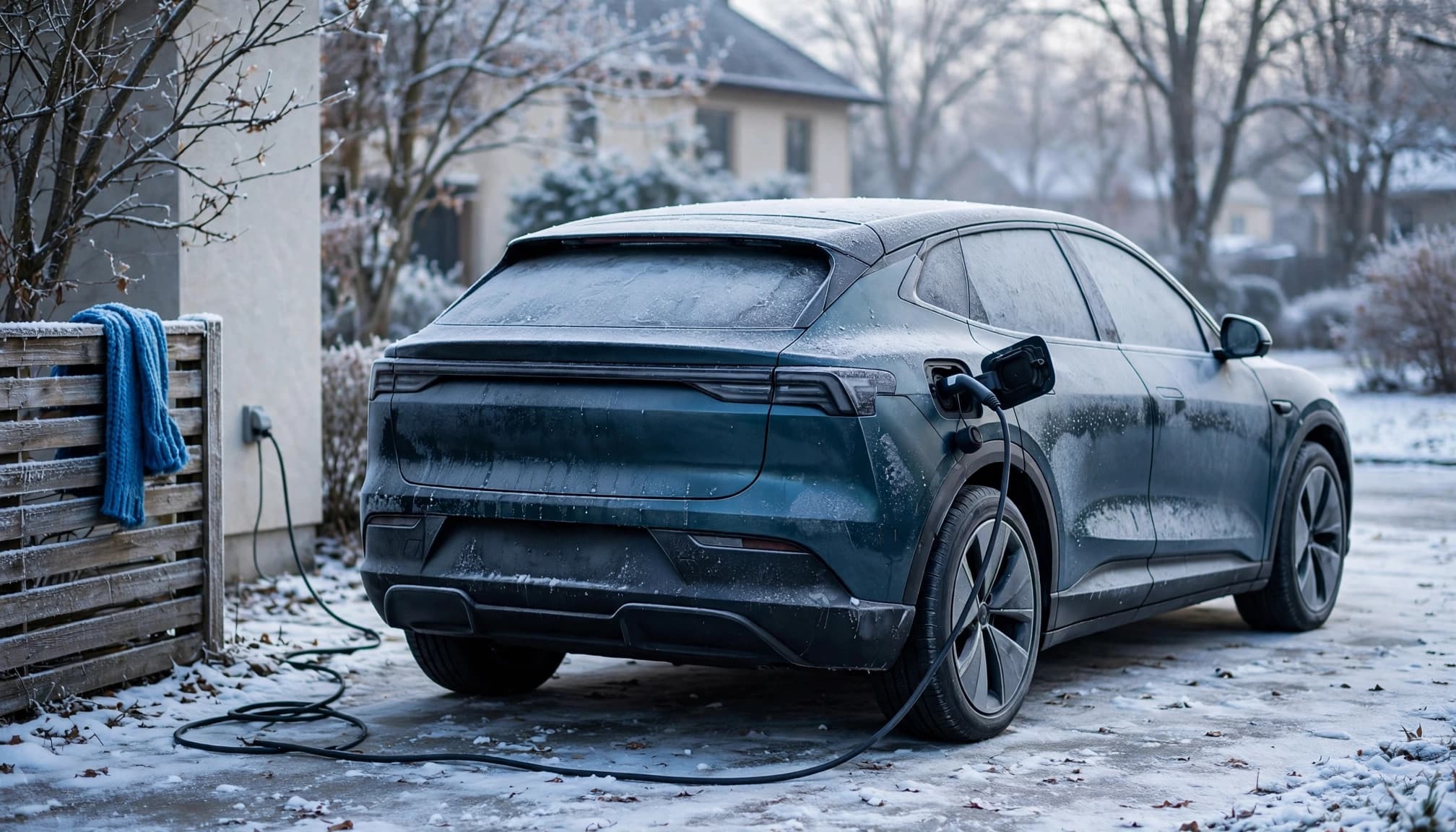
Winter Can Squeeze Both Sides of the Calculation
Cold weather can increase driving consumption through cabin heating, battery conditioning, and less favorable operating conditions.
Meanwhile, battery heating during charging can consume part of a modest 1.44-kW supply. That leaves less power available to increase stored energy.
If your efficiency drops from 3 to 2 miles per kWh, the ten-hour estimate falls from 36.7 to 24.5 miles. That's a calculation showing sensitivity, not a prediction for every EV.
A setup that comfortably handles September can struggle in January. Leave room for that.
Parked Features Also Need Energy
Security recording, cabin-temperature features, remote climate control, and other parked functions can draw energy.
Tesla's Sentry Mode is one example. Its impact depends on conditions and settings, so a fixed daily drain figure wouldn't be useful here.
Preconditioning while plugged in can help prepare the car, but Level 1 may not supply all the power requested. The battery can still contribute.
Watch stored energy or state of charge across several comparable days. Dashboard range estimates move with temperature and recent driving, so they're a less reliable scoreboard on their own.
Make Sure the Outlet Is Suitable
A Familiar Outlet Still Deserves Attention
Level 1 needs no dedicated wall-mounted charger when suitable portable equipment and an appropriate outlet are available. That doesn't make every garage receptacle ready for an all-night load.
A dedicated circuit rated for 15 or 20 amps is the sensible starting point. Shared appliances can overload a circuit that seemed perfectly fine before the EV arrived.
Grounding, receptacle condition, wiring, and applicable GFCI requirements matter. Garage and outdoor locations commonly require GFCI protection under applicable electrical codes.
For an older house, an unknown circuit, or a loose receptacle, have a qualified electrician assess suitability. Don't experiment with electrical panels.
The fact that a circuit breaker hasn't tripped doesn't prove a worn outlet is safe under an all-night charging load.
Skip Extension Cords and Stop for Faults
The Electrical Safety Foundation International's EV charging safety guidance warns that an extension cord can create a fire hazard or shock risk.
A heavy 10- or 12-gauge cord isn't an automatic workaround. Wire thickness doesn't remove connection, weather, or manufacturer-approval issues.
Plug approved equipment directly into the appropriate outlet. Avoid power strips, multiplug adapters, and cables pinched by doors.
Stop charging if you notice overheating, discoloration, damaged equipment, burning smells, repeated trips, or persistent ground-fault errors. Have a qualified electrician or the equipment manufacturer address the cause. Don't bypass protections or repeatedly reset a fault.
What a 30-Mile Commute Costs to Recharge
Charging cost depends on electricity purchased, not how impressive the charger looks.
Using the earlier assumptions, 30 miles at 3 miles per kWh requires 10 kWh in the battery. At 85% charging efficiency, that's about 11.8 kWh purchased.
At an assumed electricity rate of $0.17 per kWh:
| Driving Pattern | Estimated Electricity Cost |
|---|---|
| One 30-mile day | $2.00 |
| Five commuting days, 150 miles | $10.00 |
| Seven 30-mile days, 210 miles | $14.00 |
These calculations exclude additional parked consumption and fixed utility charges. The $0.17 rate is an example, not a claimed national average.
The EIA publishes residential electricity prices by state, but your tariff determines your actual charging price.
Time-of-use rates add another wrinkle. If cheap electricity is available for only four hours, Level 1 might need to continue into more expensive hours.
Level 2 can sometimes fit the same energy into that cheaper window. It doesn't guarantee savings, though. Our home charging cost guide covers the other bill components worth understanding.
Check official sources for utility or state incentives on eligible charging equipment or installation, since terms vary by location and date.
When Level 2 Is Worth the Installation
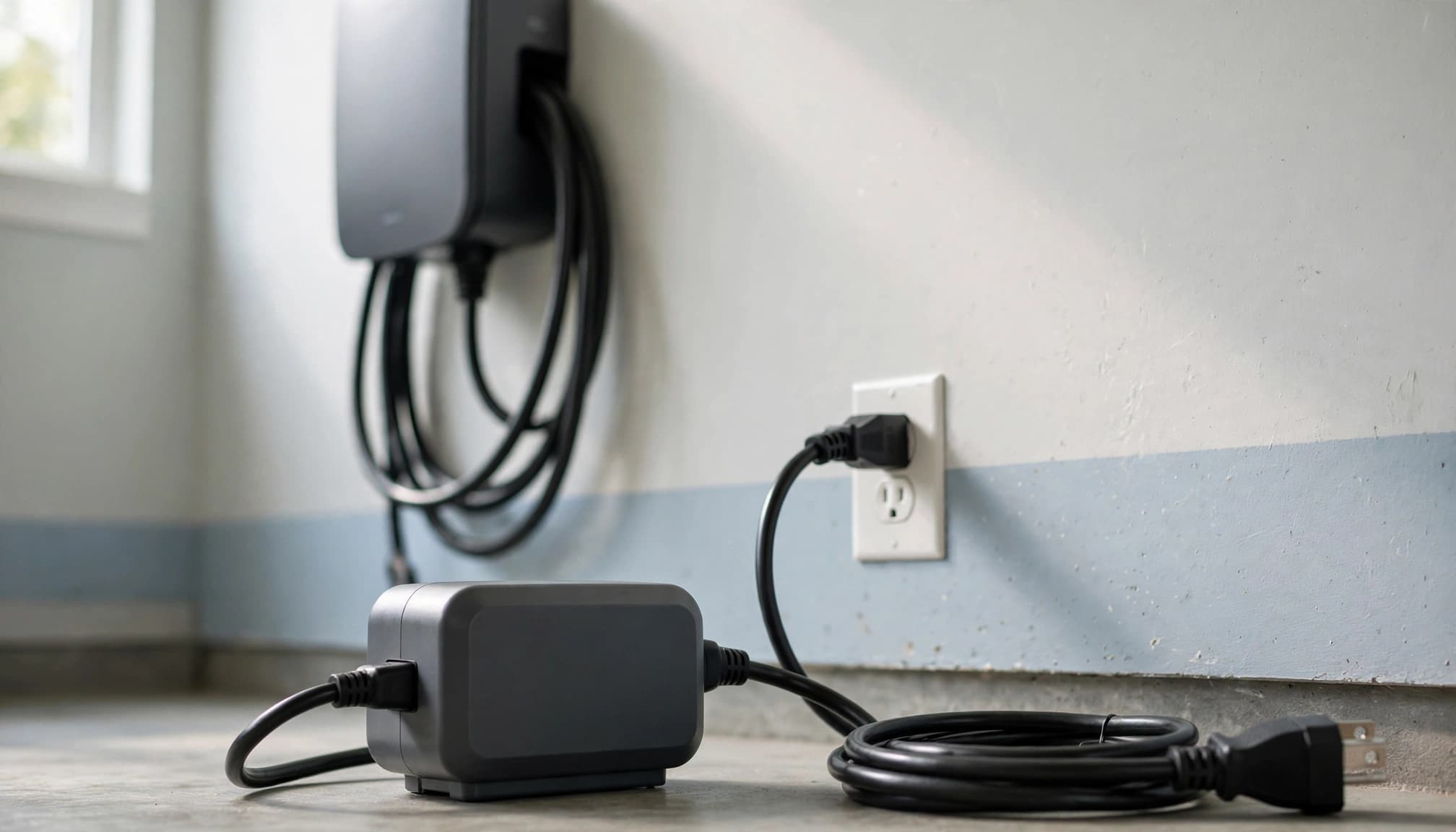
At home, Level 2 charging uses a 240-volt supply. Output ranges from about 6 kW at 24 amps to 19.2 kW at 80 amps, depending on the vehicle and installation.
A 9.6-kW setup supplies about 6.7 times the power of 1.44-kW Level 1. That's where the familiar "six to eight times faster" comparison comes from. Lower-powered Level 2 equipment won't provide that same multiple.
The strongest reason to upgrade is recovery. After a long Saturday drive, you may want the battery ready Sunday morning without rearranging your day.
Qmerit's standard installation cost estimate puts the average Level 2 installation cost at $1,700. Most projects fall between $749 and $2,500. Treat that as installation pricing, not a guaranteed all-in package. Panel upgrades, trenching, permits, and charger hardware can change the total. Confirm current specifications and pricing before budgeting, since these figures can change.
Level 3 charging, often called DC fast charging (DCFC), is the occasional-trip alternative. Many units deliver 50 to 350 kW, with newer equipment exceeding that range. Compatible vehicles can add roughly 100 to 250 miles in 30 to 45 minutes under favorable conditions.
DC charging bypasses the onboard AC charger. Vehicle compatibility, station access, and the correct manufacturer-approved DC adapter still matter; an AC adapter doesn't grant DC access.
Try a Week Before Buying More Charging Power
Once the outlet and equipment are suitable, a normal week can show whether Level 1 meets your needs.
- Record daily miles, observed charging speed, actual charging hours, and battery percentage before and after charging.
- Include errands and normal parked features rather than creating an unusually easy week.
- Compare the battery's starting point across several mornings, with similar charge limits and conditions.
A stable or rising morning charge level is encouraging. A steady decline means you're consuming energy faster than your schedule replaces it.
Weekends can help if the car spends more time plugged in. Occasional workplace or public charging can also fill a genuine gap.
There's a difference between an occasional backup and a weekly rescue mission. If charging repeatedly rearranges your life, faster home charging may be worth the installation.
An unusually mild week doesn't prove Level 1 will meet your needs in winter, so keep the cold-weather margin in mind.
Sources and Technical References
The DOE's charging equipment reference provides context on charging levels and connectors. The DOT, ESFI, EIA, and Qmerit references linked above support charging-time estimates, safety guidance, electricity-price context, and installation pricing. Calculations use the assumptions stated beside them.
Check local electricity rates and ask a qualified electrician about installation requirements for your home.
Frequently Asked Questions
Is a 30-Mile One-Way Commute Still Manageable?
That's 60 commuting miles daily, before errands. At 3 miles per kWh, 1.44 kW, and the assumed 85% charging efficiency, replacing 60 miles takes about 16.3 hours.
For most overnight schedules, Level 1 alone would struggle. Workplace charging or Level 2 would provide more breathing room.
Is Level 1 Enough for a Plug-in Hybrid?
Often, yes. Smaller batteries make overnight replenishment easier, and the DOT estimates roughly five to six hours for many plug-in hybrids.
The vehicle's electric range still matters. Charging fully won't make a plug-in hybrid cover 30 electric miles if its usable electric range is shorter.
How Can I Tell Whether My Portable Charger Supports Level 2?
Its electrical label lists the manufacturer-supported input voltage and amperage. Some portable units support both 120 and 240 volts with manufacturer-approved plug adapters.
A different vehicle-side connector doesn't change the charging level. Using 240 volts requires compatible equipment and a suitable professionally installed circuit.
The Bottom Line for Your Commute
For a 30-mile round trip, Level 1 charging can be enough with reasonable efficiency and eight to twelve dependable charging hours.
The deciding factor is daily energy balance. Your battery needs to recover what driving and parked systems consume, with some room for colder weather.
Start with a safe setup and the calculation for your schedule. Upgrade when the numbers or the inconvenience give you a reason.
Safety note: This article is general information, not professional electrical advice. Working with 240V circuits can cause serious injury or fire. Hire a licensed electrician and follow local codes and permit requirements.
Sources & further reading

Written by
LarryLeoLarryLeo started EV Charging while researching his own next car purchase. He digs into the pros, cons and real cost savings of going electric — using government, standards-body and manufacturer sources — and shares what he finds so other buyers can decide with confidence.
Why trust EV Charging Guide
Our guides are researched from government, standards-body and manufacturer sources, reviewed for accuracy, and updated when rules or products change. Brands cannot pay for placement. Read our editorial policy.