Bidirectional Charging Explained: Which EVs Support It?
Bidirectional charging can power appliances, back up a compatible home, or support grid services. Compare vehicle limits, equipment, costs, and safety requirements.
As an Amazon Associate, EV Charging may earn from qualifying purchases. This helps support our independent guides at no extra cost to you. Learn more.
Bidirectional charging lets an electric vehicle take electricity into its battery and send stored energy back out. Depending on the vehicle and equipment, that energy can run appliances, support your home during an outage, or flow into the public grid.
The part that deserves your attention is compatibility: an EV with a power outlet doesn't automatically support whole-home backup. And a charger with the right plug can't give a car capabilities it doesn't have.
Let's separate those jobs first, then look at the vehicles, equipment, costs, and practical limits.
This post may contain affiliate links. If you make a purchase through these links, I may earn a small commission at no extra cost to you.
Key Takeaways
- Outlet-based appliance power runs individual devices through vehicle outlets or approved adapters. Installed home backup connects a compatible vehicle to household circuits through dedicated equipment.
- Ford F-150 Lightning, selected GM EVs, Tesla Cybertruck, and certain Kia EV9 configurations have documented home-power options. Their equipment requirements differ.
- V2G can earn compensation through an eligible utility program, but export permission and payments aren't automatic.
- Backup duration depends on available battery energy and household consumption. Output power determines which appliances can run together.
- Compare complete installed systems. A bidirectional charger alone usually isn't a complete home-backup installation.
How Bidirectional Charging Works
An EV battery stores direct current, or DC. Your house and the public grid generally use alternating current, or AC.
Charging and discharging require power electronics to bridge those two forms of electricity. The equipment's location depends on the system.
Where the AC-to-DC Conversion Happens
During ordinary AC charging, the vehicle's onboard charger converts grid AC into battery DC. The wall-mounted box, technically electric vehicle supply equipment or EVSE, controls and protects the electrical connection.
With DC charging, conversion happens outside the car. The station supplies DC directly to the battery through the vehicle's charging system.
A bidirectional arrangement also supports the return journey. An inverter converts battery DC into usable AC, either inside the vehicle or in external equipment.
For grid-connected export, that AC must match the grid's voltage, frequency, and other operating requirements. During isolated backup operation, suitable equipment establishes a local supply instead.
The Department of Energy describes these arrangements as EVs providing mobile energy storage. An ordinary one-way charging installation doesn't provide that export function.
Why Engineers Test Both Directions
Bidirectional equipment must work safely while delivering and absorbing energy. That's where terms such as four-quadrant operation appear.
In a four-quadrant test instrument, voltage can be positive or negative, and current can flow into or out of the instrument. The same equipment can act as a source or a load. Testing can also check power quality, including harmonic distortion, as equipment transitions between source and load modes.
Regenerative test equipment sends absorbed energy back into its supply rather than dissipating all of it as heat. That reduces wasted energy during testing.
These terms describe engineering capabilities. They don't mean every EV charger can perform every grid service, or that a home installation needs a laboratory power supply.
V2L: Powering Appliances Directly
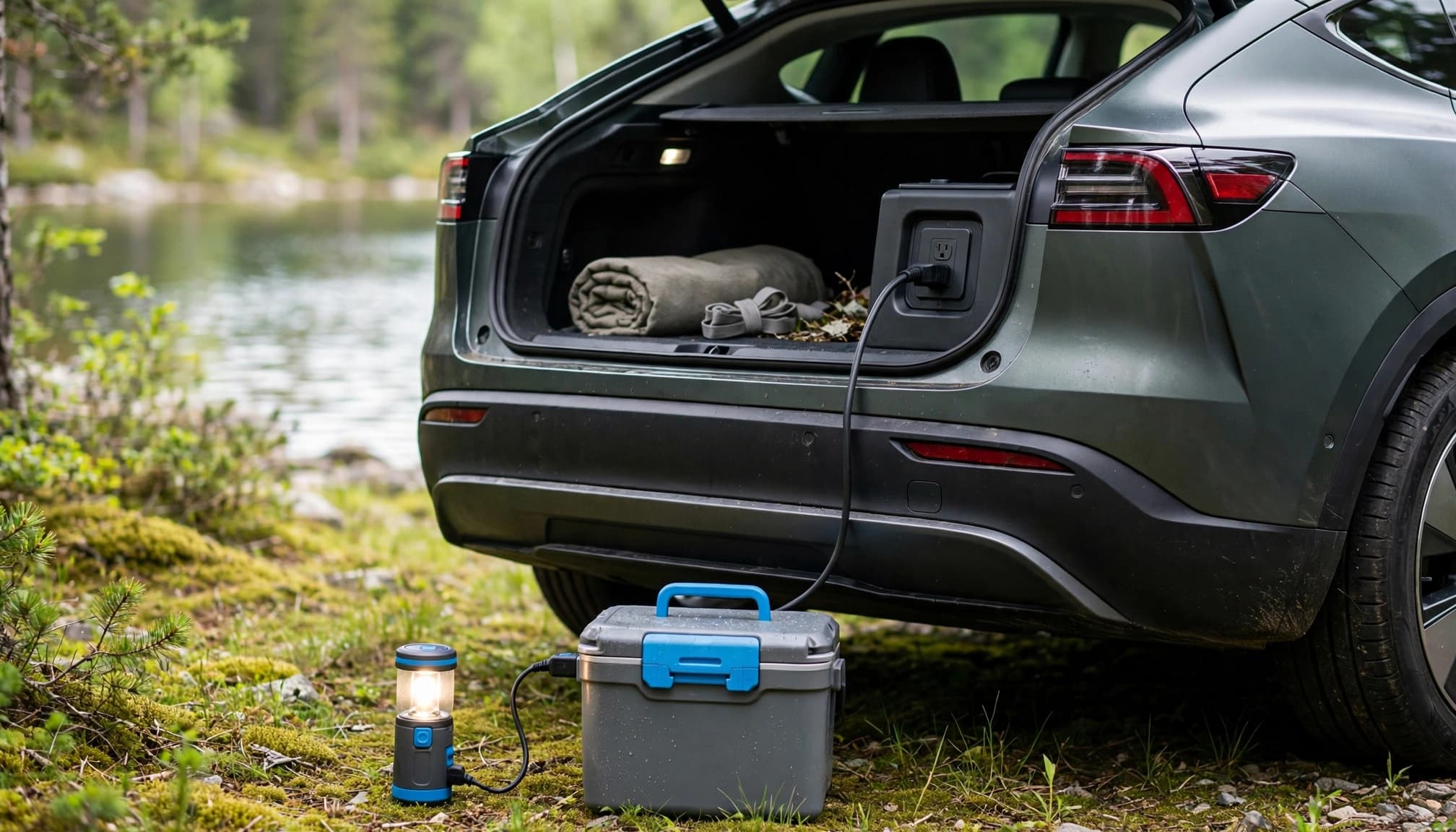
Vehicle-to-load, or V2L, is the most approachable version of outward power flow. You connect an appliance to a vehicle outlet or an approved adapter, and the battery supplies it.
Think camping equipment, lighting, a refrigerator, or suitable power tools. Useful, straightforward, and much less involved than a home-energy installation.
Which Vehicles Offer V2L?
Examples include Hyundai IONIQ 5 and IONIQ 6, Kia EV6 and EV9, and electric pickups with onboard outlets. Availability, adapters, and outlet locations vary by configuration.
Power ratings also vary by market. European-market Hyundai IONIQ 5 specifications list 3.6 kW output through the vehicle outlets. That figure shouldn't be applied to a North American vehicle with a different electrical specification.
Ford's F-150 Lightning illustrates another distinction. Its Pro Power Onboard outlet system has a 2.4 kW configuration and an optional 9.6 kW configuration. That's separate from Ford's installed home-backup system.
What Can V2L Actually Run?
The appliance's running demand must fit within the outlet and vehicle limits. Motors and compressors can briefly draw much more during startup.
A refrigerator and a few lights are a different assignment than electric space heating. A big battery doesn't remove the outlet's power ceiling.
This capability can support individual essentials during an outage, but household wiring requires a suitable, professionally designed connection. Never connect a vehicle outlet to a household receptacle to back-feed the building.
That shortcut can energize wiring unexpectedly and put other people at risk.
V2H: Using an EV to Power Your Home
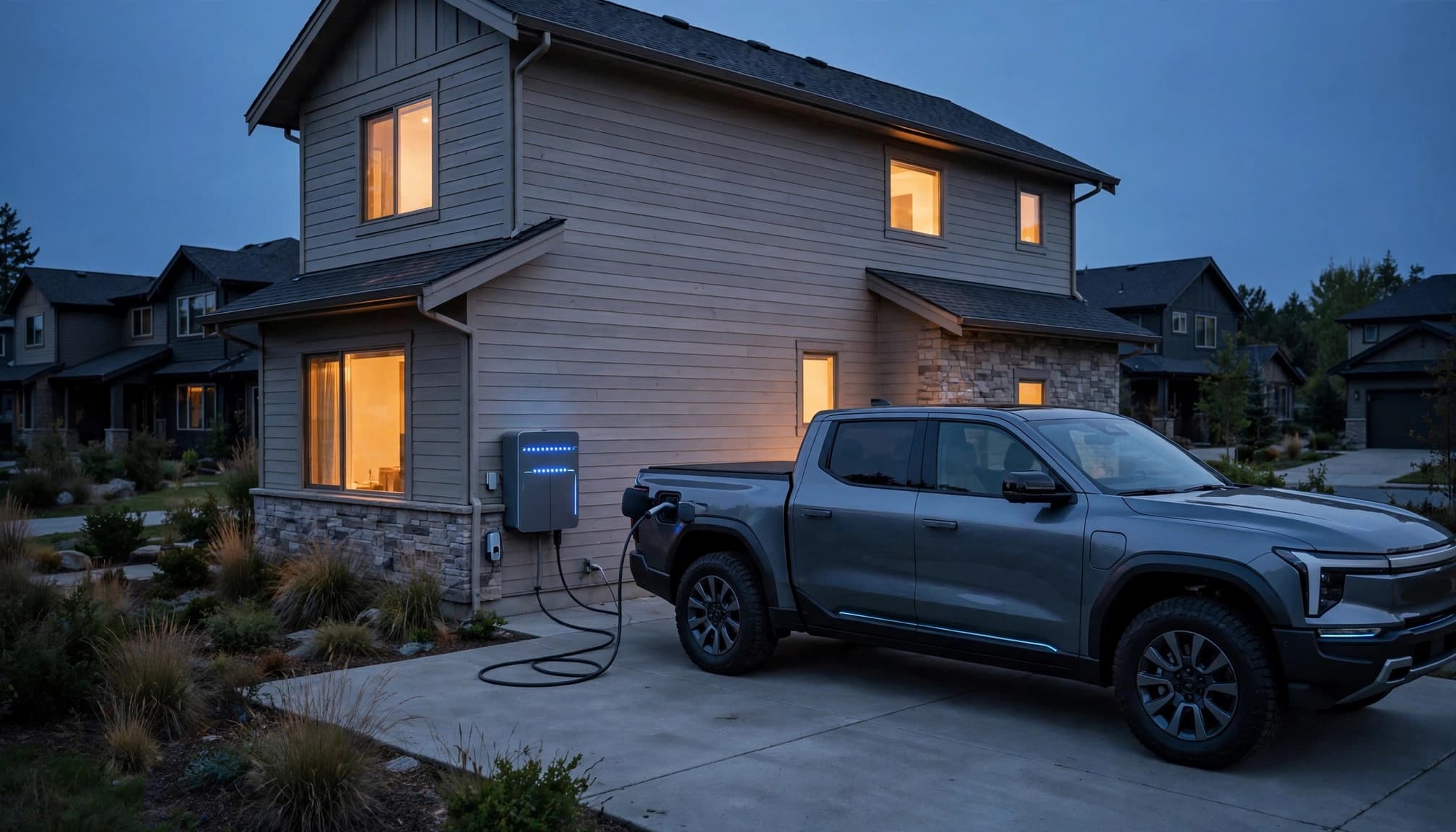
Vehicle-to-home, or V2H, connects the vehicle to household circuits through compatible conversion, control, and transfer equipment.
It can supply backup electricity during a power outage. Some systems also support using stored vehicle energy while the grid is operating.
Backup Requires an Isolated Home Supply
When utility power fails, approved equipment separates the backed-up installation from the grid. The vehicle can then supply the permitted household loads.
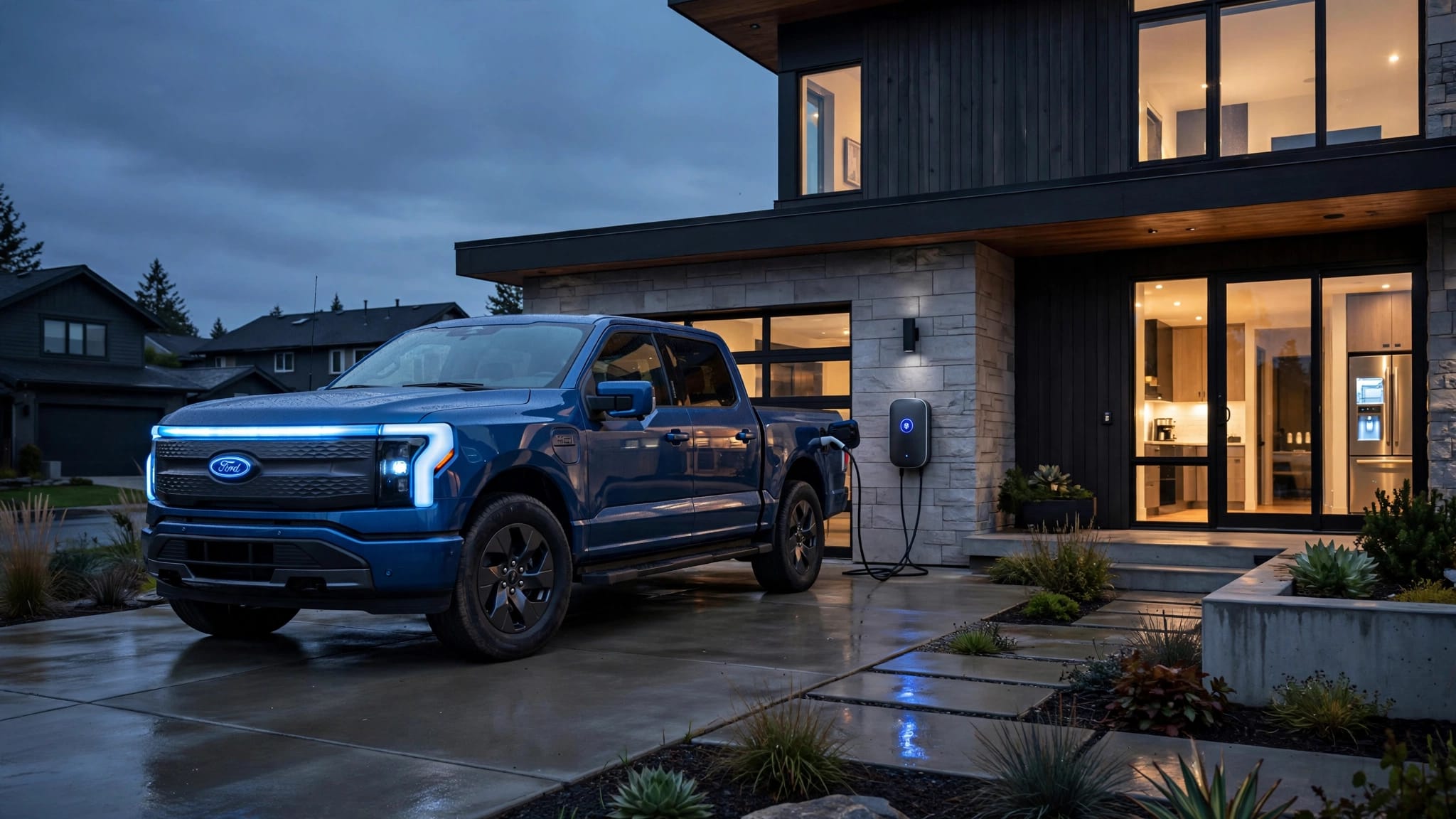
Ford documents Home Backup Power compatibility with 2022 through 2025 F-150 Lightning vehicles. The arrangement requires a Ford Charge Station Pro and Sunrun Home Integration System, with up to 9.6 kW of backup output.
Ford also warns that higher-demand homes may not be fully powered. "Whole-home backup" describes the connection arrangement, not unlimited electricity.
Our guide to EV charging during power outages separates charging a vehicle during a blackout from using its battery to supply something else.
Peak-Rate Management Is a Separate Capability
A system may also discharge the vehicle during expensive electricity periods, then recharge when rates are lower. This is often called load shifting or peak shaving.
But outage backup doesn't automatically include grid-connected rate management. The hardware, software, tariff, and interconnection arrangement must support that operating mode.
Ford's documented Home Power Management feature, for example, has its own operating restrictions, including a 50 kWh weekly transfer limit.
The distinction matters when comparing products. A backup-only installation and a system designed for daily energy trading can have very different economics.
V2G: Sending Electricity Back to the Grid
Vehicle-to-grid, or V2G, exports stored energy into the public electricity network under an approved arrangement.
A utility or aggregator may coordinate many vehicles so their combined response can help the grid. Individually, it's one parked car. Together, it's a controllable resource.
Can You Earn Money With V2G?
Yes, through an eligible program. Compensation may cover exported energy, availability, demand reduction, or other grid services, including demand-response programs.
Payments depend on program rules. Vehicle compatibility alone doesn't create an export tariff, and a credit for reducing charging demand isn't necessarily payment for discharging the battery.
There may also be minimum connection periods, battery-reserve requirements, event limits, and withdrawal restrictions.
The Department of Energy's vehicle-grid integration strategy identifies customer benefits and coordination requirements. It doesn't establish a universal annual earnings figure for EV owners.
Without a defined tariff and operating schedule, a promised income figure is sales talk.
How Does Discharging Help the Grid?
During peak demand, nearby EVs can supply some electricity that would otherwise travel through the network. This may reduce peak loading or the need for additional generation during those hours.
Vehicles can also absorb renewable energy when production is abundant, then discharge later when it is useful.
Timing matters. Discharging during the wrong period can move a problem rather than solve it.
Widespread adoption requires suitable metering, communications, protection settings, and upgrades where local networks can't accommodate two-way flow. Every street won't need identical work, but millions of exporting vehicles require coordinated planning.
V2V: Sharing Energy With Another EV
Vehicle-to-vehicle, or V2V, lets one vehicle help charge another. The everyday attraction is obvious: a stranded EV might receive enough energy to reach a working charger.
The practical arrangement depends on both vehicles and the approved equipment.
One approach uses the donor vehicle's AC outlet and the receiving vehicle's portable charging equipment. Energy passes through several conversion stages, and output may be modest. Supported dedicated systems can work differently.
This isn't a universal cable trick. A connector adapter can't create an export function, change the vehicle's software permissions, or make unsupported charging equipment compatible.
Expect portable AC assistance to be slower than a public DC fast charger. It's a way to provide useful energy, not necessarily a quick refill.
There are also grounding and electrical-protection requirements that ordinary appliance use may not expose. The donor's outlet and receiving EVSE must support the combination. Physical plug fit settles only one small part of that question.
Which EVs Support Bidirectional Charging?
Support varies by vehicle and setup. Some EVs power appliances, some support installed home backup, and some can export electricity through compatible equipment.
The examples below separate those capabilities instead of giving every vehicle a blanket "yes."
| Vehicle or Vehicle Family | Documented Outward-Power Capability | Main Qualification |
|---|---|---|
| Ford F-150 Lightning, 2022 through 2025 | Outlet power and installed V2H | Home backup requires Charge Station Pro and Home Integration System |
| Selected 2026 Chevrolet, GMC, and Cadillac EVs | Installed home backup | Requires a compatible vehicle and GM Energy equipment |
| Tesla Cybertruck | Outlet power and Powershare home backup | Home backup requires a supported Powershare installation |
| Hyundai IONIQ 5 and IONIQ 6 | Appliance power | Outlet, adapter, and output specifications vary |
| Kia EV6 | Appliance power | Equipment and output depend on market and configuration |
| Kia EV9 | Appliance power; selected home-backup arrangements | Home integration requires a supported vehicle-and-charger pairing |
| Earlier Nissan LEAF models with CHAdeMO | Bidirectional applications using compatible equipment | Regional programs and supported equipment determine usable functions |
| Rivian R1T and R1S with onboard AC outlets | Appliance power | Outlets alone don't establish installed home-backup support |
The table is a capability guide, not a claim that every trim or model year supports every listed function. An older Chevrolet Bolt EV, for example, doesn't gain home-backup capability because another Chevrolet EV supports it.
Kia EV9 home-power offerings include pairings with the Wallbox Quasar 2. That doesn't make every CCS-equipped vehicle compatible with Quasar 2; connector type alone doesn't confirm vehicle and grid compatibility.
Likewise, Nissan LEAF's bidirectional history doesn't mean any household charger can extract power from it.
The useful unit of comparison is the complete supported combination: vehicle, model year, equipment, software, and operating mode. A familiar badge or shared vehicle platform isn't enough.
For pickup owners, our electric truck charging guide also separates charging power from home-backup capability.
GM's Home-Backup System: A Concrete Example
GM provides a useful example because its documentation separates the vehicle, charger, and home-integration equipment.
Its PowerShift Charger documentation states that home backup requires both a compatible GM EV and the Enablement Kit.
Which GM Vehicles Are Included?
GM's November 2026 listings include 2026 Chevrolet Blazer EV, Equinox EV, and Silverado EV models that support home backup.
The listed GMC vehicles include the 2026 Sierra EV, HUMMER EV SUV, and HUMMER EV pickup. Cadillac listings include the 2026 LYRIQ, OPTIQ, VISTIQ, ESCALADE IQ, and CELESTIQ.
GM also lists the 2027 Chevrolet Bolt EV. That model-year distinction matters because earlier Bolt EV and Bolt EUV vehicles shouldn't be grouped into that capability statement.
Some eligible 2024 GM vehicles require a software update before bidirectional operation is enabled.
What Does the System Actually Do?
The PowerShift Charger handles ordinary home charging. With the Enablement Kit and a supported installation, the vehicle can supply power to the home during an outage.
The kit adds equipment for power conversion, isolation, and home-energy control. The vehicle must remain connected, and output is subject to system limits.
GM's published system specifications include up to 9.6 kW of backup output. That's a power limit, separate from how much energy remains in the battery.
The advertised home-backup function shouldn't be interpreted as a general V2G offering. Powering an isolated house and selling electricity through the utility meter are separate operating arrangements.
What Equipment Does a Home Installation Need?
A home-backup project usually involves more than replacing the charger on the garage wall.
The installation needs a compatible path between the battery and household loads, plus equipment that controls where electricity can go.
Conversion, Isolation, and Control Equipment
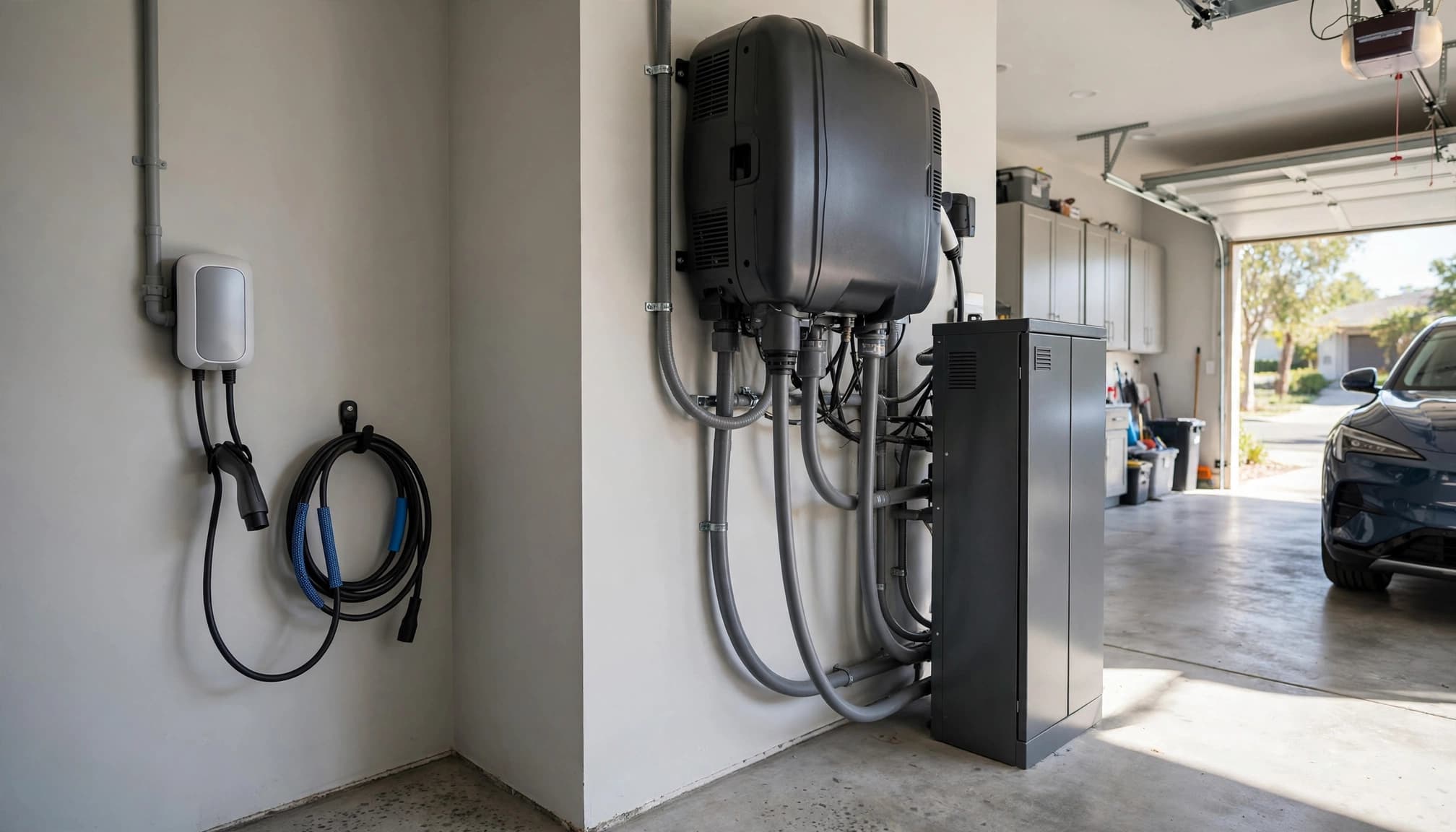
Depending on the design, a complete system can include a bidirectional charger, inverter, gateway, transfer equipment, metering, and supporting controls.
GM's V2H Enablement Kit illustrates why the charger and home-integration equipment are separate purchases.
Existing solar, batteries, or backup generators add another compatibility question. These sources must be coordinated, rather than connected independently and expected to cooperate.
A licensed installer must design the arrangement around the actual equipment and applicable electrical requirements. The Department of Energy's home charging guidance also explains why household electrical capacity affects installation planning.
A Supported-Load Plan Matters More Than a Big Number
The installation should define which circuits operate during an outage and how competing loads are managed.
A refrigerator, internet equipment, lighting, and a furnace blower present a different demand than electric resistance heating, a range, and central air conditioning operating together.
Starting current matters too. A compressor may need a brief burst that exceeds its normal running draw.
Electrical capacity also affects charging. Our guide to EV charger panel upgrades explains why the service rating alone doesn't settle whether an upgrade is necessary.
And give the cable route some respect. The vehicle must park where the connector reaches comfortably, without stretching across a walkway or interfering with the garage door. Backup equipment can't help if connecting the car becomes a daily wrestling match.
How Much Does Bidirectional Charging Cost?
Bidirectional systems generally cost substantially more than standard AC home charging.
They contain additional power electronics, protection, controls, and installation work. They're also produced in smaller volumes, with fewer interchangeable vehicle-and-equipment combinations.
Hardware Prices Aren't Installed Prices
GM's published regular pricing gives a concrete comparison. These figures exclude installation and taxes.
| GM Energy Equipment | Published Regular Equipment Price |
|---|---|
| PowerShift Charger | $1,999 |
| V2H Enablement Kit | $6,999 |
| Combined V2H Bundle | $8,998 |
GM lists discounts separately in its promotional pricing terms. The regular bundle price is a clearer starting point than treating a temporary discount as the permanent project cost.
The takeaway is straightforward: buying the charger alone doesn't buy the complete home-backup system. In this example, the home-integration kit accounts for most of the equipment expense.
Why Installed Totals Vary So Much
Labor, permits, conductor length, transfer equipment, panel work, and service changes can all affect the final amount.
A quote for a charger beside an existing suitable panel can't be compared directly with a project that relocates equipment and modifies the home's electrical service.
There isn't one defensible national installed price across these different scopes. The documented GM hardware example already approaches $9,000 before installation.
Production scale, integration, and broader competition may reduce the premium over time. That isn't a reason to assume a future price reduction in a purchase decision made today.
For ordinary charging, our Level 2 charger buying guide covers simpler arrangements.
How Long Can an EV Power a House?
Runtime depends on usable battery energy, the reserve you preserve for driving, conversion losses, and average household demand.
The calculation is simple. Getting honest inputs takes more care.
Calculate Available Energy Before Runtime
Ford's extended-range F-150 Lightning provides a useful battery reference: 131 kWh of usable capacity.
For a transparent calculation, assume discharge begins at 80% and stops at 20%. That makes 60% of capacity available:
131 kWh × 0.60 = 78.6 kWh.
Next, use an assumed 90% discharge-path efficiency. This is a calculation assumption, not a measured claim about Ford's complete system:
78.6 kWh × 0.90 = 70.74 kWh delivered.
At a steady average demand of 500 watts, or 0.5 kW, that energy lasts about 141 hours. That's roughly 5.9 days.
At a 2 kW average, the same energy lasts about 35 hours.
Those results describe the stated assumptions. They aren't a manufacturer runtime guarantee.
Power Limits Still Apply
A system can contain enough energy for several days and still be unable to start a particular appliance.
Energy, measured in kWh, determines how much work can be supplied. Power, measured in kW, determines how quickly it can be supplied.
A large battery can extend runtime, but it can't override the inverter's output limit or an appliance's startup demand.
Average demand also changes with weather and behavior. Heating, cooling, cooking, and water heating can dominate household consumption.
During a prolonged outage, essential-load operation usually preserves energy longer than trying to maintain every normal routine. Your driving reserve deserves equal attention. The house and the next journey are drawing on the same battery.
For critical medical equipment, backup planning also needs to account for transfer interruptions and an independent contingency supply.
Will It Lower Your Electricity Bill?
It can, but cheap charging and profitable discharging are different calculations.
A time-of-use tariff may reward shifting household consumption away from high-cost periods of peak demand. Conversion losses, cycling, equipment cost, and program restrictions all reduce the amount you keep.
Round-Trip Efficiency Sets the Starting Line
Round-trip efficiency measures how much useful electricity returns after a complete charge-and-discharge cycle.
At an assumed 85% round-trip efficiency, delivering 1 kWh later requires about 1.176 kWh purchased earlier. The extra electricity covers losses.
That means the expensive-period electricity price must exceed the cheap-period price by about 17.6% just to cover energy losses. Equipment cost and battery wear still remain.
The measurement boundary matters. A battery-only efficiency figure doesn't necessarily include every loss in the charger, inverter, cables, and controls.
For comparison, our explanation of monthly home charging costs shows how electricity rates affect the simpler cost of driving.
Separate Backup Value From Financial Payback
Consider GM's $8,998 regular hardware price. Recovering that amount over ten years requires roughly $900 in annual net benefit before installation, financing, or maintenance.
That's arithmetic, not an earnings forecast.
The appropriate comparison may be the additional cost over an ordinary charging installation, or the cost of another backup system. Either way, use the full relevant expense.
Backup protection also has value without producing cash savings. Keeping essential circuits running during an outage can justify spending for some households.
That's a legitimate reason to buy. It should stay separate from a claim that utility payments will repay the system.
A credible financial case needs an actual tariff, a realistic plug-in schedule, and a defined amount of usable battery energy.
How Solar Panels and EV Storage Work Together
Solar charging and bidirectional storage can complement each other. Panels generate renewable energy during daylight, while a connected EV can store some of it for later use.
But the vehicle has to be there. If it's parked at work through the best solar hours, the household can't store that midday production in its battery.
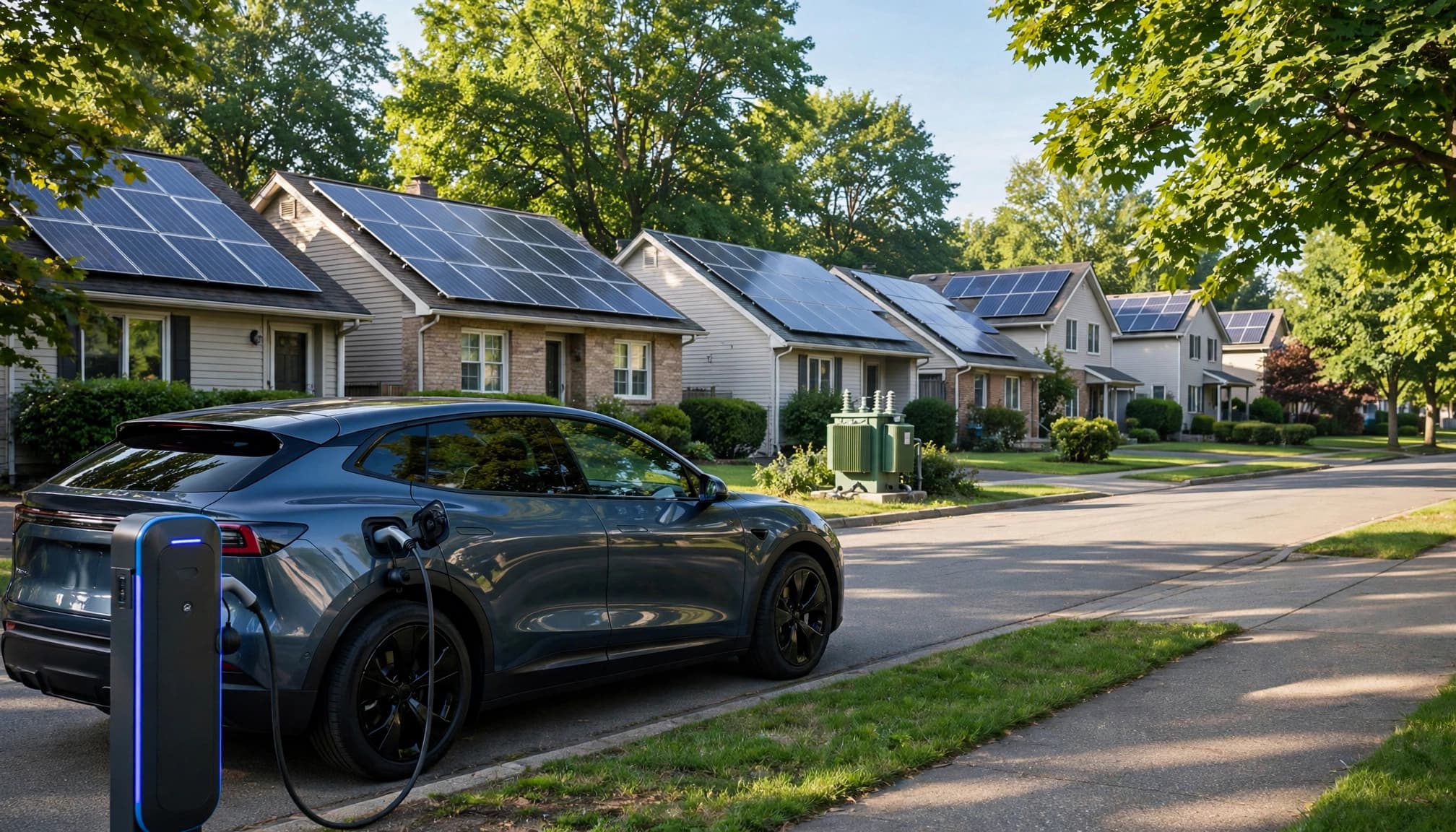
Grid-connected solar also commonly shuts down during an outage unless the installation includes suitable backup controls. Adding an EV doesn't automatically change that behavior.
The solar inverter, home controls, and bidirectional system need a supported arrangement for isolated operation. Otherwise, the roof may be sunny while the home's outlets remain without power.
A stationary home battery has one practical advantage: it stays home. An EV generally provides a larger storage resource, but that resource leaves when you drive away.
Neither arrangement is automatically the better purchase. The useful comparison includes backup needs, vehicle availability, solar production, and the installed cost of coordination.
Our guide to solar panels for EV charging explains the generation side. Storage adds another set of power limits and losses, so its benefit shouldn't be counted as free electricity.
Standards, Connectors, and Safe Grid Operation
Bidirectional charging requires agreement between the vehicle, charger, electrical installation, and grid operator. Equipment certification and interconnection requirements help determine grid compatibility with the utility network.
A connector supplies the physical interface. Communications and electrical standards address different parts of the system.
ISO 15118-20 Handles Vehicle-Charger Communication
ISO 15118-20:2022 defines communication messages and sequences for bidirectional power transfer.
Its communication framework includes secure, certificate-based authentication. Those messages help equipment negotiate and authorize operation; they don't replace the inverter or electrical protection hardware.
ISO also lists a July 2026 amendment. A published standard and universal product implementation are different milestones.
CHAdeMO has an established bidirectional history. CCS and NACS connectors can be part of supported systems too, but connector shape alone doesn't establish export capability.
The vehicle's power electronics, software, and approved equipment pairing still determine what works. System testing should verify four-quadrant operation, including active and reactive power flow in both directions.
Safety Listings and Anti-Islanding Address Other Jobs
UL 9741 addresses bidirectional EV charging equipment. UL 1741 addresses inverters and related grid-interactive conversion equipment.
For AC bidirectional systems, UL 1741 Supplement C is also part of the safety-standard discussion. Test-engineering firm Averna described it as not finalized by mid-2026. That historical status shouldn't be treated as proof of a product's November 2026 certification.
Grid-connected operation also involves interconnection requirements, including applicable IEEE 1547 requirements in the United States. Applicable equipment and interconnection limits also cover power quality and harmonic distortion.
Anti-islanding protection stops a system from continuing to energize a failed utility network. Back-feeding a dead line can endanger utility crews.
An approved backup system handles the outage differently: it disconnects the protected home supply from the utility, then supports the isolated loads.
The required detection and disconnection timing follows the applicable standards and operating conditions. "Stop exporting immediately" is the safety principle, not a universal claim of literally zero elapsed time.
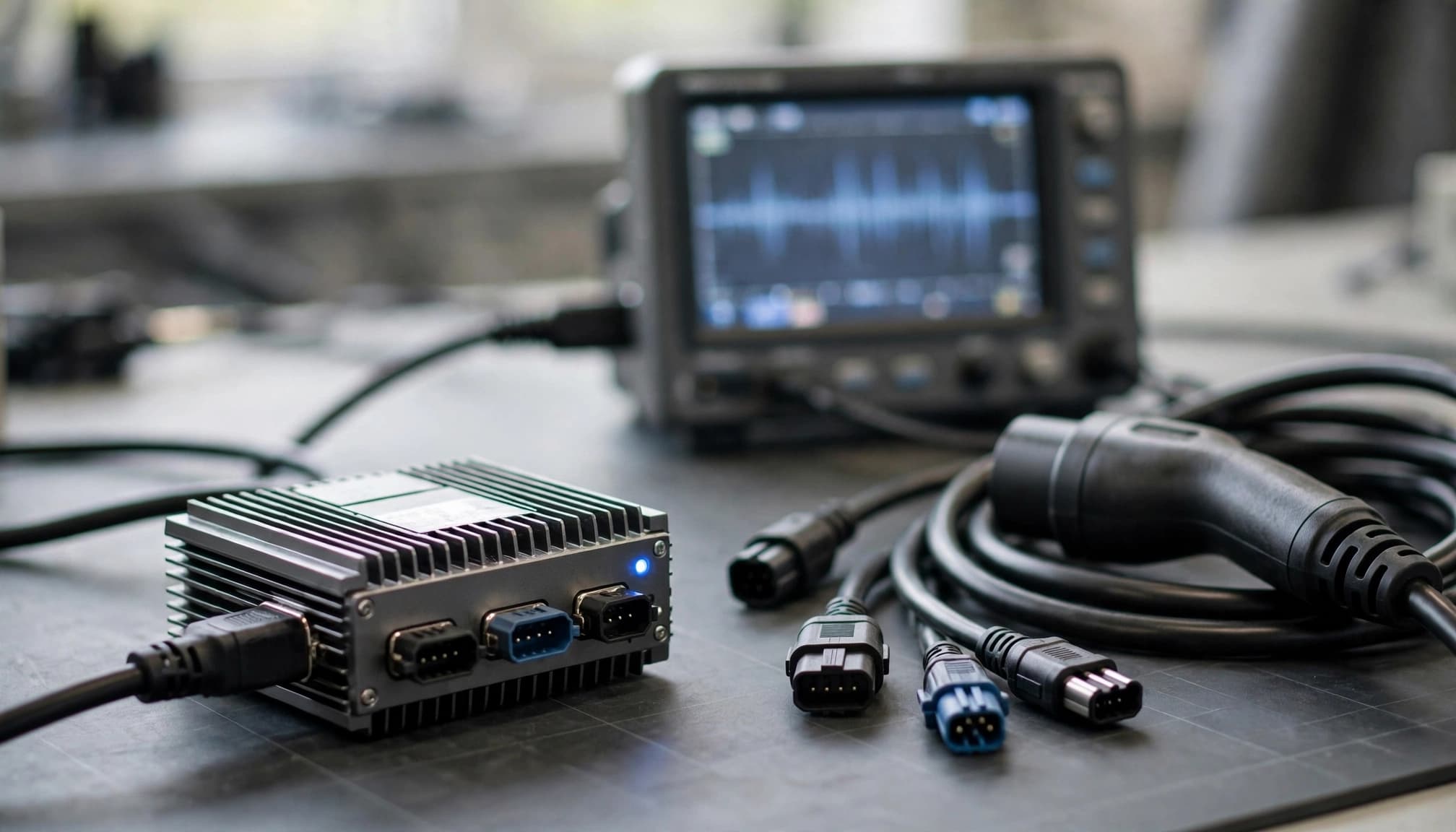
Battery Wear and Other Practical Trade-Offs
The battery already works hard moving the vehicle. Additional energy export gives it more work, so the operating strategy matters.
Cost is only one limitation. Availability, driving needs, and software dependence deserve a place in the decision too.
Extra Cycling Can Affect the Battery
Battery aging depends on chemistry, temperature, time, state of charge, and cycling. Exporting energy adds throughput, but its effect can't be reduced to one universal degradation percentage.
Shallow, controlled discharge may present a different duty cycle than repeated deep discharge. Battery-management limits also constrain permitted operation.
Warranty coverage follows the manufacturer's terms and the supported use. A general battery warranty shouldn't be interpreted as unlimited coverage for any third-party export arrangement.
Keeping a driving reserve also prevents household energy management from leaving the car short for an unexpected trip. That reserve reduces the energy available for backup or bill savings.
The Car Has to Be Connected
An EV can't power the house while it's away from the house. Obvious, yes. Easy to leave out of an enthusiastic savings estimate? Also yes.
Communications, software activation, and program enrollment can affect connected services. Equipment replacement and support arrangements matter over the installation's life.
The Department of Energy's report on EV grid impacts discusses vehicle integration as a coordinated electrical-system issue. Consumer adoption depends on those practical details, not just battery capacity.
How to Choose the Right Setup
Start with the job you need done. That keeps the equipment decision grounded.
- Decide whether you need portable appliance power, installed outage backup, daily rate management, or utility export. Each requires different capabilities.
- Match the vehicle's documented function to a supported equipment combination. Include model year, software activation, and any required integration hardware.
- Define the household loads and driving reserve. The design needs both an output-power target and an energy budget.
- Compare itemized installed proposals. Equipment, electrical work, permits, commissioning, and any service changes belong in the same comparison.
- Separate guaranteed functions from conditional benefits. A supported backup function can be concrete even when future utility earnings remain uncertain.
For simple camping power, portable appliance power may meet the need without a major home project. For frequent outages, a professionally installed home backup arrangement may offer more useful coverage.
For bill savings alone, the threshold is higher. The tariff and operating schedule have to support the extra expense.
Buy for the function you can use, with room for future improvements only where the hardware and economics justify it.
Frequently Asked Questions
Is Every EV Capable of Bidirectional Charging?
No. The battery's ability to discharge for driving doesn't mean the vehicle can export electricity through its charging port or an AC outlet.
Export requires suitable power electronics, controls, software, and manufacturer-supported operation. A conventional EV can't gain those capabilities through a generic plug adapter.
Even within one model family, model year, market, trim, or an activation requirement can change the supported functions.
Can V2L Power a House?
The vehicle outlet can power individual household appliances within the vehicle's limits. Supplying household circuits requires a suitable connection and an electrically compatible, professionally designed installation.
An appliance-power outlet alone doesn't provide automatic transfer, grid isolation, or whole-home power management.
Never connect the vehicle to an ordinary wall receptacle to energize household wiring. Use approved appliance connections or a properly designed home-integration arrangement.
What's the Most Affordable Way to Charge an EV?
For many owners, charging at home on a favorable electricity tariff is cheaper than routine public fast charging.
A suitable existing Level 1 connection may have the lowest initial equipment cost if it replaces your daily driving energy. Level 2 provides more overnight capacity but adds installation expense.
Bidirectional equipment usually isn't the lowest-cost route if your only goal is putting electricity into the car. Its additional cost buys outward-power functions.
Does Bidirectional Charging Work During Every Outage?
No. A compatible battery and charger are only part of the arrangement.
Outage operation requires the supported home-integration equipment, sufficient battery charge, and the vehicle to be connected. The installation must also isolate the backed-up loads from the failed grid.
Output limits and transfer behavior still apply. Some circuits may remain unsupported, and equipment that needs uninterrupted electricity may require a separate uninterruptible power supply.
Can You Sell Electricity Without a Utility Agreement?
Grid export requires an approved interconnection arrangement and applicable utility rules. Financial compensation also requires a tariff or program that pays for the relevant service.
A vehicle's technical ability to discharge doesn't create permission to export or an entitlement to payment.
Some systems provide outage backup without offering compensated V2G. That distinction should remain clear when comparing advertised benefits.
Choose the Capability, Then the Car and Equipment
Bidirectional charging gives an EV another useful job, but the details decide how useful. Appliance power, home backup, and grid export require different combinations of vehicle capability and installed equipment.
The strongest buying decision starts with the complete system. Its output, available energy, supported loads, and installed cost matter more than the promise of a large battery.
For backup, protect the circuits you need and preserve enough charge to drive. For savings, let the tariff and full project cost make the case. The technology can do meaningful work when the equipment matches the assignment.
Safety note: This article is general information, not professional electrical advice. Working with 240V circuits can cause serious injury or fire. Hire a licensed electrician and follow local codes and permit requirements.
Sources & further reading

Written by
LarryLeoLarryLeo started EV Charging while researching his own next car purchase. He digs into the pros, cons and real cost savings of going electric — using government, standards-body and manufacturer sources — and shares what he finds so other buyers can decide with confidence.
Why trust EV Charging Guide
Our guides are researched from government, standards-body and manufacturer sources, reviewed for accuracy, and updated when rules or products change. Brands cannot pay for placement. Read our editorial policy.