Can Two EVs Share One Home Charger?
Two EVs one charger can work when daily driving fits the overnight window. Compare taking turns with dual-port and coordinated charging options.
As an Amazon Associate, EV Charging may earn from qualifying purchases. This helps support our independent guides at no extra cost to you. Learn more.
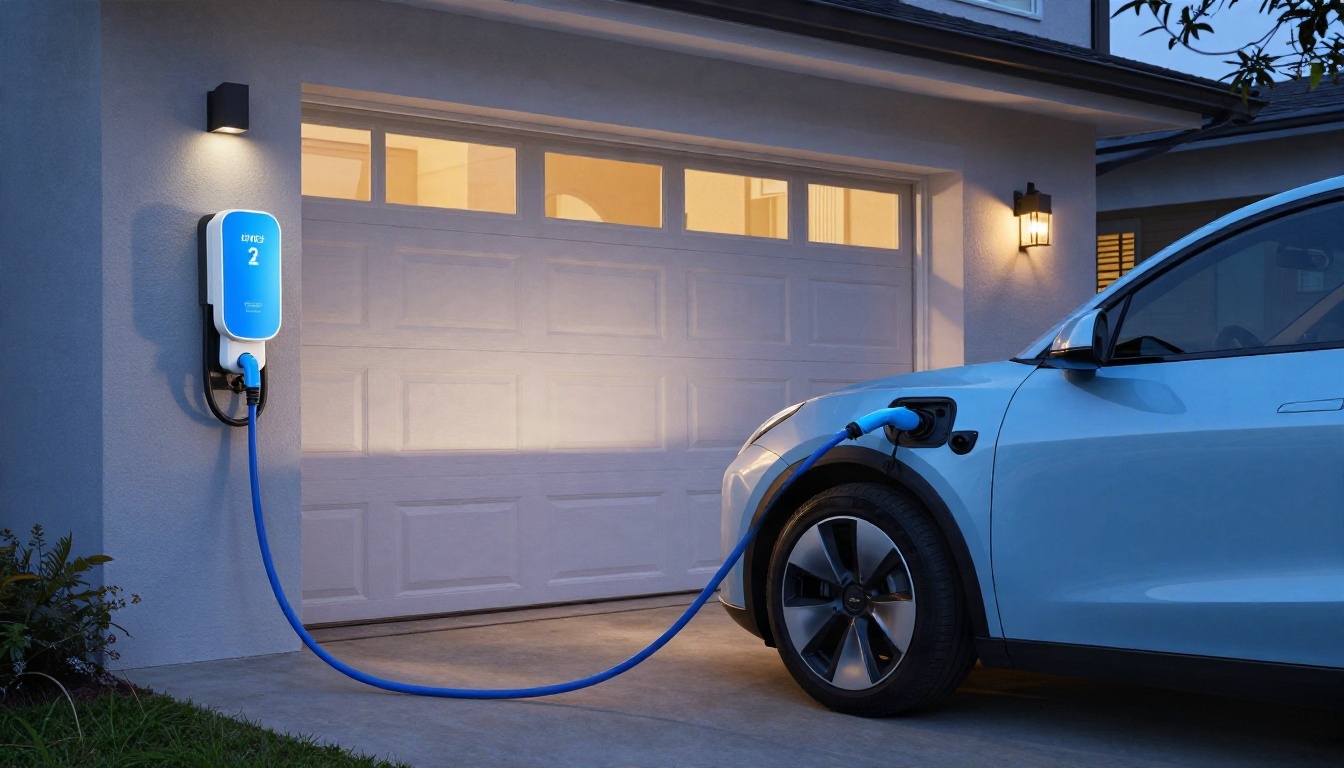
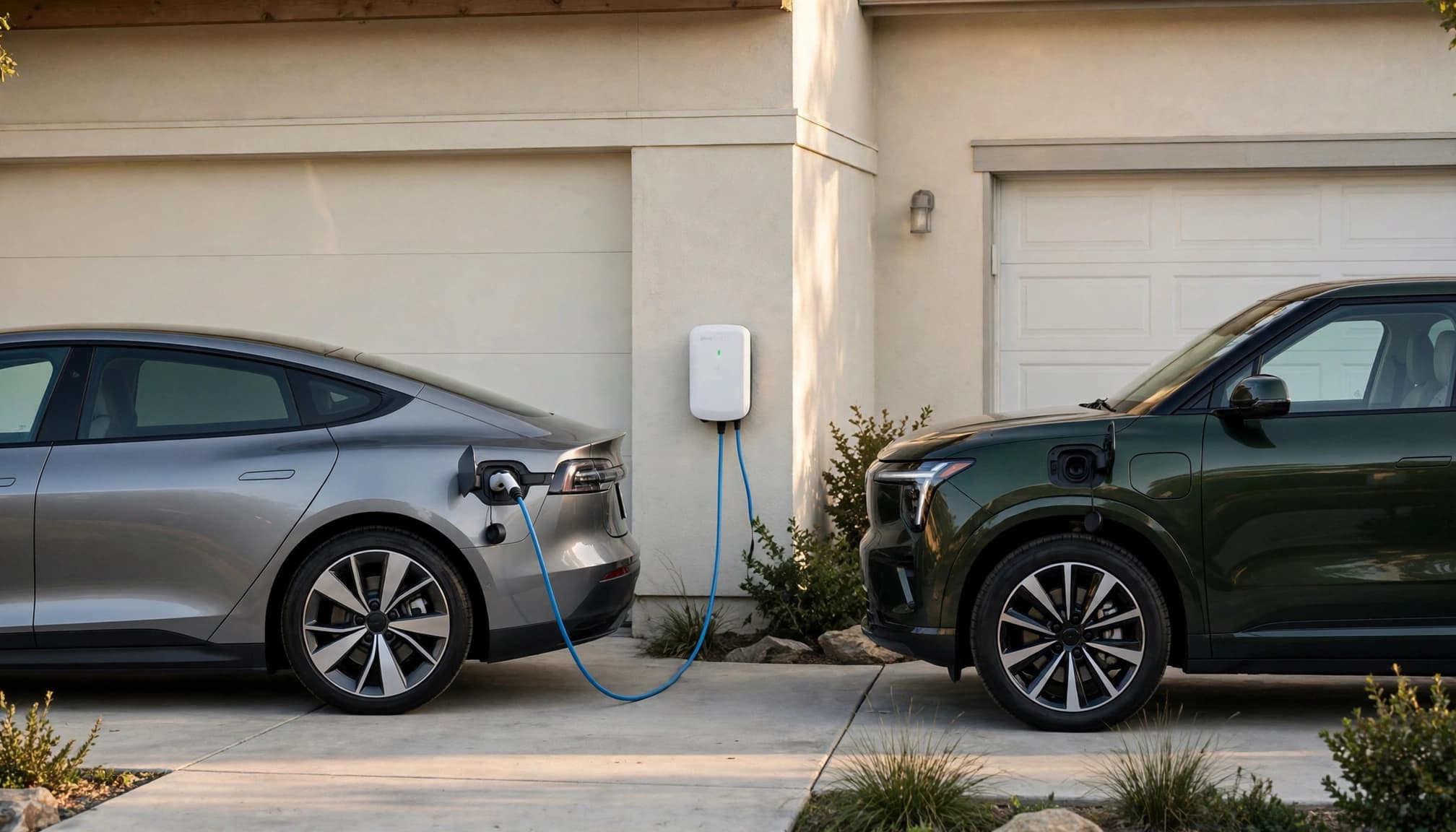
Yes. Two EVs can take turns using one connector on a home EV charger. Simultaneous charging requires a purpose-built dual-port electric vehicle charger or compatible chargers that coordinate power use.
For many households, one Level 2 charger is enough for two electric cars. The deciding factors are daily driving, overnight parking time, and whether someone wants to move the cable. That last part sounds small until you're negotiating it in pajamas.
Start by separating the charging arrangements, then look at what your two cars actually need.
This post may contain affiliate links. If you make a purchase through these links, I may earn a small commission at no extra cost to you.
Key Takeaways
- One single-connector charger serves two cars sequentially, not simultaneously.
- A dual-port charger can charge both cars within a shared power allowance; two EV chargers can do the same only when designed and configured to coordinate power use.
- Adding another connector doesn't automatically increase available electricity.
- Daily energy use matters more than total battery size when deciding whether one charger is enough.
- A qualified electrician should assess any additional charging equipment, shared-circuit arrangement, or load-management system.
1. Choose How Your Two EVs Will Share Charging
"Sharing one charger" can describe three different arrangements. A dual EV charger setup doesn't always mean both cars can charge at once.
Here's the practical comparison.
| Arrangement | Both Cars Charge Together? | Main Advantage | Main Trade-Off |
|---|---|---|---|
| One charger, rotated between cars | No | Uses existing equipment | Someone moves the cable or alternates nights |
| One dual-port charger | Yes, if designed for simultaneous charging | Both cars stay connected | Ports share the unit's available output |
| Two coordinated chargers | Yes | Flexible placement and automatic sharing | More equipment and installation work |
With one connector, you might charge one car Monday and the other Tuesday. If both need energy nightly, you can switch the cable once the first finishes.
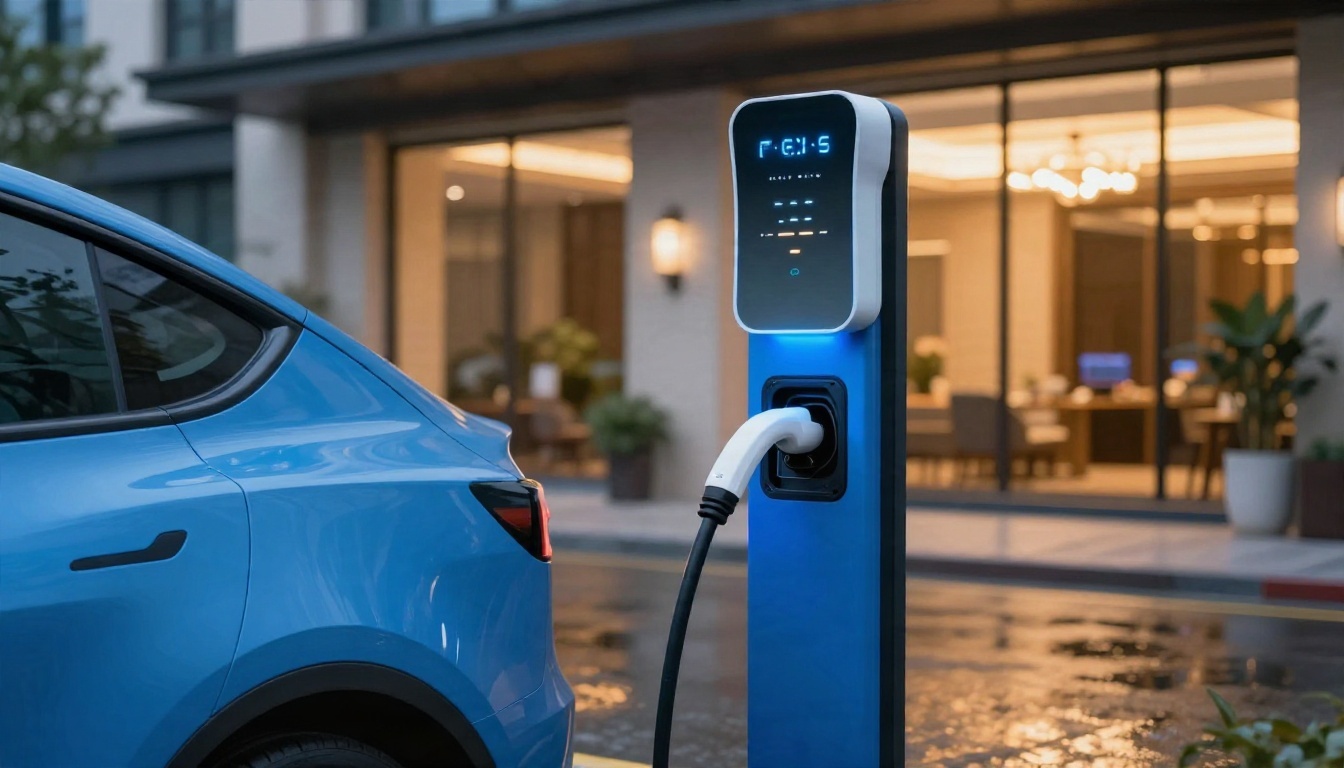
A dual-port electric vehicle charger puts two connectors in one unit. A dual charger shares its available output between cars, so it doesn't create more electrical capacity. Two coordinated chargers provide separate units, often positioned beside each parking space. They can share a fixed electrical allowance only with compatible controls.
Choose the routine before the hardware. If alternating nights works, a second charger may solve a problem you don't have.
Our guide to charging two EVs on one circuit covers the separate question of which documented equipment arrangements can share a branch circuit.
2. Calculate Daily Energy Before Comparing Chargers
Battery capacity gets plenty of attention. Your daily refill is usually the more useful number.
Start With Miles Driven
For this calculation, assume each car travels 30 miles daily and averages 3 miles per kilowatt-hour, or kWh.
Each needs:
30 miles ÷ 3 miles/kWh = 10 kWh of battery energy.
Together, they need 20 kWh. Assuming 90% charging efficiency, the electricity drawn at the wall is:
20 kWh ÷ 0.90 = approximately 22.2 kWh.
At an assumed charging rate of 7.2 kW, a 7kW-class charger could supply that energy in approximately 3.1 hours. These are labeled assumptions, not promises about your particular cars. Charging speed varies with vehicle efficiency, temperature, and cabin conditioning.
Compare Energy With Available Time
Now assume both cars are home for ten hours overnight. That leaves substantial room around a roughly three-hour combined refill.
The challenge becomes access to the connector. Can one car charge after dinner? Can the lower-mileage car skip a night? Does someone leave early?
Two high-mileage drivers have a different assignment. If both cars need substantial refills every night, limited parking time can justify simultaneous charging.
You also don't need to fill both batteries to 100% every evening. Follow each vehicle manufacturer's charging guidance, then replace the energy your routine requires.
That's the useful starting point: daily demand divided by available charging time.
3. Understand What Sharing Does to Charging Time
Power sharing can lower each car's charging speed because each receives fewer kilowatts. For the household's combined energy requirement, the comparison is different.
Taking Turns Versus Charging Together
Assume a fixed 7.2 kW charging allowance.
With one charger, Car A receives up to 7.2 kW, then Car B receives up to 7.2 kW. With an evenly shared dual-port setup, each receives approximately 3kW to 3.6 kW while both are charging.
Using the previous daily example, each car needs about 11.1 kWh from the wall. Sequential charging takes approximately 1.55 hours per car, or 3.1 hours combined.
Simultaneous charging at 3.6 kW takes approximately 3.1 hours for each car. The charging rate is lower, but the household finishes in about the same time.
A dual EV charger avoids the cable swap without reducing the energy the household needs.
Larger Refills Change the Schedule
Consider two 60 kWh batteries, each charging from 20% to 80%. Each needs 36 kWh added to the battery.
At an assumed 90% efficiency, that's 40 kWh from the wall per car, or 80 kWh total.
At a shared 7.2 kW, the theoretical combined charging time is approximately 11.1 hours. Temperature, vehicle limits, and interruptions can extend it.
A second connector can remove the midnight cable swap without reducing the time needed to deliver the household's total energy.
4. Separate Power Sharing From Household Load Management
These features are related, but they handle different jobs. Mixing them up can lead to buying equipment that doesn't solve your actual capacity problem.
Power Sharing Manages the Chargers
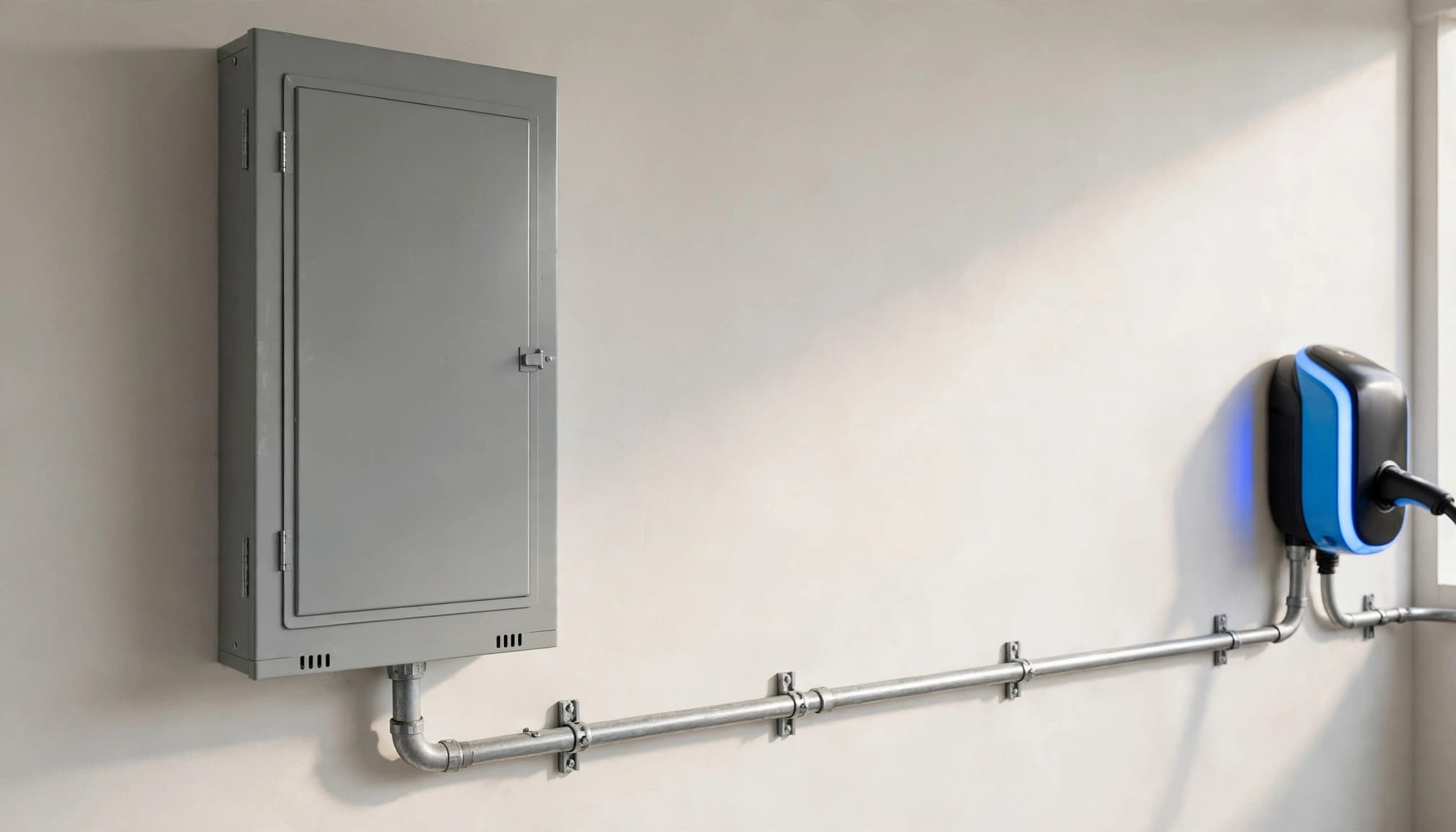
Power sharing, or charger-level load balancing, allocates a configured allowance among charging units or connectors. Some systems divide it equally; others adjust as vehicles connect, finish, or accept less power.
Don't assume equal halves forever. Without coordinated controls, two independent chargers don't automatically divide demand safely. They may draw different amounts, exceed available capacity, or trigger protection.
Tesla's Gen 3 Wall Connector installation manual describes power sharing among up to six units under a configured group limit. Its documented US arrangement uses individual branch circuits and must follow the manual's requirements. Power sharing doesn't authorize an improvised daisy chain.
Dynamic Load Management Watches the Home
A load-balancing feature controls power allocation among chargers, while dynamic load management monitors the home's overall demand. It can reduce EV charging when household demand rises, then restore it when capacity becomes available.
That matters when cooking, heating, air conditioning, and charging overlap. A 200-amp service doesn't automatically mean two high-output chargers fit; a 100-amp service doesn't automatically rule out charging.
The Department of Energy's multifamily charging guide explains how automated load management lets multiple charging points share electrical capacity. The principle also helps explain residential systems.
Our guide to load-managed home charging separates charger sharing, household monitoring, and shared-circuit capability.
5. Match the Connector to Both Vehicles
Two cars can share equipment across brands if the connector, vehicle, and any adapter support the charging setup.
Home AC Charging Compatibility
In the US, common AC connections are J1772 and NACS, now standardized as SAE J3400. Tesla vehicles use the NACS-shaped inlet, and other manufacturers are adopting it.
One compatible home charger can charge two Teslas sequentially. A Tesla and another EV can also share equipment if their AC connections are supported directly or through an approved adapter.
Tesla's Universal Wall Connector includes a J1772 adapter for supported AC charging. That makes it an option for mixed fleets, though one connector charges only one vehicle at a time.
Model year matters. Don't infer a car's inlet or adapter support from its badge alone.
AC and DC Adapters Aren't Interchangeable
A DC fast-charging adapter doesn't automatically work with a home AC charger, even when the connector shapes look related. They handle different electrical paths and charging functions.
Use only adapters approved for the exact vehicle and charging application. Don't daisy chain passive Y-cables or use improvised splitters to connect two cars to one charging connector.
In the UK, Type 2 is the common AC connection. A car with a Type 1 inlet can use a suitable Type 2-to-Type 1 cable with an untethered Type 2 charge point. Some listings call this a Type 1 to Type 2 cable, but naming varies by connector end, so check which end connects to the car and which to the charge point. A fixed Type 2 cable presents a different compatibility question.
6. Compare the Cost of Convenience
If you already own a compatible charger, rotating between cars adds $0 in charger hardware. That's a useful baseline before buying another unit.
The cost of a second EV charger installation can include equipment, electrical labor, permits, trenching, a subpanel, or service work. A dual charger may reduce duplicated hardware or installation work, but it isn't automatically cheaper than two separate chargers.
Compare complete installed costs, not hardware prices alone. An electrical assessment can change the result substantially. The IAEI's charging infrastructure planning guidance covers equipment and electrical factors that affect an installation.
Electricity costs are separate. Using our assumed daily requirement of 22.2 kWh and an illustrative rate of $0.15/kWh:
22.2 kWh × $0.15 = approximately $3.33 per day.
Splitting that energy between two connectors doesn't inherently lower the bill. Scheduling charging during a utility's cheaper time-of-use period can, depending on the tariff.
For hardware comparisons, our dual-port home charger guide covers equipment that lets both cars remain connected. The benefit you're buying may be convenience rather than faster charging.
Why UK Charging Advice Uses Different Numbers
US homes commonly supply Level 2 charging at 240 volts through split-phase service. Most UK homes use a 230-volt single-phase electricity supply. Advice about upgrading to three-phase shouldn't be transplanted between them.
Two 7 kW chargers sharing a roughly 7 kW allowance deliver about 3kW each. A single-phase electricity supply alone doesn't determine that split; the configured allowance and installation design do.
The UK-market Easee One supports up to three chargers on one fuse with a built-in load-balancing feature, subject to its installation requirements. Installers must follow the Easee One's requirements. That setup isn't permission to connect unrelated chargers the same way.
Neither a three-phase electricity supply nor another connection type alone determines the permitted charging arrangement. Your site's electricity supply and other household loads affect the capacity available.
Delivering 7 kW to each car requires roughly 14 kW for charging, plus household demand. A three-phase electricity supply can provide additional capacity, but upgrading to one isn't a universal requirement. UK supply upgrades involve the distribution network operator, or DNO, and can add substantial cost and delay.
At about £1,000 per EV charger installation, two units could cost approximately £2,000 before additional work. That's an estimate, not a guaranteed quote or a US price estimate.
Eligible UK households may receive up to £500 through applicable OZEV grant schemes. "OZEV EV charger grant" is descriptive wording, not an official scheme name. The government's on-street household grant guidance covers qualifying installations with cross-pavement solutions; on-street parking alone doesn't establish eligibility.
Great Britain's Electric Vehicles (Smart Charge Points) Regulations require covered private smart EV chargers sold from June 30, 2022, to meet smart-functionality requirements. They don't ban every non-smart charging device worldwide.
Keep a Backup for Busy Charging Days
Workplace charging can cover part of your weekly energy need while your car is parked. Whether it saves money depends on your employer's charging price.
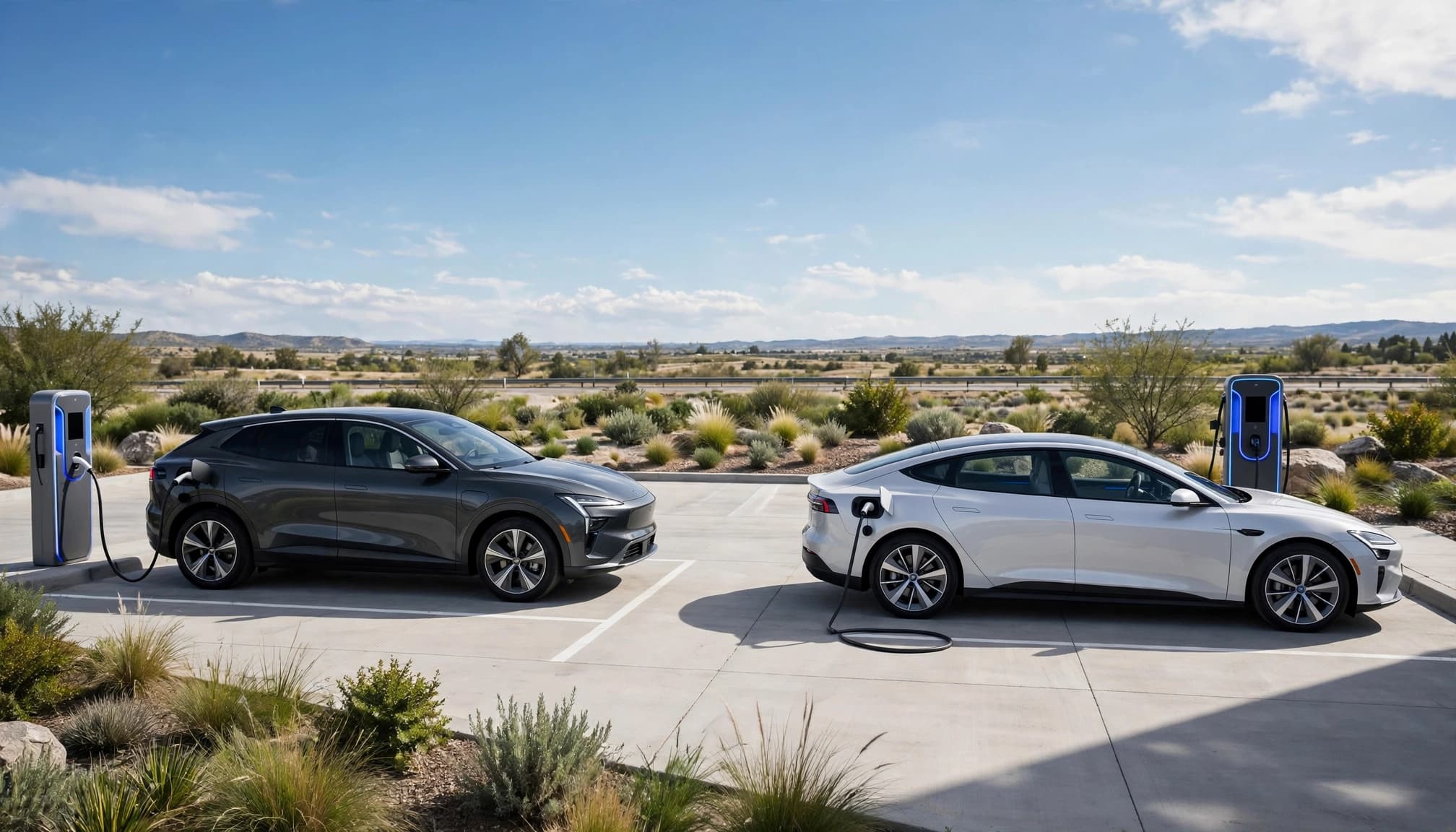
Public charging, including DC fast charging, is another option when both cars arrive low and leave early. Use the vehicle's navigation or charging-network apps to find compatible rapid charging stations. Zap-Map is also useful for locating UK public chargers.
An occasional public session may be easier than installing equipment for a situation that happens rarely. Regular dependence on public charging calls for a fuller cost comparison.
US 120-volt Level 1 charging is slow: 12 amps provides approximately 1.44 kW before losses. In the UK, three-pin plug charging is also among the slowest options. Three-pin plug charging requires suitable equipment and an electrical supply that's suitable for the load.
Overheating, damaged plugs, repeated breaker trips, or charging faults need attention from a qualified electrician or the manufacturer. Stop using affected equipment. Don't bypass protections.
Frequently Asked Questions
Is There a Limit to How Many Home Chargers I Can Have?
There's no universal two-charger limit. The practical limit comes from electrical capacity, approved equipment arrangements, local requirements, and any utility or property restrictions. More chargers may need to share available power.
Do Two Chargers Require Three-Phase Power in the US?
No. Two chargers can operate on residential split-phase service when the electrical design supports their combined demand. Load management can reduce that demand. A qualified electrician determines the permitted arrangement and charging limits.
Can Two Teslas Share One Wall Connector?
Yes, by taking turns. One single-connector Wall Connector can't charge both simultaneously. Compatible multiple-Wall-Connector installations can coordinate power, with the generation-specific installation requirements controlling the design.
Can I Install a Shared Charger in a Condo Garage?
Potentially. Parking rights, association or landlord approval, electrical capacity, access control, and electricity billing all matter. A shared garage also raises cable-routing and trip-hazard concerns. Equipment ownership alone doesn't grant installation rights.
Sources and Technical Basis
The charging-time and cost examples use the assumptions stated beside each calculation. They aren't vehicle-specific test results.
Technical references include Tesla's Gen 3 Wall Connector Installation Manual, the Department of Energy's multifamily charging guidance, and IAEI's infrastructure planning guidance. UK grant and regulatory information applies only to the UK arrangements described above.
Choose Enough Charging for Your Actual Routine
Two EVs can share one home charger comfortably when their combined energy needs fit the available parking time. Calculate that requirement before paying for more equipment.
A second connector earns its place when automatic overnight access matters, or your driving leaves little scheduling room. Buy for the mornings you need to handle, with an electrical design that supports them safely.
Safety note: This article is general information, not professional electrical advice. Working with 240V circuits can cause serious injury or fire. Hire a licensed electrician and follow local codes and permit requirements.
Sources & further reading

Written by
LarryLeoLarryLeo started EV Charging while researching his own next car purchase. He digs into the pros, cons and real cost savings of going electric — using government, standards-body and manufacturer sources — and shares what he finds so other buyers can decide with confidence.
Why trust EV Charging Guide
Our guides are researched from government, standards-body and manufacturer sources, reviewed for accuracy, and updated when rules or products change. Brands cannot pay for placement. Read our editorial policy.