Calculate EV Charging Cost From Your Electric Bill
Estimate your EV charging cost using your utility’s usage-based rate, charging losses, and time-of-use prices to build a realistic monthly budget.
As an Amazon Associate, EV Charging may earn from qualifying purchases. This helps support our independent guides at no extra cost to you. Learn more.
Your EV charging cost equals the electricity you use, measured in kilowatt-hours, multiplied by your price per kilowatt-hour. For an accurate estimate of home charging for your electric vehicle, use the bill's usage-based charges. Then account for charging losses and any cheaper charging hours.
The multiplication is easy. Finding the right numbers takes a little more attention, especially when your bill separates electricity supply, delivery, and fees.
Let's work through the bill first, then turn those numbers into a cost per charge and monthly budget.
This post may contain affiliate links. If you make a purchase through these links, I may earn a small commission at no extra cost to you.
Key Takeaways
- Multiply charging energy by your electricity rate in dollars per kWh.
- Include supply, delivery, and other charges that increase with consumption. Exclude existing fixed fees when estimating the car's added cost.
- Use charger-recorded energy for completed sessions. For future estimates, distinguish battery energy from energy drawn from the wall.
Find Your Electricity Rate on the Bill

Add the Charges That Follow Your Usage
Look for your billing period's electricity consumption, listed in your bill. Then identify the charges calculated against that consumption.
These can include generation or supply, transmission, distribution, fuel adjustments, and usage-based taxes. Electricity prices can include several components, listed together or on separate lines. Generous of them.
Effective usage rate = total usage-based charges ÷ billed kWh
Convert cents to dollars to find the price per kWh: 18.07 cents becomes $0.1807.
If your bill has separate peak and off-peak prices, keep them separate. A blended household average can hide what overnight charging actually costs.
Leave Existing Fixed Fees Out
A monthly customer charge you already pay usually doesn't increase because you plug in a car. Including it overstates the car's added expense.
An additional meter fee or subscription required for an EV plan does belong in the comparison.
Dividing the entire bill by total consumption gives an average household cost. That's useful for some budgeting, but incremental cost answers the question here: how much extra does charging add?
For tiered plans, use the rate applied to the additional charging energy. Your existing household consumption may already have used the cheaper tier.
Calculate the Cost of One Charge
The starting formula is:
Charging cost = energy added × electricity rate
For a battery-capacity estimate:
Battery energy added = usable capacity × change in charge percentage
Charging an 80 kWh usable battery from 20% to 80% adds 48 kWh: 80 × 0.60.
The following comparison uses historical state-rate figures of 32.04 cents per kWh for California and 15.12 cents per kWh for North Carolina. These are calculation examples, not current utility quotes.
| Charging Amount (kWh) | California | North Carolina |
|---|---|---|
| 80, equivalent to 0% to 100% | $25.63 | $12.10 |
| 48, equivalent to 20% to 80% | $15.38 | $7.26 |
The North Carolina full-charge calculation is $12.096, which rounds to $12.10.
These figures exclude charging losses. Your utility bills electricity delivered through the meter, so the actual bill can be higher.
Use usable battery capacity when available. Advertised gross capacity can include reserves the car doesn't let you access.
Account for Charging Losses Without Counting Them Twice
Battery Energy and Wall Energy Differ
Some electricity becomes heat or powers battery conditioning and charging electronics instead of being stored in the battery.
For a clear example, assume 90% charging efficiency. Delivering 48 kWh into the battery requires:
48 ÷ 0.90 = 53.33 kWh from the wall
At the $0.1807 rate, that costs about $9.64, compared with $8.67 before losses.
The 90% figure is an assumption, not a universal specification. Temperature, charging power, equipment, and vehicle behavior affect the result.
Match the Formula to Your Data
Charger-recorded wall energy already includes the electricity that passed through the charger. Don't add another loss allowance.
EPA electricity-consumption ratings also account for charging losses. Dashboard miles-per-kWh readings may use a different measurement boundary.
EPA's explanation of EV testing helps distinguish standardized ratings from everyday driving results.
Add charging losses only when your starting energy figure excludes them. Otherwise, you're charging yourself twice on paper.
Vehicle preconditioning or standby consumption may also appear in charger totals, depending on when and where the energy is measured.
Estimate Your Monthly EV Charging Cost
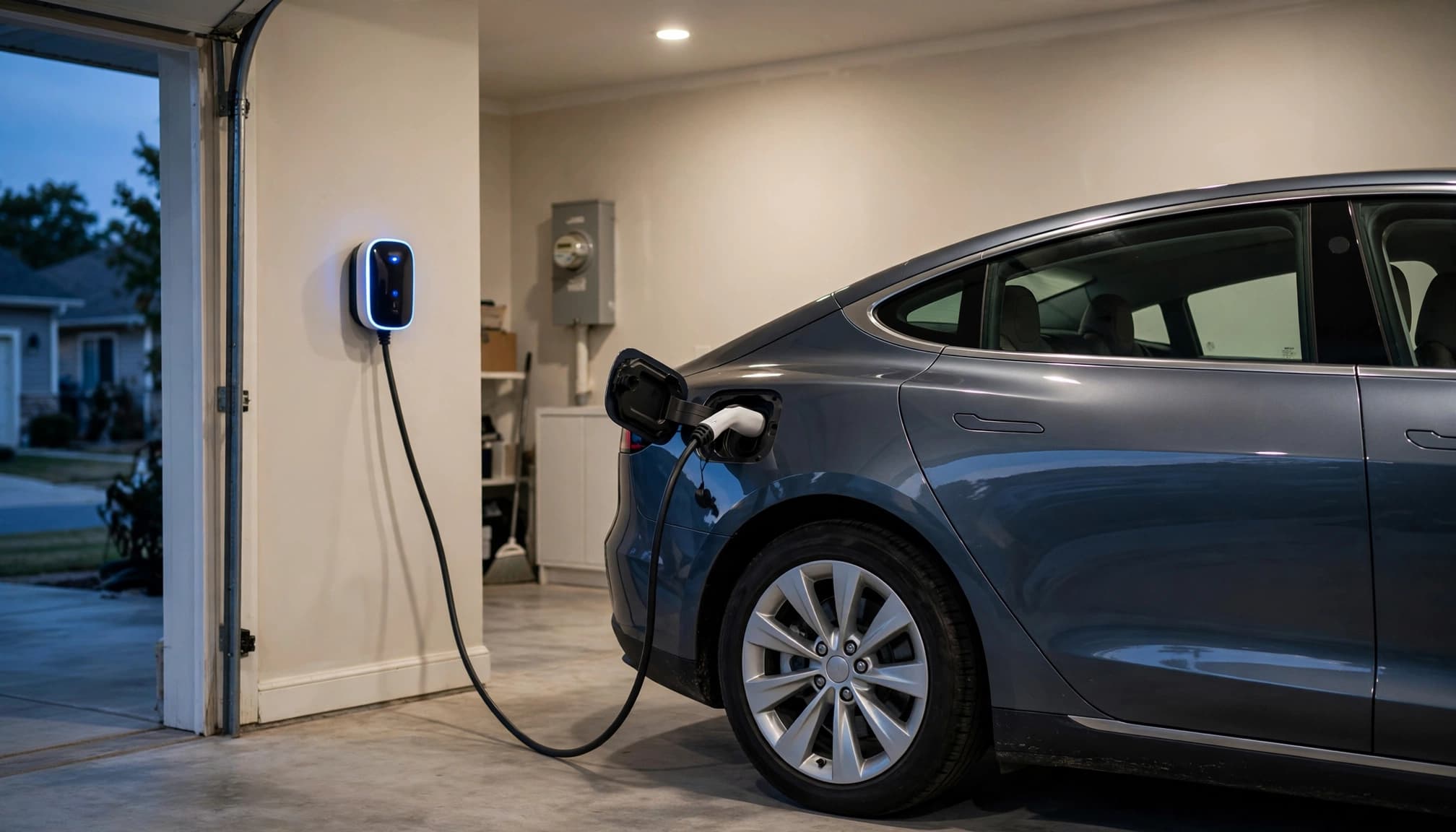
For a mileage-based estimate of monthly charging cost:
Monthly cost = monthly miles ÷ vehicle efficiency × energy price
Using 1,123 miles, an assumed efficiency of 3 miles per kWh, and the September 2025 residential average of $0.1807:
1,123 ÷ 3 × $0.1807 = $67.64
Rounding energy use first to 374 produces $67.58. Keep the unrounded number through the calculation when possible.
That electricity price is a historical benchmark reported in September 2025 electricity-price coverage, not a current quote for electricity prices.
The mileage input equals about 13,476 miles annually, a figure in older FHWA material. It shouldn't be described as a new 2024 survey result.
At 3 miles per kWh, this estimate excludes losses if efficiency comes from battery-side dashboard data. With the illustrative 90% charging efficiency, the total becomes about $75.16.
If your vehicle instead uses 30 kWh per 100 miles on an EPA-rated basis, calculate:
1,123 ÷ 100 × 30 × $0.1807 = $60.88
Different efficiency inputs produce different answers. That's why the source of the number matters.
Apply Time-of-Use Rates to Each Charging Period
Price Each Group of Kilowatt-Hours
With a time-of-use rate, calculate each period separately:
Cost = (lower-priced-period usage × rate) + (peak-period usage × rate)
PG&E's March 1, 2026 pricing sheet listed EV2-A winter rates of about 23 cents during lower-priced hours and 41 cents at peak. At those rates, 300 kWh costs $69 at the lower rate or $123 at peak, before other applicable charges.
These are dated examples, not permanent prices. Use your utility’s current rate sheet to estimate your costs.
PG&E's official EV rate-plan guidance lists EV2-A's lower-priced hours as midnight to 3 p.m. daily. Peak hours are 4 to 9 p.m.
Compare the Whole Household Bill
EV2-A applies to household electricity as well as charging. A lower overnight rate can come with higher prices when you're cooking dinner or running air conditioning.
Older figures such as 31-cent EV2-A pricing or a Reddit user's 34-cent EV-B rate describe different dates or plans.
Our guide to time-of-use charging costs explains how scheduling affects the calculation.
Understand How Charging Speed Affects Cost
A kilowatt, or kW, measures charging power. A kilowatt-hour measures energy consumed. Your charger can draw more power and finish sooner without using proportionally more energy.
Here's the practical comparison.
| Charging Type | Typical Supply | What Determines Charging Time |
|---|---|---|
| Level 1 charger | 120 V AC | Outlet power, vehicle efficiency, and energy needed |
| Level 2 charger | 240 V AC | Circuit capacity, charger output, and onboard charger limit |
| Level 3 charger | Public DC equipment | Vehicle charging curve, battery temperature, and charge level |
The table's Level 3 charger label is informal; DC fast charging is the more precise term. DOE's charging-station guidance describes these charging categories.
A Level 1 charger can add roughly 4 miles of range per hour; a Level 2 charger often adds around 20 to 40. These are broad estimates.
Claims of 11 to 30 hours on Level 1 or 4 to 5 hours on Level 2 depend on the refill size. They aren't universal empty-to-full times.
For perspective, an 80 kWh battery requires over 55 hours at 1.44 kW, even before losses. At 11.5 kW, the theoretical minimum is about seven hours.
Calculate Public Charging Separately
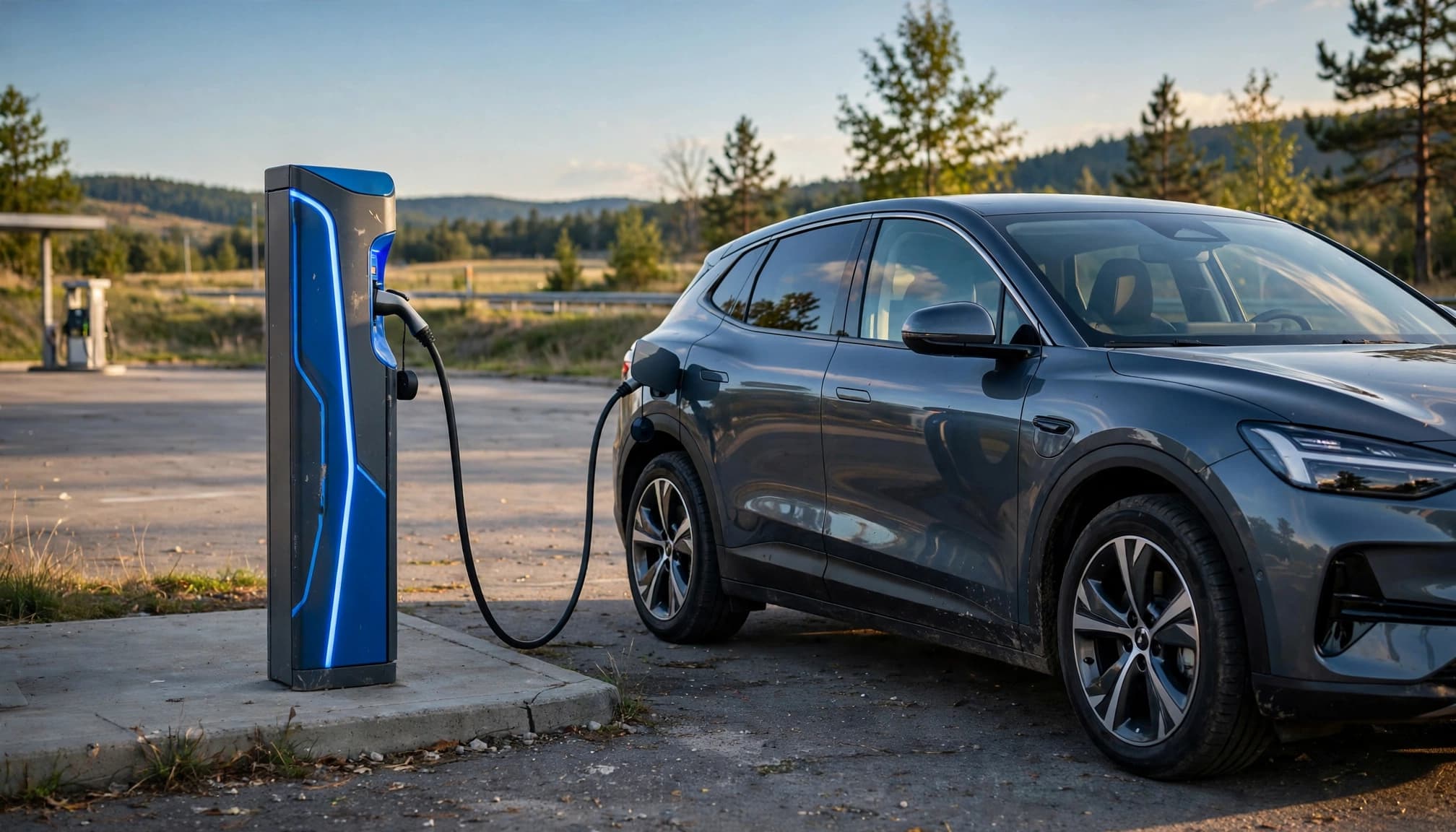
For network sessions billed by energy:
Session cost = billed energy × station price + applicable fees
A 40 kWh session costs $14 at $0.35 per unit or $18 at $0.45. These are illustrative prices, not nationwide network rates.
Network charging can cost two or three times home electricity, but the comparison depends on both prices. A low network rate can beat an expensive home peak rate.
A $10 to $30 estimate is plausible for many refills, but the amount varies by battery and station.
Check current rates and fees at the charging station before plugging in. Electrify America's pricing policies include time-of-use pricing at selected locations. Bills can also include subscriptions, idle fees, taxes, or time-based charges.
For a mixed monthly budget, calculate home and network energy separately, then add the totals. Don't multiply all driving by your home rate if road trips regularly send you to fast chargers.
Free workplace charging can reduce that total. Paid parking, access requirements, or a costly detour can eat into the benefit.
Compare Charging With Gasoline on Equal Miles
Use cost per mile to compare equal distances, so battery and gas-tank size don't distort the fuel cost comparison.
EV cost per mile = home electricity price ÷ wall-based vehicle efficiency
Gas cost per mile = gas price ÷ miles per gallon
Using the earlier illustrative inputs:
| Energy Source | Assumptions | Cost per Mile | Cost for 1,123 Miles |
|---|---|---|---|
| Home electricity | $0.1807 per unit, 3 miles per kWh | 6.02 cents | $67.64 |
| Gasoline | $2.99/gallon, 24 mpg | 12.46 cents | $139.91 |
The gasoline vehicle uses 46.79 gallons, roughly 47. The apparent monthly energy saving is $72.27, before adjusting the home estimate for charging losses.
At $0.45 per kWh for a public-network session, the same 3-mile-per-kWh efficiency costs 15 cents per mile. In this comparison, gasoline costs less.
Our EV versus gas savings calculator lets you include a mix of home and public charging.
Historical claims of $14 to $80 saved per fill-up aren't a personal forecast. Equal miles, actual efficiency, and your own prices give you a more useful answer.
Keep Equipment Costs Outside the Electricity Calculation
A home Level 2 charger can cost roughly $400 to $1,300, with installation around $200 to $2,000 for straightforward projects. These are broad budgeting ranges, not quotes. Panel work, trenching, permits, or a difficult cable route can push costs higher.
Separate that upfront investment from recurring electricity costs. Otherwise, the first month's charging total can look alarming for the wrong reason.
The federal residential tax credit had a deadline. Under the IRS refueling-property credit rules, qualifying property placed in service by June 30, 2026, could receive 30% of eligible costs, capped at $1,000 per charging port.
Eligibility required a qualifying census tract and use at a main home. As of October 2026, property placed in service after the deadline doesn't qualify.
Buying equipment before the deadline wasn't enough; it had to be operational.
Have a qualified electrician assess the installation and electrical capacity. Stop using equipment that overheats, is damaged, or repeatedly trips protection, and contact the manufacturer or electrician.
Cut Costs Where Your Numbers Show a Benefit
The useful savings opportunities are pretty practical.
- Schedule charging at home during cheaper periods when your tariff offers them. Scheduling doesn't lower costs on a flat-rate plan.
- Use free charging at work or a destination when access and parking don't erase the savings.
- Compare public memberships against your expected energy purchases, including the monthly subscription.
- Use solar panels thoughtfully. Electricity sent to the car may have earned an export credit, so its opportunity cost isn't automatically zero.
A smart charger doesn't create a second scheduling discount if your car already schedules reliably. Our charger scheduling comparison separates useful features from savings you might already have.
Track your charging energy over several billing periods. That gives you a better baseline than blaming every seasonal bill increase on the car.
Frequently Asked Questions
How Many Miles Can You Drive per kWh?
About 3 to 4 miles per kWh is a useful starting range for many electric cars. Larger trucks, high speeds, cold weather, and cabin heating can reduce efficiency.
A rating of 30 kWh per 100 miles equals 3.33 miles per unit of electricity. Use the exact model year's rating rather than treating every Nissan LEAF or Chevrolet Bolt as identical.
Do You Need a Level 2 Charger at Home?
Level 1 may cover modest daily driving if the vehicle stays plugged in long enough. Level 2 helps with higher mileage, shorter parking windows, and larger batteries.
Choose around your daily refill requirement. You don't need to replenish the entire battery every night.
Why Do Older Charging Estimates Look So Cheap?
Many use electricity rates of 12 or 13 cents. At a 12-cent rate, 15,000 annual miles and 30 kWh per 100 miles produce $540 annually, or $45 monthly.
That's valid arithmetic using older assumptions. It isn't a current national promise. At a 13-cent rate and 3.4 miles per unit of electricity, 1,000 miles costs $38.24, so a quoted $44.20 needs different inputs.
Sources
DOE's home-charging guidance supports the electricity-and-efficiency method. FHWA's older annual-mileage table provides historical driving context. Neither replaces your household tariff or actual charging records.
Put Your Own Bill in Charge
Your most useful EV charging cost starts with metered energy and the rate that applies when you charge. Battery capacity and mileage estimates help you plan, but measured sessions make the budget more personal.
Keep fixed household fees separate, count losses once, and price network charging sessions on their own. Then you'll know what the car adds to your bill, without asking a national average to do a job it can't.
Safety note: This article is general information, not professional electrical advice. Working with 240V circuits can cause serious injury or fire. Hire a licensed electrician and follow local codes and permit requirements.
Sources & further reading

Written by
LarryLeoLarryLeo started EV Charging while researching his own next car purchase. He digs into the pros, cons and real cost savings of going electric — using government, standards-body and manufacturer sources — and shares what he finds so other buyers can decide with confidence.
Why trust EV Charging Guide
Our guides are researched from government, standards-body and manufacturer sources, reviewed for accuracy, and updated when rules or products change. Brands cannot pay for placement. Read our editorial policy.