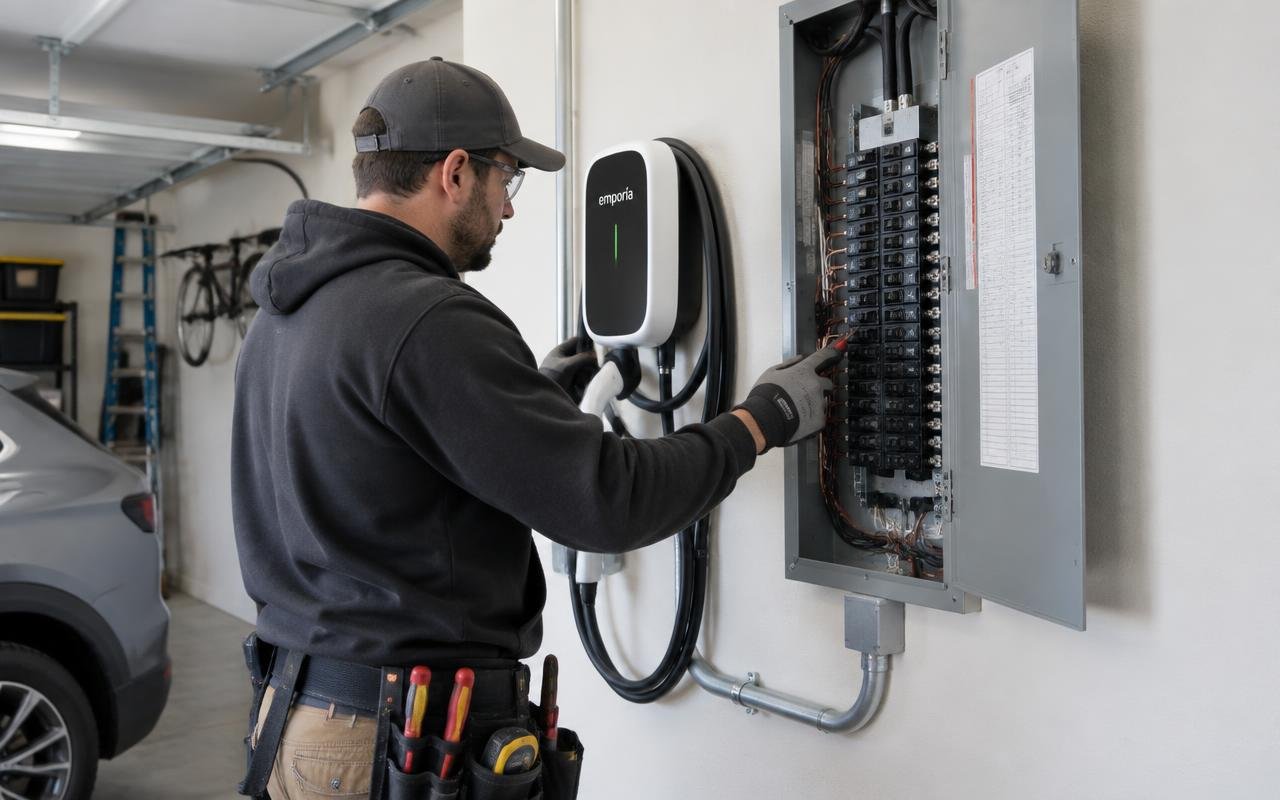
How many amps do I need for a home EV charger?
Short answer
Choose current that covers your driving within your charging window and fits the vehicle and electrical installation.
At 240V, 32A provides approximately 7.7 kW, 40A provides 9.6 kW, and 48A provides 11.5 kW before losses. These are electrical calculations, not guaranteed battery charging speeds. A vehicle limited to 7.2 kW on AC won't gain speed from an 11.5 kW wall unit.
Common residential configurations pair 32A charging with a 40A circuit, 40A with 50A, and 48A with 60A. The installer must apply the equipment instructions and locally adopted code, including the whole installation's capacity. Don't select a larger breaker as a shortcut to faster charging. A lower current or supported load-management system may meet your needs without a service upgrade.
Shopping for gear?
As an Amazon Associate, EV Charging may earn from qualifying purchases. This helps support our independent guides at no extra cost to you.
People also ask
In-depth guides
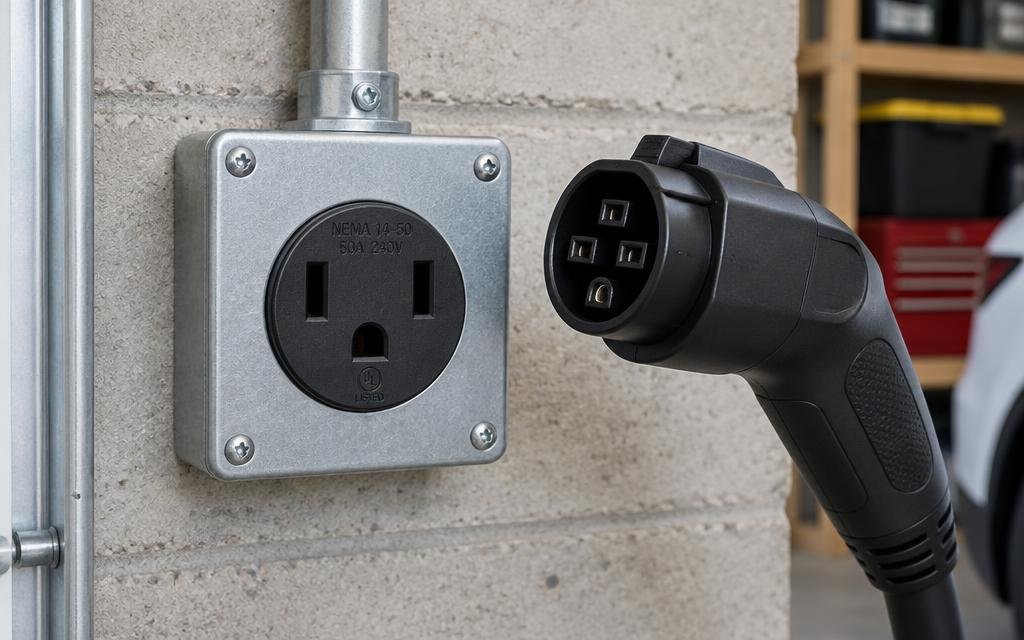
NEMA 14-50 vs Hardwired EV Charger: Which Installation Is Better?
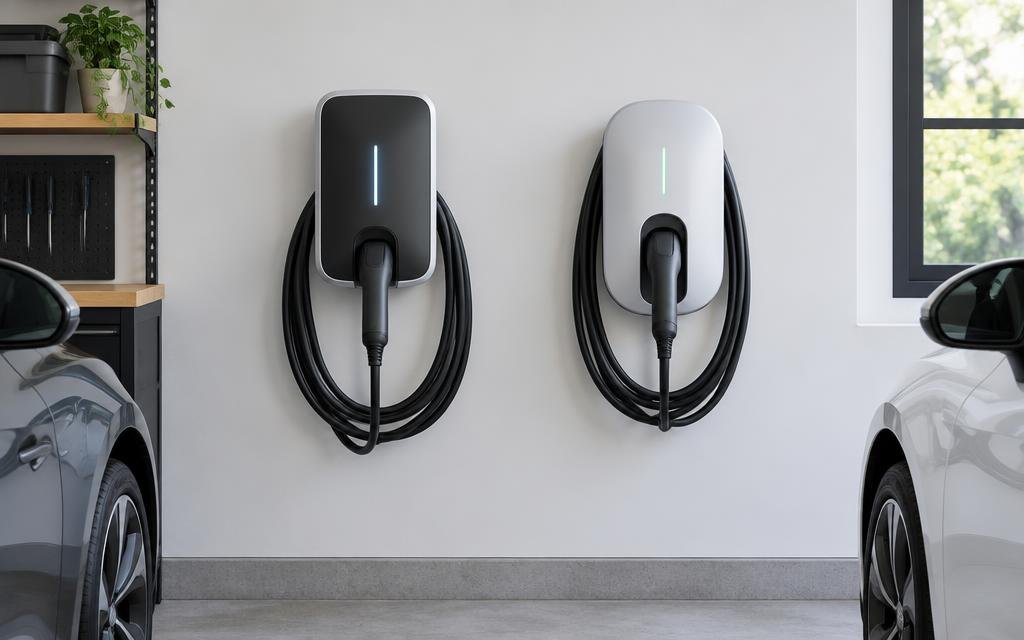
40 Amp vs 48 Amp EV Charger: Is the Faster Charger Worth It?